
My kids once had a three-hour argument about virtual sheep in Minecraft. Three. Hours. About pixels that look like sheep. If you've ever wondered what to do when siblings constantly argue, welcome to the gaming generation version, where I quickly realized that everything I'd learned about handling sibling arguments needed a serious update for the digital age.
I stood in the doorway listening to my boys debate sheep breeding mechanics with the intensity of Supreme Court justices. The younger one had apparently used wool from his brother's prized rainbow sheep collection to make a bed. A bed. This wasn't just any sheep farm - it was a carefully color-coded operation my older son had spent weeks perfecting.
Twenty minutes into playing referee over Minecraft livestock, I had an epiphany: I was doing this all wrong. Every parenting book I'd read, every article about sibling rivalry - none of them prepared me for digital property disputes. They definitely didn't cover what to do when "he's touching me" became "he's griefing my base."
Why Gaming Arguments Hit Different
For the bigger map of why these flare-ups happen at all, see our breakdown of sibling gaming conflicts.
Here's what took me way too long to understand: when my kids fight over something in Minecraft, it's not the same as fighting over LEGO. That deleted save file? That's 200 hours of work. That ruined base? That's creative expression destroyed. That stolen diamond? That's trust broken in a space where they thought they were safe.
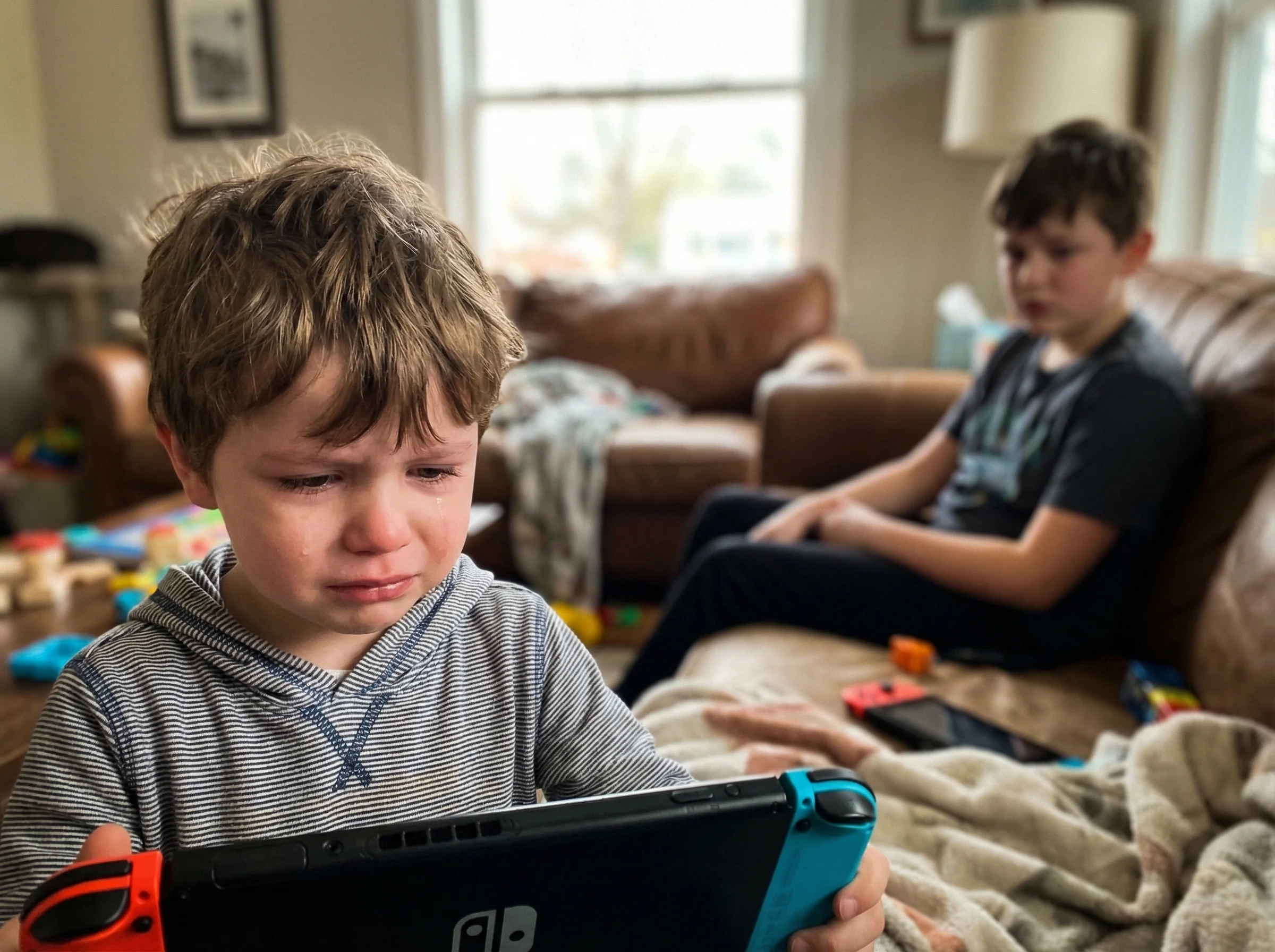
My wake-up call came during the Great Pokemon Incident. My younger son, trying to be helpful, decided to "organize" his brother's Nintendo Switch. One wrong button press later, he'd deleted a save file with every Pokemon from three different games, perfectly trained teams, shiny catches that took weeks to find. The scream that came from my older son's room wasn't anger - it was grief.
Traditional sibling argument advice would say "it's just a game." But watching my son's face, I realized that was like telling an artist "it's just a painting" after someone destroyed their portfolio. These aren't just games to our kids. They're worlds they've built, achievements they've earned, stories they've created.
The skill gap thing makes it worse. In the physical world, a 10-year-old and 7-year-old can find ways to play together. In Fortnite? That age gap might as well be the Grand Canyon. The older kid gets frustrated carrying dead weight. The younger one feels useless and excluded. Nobody has fun, everybody fights.
 On a night without fightingPause, Play, Connect: Core Deck172 prompts that give you something to ask each kid on an evening when nobody is arguing.$49 CAD • 90 cards • 18 reviewsShop the deck
The Energy Economics of Sibling Referee Duty
Let me tell you about my lowest point as a gaming parent. I was working from home, on an important call, when I heard the familiar crescendo of a brewing gaming argument. By the time I hung up, I'd been interrupted six times. SIX TIMES. Over controller ownership, screen hogging, someone breathing too loud, someone else existing in the same room.
I was exhausted, they were miserable, and nobody was actually playing anything. We were just managing conflict, badly.
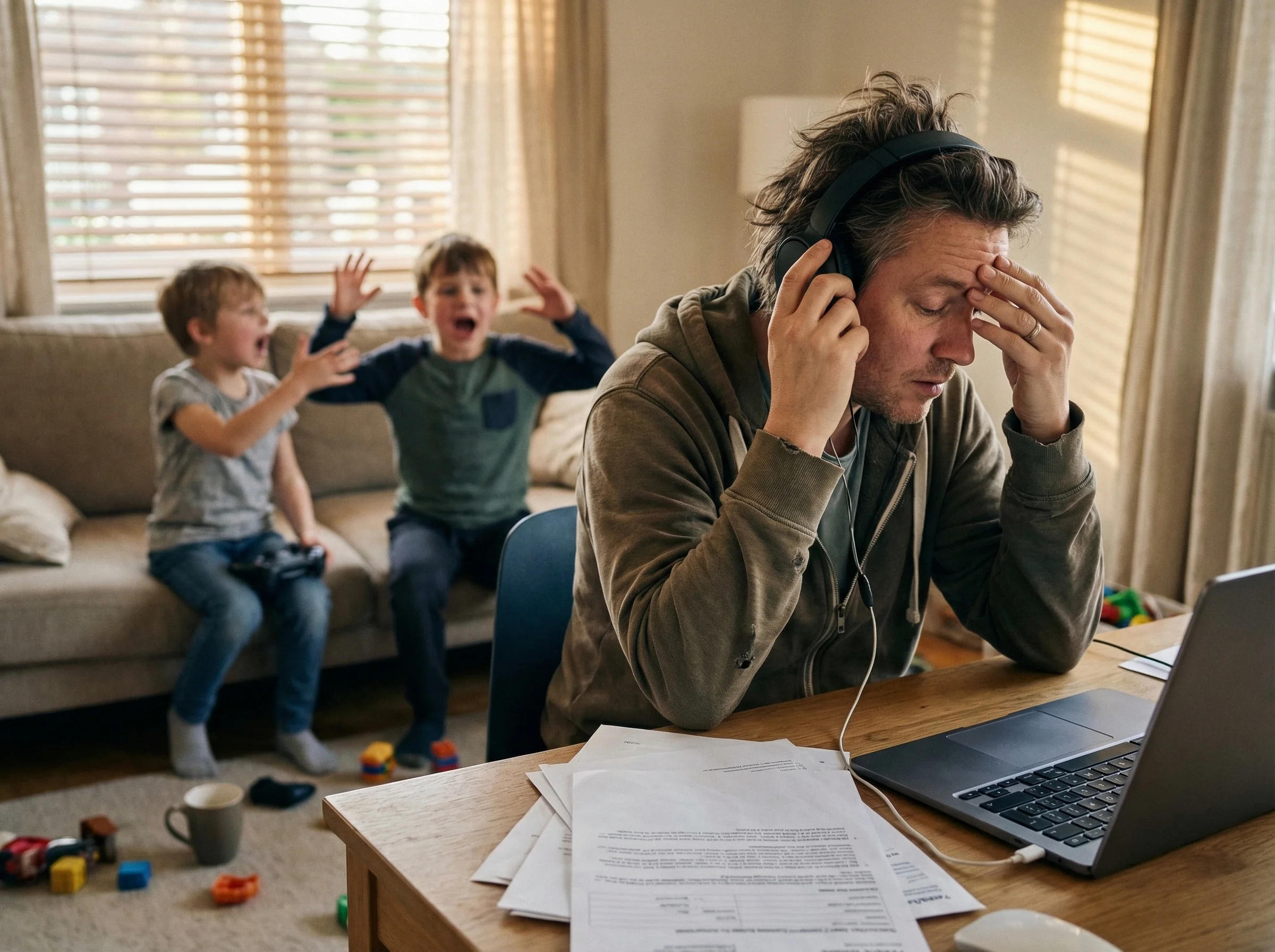
That's when I invented the Batman Protocol. Batman doesn't show up for every purse snatching - he comes when the signal goes up for real emergencies. My kids now have to try solving their own problems before calling in the cavalry. The rule is simple: before you come to me, you need to tell me three things you tried first.
The first week was rough. They'd storm in with "HE'S BEING MEAN" and I'd calmly ask "What three things did you try?" Blank stares. Stomping. Eventually going back to figure it out themselves. Now? I maybe get two interruptions per gaming session, and they're usually legitimate.
My intervention threshold is pretty simple:
- Physical violence or threats? I'm there.
- Destruction of property (real or significant digital)? I'm there.
- Genuine cruelty or bullying? I'm there.
- Everything else? Batman's busy, figure it out.
Natural Consequences in Virtual Worlds
You know what's brilliant about Minecraft servers? They handle justice better than most parents. Grief someone's build, get banned. Steal from the community chest, lose access to the good stuff. Break trust, find yourself playing alone.
I learned to let games teach their own lessons after watching my kids try to run a "business" together in Minecraft. The older one would mine, the younger would sell to villagers. Seemed perfect until little brother started pocketing emeralds for his own secret base. When big brother found out, he didn't come crying to me. He dissolved the partnership, changed the door codes, and started his own shop.
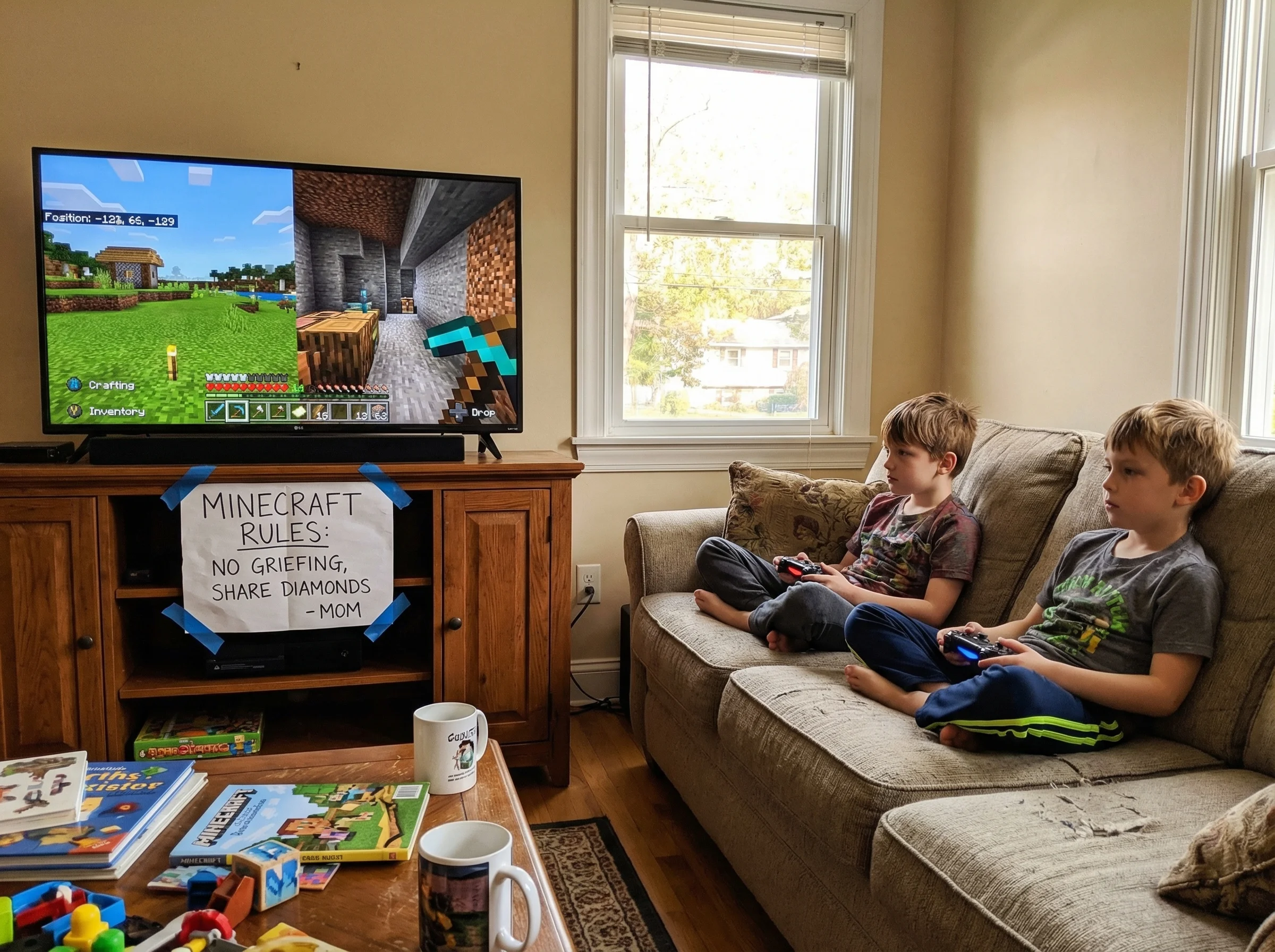
Two days of the silent treatment later (well, silent except for the extremely loud separate gaming), little brother apologized and offered to work for free to earn trust back. They negotiated terms, set up a contract (written on paper, taped to the Xbox), and learned more about business ethics than any lecture from me could've taught.
The beauty is, pixels are replaceable. Trust isn't. When you let natural gaming consequences play out, kids learn the real cost of their actions without permanent damage.
For the Cooldown: Arguments end faster when you have a question on hand. Keep a Pause, Play, Connect deck beside the console so a calm prompt is ready when the shouting stops.
Building Conflict Skills Through Co-op Play
The lab section of this fix is our companion piece on cooperative games for arguing siblings, which lists the formats that actually defuse the worst patterns.
Wanna know what nearly ended my marriage? No, not really - but Overcooked definitely tested it. If you haven't played this "cooperative" cooking game, imagine trying to run a kitchen where the floor keeps moving, half the ingredients are on fire, and your partner thinks "I'll get the tomatoes" is a binding contract.
My kids played one level of Overcooked and I've never seen them communicate better or worse simultaneously. The screaming was Olympic-level. But here's what happened after: they sat down and actually talked strategy. "You're better at chopping, I'll handle plating." "When I say 'burger now' I mean NOW."
Three sessions later, they were a machine. More importantly, they started using the same communication in other games. Clear roles, specific callouts, and - this is key - debriefing after losses without blame.
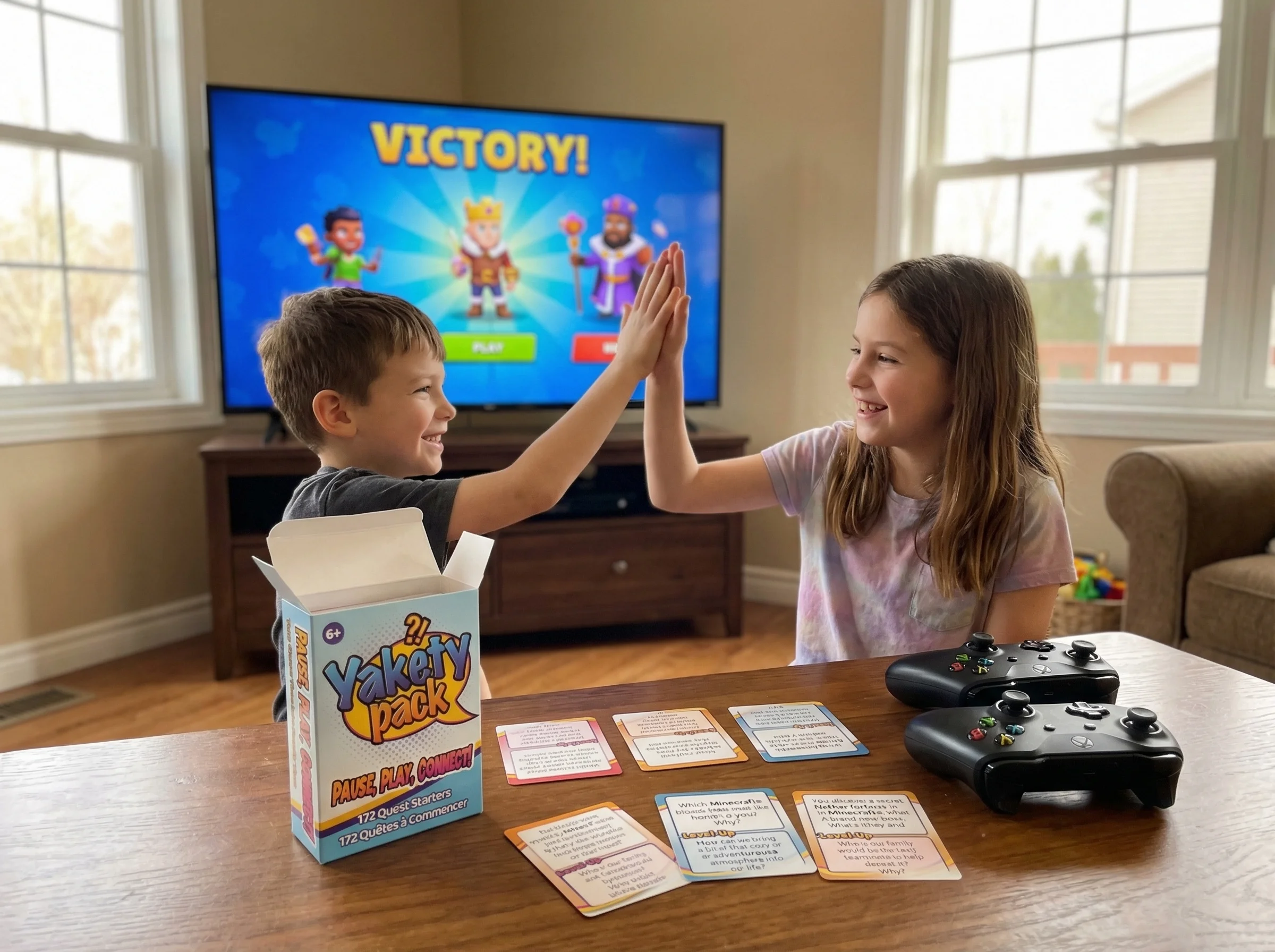
We use our Yakety Pack questions after particularly heated sessions. "Which game character would make the worst teammate?" gets them laughing about their own behavior. "What's your signature move?" helps them recognize each other's strengths.
Other games that transformed our sibling dynamics:
- It Takes Two (literally requires cooperation)
- Portal 2 co-op (can't progress without helping each other)
- Raft (survive together or drift apart)
- Minecraft (obviously, when they're building together)
 In each kid's own roomPause, Play, Connect: Core Deck$49 CAD • 172 promptsSee the deck
The Skill Gap Solution for Siblings Who Constantly Argue
My 13-year-old destroys his 10-year-old sister at basically every competitive game. For months, this meant she'd quit crying, he'd gloat, everyone would fight. Fun times.
Then I watched him teaching a friend Rocket League and something clicked. He was patient, encouraging, breaking down moves. I asked why he didn't do that with his sister. His response? "She doesn't want to learn, she just wants to win."
Fair point. So we tried something new. In competitive games, he became her coach, not her opponent. In Fortnite, he'd spectate and call out enemies. In Minecraft PvP, he'd prep her gear and teach strategies. The deal was: she had to actually listen and try to improve, and he had to celebrate her progress, not just her wins.
Plot twist: he LOVED it. Turns out, being the expert teacher gave him more satisfaction than stomping noobs. She got better, he felt important, and the fights dropped by 80%. When they do compete now, he'll use weird loadouts or challenging restrictions to level the playing field.
The key was finding games with asymmetric roles:
- Luigi's Mansion 3 (Gooigi has different abilities)
- Super Mario Odyssey (Cappy is crucial but different)
- Splatoon (support vs assault roles)
Creating Household Gaming Agreements
After the fifteenth argument about whose turn it was, I made my kids write their own gaming constitution. Not me dictating rules - them figuring out what would actually work.
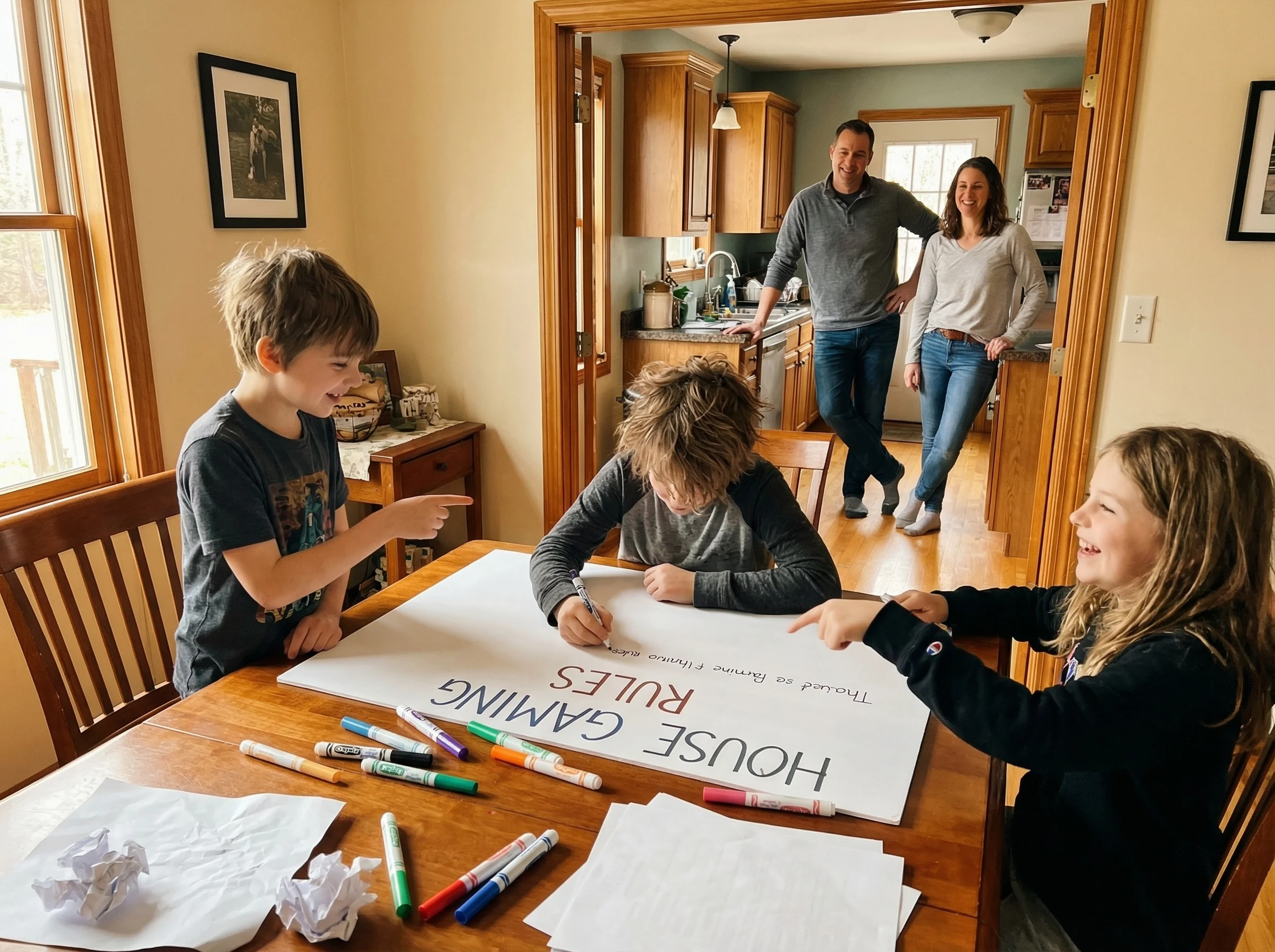
Their first draft was hilarious:
- "Unlimited gaming for everyone"
- "No bedtimes during raids"
- "Dad can't say 'pause it' anymore"
Draft two got more realistic. They came up with:
- Controller custody schedules
- A trade system for gaming time
- Consequences THEY chose for breaking rules
- Monthly amendment meetings
The consequences part was key. They decided that destroying someone's digital property meant rebuilding it plus interest. Hogging agreed-upon shared time meant losing your next slot. They police themselves now because they wrote the laws.
Best amendment so far? The "nuclear option" clause. For massive violations (like the Pokemon save incident), the guilty party has to dedicate their next three gaming sessions to helping the victim rebuild or achieve something comparable. It's restorative justice, gaming style.
When Fighting Is Actually Bonding
Real conversation with my wife: Her: "They're screaming at each other again." Me: "Yeah, but listen to what they're actually saying." Her: "..." Kids: "YOU'RE TRASH!" "GET GOOD NOOB!" "CARRIED!" hysterical laughter
Took me forever to realize their trash talk was actually affection. When they're genuinely mad, they get quiet and leave the room. When they're bonding? They roast each other like professional comedians.
Some fighting is connection. It's engagement. It's "I care enough about playing with you to get mad when you mess up." The trick is recognizing good conflict from toxic behavior:
Good conflict:
- They keep choosing to play together
- The trash talk is creative, not cruel
- They laugh between arguments
- They reference shared jokes/moments
Toxic behavior:
- Personal attacks unrelated to gaming
- Bringing up old hurts
- Physical aggression
- One sibling always losing/crying
If it's good conflict, let it ride. Siblings have been competing since Cain and Abel (though maybe with less drastic outcomes). Gaming just gives them a new arena.
For Repeat Use: The talk after the fight is where habits form. A deck of conversation cards for families with gamer kids on the kitchen counter makes that talk easy to start.
Your Next Move
Here's what you can do today: Stop trying to eliminate sibling gaming arguments. Instead, ask your kids one question: "If I disappeared for a week, how would you solve this?"
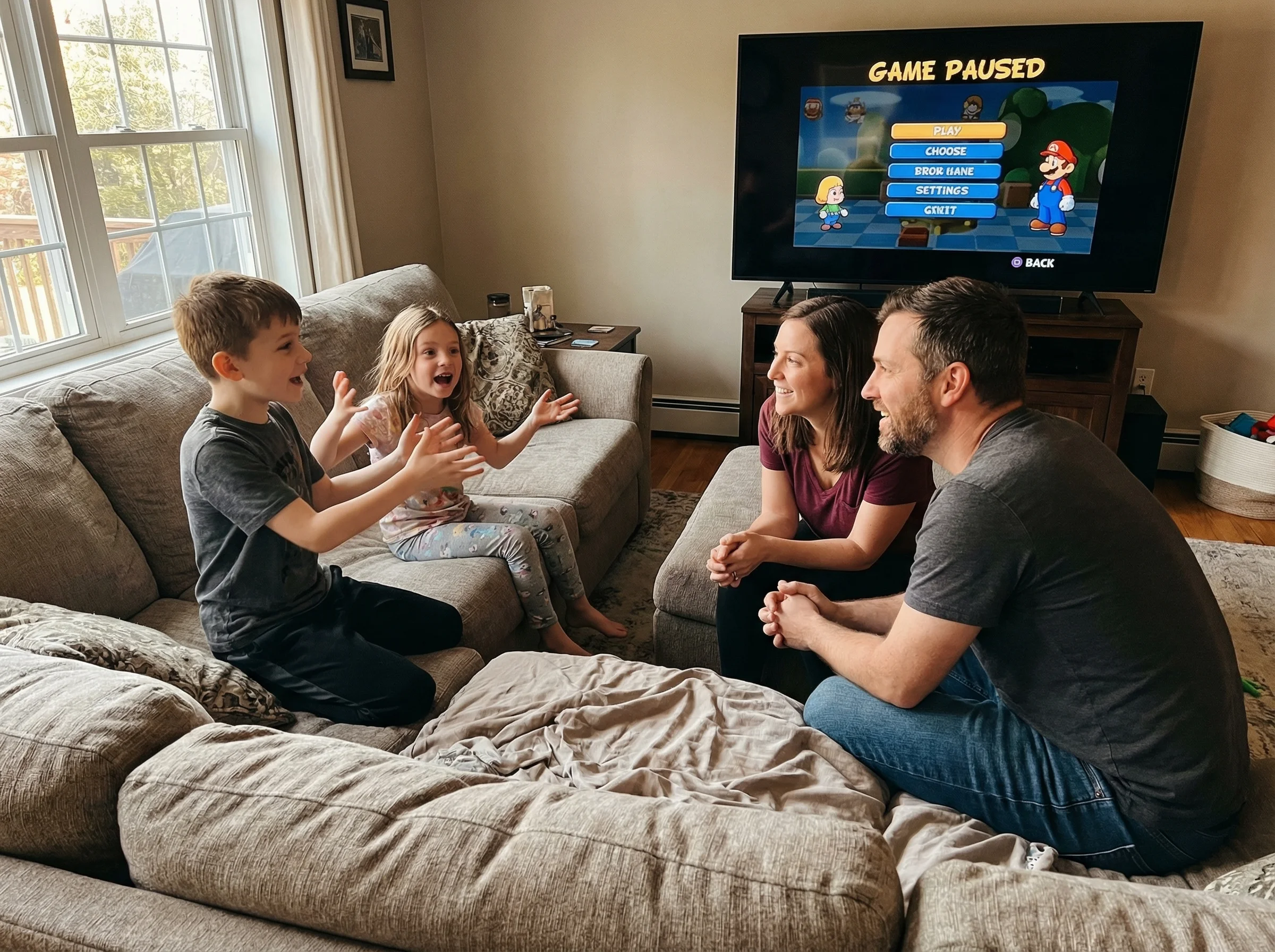
Watch their faces. Watch them realize they'd have to figure it out. Then give them the chance to practice while you're still around to prevent actual disaster.
One dad told me he uses our Yakety Pack cards during family gaming meetings. Questions like "What's a rule you wish everyone followed?" get kids talking about what really bugs them, not just surface complaints. It turns "he's not sharing!" into "I feel left out when he plays with friends and won't let me join."
My kids still argue. Last week it was about whether creative mode counts as "real" Minecraft. But now they argue productively. They negotiate, compromise, and occasionally even apologize without prompting.
The sheep farm, by the way, survived. They built an automatic wool harvester together so nobody had to shear manually anymore. Turns out the solution to most sibling arguments isn't stopping the fight - it's teaching them to fight better.
FAQ
Q: What if one kid always loses and wants to quit gaming altogether?
Look, constant losing sucks. I'd quit too. Try games where losing is fun (Fall Guys, Mario Party) or cooperative games where you win or lose together. Also check if the skill gap is fixable with practice or if you need different games entirely. Sometimes the answer is separate gaming time, and that's okay.
Q: Should I force them to share everything equally?
Nope. Real life isn't equal. The kid who saves their allowance gets better stuff. The one who practices gets better at games. Fair doesn't mean equal - it means everyone gets what they need. Sometimes that's equal time, sometimes it's not.
Q: How young is too young for violent games with siblings?
If they're turning Mario Kart into a blood sport, Fortnite isn't the problem. Watch how they handle competition in ANY game first. Some 8-year-olds handle Minecraft combat fine. Some 13-year-olds lose it over Animal Crossing. Know your kids.
Q: What about online games where I can't monitor their fights?
If they're old enough for voice chat with strangers, they're old enough for the Batman Protocol. But I do spot-check Discord, check PlayStation messages occasionally, and maintain "parent can look anytime" as the price of online gaming.
Q: They're fine separately but terrible together. Do I just keep them apart?
Try scheduled together time with specific games that require cooperation. Start with 30 minutes. If they can't handle that, they're not ready. But don't give up - learning to work with difficult people (even siblings) is a life skill.
Separately, on the good daysPause, Play, Connect: Core Deck172 prompts that give you something to talk about with one kid at a time, away from the argument.$49 CAD • 90 cards • 18 reviewsShop the deck

