
Your kid just asked if they can "install some mods" for their game, and now you're wondering what is mod gaming term and whether it's even safe. But here's what I wish someone had told me: when my son started modding Minecraft, he wasn't breaking his game. He was fixing what he saw as problems, expressing creativity, and joining a massive community of young inventors.
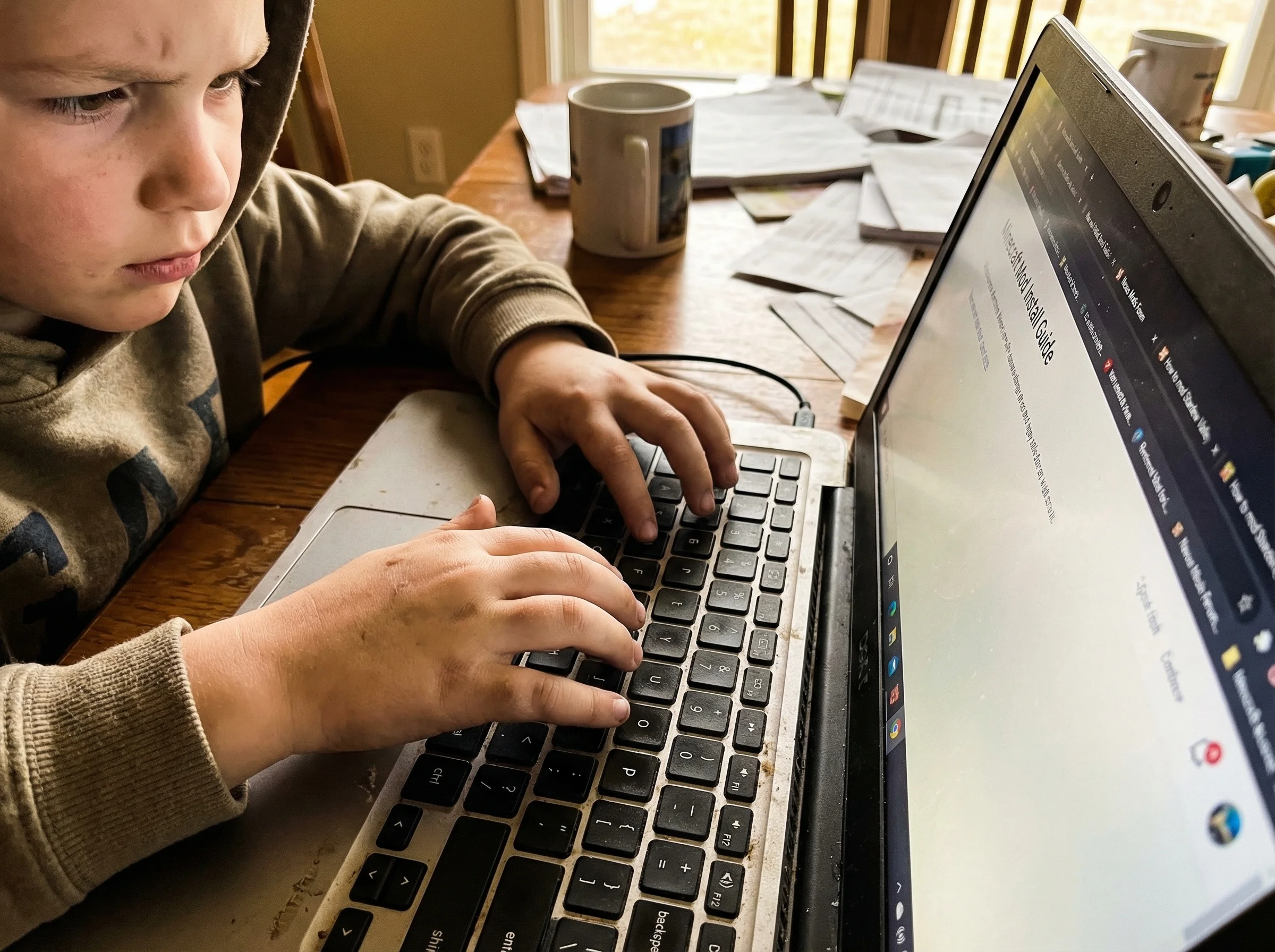
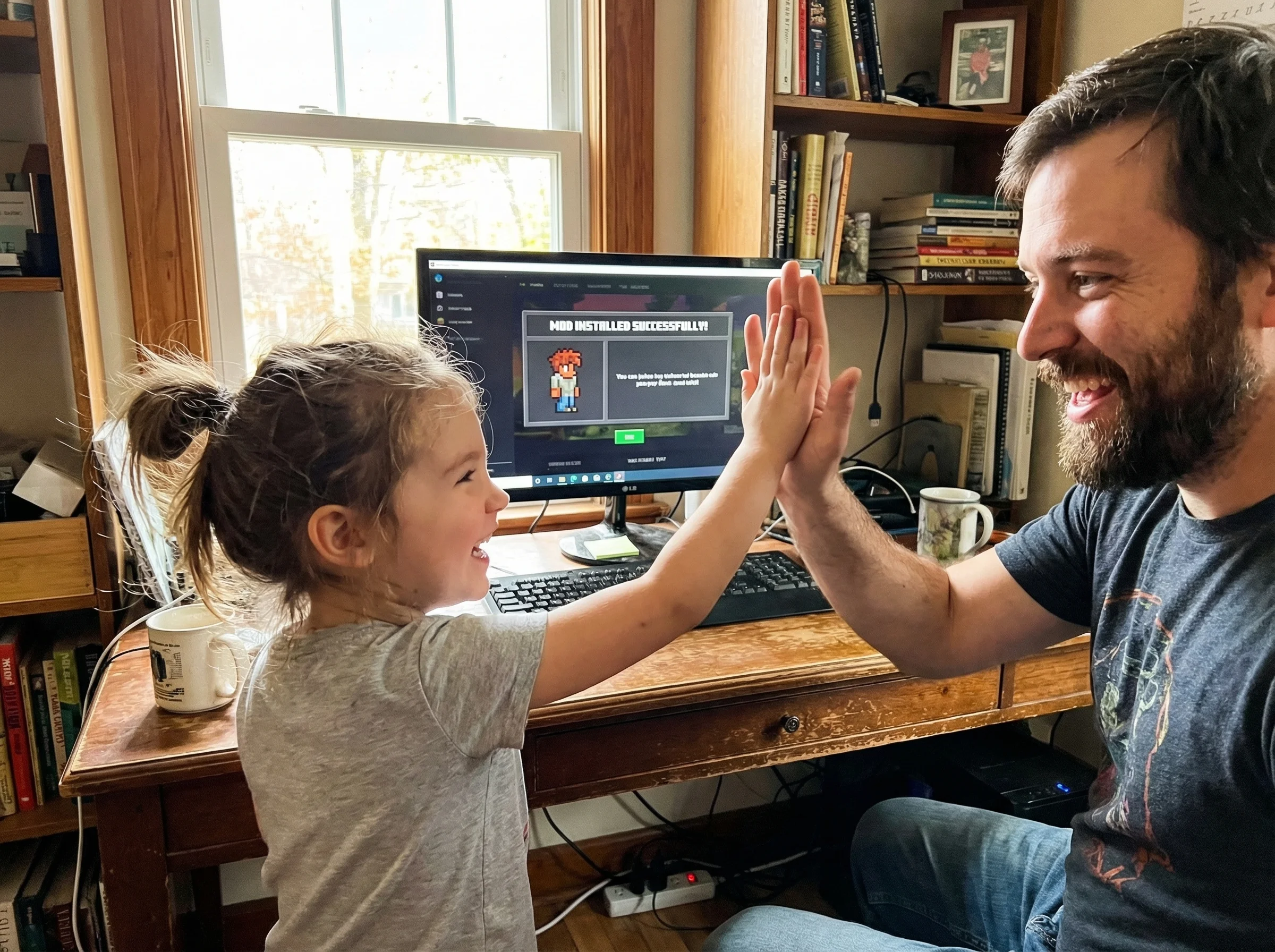
I used to think mods were some shady hacker thing. Turns out I was completely wrong. That realization came when my son spent three hours installing a mod that turned Minecraft pigs into flying unicorns. Three hours. For flying pigs. But watching him troubleshoot, research, and finally succeed taught me more about his persistence than any parent-teacher conference ever did.
What Mods Actually Are (In Parent Terms)
For the broader frame, see our parent guide to gaming culture.
A mod is just a modification - something players create to change or add to their games. Think of it like this: if the game is a LEGO set, mods are the custom pieces your kid makes from clay or cardboard to add their own touch. Game developers build the playground, modders add the swings, slides, and that weird spinning thing nobody knows how to use.
My daughter explained it perfectly: "Dad, vanilla Minecraft is like plain ice cream. It's good, but sometimes you want sprinkles." The sprinkles? That's mods.
Here's what blew my mind - mods aren't about breaking games or cheating (though some can do that). Most mods fix things that bug players. Inventory too small? There's a mod. Nights too dark? Mod. Want your farm animals to wear tiny hats? Yep, there's a mod for that too.
 Three hours for flying pigsPause, Play, Connect: Core Deck172 prompts that get a kid walking you through what they changed and why.$49 CAD • 90 cards • 18 reviewsShop the deck
The Different Types of Mods Your Kid Might Want
Not all mods are created equal. Understanding what type your kid wants helps you have better conversations about them.
Visual mods change how games look. My son's first mod made Minecraft look "more realistic" with better lighting and textures. Two weeks later, he installed one that made everything look like cartoons. Kids experiment with aesthetics just like they do with clothes or room decorations.
Gameplay mods actually change how games work. These range from simple (backpacks for more storage) to complex (entire new game modes). My neighbor's kid installed a mod that made Minecraft enemies smarter. He complained for days about how hard it was, but never uninstalled it. That's when I realized - kids often want games to challenge them more, not less.
Content mods add whole new areas, stories, or items. Think expansion packs, but free and made by players. One kid in my son's class became legendary for finding a mod that added 300 new creatures to Minecraft. He gave tours of his zoo for weeks.
Quality of life mods fix the little annoyances. Faster walking speed, automatic door opening, better organizing systems. These taught my kids an important lesson - you don't have to accept things that frustrate you. You can change them.
Why Kids Mod (It's Not Just About The Game)
Here's what I didn't get at first - modding isn't really about the game. It's about control, creativity, and community.
When my daughter couldn't draw the anime characters she loved, she found mods that added them to her games. Suddenly, she could interact with her favorite characters, create stories, build worlds for them. She found her artistic outlet through modding.
There's also the problem-solving aspect. Every mod is someone saying "this bugs me, so I fixed it." When kids use mods, they're learning that problems have solutions. When they start making mods? They're learning they can BE the solution.
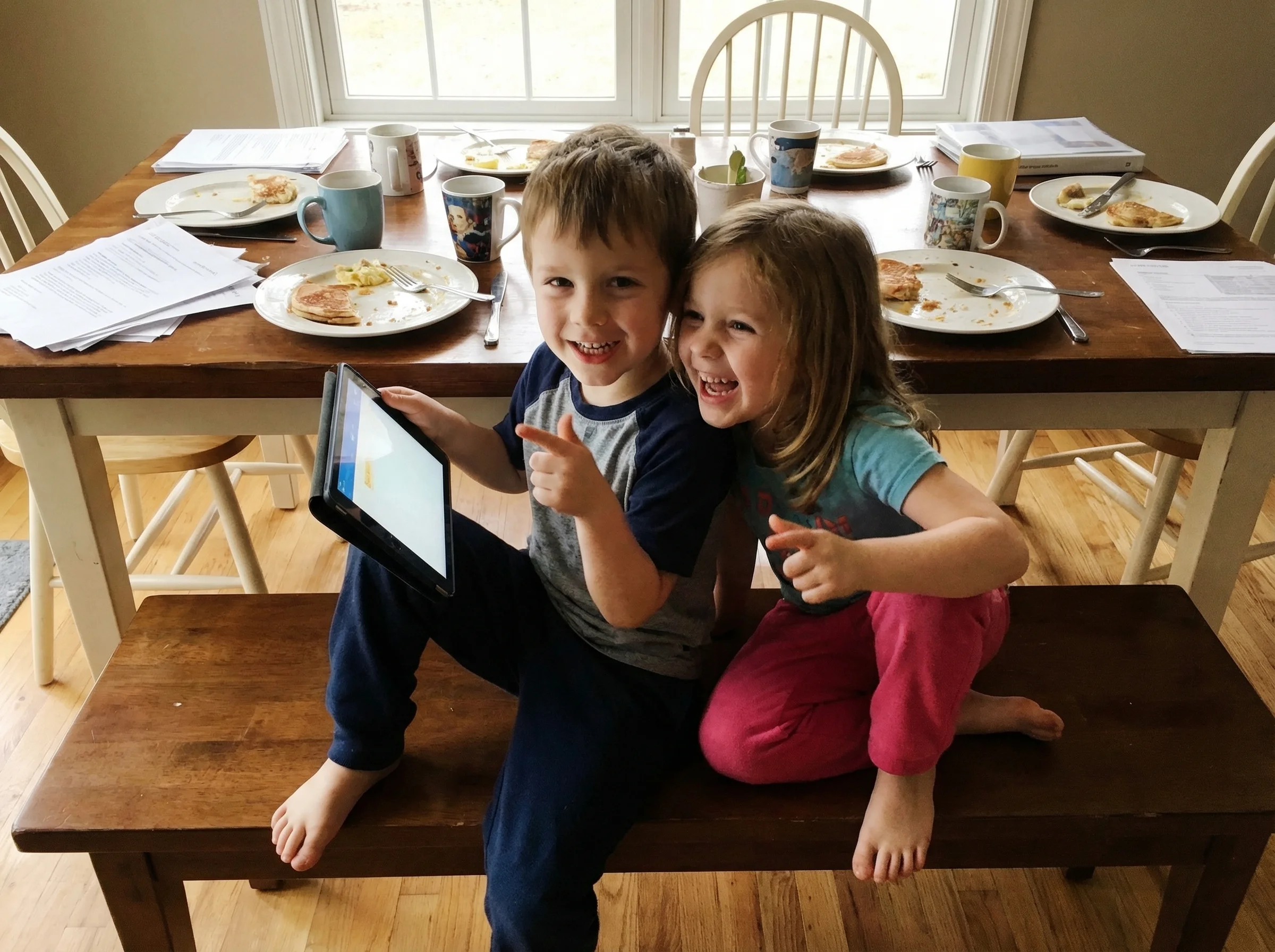
But the biggest surprise was the social element. Kids share mods like trading cards. "Have you tried this one?" "Oh, you HAVE to get this mod!" My son made two of his closest friends through a shared love of a mod that adds dinosaurs to every game possible. Yes, every game. Even chess, apparently.
 Dinosaurs in every gamePause, Play, Connect: Core Deck$49 CAD • 172 promptsSee the deck
The Safety Conversation (Without the Scare Tactics)
Let's address the elephant in the room. Yes, downloading random files from the internet can be risky. But teaching kids to mod safely is like teaching them to cross the street - give them the tools to do it right, not just fear.
Safe mod sources are usually obvious. Steam Workshop, CurseForge, the official Minecraft site - these are like shopping at Target instead of that sketchy pop-up store. Teach your kids the signs of legitimate sites: lots of users, regular updates, comment sections with real discussions.
Red flags are equally obvious once you know them. Mods that require turning off antivirus? Nope. Sites covered in "DOWNLOAD NOW" buttons? Hard pass. Mods that promise impossible things like "unlimited money in every game"? That's not a mod, that's malware wearing a fake mustache.
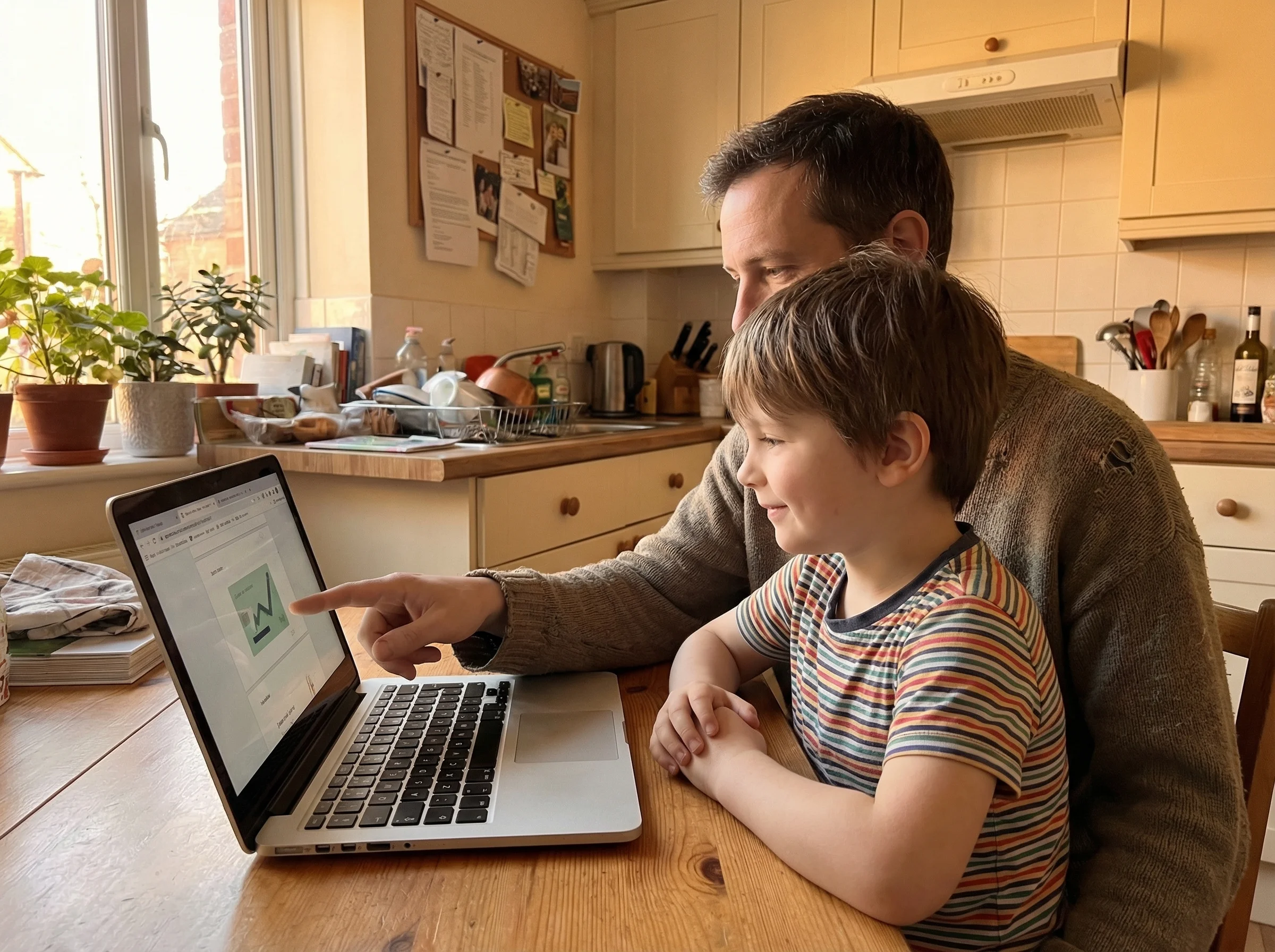
I taught my kids to read mod comments like restaurant reviews. Lots of recent, detailed reviews? Probably safe. No comments or only "GREAT MOD!" spam? Skip it. One mom in our gaming group calls it "digital street smarts" and I love that term.
For the Mod Tour: Curiosity beats interrogation. Keep a Pause, Play, Connect deck near the desk so a soft prompt is right there when your kid demos their build.
How to Talk to Your Kid About Their Mods
The full set of soft starters is in our conversation cards for families with gamer kids.
"What mods are you using?" gets you nowhere. Trust me, I tried. But "What problem does this mod solve?" opened floodgates. Suddenly my son was explaining game balance, user interface design, and community feedback. He just didn't know those terms yet.
Better questions that actually worked:
- "What's the coolest thing this mod adds?"
- "Show me your favorite modded thing in your game"
- "If you could create any mod, what would it do?"
- "Which of your friends uses the best mods?"
That last one revealed entire social dynamics I'd missed. Turns out there's a whole hierarchy of who finds the coolest mods first. It's like being the kid who discovers the best new songs, but for gaming.
We actually turned some of these mod conversations into Yakety Pack cards. One asks "If you could mod real life, what would you change first?" The answers told me more about my kids' frustrations than months of "how was school?"
When Modding Becomes Creating
Watch for these signs - they mean your kid might be ready to make their own mods:
- Complaining that the mod they want doesn't exist
- Asking how mods are made
- Trying to modify mods they've downloaded
- Drawing or writing about their mod ideas
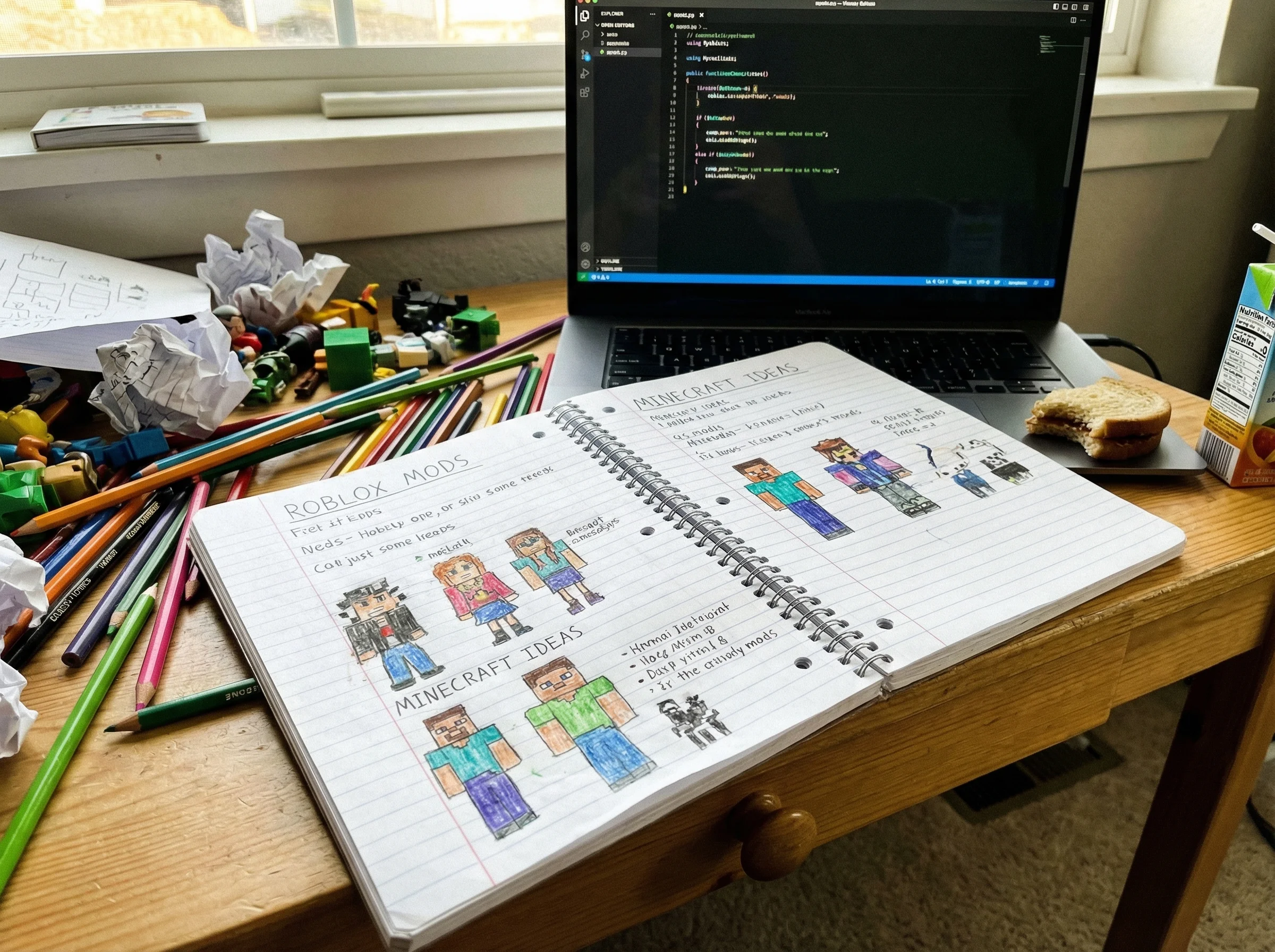
My friend's daughter started by changing colors in a Minecraft texture pack. Just colors. Six months later, she was creating simple mods. Two years later, she's teaching herself Java. Not because anyone pushed her, but because she wanted to make cooler stuff.
Supporting this interest doesn't mean buying expensive software or signing up for coding camps (unless they ask). Sometimes it just means saying "that's a cool idea" when they describe their mod concept. Or helping them find beginner-friendly tutorials on YouTube.
Games That Welcome Mods (And Why That Matters)
Not all games allow mods, and that's actually important information. Games that support modding tend to have better communities, longer lifespans, and more educational potential.
Kid-friendly games with great mod support:
- Minecraft (the king of modding)
- Roblox (though they call them "experiences")
- Stardew Valley (wholesome farming with endless possibilities)
- Cities: Skylines (for the future urban planners)
- Kerbal Space Program (rockets and learning)
When researching games for your kids, check if they support mods. It's like buying toys that work with what you already have instead of need their own special pieces. A moddable game is a game that grows with your kid.
For the Long Build: Mod-friendly parents are built from many small curious conversations. A deck of Yakety Pack conversation cards on the dinner table keeps the door open every night.
The Real Value of Understanding Mods
Here's what understanding mods really gave me - a window into how my kids think. The kid who installs difficulty mods isn't just playing games, they're seeking challenge. The one adding story mods might be your future writer. The one obsessed with optimization mods could be your little engineer.
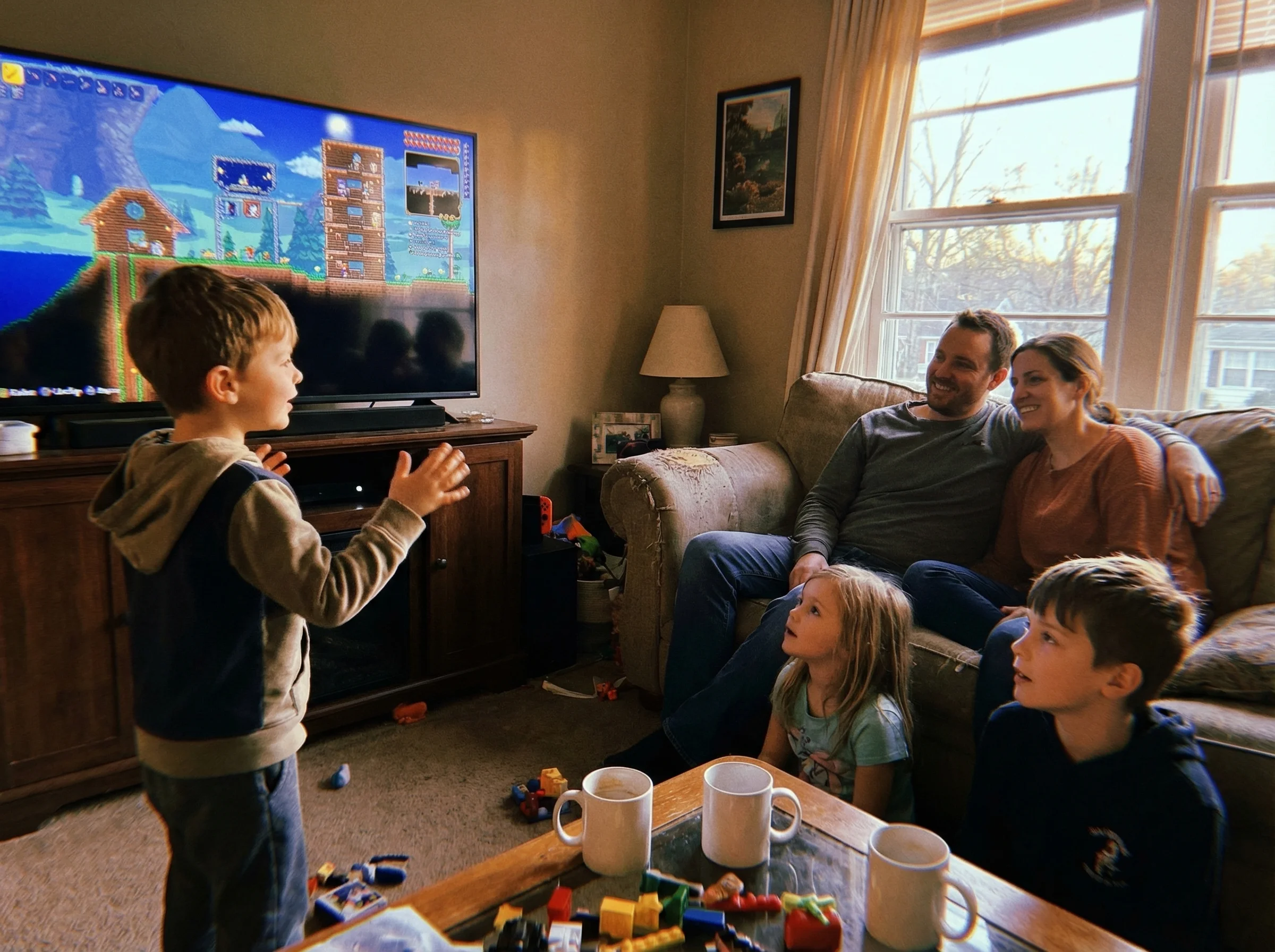
More importantly, it gave us a shared language. When my son says a teacher is "like a badly coded NPC," I know he means they're inflexible. When my daughter talks about "modding" her homework approach, she means customizing it to work better for her brain.
Let your kids struggle with broken mods sometimes. The troubleshooting, research, and problem-solving they do figuring out "why won't this work?" builds exactly the kind of persistence and technical thinking that serves them later. My son spent four hours fixing a mod conflict. Four hours. But he learned about compatibility, file systems, and systematic debugging without realizing it.
Understanding what your kids love about their games, mods included, opens doors to connection you didn't know existed. Sometimes the right question at the right time makes all the difference. And sometimes, letting them teach you how to install a mod that turns all the dragons into Thomas the Tank Engine is exactly the bonding experience nobody tells you about in parenting books.
FAQs About Gaming Mods
Q: What's the difference between mods and cheats?
A: Cheats skip the game - like teleporting to the end. Mods change the game - like adding new areas to explore. One's a shortcut, the other's an enhancement. Though honestly, in single-player games, both are just different ways to have fun.
Q: Can mods permanently break a game?
A: Almost never. Most games keep modded stuff separate from the main game files. Worst case, you uninstall and reinstall the game. My kids have "broken" Minecraft dozens of times. Takes about 10 minutes to fix, and they learn something each time.
Q: Are mods free?
A: Most are, but some creators accept donations or sell through official channels. Think of it like apps - most free, some paid, quality varies. We treat paid mods like any other game purchase - is it worth the allowance money?
Q: At what age should kids start using mods?
A: If they can install the game, they can probably handle simple mods. My 8-year-old uses visual mods with help. My 12-year-old manages his own mod folder like a tiny IT administrator. It's more about their interest and tech comfort than age.
Q: How do I know if a mod is appropriate?
A: Same way you check if a game is appropriate - look at screenshots, read descriptions, check reviews. Most mod sites have rating systems. When in doubt, ask your kid to show you what it does. They usually love being the expert explaining things to you.
If they modded real lifePause, Play, Connect: Core Deck172 prompts that open up what your kid would fix, in the game and outside it.$49 CAD • 90 cards • 18 reviewsShop the deck
Related Articles
Looking for more? Check out these related articles:

