
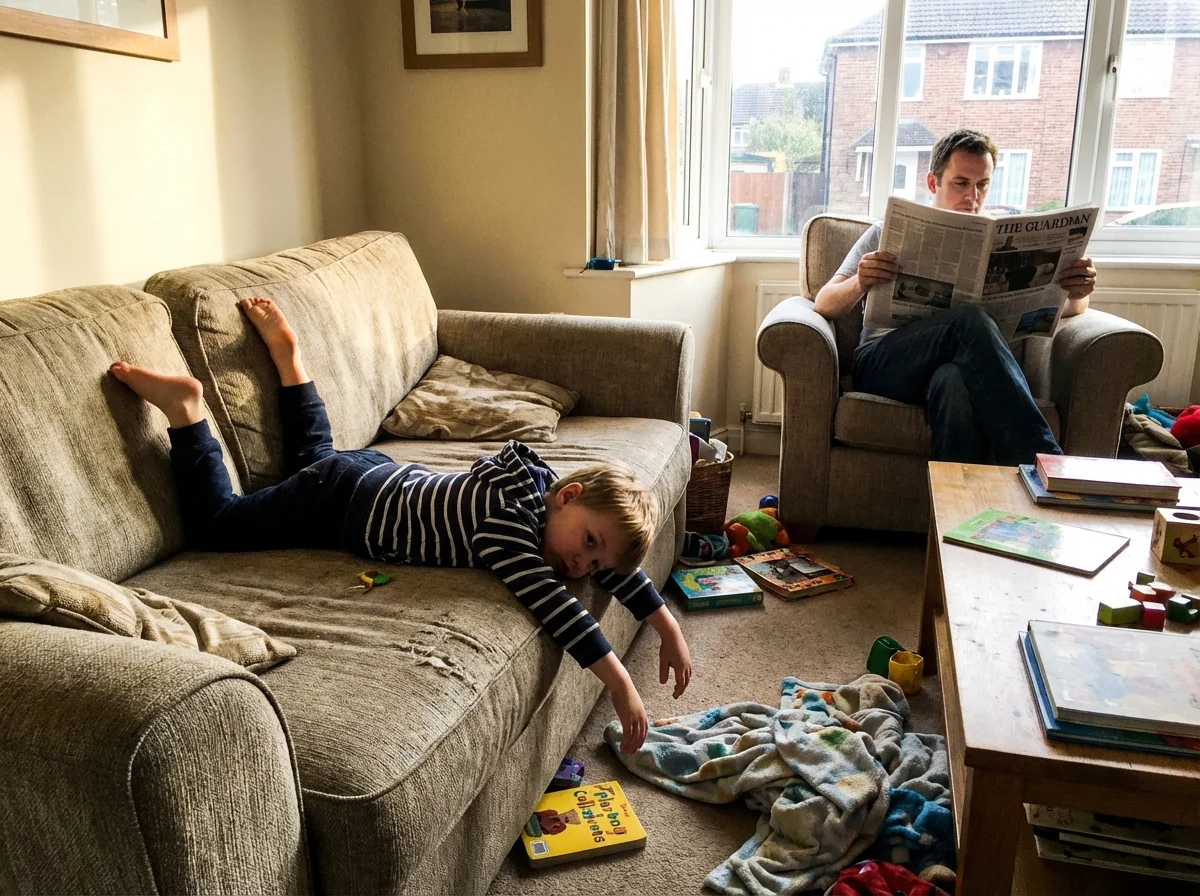
Saturday afternoon. Screens are off. Your kid is draped across the couch like a deflated pool float, staring at the ceiling. "There's nothing to do." You look around. Legos, books, art supplies, a backyard. A literal room full of options.
And yet, nothing to do.
I used to panic at this moment. I'd scramble to suggest activities like some kind of frantic cruise director. "Want to draw? Build something? Go outside? We could bake cookies!" My son would reject every single one while somehow making eye contact feel like an accusation.
It took me embarrassingly long to realize: the problem wasn't a lack of options. The problem was a 10-minute window that I kept trying to skip.
What the Boredom Hump Actually Is
This is the everyday version of our pillar piece on turn screen time into connection time; the hump is where the swap happens.
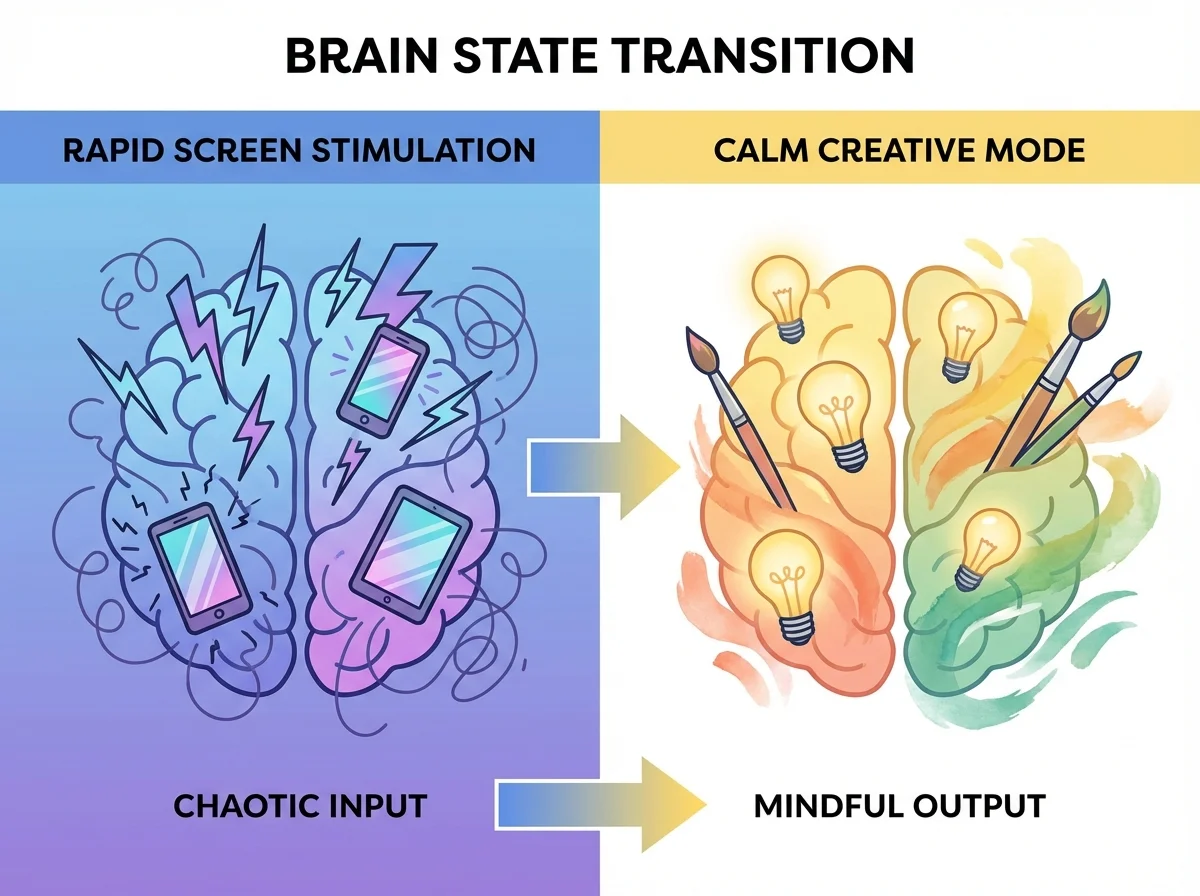
Here's what happens when you pull a kid away from screens. Their brain has been running on easy dopamine, the kind that comes from rapid-fire stimulation with zero effort. YouTube autoplay. Game levels designed to reward every 30 seconds. Infinite scroll. It's like an IV drip of engagement.
When you turn that off, their brain doesn't just smoothly transition to building a birdhouse. There's a gap. A withdrawal period. And that gap, which I call the boredom hump, usually lasts about 5 to 15 minutes.
During those minutes, your kid genuinely feels like there's nothing to do. They're not being dramatic (okay, they're being a little dramatic). But their brain is recalibrating. It's used to stimulation being delivered. Now it has to go find stimulation on its own. That's a different skill entirely, and it's one that atrophies when screens do all the work.
The boredom hump is the transition between consumption mode and creation mode. And it is uncomfortable for everyone involved.
 Minute six of the humpPause, Play, Connect: Core Deck172 prompts that sit on the counter for the ten minutes nobody knows what to do.$49 CAD • 90 cards • 18 reviewsShop the deck
Why Most Parents (Including Me) Handle It Wrong
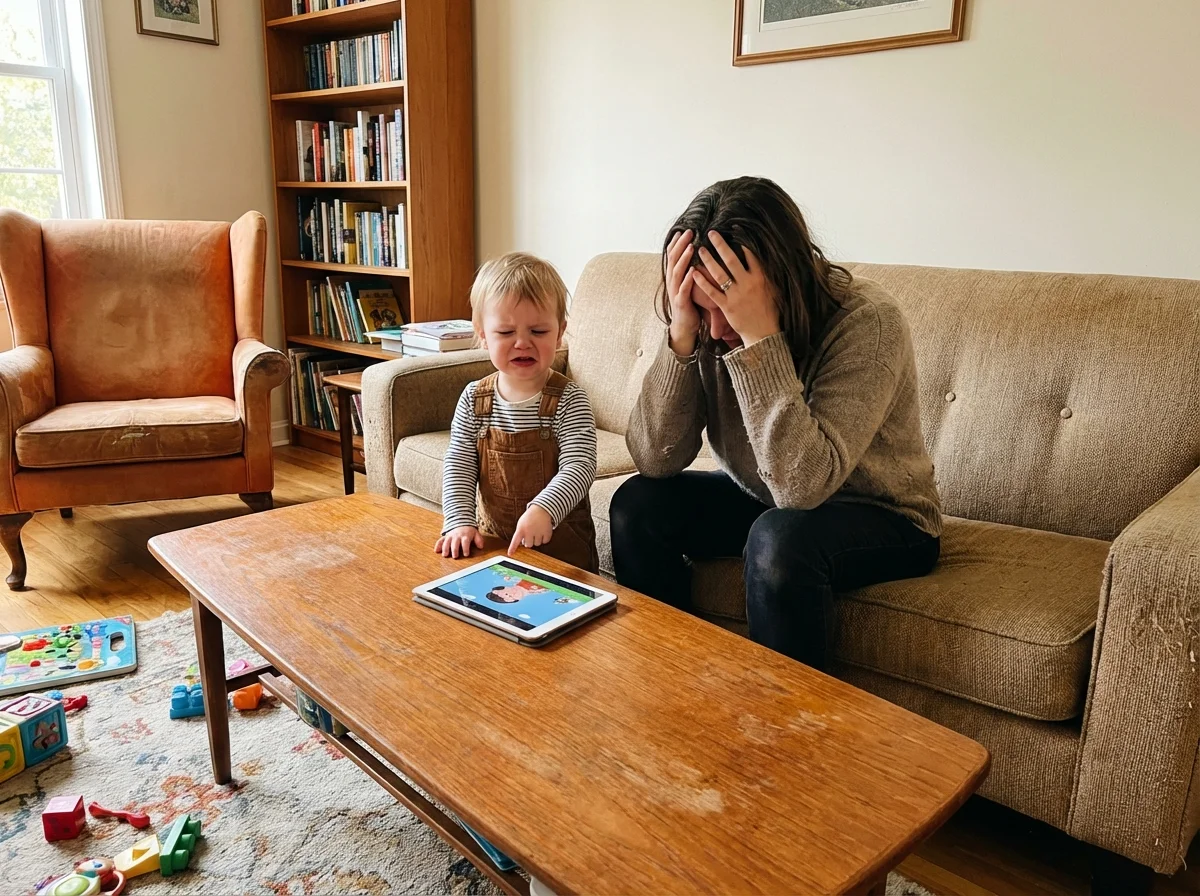
When my kid says there's nothing to do, my instinct is to fix it. Suggest something. Set up an activity. Basically, become the replacement for the screen - delivering entertainment on demand, just in person.
And it kind of works in the moment. But it creates a bigger problem: your kid never learns to push through the discomfort themselves. They learn that boredom is an emergency someone else needs to solve.
Here's what I used to do wrong, ranked by how much I cringe looking back:
The Activity Auctioneer. Rapid-fire suggesting things until something sticks. "Bikes? Legos? Drawing? Board game? Trampoline? Dog walk?" This teaches your kid to reject things while you audition for their attention.
The Guilt Trip. "When I was your kid, we played outside until the streetlights came on." Cool story. Doesn't help. Different era, different brain chemistry, and your kid has now tuned you out.
The Rescue. Setting up an elaborate activity, pulling out the craft bin, organizing a playdate on the spot. Solves today's boredom, guarantees tomorrow's. Because you just confirmed that boredom is your problem to solve, not theirs.
The Cave. Giving the screen back after 4 minutes because the whining broke you. I've done this. No judgment. But it teaches your kid that boredom complaints have a very effective solution - and it's not creativity.
The thing all of these have in common? They interrupt the boredom hump before the magic happens.
The Magic of the Other Side
Here's what I started noticing once I stopped intervening during those first 10 minutes.
My daughter, after about 7 minutes of flopping around the house, started rearranging her stuffed animals into what she called "a courtroom." She made a judge's wig out of a sock. She spent two hours running a trial where her teddy bear was accused of stealing crackers. I could not have planned this. No activity list would have suggested it. Her bored brain created it from nothing.
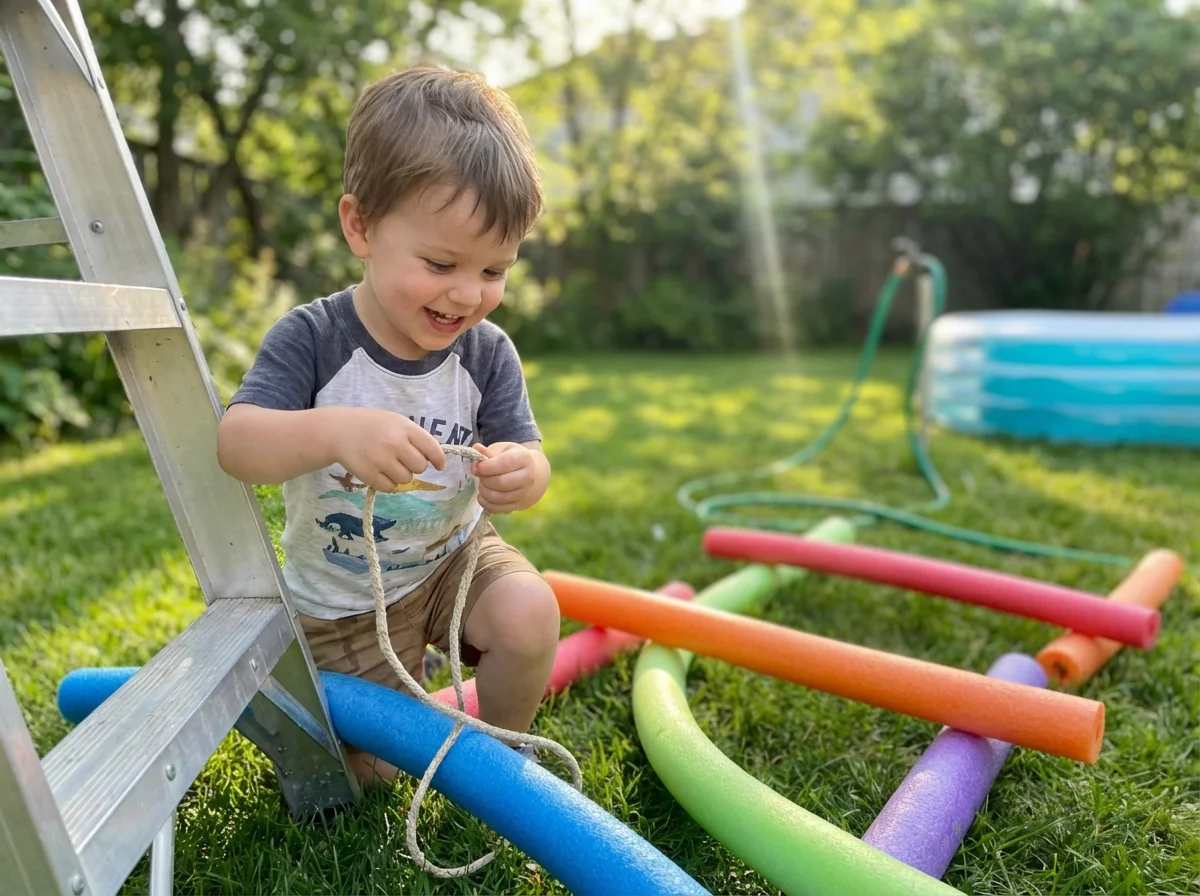
My son built an entire obstacle course in the backyard with pool noodles, a ladder, and some rope he found in the garage. He timed himself. He made records. He modified it three times. This after declaring, with full conviction, that there was literally nothing to do on planet Earth.
This isn't unique to my kids. Researchers at the University of Central Lancashire found that boredom can enhance creativity because it triggers daydreaming, which activates the brain's default mode network, the same network responsible for imagination, problem-solving, and original thinking.
The boredom hump isn't a problem to solve. It's a doorway to walk through.
For the Hump Moment: A prompt makes the awkward 20 minutes easier. Keep the Pause, Play, Connect deck on the counter so a card is right there when the whining starts.
How to Actually Survive It (Practical Strategies)
Knowing the boredom hump exists is one thing. Standing in your kitchen listening to dramatic sighing for 10 minutes straight is another. Here's what actually works.
Name It Out Loud
Tell your kids about the boredom hump. Seriously. We gave it a name in our house, and it changed things immediately. "Oh, you're in the boredom hump right now. Give it about 10 minutes, your brain will figure it out."
Kids are surprisingly receptive to understanding what's happening in their own heads. Once they know the boredom hump is temporary, they stop treating it like an emergency. It goes from "I'M SO BORED AND MY LIFE IS TERRIBLE" to "Ugh, the boredom hump again." That shift matters.
Set a Timer (But Not for What You Think)
Don't set a timer for the activity. Set a timer for the boredom. "I know it feels like there's nothing to do right now. Let's set a 10-minute timer. If you're still bored after that, we'll brainstorm together."
In our house, nobody has ever made it to the end of the timer. Something always clicks around minute 6 or 7. But having the timer there makes the discomfort feel contained and temporary. It's the difference between "I'm bored forever" and "I'm bored for 8 more minutes."
Don't Leave, But Don't Help
This is the hardest part. Stay present but don't rescue. You can be in the same room, doing your own thing. But resist every urge to suggest, set up, or solve.
Think of it like teaching a kid to swim. You're right there. They can see you. But they have to feel the water themselves. If you hold them up every time they start to sink, they never learn to float.
I usually do dishes or fold laundry during the boredom hump. Something visible and boring. Ironically, watching me do something mundane sometimes motivates my kids to go find something better. Nobody wants to watch dad fold socks.
Prepare the Environment, Not the Activity
This is the biggest lesson I've learned: what your home looks like before the boredom hump determines what happens during it.
If activity options are visible and accessible, kids find them. If everything is stored away in closets and bins, the boredom hump wins because now there's friction on top of discomfort.
We keep a few key things out at all times: a half-built puzzle on the dining table, art supplies on a low shelf, books with covers facing out instead of spines. These are visual invitations that do the suggesting for you.
I wrote a whole piece about this approach in our guide to screen time alternatives that actually work, where I break down what I call "friction engineering." The short version: make the alternative as easy to start as tapping a screen.
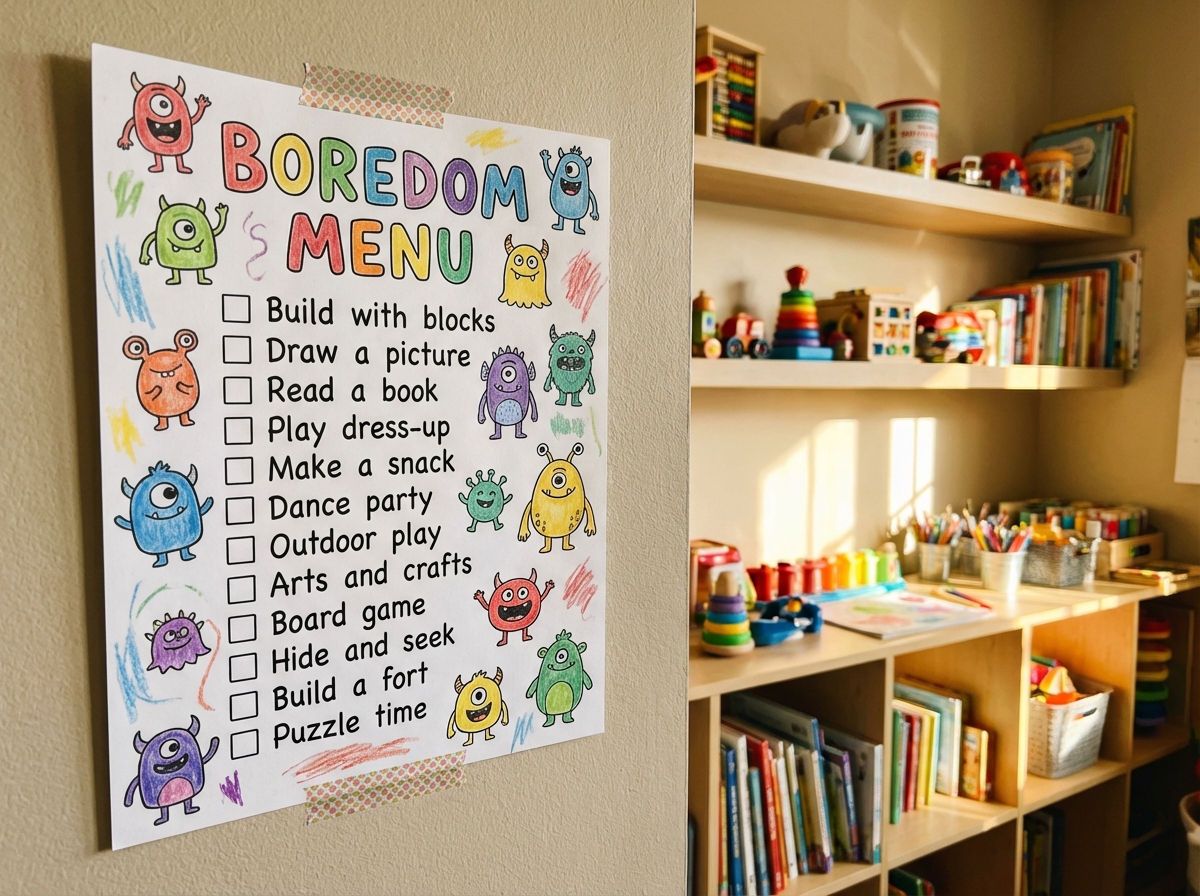
Have a "Boredom Menu" Ready
This is different from suggesting activities in the moment. A boredom menu is a list your kid creates themselves, during a calm moment, of things they enjoy doing. Tape it to the fridge. When they hit the boredom hump, point to the list and walk away.
The key: they make the list, not you. When a kid rejects your suggestion, it's because it feels imposed. When they reject their own list, they feel silly. It's a small psychological shift that makes a real difference.
Our boredom menu has about 15 items, and my kids cross things off and add new ones regularly. It includes stuff like "spy on the neighbors with binoculars" (we have very patient neighbors) and "make a potion with stuff from the kitchen" (we have a very patient kitchen).
What to Say When Your Kid Says There's Nothing to Do
The actual words matter here. Some responses shut down the boredom hump process. Others support it.
Instead of "go play" (too vague, feels dismissive), try: "Your brain needs a few minutes to switch gears. It'll come to you."
Instead of "how about..." (launches the activity auction), try: "What's on your boredom menu?" or just "Hmm" with genuine curiosity, then go back to what you were doing.
Instead of "you have a room full of toys" (factually true, emotionally useless), try: "I know it feels like nothing sounds good right now. That's normal. It'll pass."
Instead of "when I was your age" (conversation ender), try: "I get bored too sometimes. Yesterday I just stared out the window for like five minutes before I figured out what I wanted to do."
The goal is to normalize the feeling without fixing it. Your kid needs to learn that boredom is safe, temporary, and often the beginning of something interesting.
 Instead of the activity auctionPause, Play, Connect: Core Deck$49 CAD • 172 promptsSee the deck
The Two-Week Reality Check
I want to be honest about timelines because most parenting advice skips this part.
When you first start letting the boredom hump play out instead of rescuing, the first few days are rough. Like, really rough. Your kid might escalate. Whining turns to anger turns to "you're the worst parent" turns to tears. This is normal. They're used to boredom being solved immediately, and you just changed the rules.
Week one is survival mode. You'll second-guess yourself approximately 47 times. "Maybe I should just let them have the iPad." Stay the course if you can. The protests are loudest right before the breakthrough.
Week two gets noticeably better. The boredom humps get shorter. Your kid starts self-directing faster. You'll catch them doing something creative and think, "Wait, when did they start that?" The answer is: during a boredom hump you didn't interrupt.
By week three or four, "there's nothing to do" still happens. But it's quieter. More habit than crisis. And the gap between "I'm bored" and "actually I'm going to go do this thing" shrinks from 15 minutes to 5.
This isn't theoretical. This is what happened in our house. And I've heard similar timelines from other parents who've tried it.
When Boredom Is Actually a Problem
I want to be careful here. The boredom hump is one thing. Persistent, chronic boredom that doesn't resolve can be something else.
If your kid consistently can't engage with any activity, shows no interest in things they used to enjoy, or seems genuinely flat and disconnected (not just screen-deprived but emotionally absent), that's worth paying attention to. Chronic boredom can sometimes signal anxiety, depression, or other things that need more than a timer and a boredom menu.
The difference: boredom hump kids are annoyed but ultimately functional. They protest, then create. Chronically bored kids don't bounce back. Trust your gut on this one. You know your kid.
The Connection Piece Nobody Talks About
The simplest connection tool is a deck of conversation cards for families with gamer kids; pull a card the moment boredom hits.
Here's something I didn't expect. When my kids started coming out of the boredom hump on their own, they didn't just play. They often wanted to talk.
My son would wander into the kitchen mid-boredom-hump and start telling me about something random, a kid at school, a dream he had, what he thought would happen if dogs could talk. These weren't big, planned conversations. They were the little moments that happen when a kid's brain isn't being filled by a screen.
This is actually why we built Pause, Play, Connect. Those small, unexpected conversation windows are gold. But they only happen when there's space for them, and that space often starts with boredom.
One card in our deck asks, "What would you do if you could be invisible for a day?" My daughter answered this during a boredom hump one evening, and it turned into a 30-minute conversation about what she'd do at school without anyone watching. I learned more about her social life in that half hour than I had in months of "how was your day?"

For the Long Build: Tolerance grows from many small post-screen rituals. A deck of Yakety Pack conversation cards on the dinner table builds the habit nightly.
Building Boredom Tolerance as a Life Skill
I think about this a lot, both as a dad and as someone who runs a business. Every meaningful thing I've built required sitting through discomfort and not quitting during the boring parts.
Business plans are boring before they're exciting. Creative work is frustrating before it's rewarding. Relationships require staying present through the mundane to get to the meaningful.
When we help our kids learn to sit with boredom, we're not just solving a Saturday afternoon problem. We're building a muscle they'll use for the rest of their lives. The ability to tolerate discomfort long enough for something good to emerge, that's not just a parenting win. It's a life skill.
And it starts with you, standing in the kitchen, listening to dramatic sighing, and choosing not to fix it.
When they wander in talkingPause, Play, Connect: Core Deck172 prompts that give you something to ask when a bored kid drifts into the kitchen.$49 CAD • 90 cards • 18 reviewsShop the deck
Related Articles
Looking for more ways to manage screen time and build connection with your kids?
- Screen Time Alternatives That Actually Work (Hint: It's Not About the Activities) - The complete guide to friction engineering and dopamine bridges
- When Gaming Becomes a Problem: Signs to Watch For - Understanding when screen habits cross the line
- Playing Video Games With Your Kids: A Parent's Real Guide - How to turn gaming into connection instead of conflict
Frequently Asked Questions
What if my kid never comes out of the boredom hump?
Give it a full 15 minutes before stepping in. Most kids resolve within 5-10 minutes. If they genuinely can't engage after 15 minutes, offer two specific choices (not an open menu). "Would you rather build with Legos or draw?" Limiting options reduces decision fatigue. If this happens consistently for weeks, see the section above about when boredom might signal something deeper.
Does this work for kids who are used to hours of daily screen time?
Yes, but expect the first week to be harder. Kids with heavy screen habits have a longer recalibration period. Their boredom hump might be 15-20 minutes instead of 5-10. Start with shorter screen-free windows and gradually extend them. Progress isn't linear, there will be good days and bad days.
What age does this work for?
The boredom hump concept applies from about age 4 to teenage years. Younger kids (4-6) might need slightly more environmental support, like having activities visible and accessible. Older kids (12+) benefit from the autonomy-focused approach, where you name the concept and let them manage it. The core principle is the same at every age: resist solving it for them.
Won't my kid just sit and do nothing for hours?
No. The brain doesn't work that way. Boredom creates a kind of cognitive itch that demands scratching. Your kid might sit for 10 minutes, but eventually their brain will seek stimulation. The question is whether that stimulation comes from a screen (passive, easy) or from their own creativity (active, harder at first but more rewarding). By removing the easy option, you let the harder-but-better path win.
Should I ban screens entirely to make this work?
No. This isn't about screen elimination. It's about building the muscle of tolerating boredom. You can have healthy screen time and still practice boredom tolerance. The goal is that when screens aren't available, your kid doesn't fall apart. Set clear screen-free windows (Saturday mornings, dinner to bedtime, whatever works for your family) and let the boredom hump do its work during those times.
My partner gives in and hands back the screen. How do we get on the same page?
This is so common. Share this article with them (seriously). When both parents understand the boredom hump, it's easier to commit to the same approach. Have a quick conversation about your screen-free windows and agree on the plan before implementing it. Consistency between caregivers is the single biggest factor in whether this works.
How is this different from just ignoring my kid?
Big difference. Ignoring means being absent or dismissive. Surviving the boredom hump means being present, empathetic, and intentionally not solving. You acknowledge their feelings ("I know this is frustrating"), you stay nearby, and you trust them to figure it out. Your kid should feel supported but not rescued. Think warm presence, not cold shoulder.

