
My son spent three hours last night trying to beat a single boss in Hollow Knight. Three. Hours. The same kid who told me his math homework was "impossible" after looking at it for 30 seconds.
I used to think this was a problem. Now I realize it's the solution.
Here's what clicked for me: My kids aren't lacking perseverance. They're drowning in it. They'll restart the same level 50 times, grind for hours to unlock a character, or rebuild their entire Minecraft base after a creeper explosion. The perseverance is there. We just don't recognize it because it's wrapped in pixels and sound effects.
After years of watching my kids display Olympic-level persistence in games while giving up on everything else, I finally cracked the code. Turns out, games teach four specific perseverance principles that kids master naturally. They just can't name them. And neither can we.
The Respawn Principle: Failure Is Information, Not Defeat
For the bigger frame, see our pillar piece on turn screen time into connection time.
Watch a kid play any game with a lives system. They die, they respawn, they try again. No drama. No "I'm terrible at this." No giving up. Just a quick analysis of what went wrong and another attempt.
My daughter was learning to ollie on her skateboard last month. First few attempts, she got frustrated and wanted to quit. "I can't do it," she said, throwing her board down.
"How many times did you die before beating that Rocket League aerial training?" I asked.
She thought about it. "Like... a hundred?"
"And what did you do each time you missed?"
"I watched the replay to see where I messed up the timing."
"So do that here. What went wrong on that last attempt?"
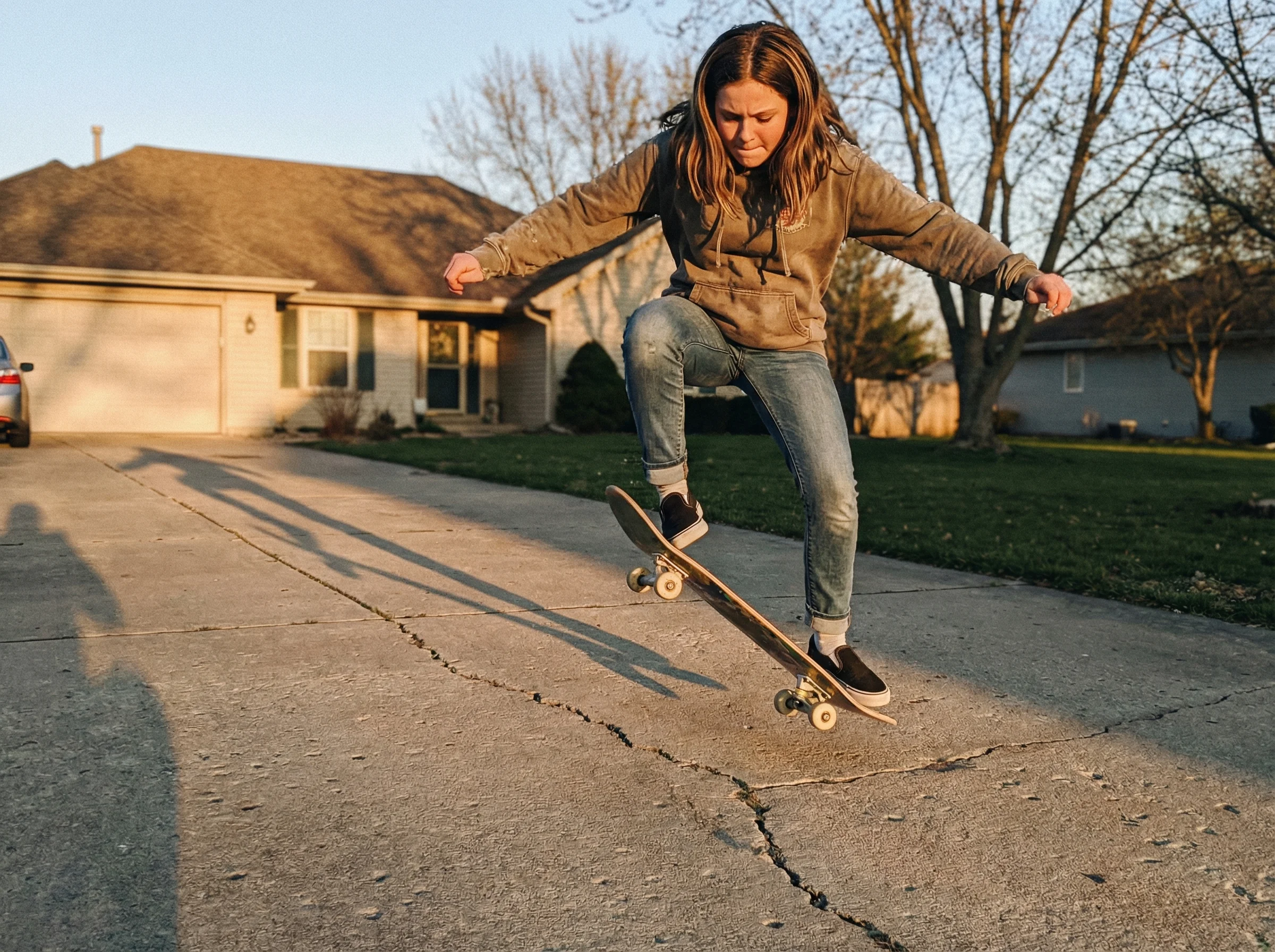
She picked up her board. "I didn't pop the tail hard enough."
Twenty minutes later, she landed her first ollie. Not because I taught her perseverance, but because I helped her recognize she already knew how to learn from failure. She just needed to apply her respawn mentality to skateboarding.
In games, failure teaches you the boss's attack pattern. In life, failure teaches you what doesn't work. Same principle. Different graphics.
 The attempt that finally workedPause, Play, Connect: Core Deck172 prompts that get a kid describing the thing they failed at fifty times before it worked.$49 CAD • 90 cards • 18 reviewsShop the deck
The Progress Bar Principle: Small Gains Are Still Gains
Every game has them. XP bars. Level indicators. Achievement percentages. That little dopamine hit when the bar moves even slightly forward. Games make progress visible, celebrating every small win along the way.
Real life? Not so much. Piano practice doesn't come with a progress bar. Neither does learning multiplication tables or getting better at basketball.
So we made our own.
I created a "real-life XP system" for my son's piano practice. Every time he practiced a piece, he got XP. Nail a tricky passage? Bonus XP. Play for his sister? Double XP. We tracked it on a chart by the piano, complete with "level ups" at certain milestones.
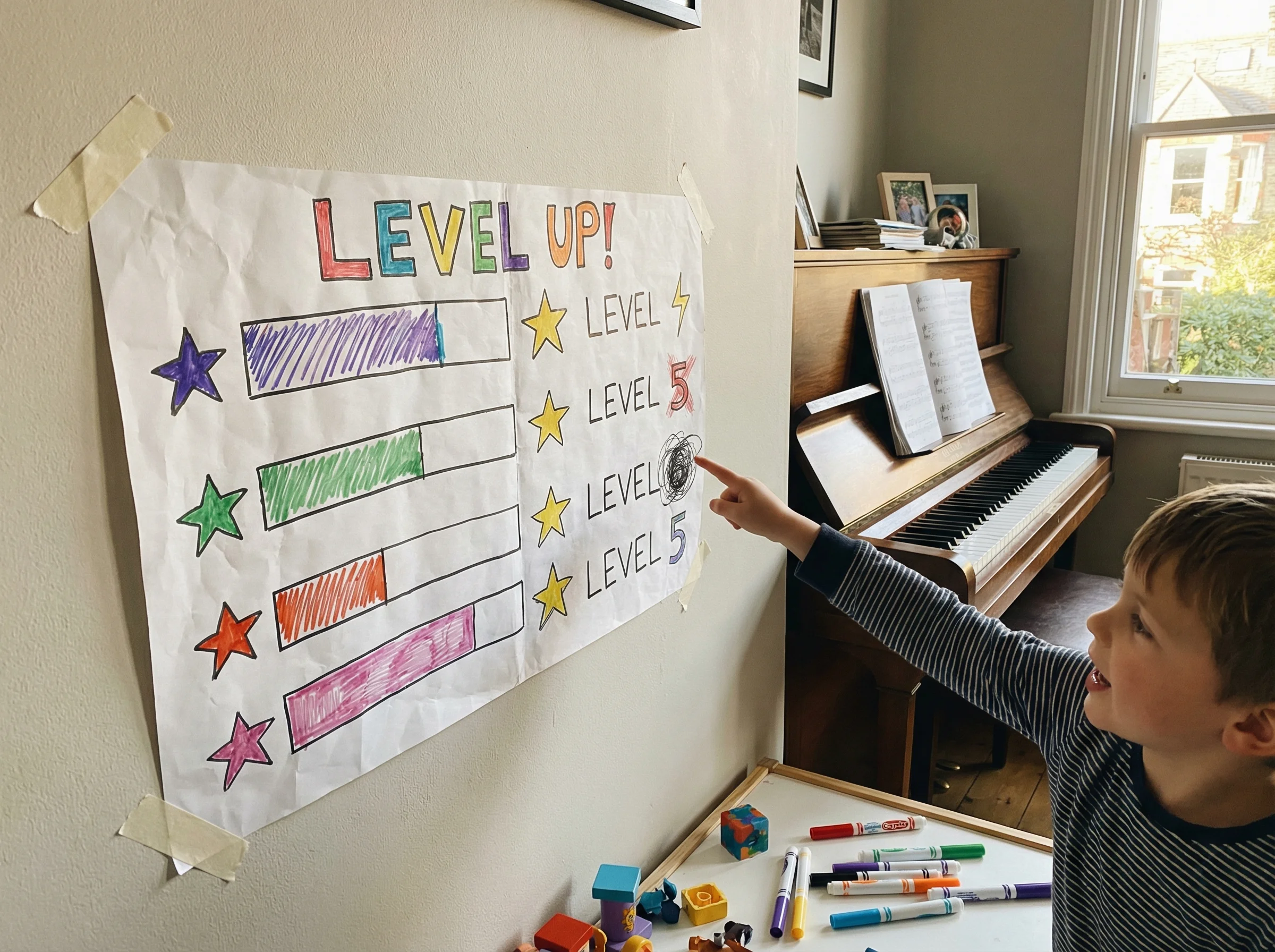
Same kid who complained about piano for months suddenly started practicing daily. Nothing changed except making his progress visible. He could see himself getting closer to "Level 10 Piano Master" with every session.
"Dad, I'm only 30 XP from level 8!"
That's the same excitement he shows grinding levels in Pokemon. Because the principle is the same: when you can see progress, perseverance becomes automatic.
The Loadout Principle: Different Challenges Need Different Tools
Ask any gamer about fighting different bosses and they'll tell you about switching strategies. Fire boss? Bring ice weapons. Flying enemy? Equip ranged attacks. Tank boss? Focus on dodging, not blocking.
Kids intuitively understand that different challenges require different approaches. In games.
My son was struggling with his science fair project. Traditional research methods were boring him to tears. Then I asked, "How would you approach this if it were a Minecraft challenge?"
His eyes lit up. "I'd probably build a model first to see if my idea even works."
"So do that."
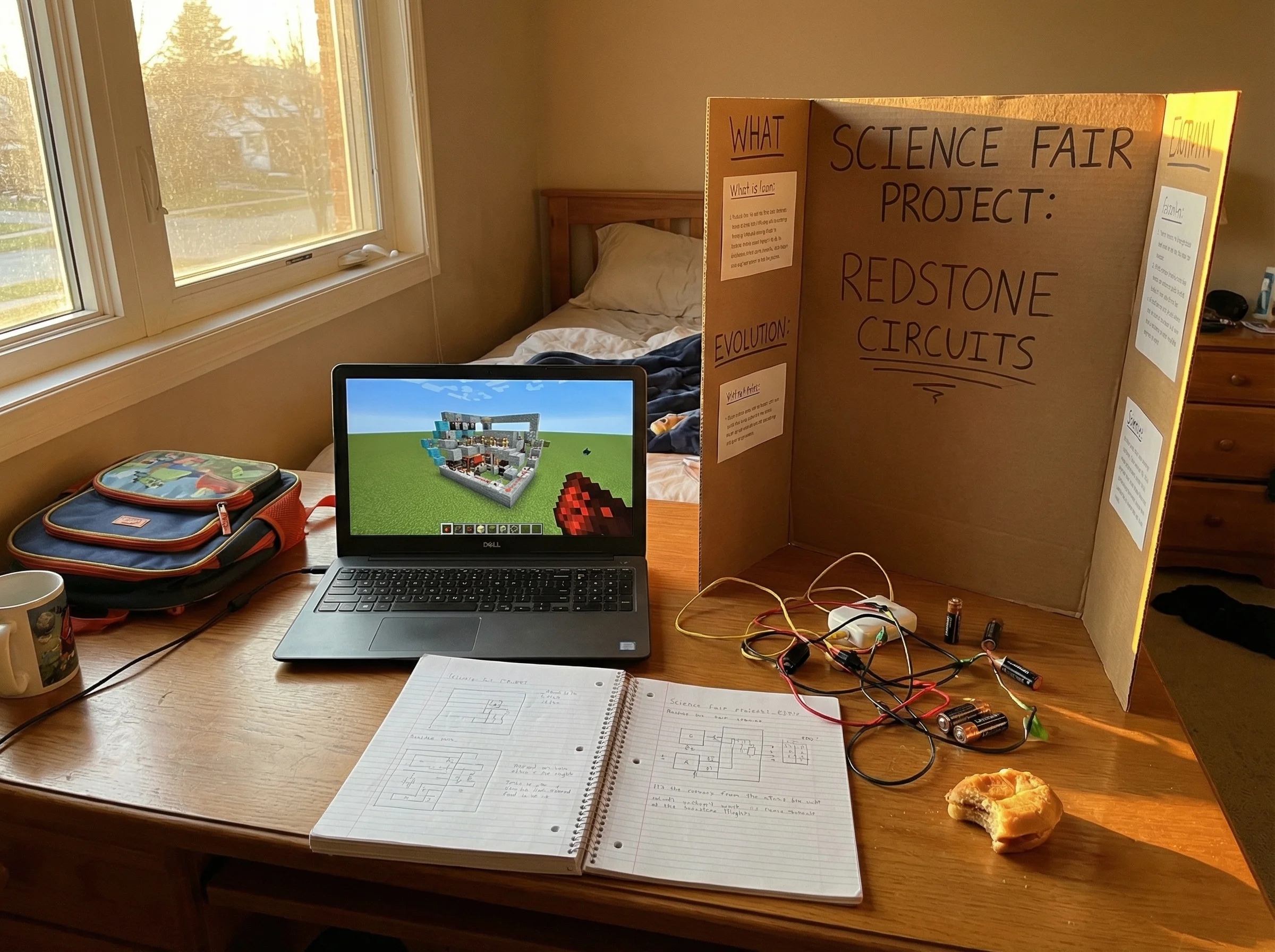
He spent the next three days building a working model of his hypothesis in Minecraft, testing variables by changing redstone configurations. When it came time to write up his findings, he had genuine data from his "virtual prototype." He won second place.
Same project. Different loadout. He didn't need more perseverance. He needed permission to use his Minecraft problem-solving build instead of his traditional homework build.
The Squad Principle: Perseverance Isn't Always Solo
Here's something adults forget: Some of the hardest gaming achievements require a team. Raid bosses. Ranked team matches. Co-op campaigns. Games teach kids when to grind solo and when to call for backup.
My kids were teaching each other skateboard tricks in the driveway last week. My older son had been trying to land a kickflip for days. His sister, who'd learned recently, became his coach.
"Remember in Overwatch when you taught me how to play Genji?" she said. "You made me practice the dash-reset combo like fifty times. This is the same thing."
She broke down the kickflip into steps, the same way he'd broken down complex game mechanics for her. Patient. Specific. No judgment when he failed.
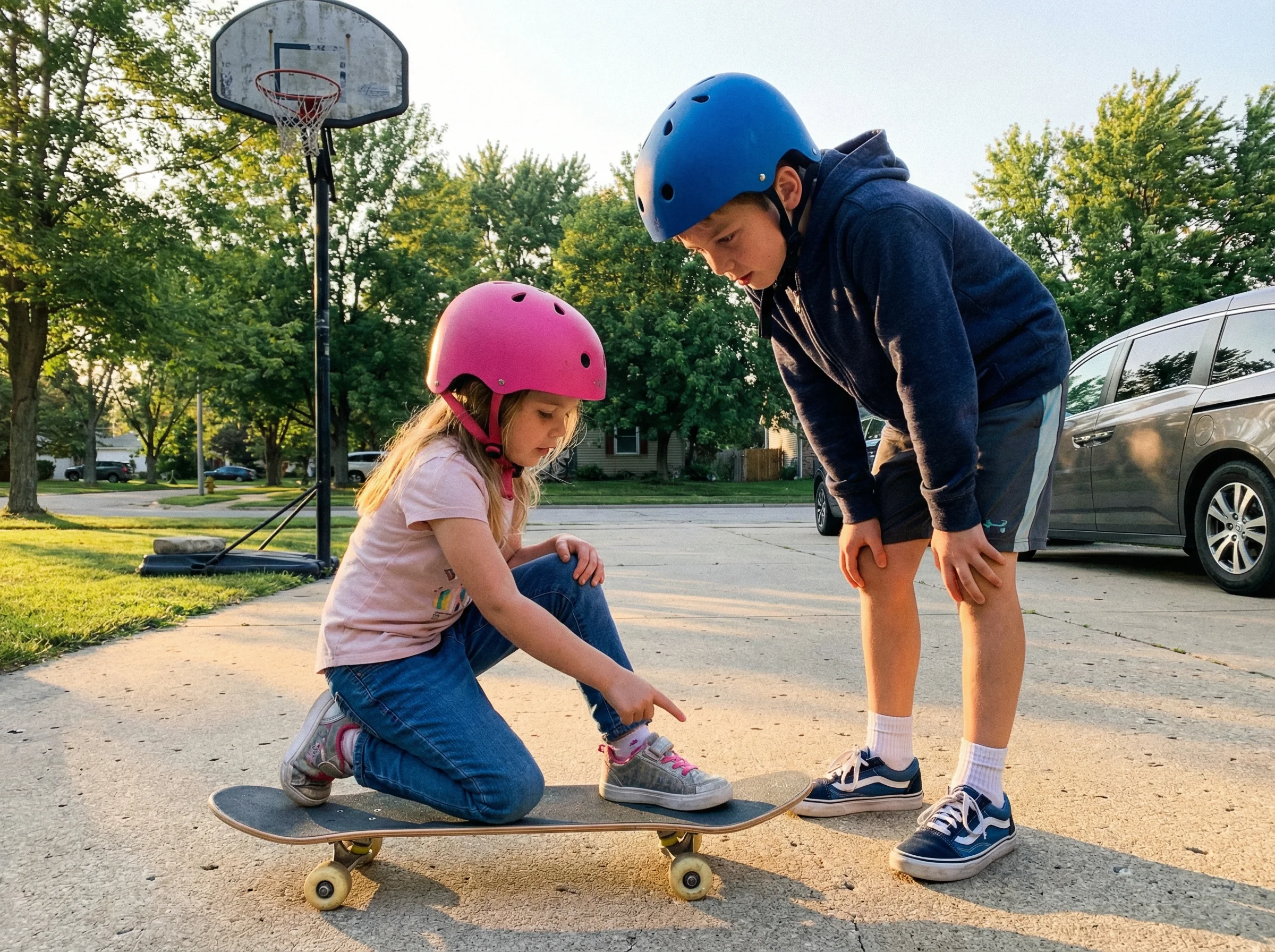
That's when I realized they'd learned collaborative perseverance from years of online co-op. They knew how to be both student and teacher, how to encourage without babying, how to push without being pushy.
Sometimes perseverance means knowing when to ask your squad for help.
For the Hard Moment: A curiosity card lands during the in-between beats. Have a Pause, Play, Connect card in hand so a prompt is waiting when you sit down together.
The Translation Problem: Why Kids Don't Apply Gaming Perseverance to Life
For the Long Build: Connection grows from many small low-pressure conversations. A deck of conversation cards for families with gamer kids on the table makes those talks routine.
Here's the conversation that changed everything in our house.
"You just spent two hours learning that combo move in Street Fighter," I told my son after another homework meltdown. "That's literally what math homework is. Learning combos."
He looked at me like I'd spoken in code. "That's... different."
"How?"
He struggled to explain. "In Street Fighter, I can see exactly what I did wrong. The timing bar shows me if I'm too early or too late. And when I get it right, I know immediately because the move works."
That's when it clicked. Games provide instant, clear feedback. Life usually doesn't.
Math homework doesn't tell you immediately if your process is right. Piano practice doesn't show a combo counter. Soccer drills don't have a replay feature to analyze your footwork.
The perseverance is there. The feedback systems aren't.
 What kept them goingPause, Play, Connect: Core Deck$49 CAD • 172 promptsSee the deck
Building Bridges: Practical Ways to Transfer Gaming Perseverance
Since that conversation, we've started explicitly connecting gaming perseverance to other areas. Here's what actually works:
Use gaming language for real-world challenges. Instead of "practice your multiplication tables," try "let's grind some math XP." Instead of "keep trying," say "ready to respawn?"
Create achievement systems for non-gaming goals. My daughter has a "skateboarding achievement list" modeled after Tony Hawk's Pro Skater challenges. Ollie over a stick? Achievement unlocked. Land five kickflips in a row? Rare achievement.
Have kids explain their gaming strategies. At dinner, we ask: "What's the hardest thing you accomplished in a game today, and how did you do it?" Then later: "How could you use that same strategy for your book report?"

Make failure analysis a habit. "What did you learn from that attempt?" works for both failed boss fights and failed math problems. The skill transfers when you make the connection explicit.
We created Yakety Pack after realizing kids want to share their gaming wisdom, they just need questions that unlock those conversations. One card asks "What's the hardest thing you've ever accomplished in a game?" The stories that come out help everyone recognize the perseverance already there.
When Gaming Perseverance Goes Too Far
Let's be real. Sometimes kids need to learn when NOT to persevere. My son once spent six hours trying to beat an optional boss that gave terrible rewards. Six hours.
"Why didn't you just skip it?" I asked.
"I wanted to beat it," he said, exhausted and frustrated.
That's when we talked about "main quest vs side quest" thinking. In games and life, some challenges are worth the grind. Others aren't.
Now when he's stuck on something, we ask: "Is this a main quest or a side quest?" If it's homework, that's main quest, worth persevering. If it's perfecting his handwriting when the content is what matters? Maybe that's a side quest he can skip.
Games teach perseverance, but the best games also teach strategic quitting. Not every boss needs to be beaten. Not every achievement needs to be unlocked. And that's a life lesson too.
Your Kids Already Have What It Takes
Stop trying to teach your kids perseverance. Start recognizing the perseverance they show every day in their digital worlds. The kid grinding Fortnite builds for hours has incredible work ethic. The one memorizing every Pokemon type advantage has amazing dedication. The one rebuilding their Minecraft world after a disaster has resilience most adults lack.
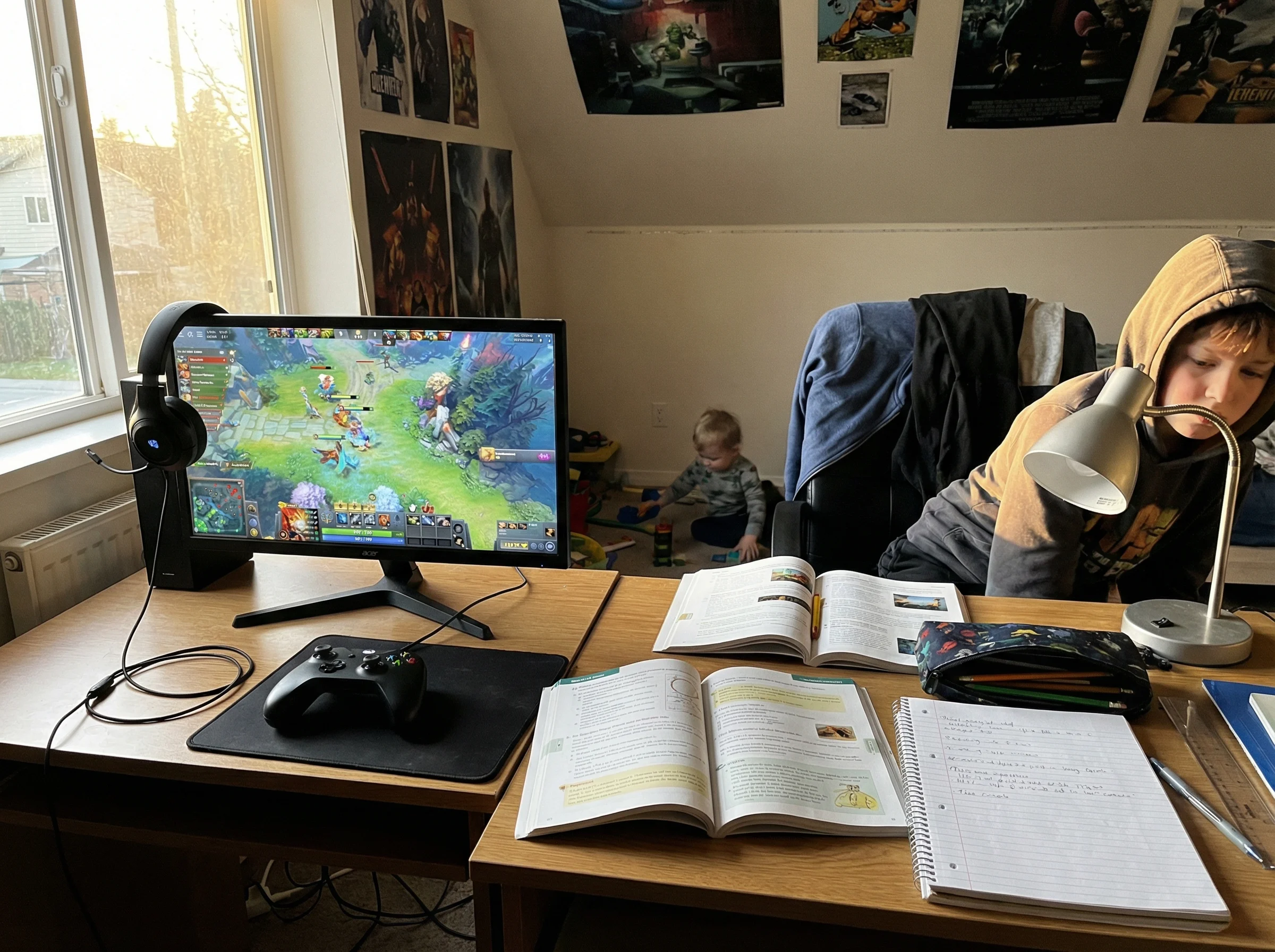
They don't need lectures about sticking with things. They need translation help. They need us to connect their gaming perseverance to the rest of their life. They need to hear that their respawn mentality, their progress tracking instincts, their loadout flexibility, and their squad coordination are exactly the skills they need for school, sports, and life.
Next family dinner, try this Yakety Pack-inspired question: "If your life was a game, what achievement did you unlock today?" You might be surprised how naturally kids connect their gaming perseverance to real life when you speak their language.
Because here's what I learned watching my son beat that Hollow Knight boss after three hours: The perseverance was never missing. I just wasn't looking in the right place.
For the Repeat Sessions: A deck of Yakety Pack conversation cards near the gaming setup keeps the post-game ritual going.
The long slog they chosePause, Play, Connect: Core Deck172 prompts that open up an evening of hearing what your kid stuck with and why.$49 CAD • 90 cards • 18 reviewsShop the deck
Related Articles
Looking for more? Check out these related articles:

