
My son asked me for $20 last month. Not for lunch, not for a book. For V-Bucks.
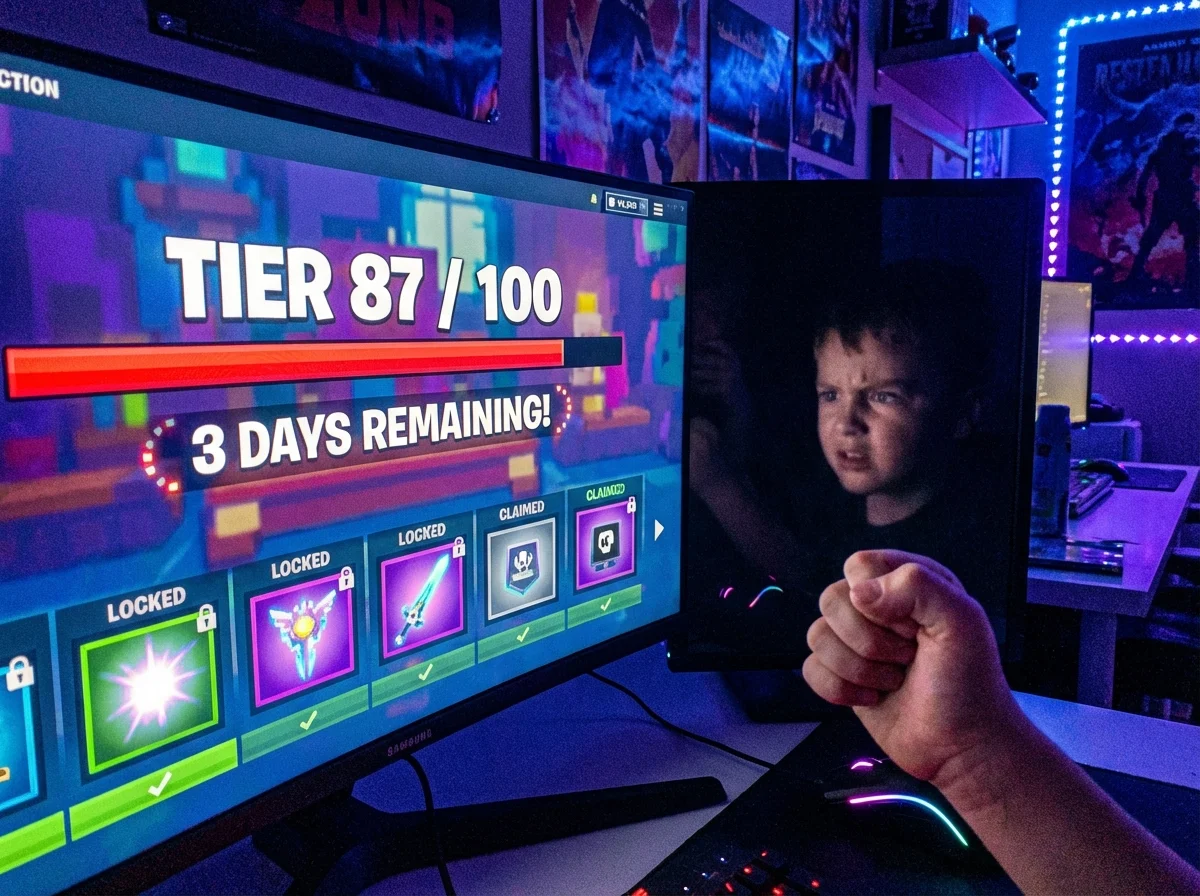
I said "for what?" and he looked at me like I'd asked what the internet was. "Dad. The battle pass is about to expire and I'm only at tier 87. I need to finish it."
I had no idea what any of that meant. But I could feel the urgency in his voice, and I could see the frustration when I hesitated. To him, this wasn't a frivolous purchase. It was something he'd invested weeks into, and the clock was running out.
That moment made me realize I was making financial decisions about a system I didn't understand. I was either saying yes out of guilt or no out of confusion, and neither response was helping my kid learn anything about money. So I started learning how these systems actually work.
If you've ever felt manipulated by your kid's game asking for money, or confused about why a "free" game somehow costs $40 a month, this is the guide I wish I'd had. It's part of our bigger series on understanding gaming culture as a parent, and honestly, understanding the money part might be the most practical thing you can do.
Why "Free" Games Cost So Much
For the bigger frame, see our pillar piece on turn screen time into connection time.
Here's the first thing that confused me: most of the games kids play today are free. Fortnite, Roblox, Apex Legends, Genshin Impact - you don't pay a cent to download and play them. So where does the money go?
The answer is the free-to-play model, and it's the dominant business strategy in gaming right now. Instead of charging $60 upfront, these games give you the core experience for free, then sell cosmetic items, battle passes, and premium currencies inside the game.
This isn't inherently evil. Game developers need revenue, and many parents prefer paying $10 here and there over dropping $70 on a game their kid might abandon in a week. The problem is that these systems are designed by behavioral psychologists to encourage spending, and kids are the most susceptible audience.
Understanding the mechanics doesn't mean you have to ban spending. It means you can make informed decisions instead of reactive ones.
 Before you say yesPause, Play, Connect: Core Deck172 prompts that turn a spending request into a calm talk about what the purchase is worth.$49 CAD • 90 cards • 18 reviewsShop the deck
The Three Monetization Systems Every Parent Should Understand
1. Premium Currencies (V-Bucks, Robux, and Why Real Money Feels Fake)
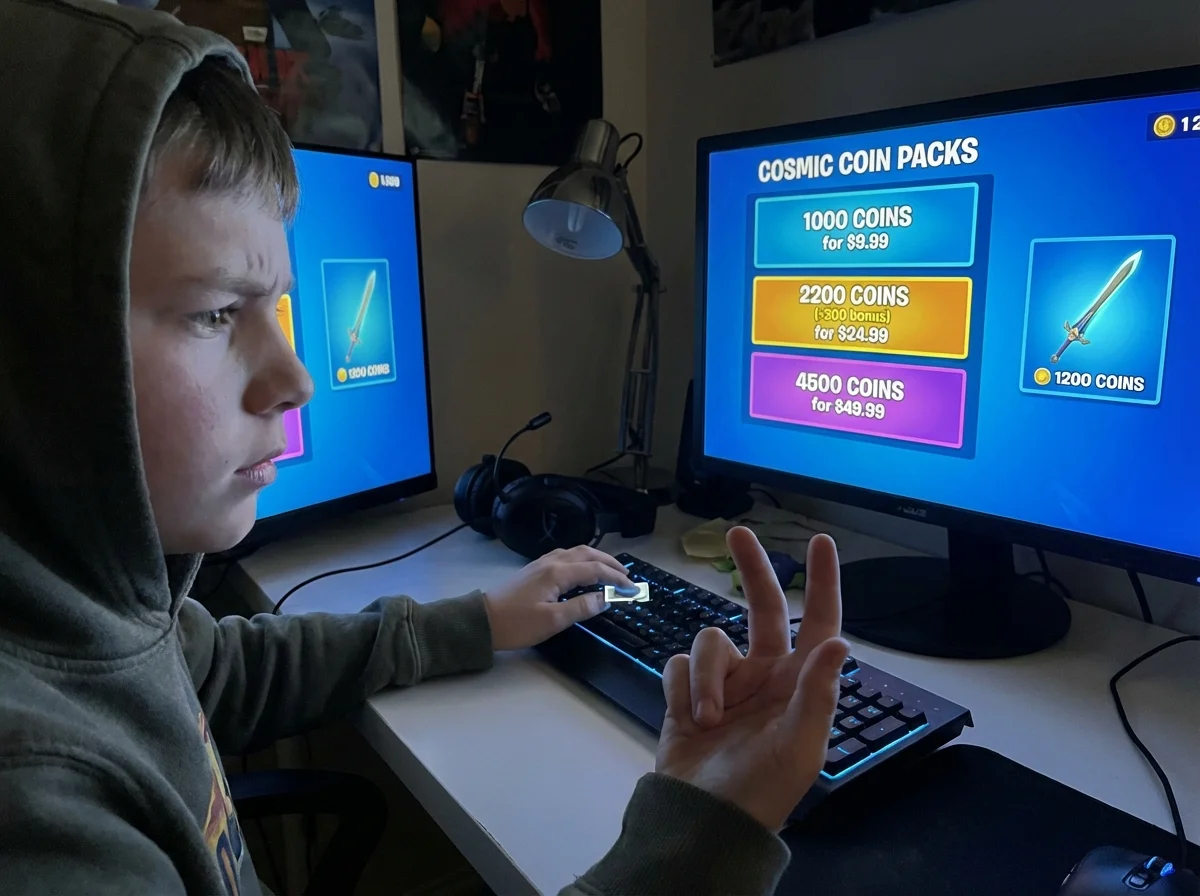
Almost every free-to-play game uses a premium currency. In Fortnite, it's V-Bucks. In Roblox, it's Robux. In Apex Legends, it's Apex Coins. The concept is the same everywhere: you spend real money to buy fake money, then spend the fake money inside the game.
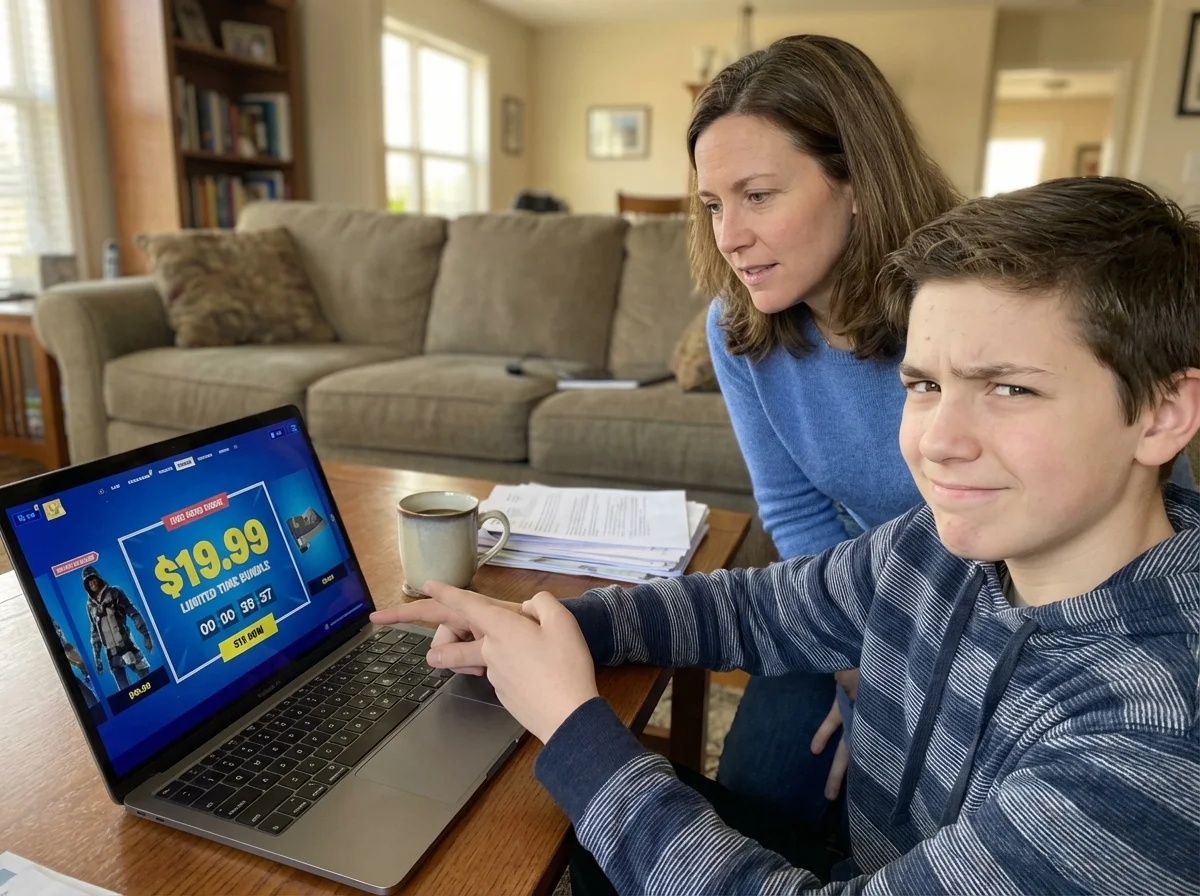
Why not just charge real dollars? Because premium currencies create psychological distance from real spending. When your kid buys a skin for 1,200 V-Bucks, it doesn't feel like spending $12. The conversion math is deliberately awkward - 1,000 V-Bucks costs $7.99, but the skin costs 1,200, so you need to buy the $13.49 pack. Now you have leftover V-Bucks that aren't enough for anything good, which nudges you toward buying more.
This is called price obscuring, and it's the oldest trick in the playbook. Casinos do the same thing with chips. When the currency doesn't look like money, the brain processes it differently.
What your kid sees: Cool skins and fun items. What the system does: Disconnects spending from the feeling of spending real money.
2. Loot Boxes (Gambling Mechanics with a Friendly Face)
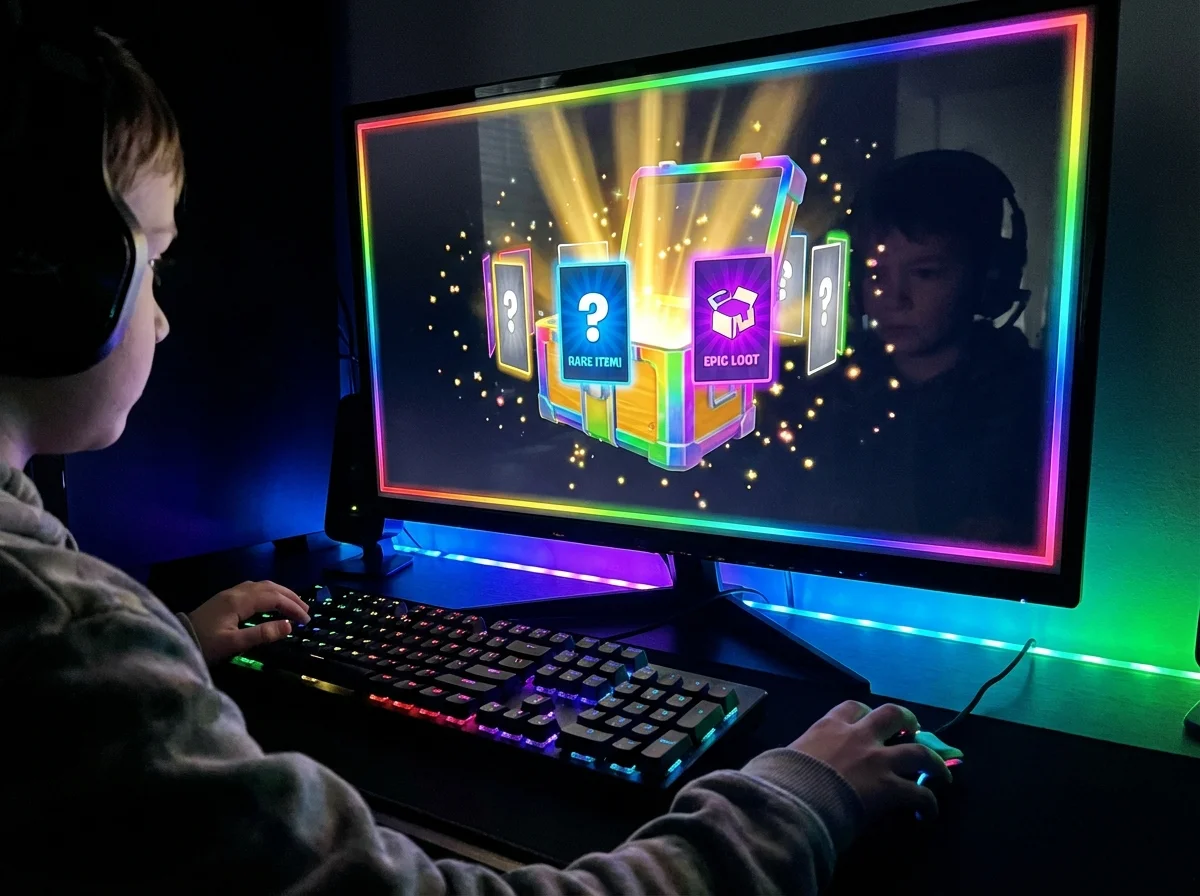
Loot boxes are randomized purchases. You pay a set price and receive a random selection of items. You might get something incredible or something worthless. You don't know until you open it.
Sound familiar? It should. It's the same psychological mechanism behind slot machines and scratch-off tickets. The variable reward - not knowing what you'll get - triggers dopamine in ways that fixed purchases don't. Your brain gets excited by the possibility of something rare, which makes you want to open another one. And another.
Some games are more aggressive about this than others. Games like FIFA (now EA Sports FC) built entire modes around loot box mechanics, where building a competitive team practically requires spending real money on random player packs. Other games, like Overwatch 2, have moved away from loot boxes after massive backlash.
Several countries have actually banned or regulated loot boxes. Belgium and the Netherlands classified them as gambling. Australia and the UK have investigated them. In the US, regulation is still catching up, but the conversation is happening.
What to watch for:
- Games that sell randomized items for real money (or premium currency)
- "Pity timers" that guarantee a rare item after X purchases (still encouraging bulk spending)
- Limited-time loot boxes that create urgency
The key question for your kid: "Do you know what you're getting before you buy it?" If the answer is no, it's a loot box, even if the game doesn't call it one.
3. Battle Passes (The One That Gets Everyone)
Battle passes are the monetization system I see the most confusion about from parents, and ironically, they're the least predatory option - which is exactly why they're so effective.
Here's how they work: You buy a battle pass (usually $8-$12) at the start of a game's season, which lasts about 2-3 months. The pass gives you access to a track of rewards - skins, emotes, loading screens, premium currency - that you unlock by playing the game and completing challenges. The more you play, the more you unlock.
Sounds reasonable, right? And it mostly is. You know what you're getting. There's no randomness. You're paying for content that you earn through gameplay. Many battle passes even give you enough premium currency to buy the next battle pass, so a single $10 purchase can theoretically last forever.
So what's the catch?
FOMO and sunk cost. Battle passes expire. When the season ends, anything you didn't unlock is gone forever. This creates two powerful psychological pressures: fear of missing out on exclusive items, and the sunk cost of feeling like you've "wasted" the money if you don't finish. That's why my son was panicking at tier 87. He'd paid for the pass, played for weeks, and was about to lose the final rewards.
Time pressure leads to spending. Most battle passes let you buy tier levels with premium currency if you're running out of time. So the pass that cost $10 can quietly become $10 plus another $20 to buy the last 15 tiers. The system creates the problem (time pressure) and sells you the solution (buying levels).
Daily login mechanics. Battle passes reward daily play with bonus XP and challenges. Missing a few days means falling behind, which means more pressure to buy levels later. This is why your kid "has to" play every single day during a season.
Despite all this, battle passes are genuinely the most consumer-friendly monetization system in gaming. Compared to loot boxes, they're transparent. Compared to direct skin purchases at $15-$20 each, they're a better deal. The issue isn't that battle passes are a scam - it's that the time pressure mechanics specifically target kids' fear of missing out.
Red Flags: When Monetization Crosses a Line
Not all in-game spending is created equal. Here's how to tell the difference between reasonable monetization and predatory design:
Cosmetic-only purchases (lower concern). If the game only sells things that look cool but don't affect gameplay - skins, emotes, sprays - you're dealing with social pressure, not competitive pressure. Fortnite does this well. No amount of spending makes you better at the game.
Pay-to-win mechanics (high concern). If spending real money gives players competitive advantages - better weapons, stronger characters, faster progression - the game is designed to frustrate free players into paying. Mobile games are the worst offenders here. If your kid says "I can't beat anyone without buying X," that's a pay-to-win design.
Aggressive notifications and pop-ups (concern). Games that constantly show you what you could buy, or remind you that a sale is ending, are using urgency tactics. If the game feels more like a shopping app than a game, that's by design.
Targeting whales. The gaming industry term for high-spending players is "whales." Many free-to-play games are designed so that 90% of players pay nothing, while the top 5-10% spend hundreds or thousands. If your kid is spending significantly more than the average, the system is working as intended - on them.
For the Money Talk: A curiosity card lands better than a no. Keep the Pause, Play, Connect deck within reach so a prompt is right there when the V-Bucks ask comes.
Setting Smart Boundaries (That Actually Work)
For the Long Build: Financial talks grow from many small low-pressure conversations. A deck of conversation cards for families with gamer kids on the table makes those talks routine.
Here's what I've found works better than either "yes to everything" or "no spending ever":
The Monthly Gaming Budget
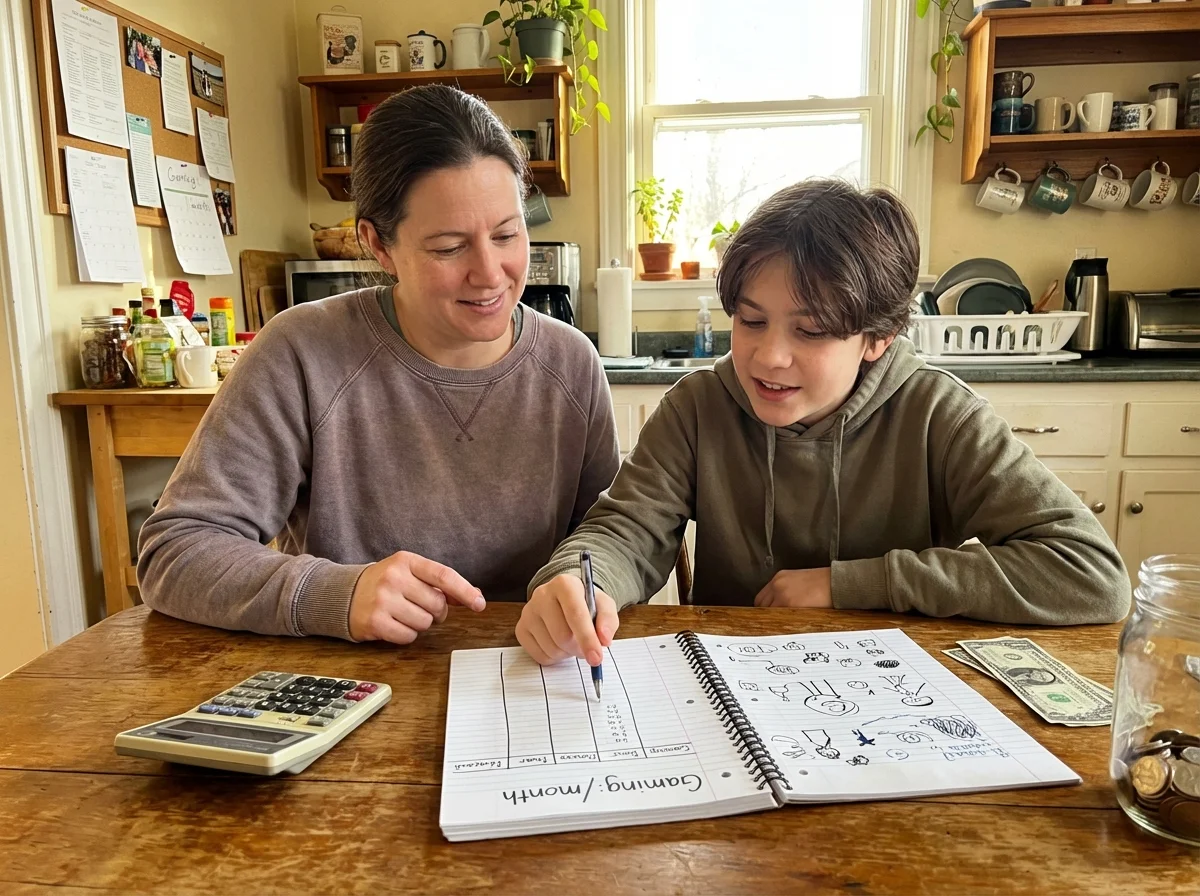
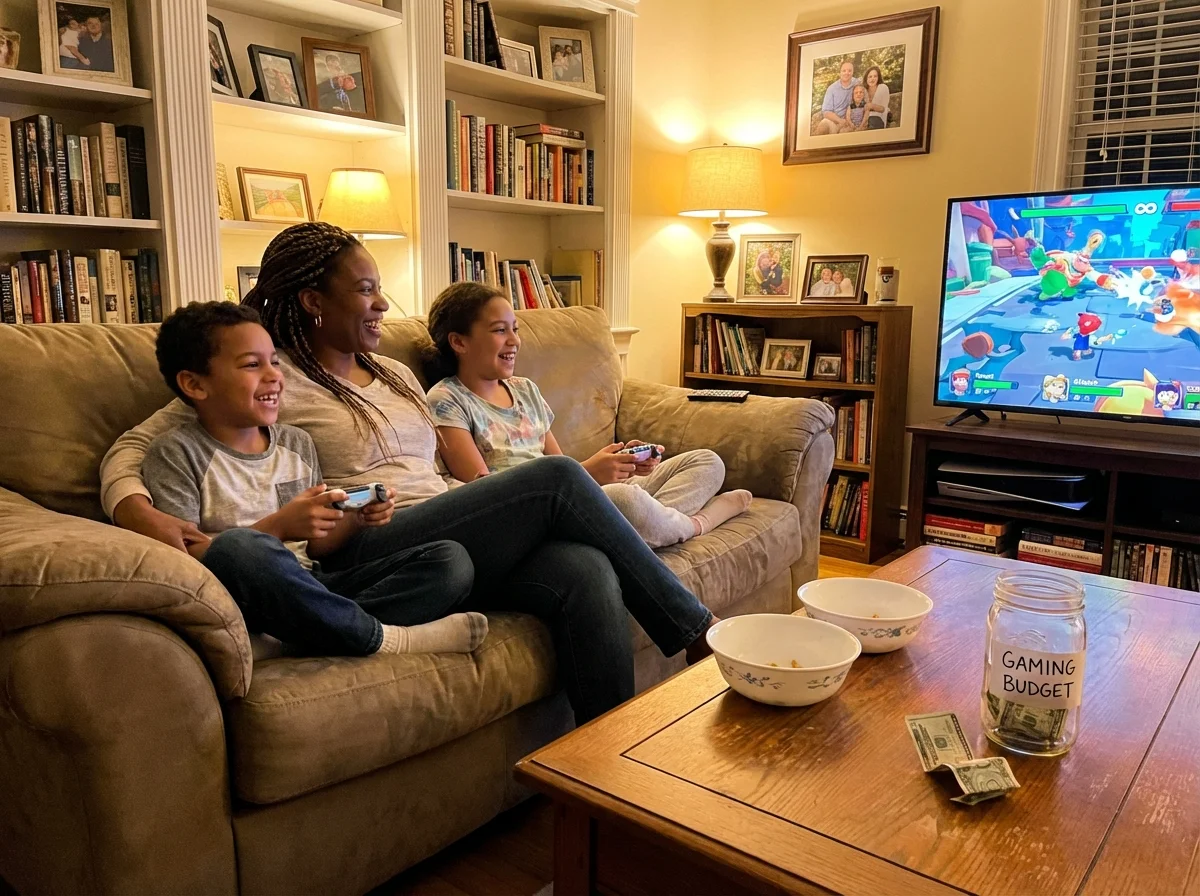
Give your kid a fixed monthly amount for gaming - maybe $10-$15. They decide how to spend it. Battle pass this month? Cool, but that means no individual skins. Want that $20 skin? Save for two months. This teaches budgeting with real stakes but low consequences.
The key: don't bail them out. If they blow their budget on day one, they wait until next month. The lesson only sticks if the boundary holds.
The Earn-It System
Tie gaming spending to something tangible. Extra chores, good grades, saving allowance - whatever works for your family. The point isn't to make gaming feel like punishment. It's to connect digital spending to real effort, which counteracts the psychological distance that premium currencies create.
 While the purchase waitsPause, Play, Connect: Core Deck$49 CAD • 172 promptsSee the deck
The Cooling-Off Rule
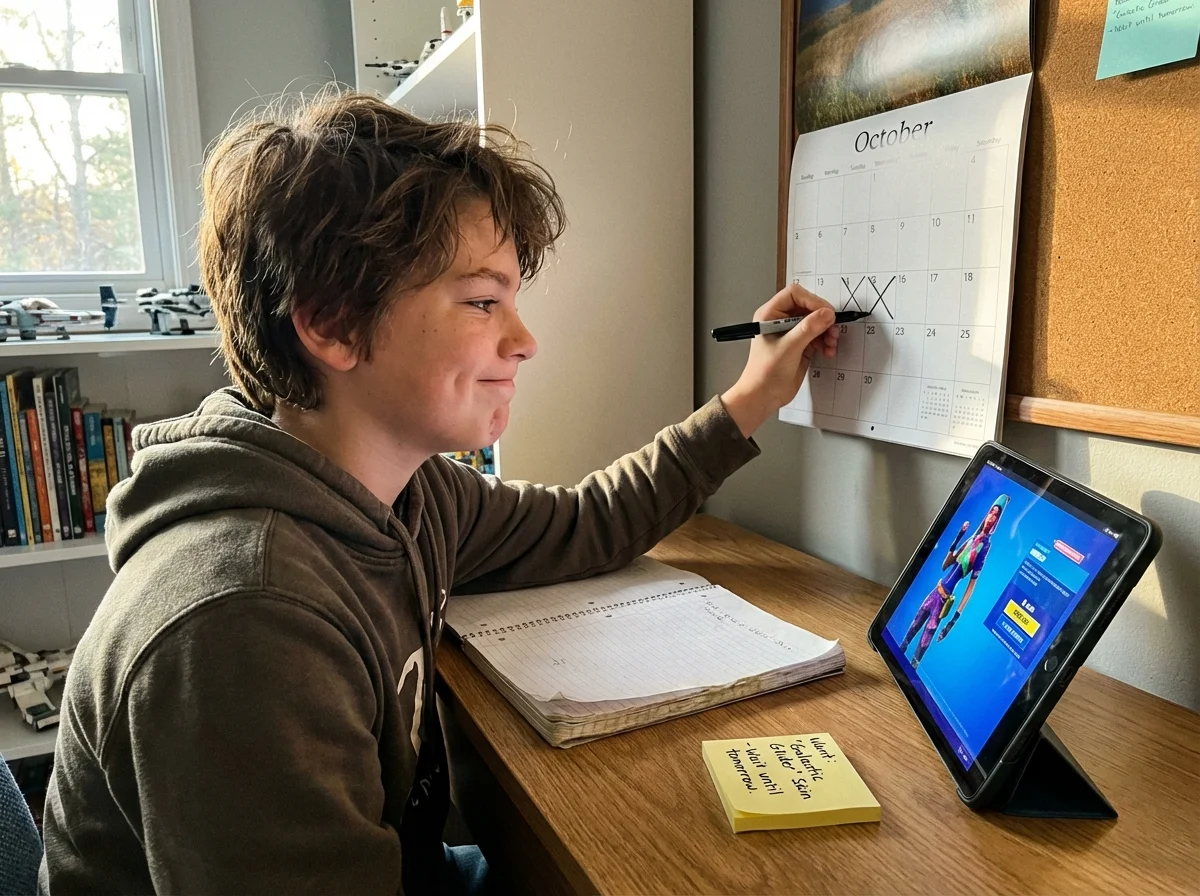
Require a 24-hour wait before any purchase over $5. If your kid still wants it tomorrow, it's probably a real desire. If they've forgotten about it, the urgency was artificial. This single rule has saved us more money than anything else.
Talk About the Design
The most powerful thing you can do is teach your kid how these systems work. Not in a lecturing way - in a curious way. "Hey, why do you think they made the currency amounts not line up with the skin prices?" or "Do you notice you feel more pressure to buy stuff when the season's about to end?"
Kids are smarter than we give them credit for. Once they see the mechanics, they can't unsee them. My son now points out predatory monetization to me. "Dad, this game is so pay-to-win, it's ridiculous." That awareness is worth more than any spending rule.
What This Means for Different Games
Here's a quick breakdown of how monetization works in the games your kid probably plays:
Fortnite - Battle pass ($8-$12/season) plus item shop with rotating skins ($5-$20). Cosmetic only. One of the more fair models, though the FOMO mechanics are strong. If you want to understand V-Bucks specifically, our Fortnite conversation guide covers the social side.
Roblox - Robux currency used across millions of user-created games. Quality varies wildly - some games are fair, others are aggressively pay-to-win. The bigger concern is that Roblox's own economy lets kids create and sell items, which introduces real money-making dynamics.
Apex Legends - Battle pass plus loot boxes (called Apex Packs). The loot boxes here are particularly controversial because rare "heirloom" items have roughly a 1-in-500 chance. Getting one without spending hundreds is almost impossible.
FIFA / EA Sports FC - Ultimate Team mode is the textbook example of predatory loot boxes in gaming. Building a competitive team without spending money is technically possible but practically designed to be frustrating enough that you open your wallet.
Genshin Impact - Uses a "gacha" system (Japanese term for capsule-toy machines) where you spend premium currency for a random chance at powerful characters. Pity system guarantees a rare character after 90 pulls, which costs roughly $150-$200.
Minecraft - One-time purchase. No battle pass, no loot boxes, no premium currency in the core game. The Marketplace sells community-created content, but it's entirely optional. If you're looking for a monetization-free experience, Minecraft is as close as it gets.
The Financial Literacy Opportunity
Here's what changed my perspective: gaming monetization is actually an incredible tool for teaching kids about money. Where else can a 10-year-old experience budgeting, opportunity cost, buyer's remorse, and marketing psychology in a low-stakes environment?
When my son spent his entire monthly budget on a skin he stopped caring about two days later, that was a $10 lesson in impulse buying. When he saved for three months to get something he really wanted, that was delayed gratification in action. When he recognized a limited-time offer as manufactured urgency, that was critical thinking about advertising.
These are real skills that transfer directly to adult financial decisions. The kid who learns to spot predatory monetization at age 12 is better prepared for credit card offers at 18.
Don't just set rules. Have conversations. The goal isn't to protect your kid from ever spending money on games. It's to raise someone who understands why the "BUY NOW - LIMITED TIME" button exists and can decide for themselves whether to click it.
For the Repeat Sessions: A deck of Yakety Pack conversation cards near the gaming setup keeps the post-purchase chat going.
What to Do Next
Understanding monetization is one piece of the bigger puzzle. If you're trying to connect with your kid's gaming world, our gaming culture guide covers the full picture - from slang to skills your kid is actually learning to playing together.
And if Discord subscriptions (Nitro) have entered the conversation too, our Discord safety guide covers what that's about.
The money conversation doesn't have to be adversarial. When you understand what your kid is buying and why, you can stop being the person who says no and start being the person who helps them spend smart. That's a much better role to play.
After the battle pass endsPause, Play, Connect: Core Deck172 prompts that help a kid explain what they bought, and whether it was worth the money.$49 CAD • 90 cards • 18 reviewsShop the deck

