
My son walked in the door after school, dropped his bag on the floor, said "good day" in this flat little monotone, and headed straight for his room. If I'd only been listening to his words, I would've believed him. Words said: fine. Voice said: nothing to see here.
But his shoulders were practically touching his ears.
That's the 55-38-7 rule in action. And once I actually understood what it was (and what it wasn't), I stopped getting played by "I'm fine."
What Is the 55-38-7 Rule, Actually?
Back in 1967, a UCLA professor named Albert Mehrabian ran a study on how we communicate feelings. He came up with a breakdown that's been bouncing around the internet ever since:
- 55% body language
- 38% tone of voice
- 7% actual words
Here's the part everyone leaves out, and it's the most important part: Mehrabian was specifically talking about what happens when there's a mismatch between what someone says and how they say it. He wasn't claiming that words only carry 7% of meaning in every conversation. He was saying that when your kid's words don't match their face and tone, the body wins. Every time.
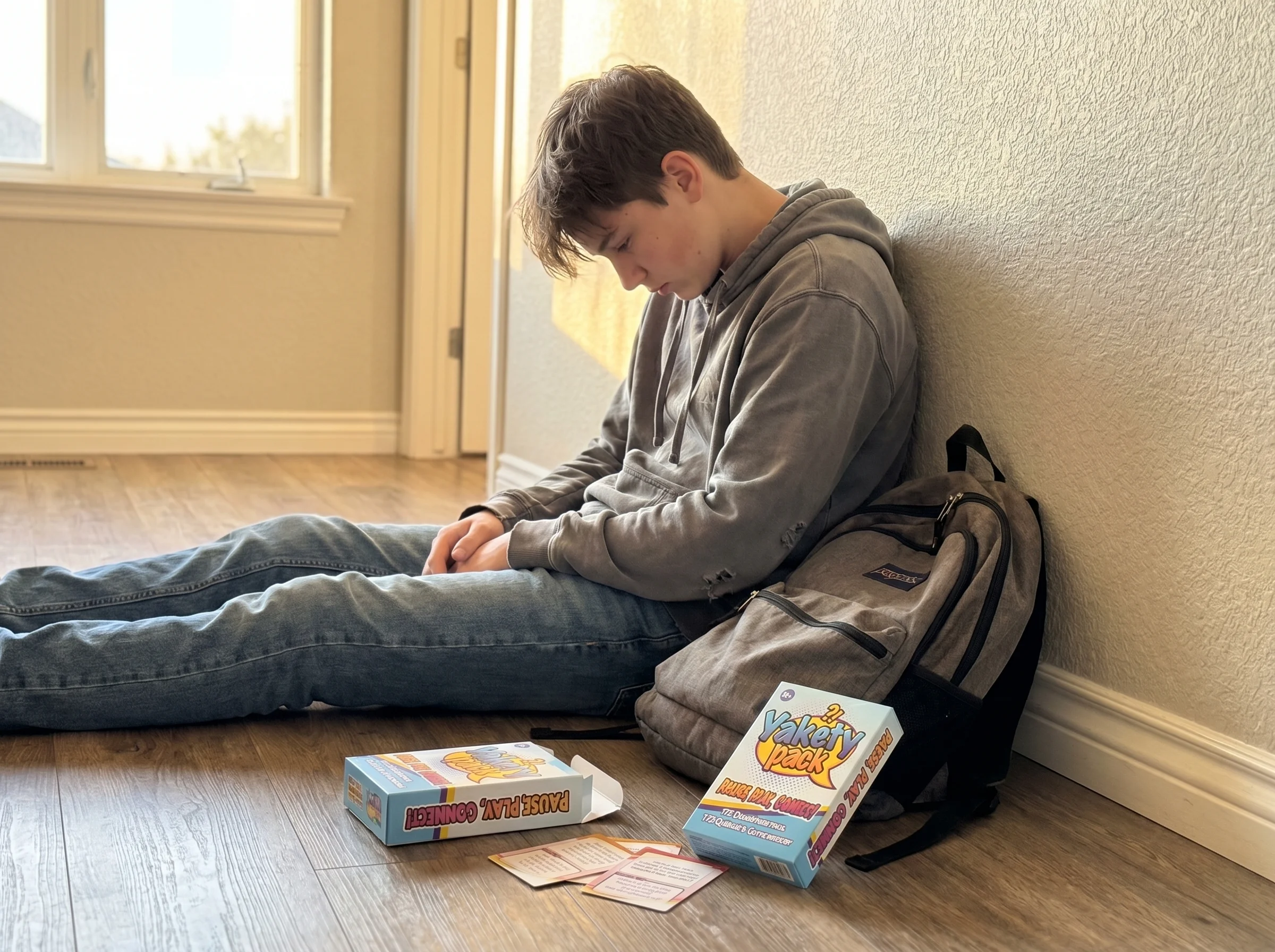
Most articles on this rule butcher that nuance. They turn it into a party trick for salespeople ("read anyone in five seconds!"). For parents, the real value isn't in reading strangers. It's in knowing that when your kid says "good day" in a dead voice with their shoulders up by their ears, you can stop pretending you believe them.
 Once you stop believing finePause, Play, Connect: Core Deck172 prompts that give you a specific question to ask once you notice the mismatch.$49 CAD • 90 cards • 18 reviewsShop the deck
Why the 55-38-7 Rule Hits Different for Parents of Gamer Kids
Here's where it gets weird, and where every other article on this topic falls flat.
Our kids have spent thousands of hours communicating in ways that strip away big chunks of the 55-38-7 equation. Voice chat? No body. Text chat? No body, no tone. They've developed a whole nonverbal vocabulary we didn't grow up with, and they've also gotten really, really good at masking the parts they don't want broadcast.
There's also something I call the gaming face. When my son is mid-match, his body is locked, his eyes are glued, his voice goes flat and clipped. The first time I watched him do this, I genuinely thought he was furious with me. I asked him later if everything was okay. He looked at me like I had three heads. He'd been winning. He was happy. He was just concentrating.
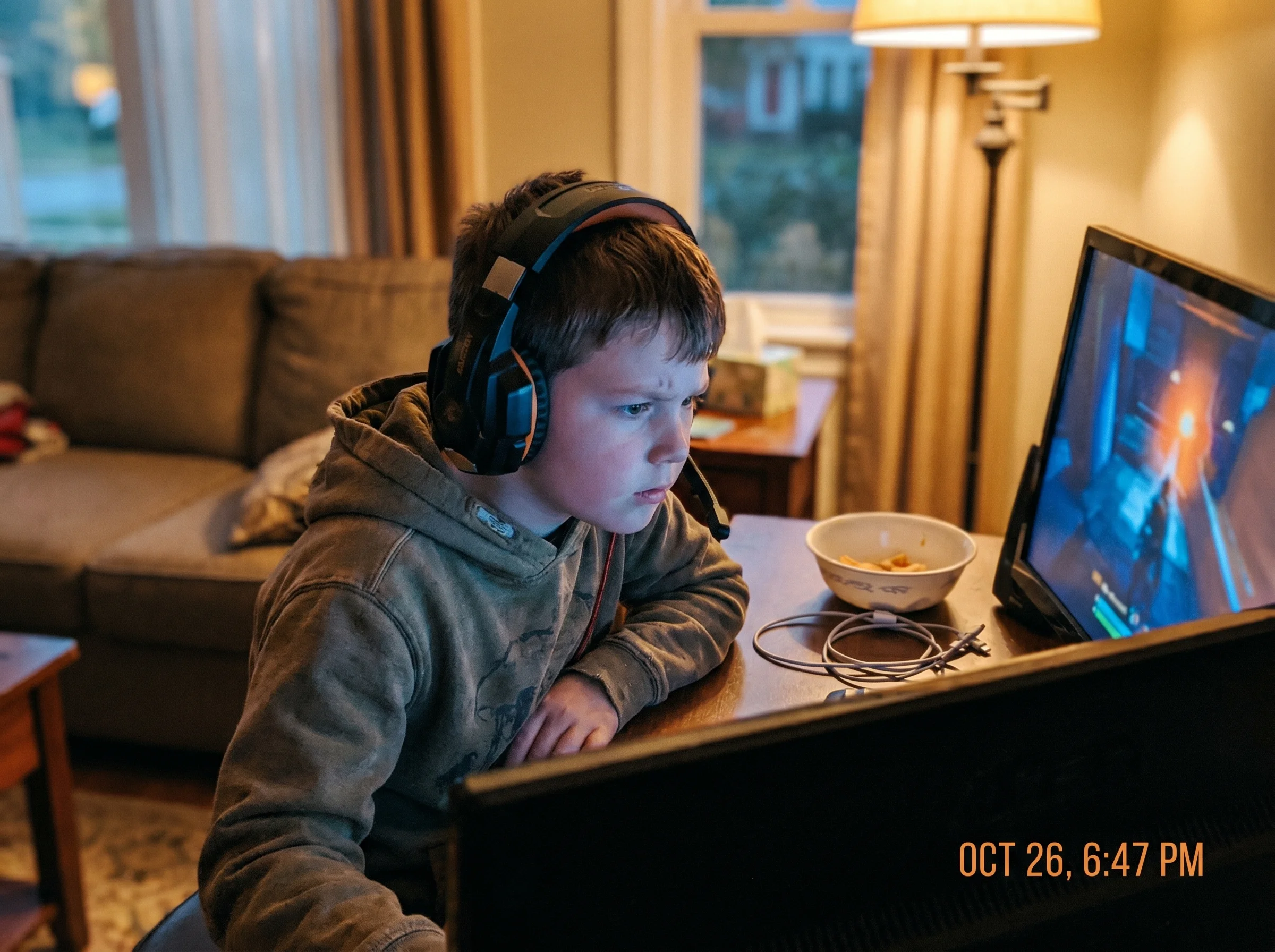
If you apply the 55-38-7 rule while your kid is actively gaming, you'll misread them every single time. Their nonverbals during play don't mean what they would mean in any other context. That's the first thing to understand.
The second thing? The second the headset comes off, every signal they've been suppressing for an hour comes flooding out. That's the window. That's the gold mine.
The 55%: Reading Body Language Post-Game
The 60 seconds after your kid takes off their headset is the most honest moment of their day. They're not putting anything on yet. They haven't reset their face. Whatever happened in there, their body is still wearing it.
Things I've learned to watch for:
- The slow walk out of the room. Bad news they're sitting on. Something happened and they don't know how to bring it up.
- The bouncing leg or the fast pace. Good news incoming. They want to tell someone, they just need a prompt.
- The fake stretch. When they stretch their arms over their head and exhale loudly, they're resetting. Something stressed them out and they're trying to shake it off before anyone notices.
- The shoulder slump. Took a loss, either in-game or socially.
- The head shake at the screen as they shut it down. Frustration they're trying to leave at the door.
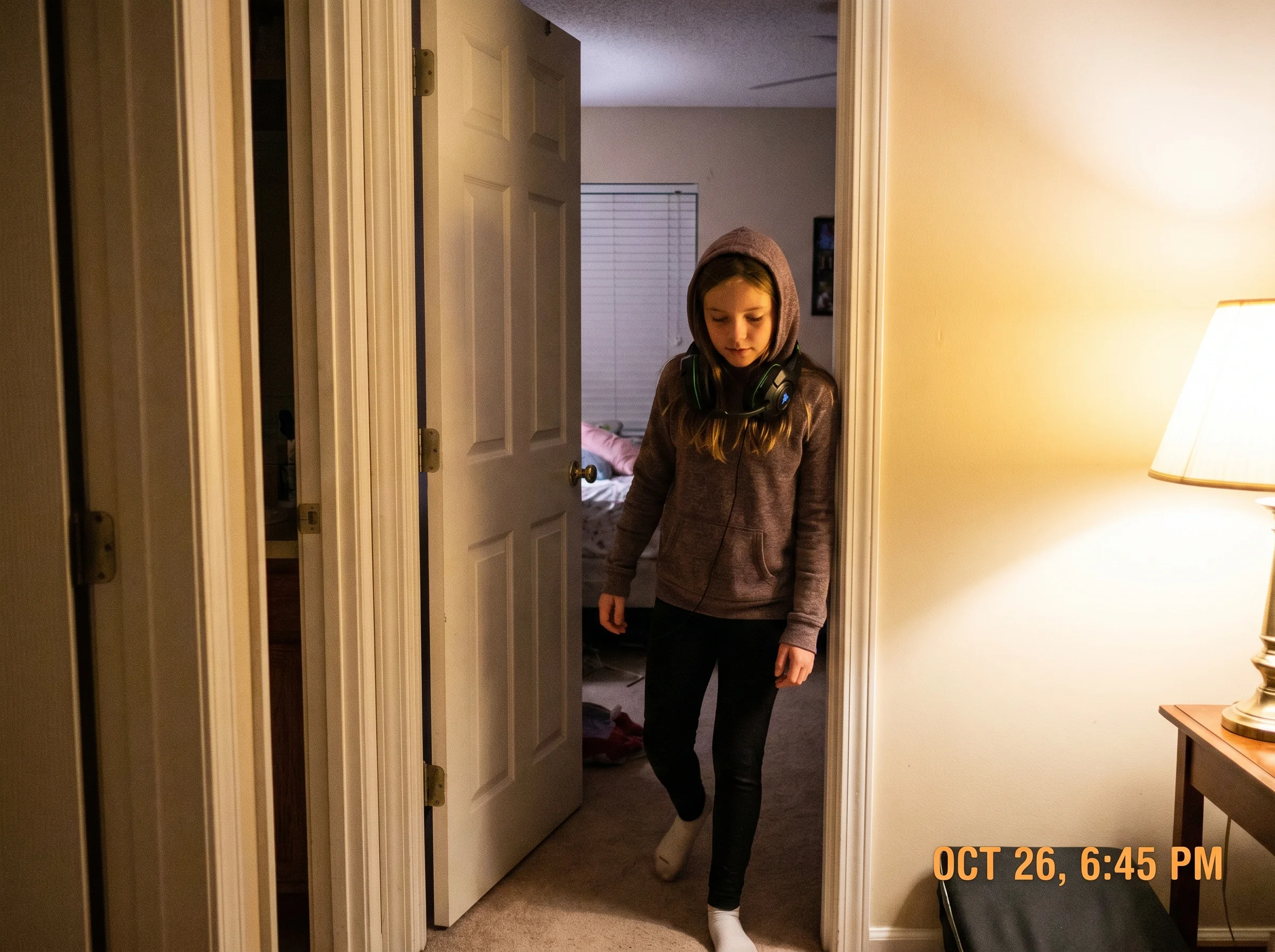
I caught my daughter mid-friend-drama once just by watching her walk out of a Roblox session. She wasn't crying. She wasn't pouting. She was just walking too carefully, like she was holding something. I didn't ask "what's wrong" (that question is a trap, more on that in a minute). I just sat down near her and said, "rough one?" She unloaded for fifteen minutes.
 The words are your jobPause, Play, Connect: Core Deck$49 CAD • 172 promptsSee the deck
The 38%: When Tone Tells the Truth
Tone is the tiebreaker. When the words say one thing and the voice says another, the voice is almost always right. Researchers at Greater Good Science Center at UC Berkeley have found similar patterns: vocal tone often leaks emotion even when people try to mask it.
The "I'm fine" voice has a sound. You know it. It's the same two words flattened out, with the second word slightly lower than the first. Real "I'm fine" has lift on the second word. Fake "I'm fine" drops like a stone.
A few things I've learned about tone with gamer kids specifically:
- Monotone right after a session isn't always emotional. Sometimes it's just focus residue. Give them five minutes before you read anything into it.
- The clipped one-word answer with a sigh attached is the universal signal for "I want you to ask again, but gently."
- Texting sometimes works better than talking. Especially for teens. Removes the tone pressure and lets them think before they respond. I've had some of the best conversations with my son over text while he was in the next room.
The 7%: Why the Words Still Matter (Just Not How You Think)
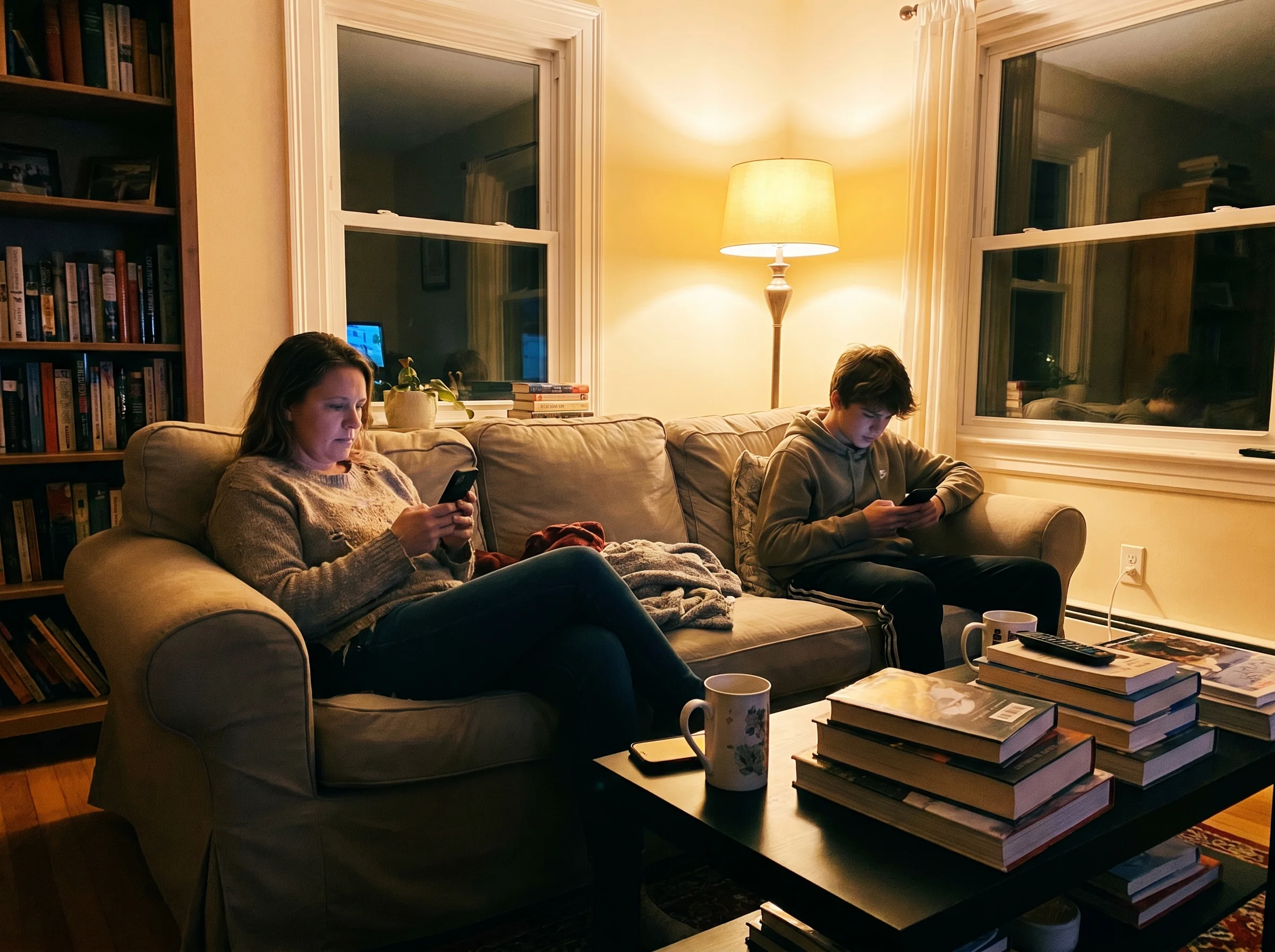
Here's where I push back on the pop-psych version of this rule. People read "7% words" and think words don't matter. They do. They matter enormously, just not the way you'd expect.
The wrong words shut down the other 93%.
"How was your day?" gets you a grunt. "How was gaming?" gets you "fine." These questions are doors that swing shut.
But "what's the craziest thing that happened in your world today?" gets you a twenty-minute monologue about how your kid accidentally flooded their Minecraft village. "Did you win or lose that last one?" gets you a real answer, because it's specific and shows you were paying attention.
This is actually how Yakety Pack got started. My co-founder and I kept asking the wrong 7% and getting grunts in return. We realized the words weren't a small part of communication, they were the key that unlocked the rest of it. The right question, asked at the right moment, opens the door to everything else. If you want a deeper dive on this, I wrote about the questions that actually get kids talking too.
The 7% isn't a small number. It's the password.
What YOUR Body Language Is Telling Them
Nobody writing about this rule ever flips it around. But your kid is reading you too, and they're reading you constantly.
Standing in the doorway with your arms crossed while they're gaming? Interrogation posture. They've already shut down before you said a word.
Hovering behind their chair? Surveillance. They feel it.
Sitting down on the floor next to them, eyes on the screen instead of on them? That's an invitation.
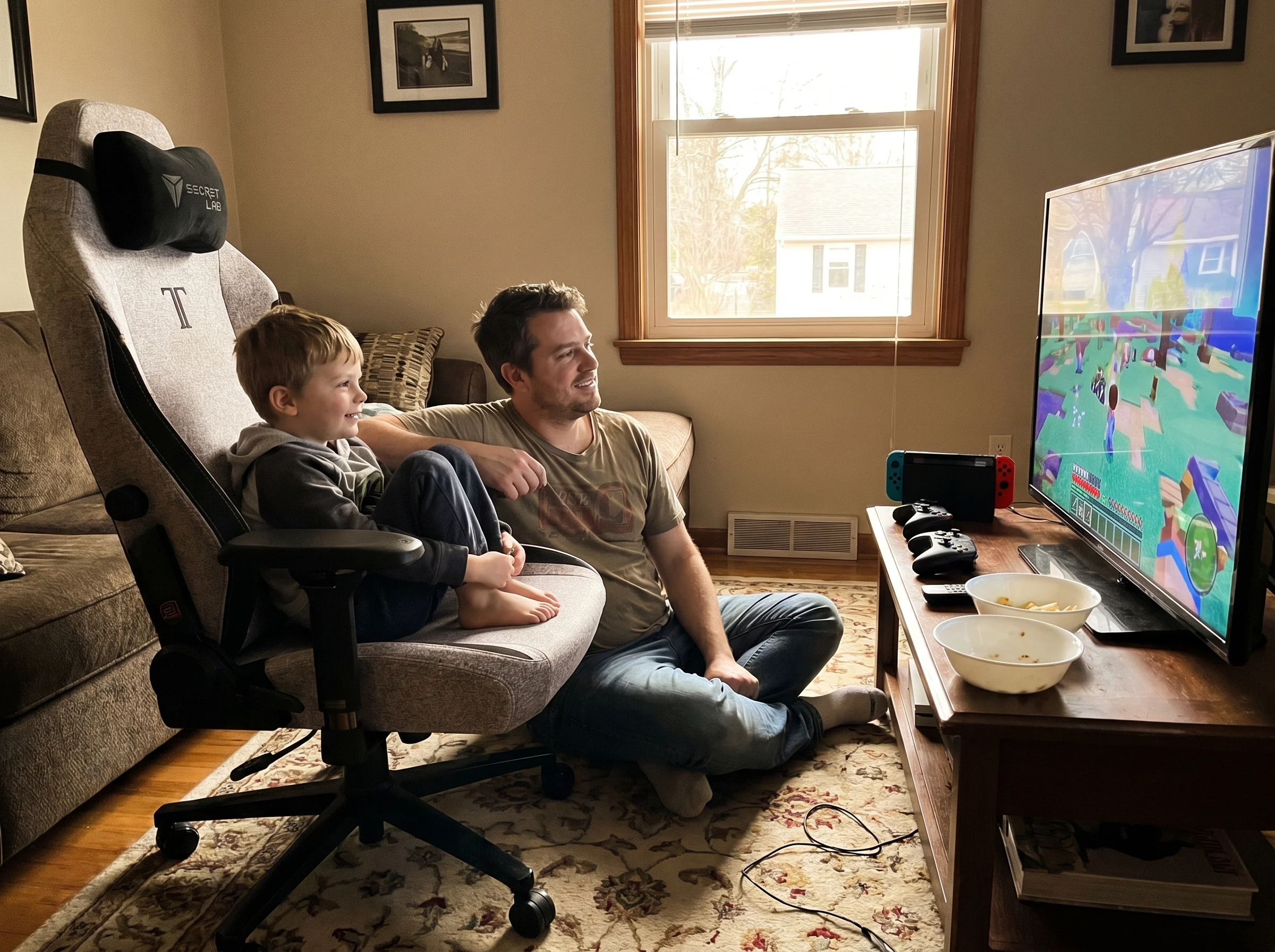
I figured this out by accident. One night I came home stressed and instead of doing my usual "hey, dinner in fifteen" from the doorway, I just sort of collapsed onto the floor next to my son's gaming chair. I wasn't even trying to connect. I was tired. But within about thirty seconds he was narrating his entire match to me. Unprompted. Just because my body had said "I'm with you" instead of "I'm checking on you."
I do it on purpose now.
Putting the 55-38-7 Rule Into Practice: The Five-Minute Window
If you only take one thing from this article, take this:
For the next week, watch the five minutes after your kid finishes a gaming session. Don't ask questions yet. Don't interrupt. Just observe.
Body first. Tone second. Words last.
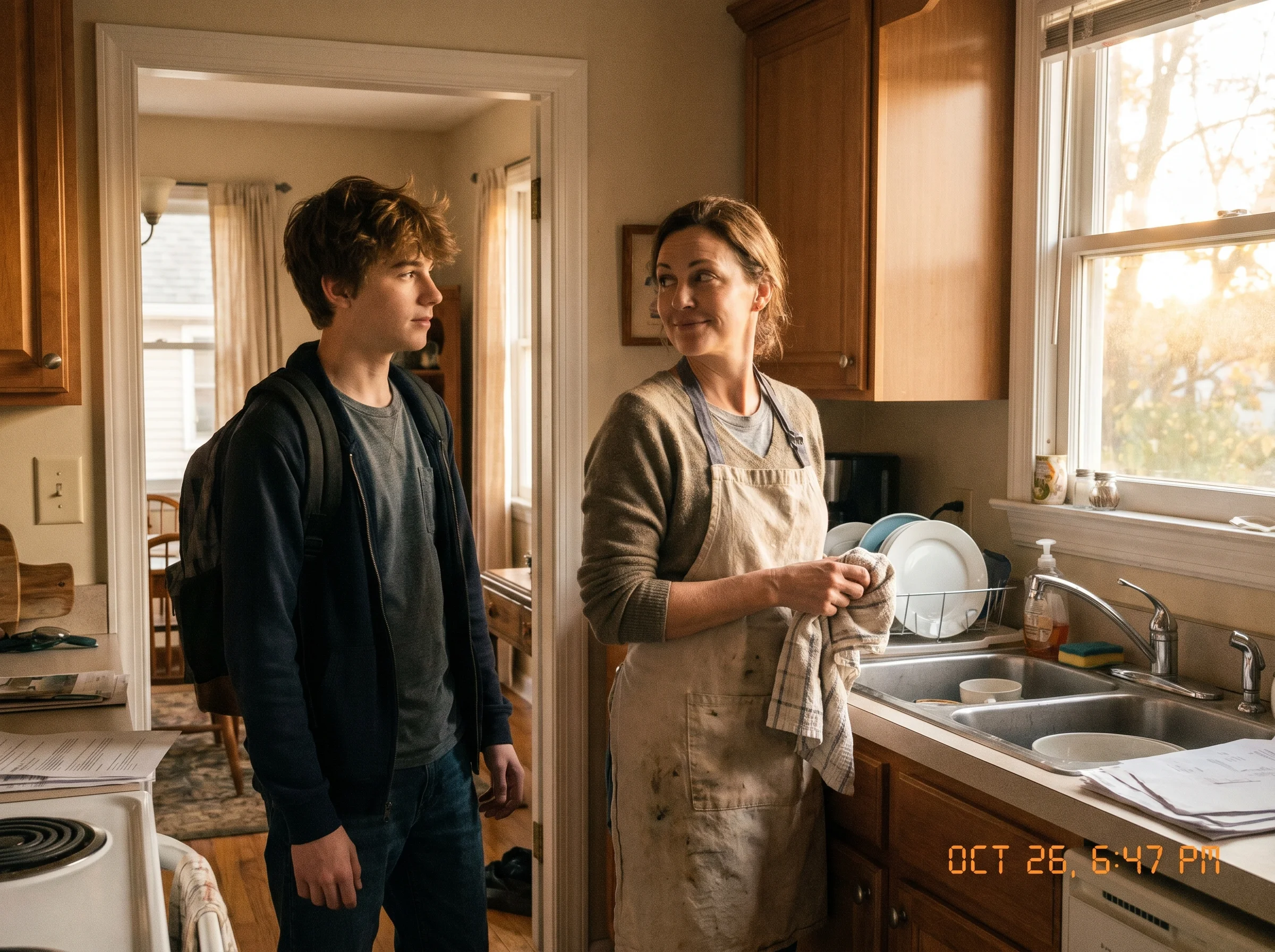
Within 48 hours, you'll start to see patterns. The post-loss slump. The post-win bounce. The "something happened with a friend" carefulness. Within a week, you'll know their tells better than they do.
Then, and only then, ask one specific question that matches what their body just told you. Not "how was your day." Something like, "looked like a rough match, what happened?" or "you came out of there grinning, what'd you pull off?"
That's the whole game. Read the 93%, then use the 7% like a key.
If you want to go deeper on the bigger picture, I wrote a longer piece on gaming communication skills for families that pulls all of this together. But honestly, start with the five-minute window. It changed how I parent. It might change how you parent too.
Have the specific question readyPause, Play, Connect: Core Deck172 prompts that are specific enough to be worth answering, ready when the window opens.$49 CAD • 90 cards • 18 reviewsShop the deck
Related Articles
Looking for more? Check out these related articles:
