
Last year, I asked my 12-year-old how his school day went while I was loading the dishwasher with my back to him. He said "fine" and went upstairs.
I was annoyed. Classic teenage grunt, right?
Then I remembered something I'd read about a researcher named Albert Mehrabian, and it hit me: my kid didn't hear my question. He heard my back.
What Is the Mehrabian Formula? The Plain English Version
So what is the Mehrabian formula, exactly?
Back in the 1960s, a UCLA psych professor named Albert Mehrabian ran a couple of studies on how people communicate feelings. He came up with a breakdown that's been quoted, misquoted, and slapped on PowerPoint slides ever since:
- 7% of the message comes from your words
- 38% comes from your tone of voice
- 55% comes from your body language and facial expressions
That's the famous 7-38-55 rule. You've probably seen it before.
Here's the part almost every article skips: Mehrabian himself has spent decades telling people they're using his research wrong. The formula only applies in a very specific situation, when you're communicating feelings or attitudes, AND when your words and nonverbal cues don't match each other.
It does NOT mean "93% of all communication is nonverbal." If I tell you the capital of France is Paris, the words are doing 100% of the work. Mehrabian wasn't talking about facts. He was talking about emotional messages, and what happens when your face says one thing while your mouth says another.
So treat it like a useful lens, not a law of physics. It's a framework for understanding why some of your conversations with your kid go sideways even when you said all the "right" things.
 When your tone does the talkingPause, Play, Connect: Core Deck172 prompts that give you something real to ask, so your face and your question finally agree.$49 CAD • 90 cards • 18 reviewsShop the deck
Why "I'm Not Mad" Never Works
Here's where the formula stops being a Wikipedia entry and starts being painfully practical.
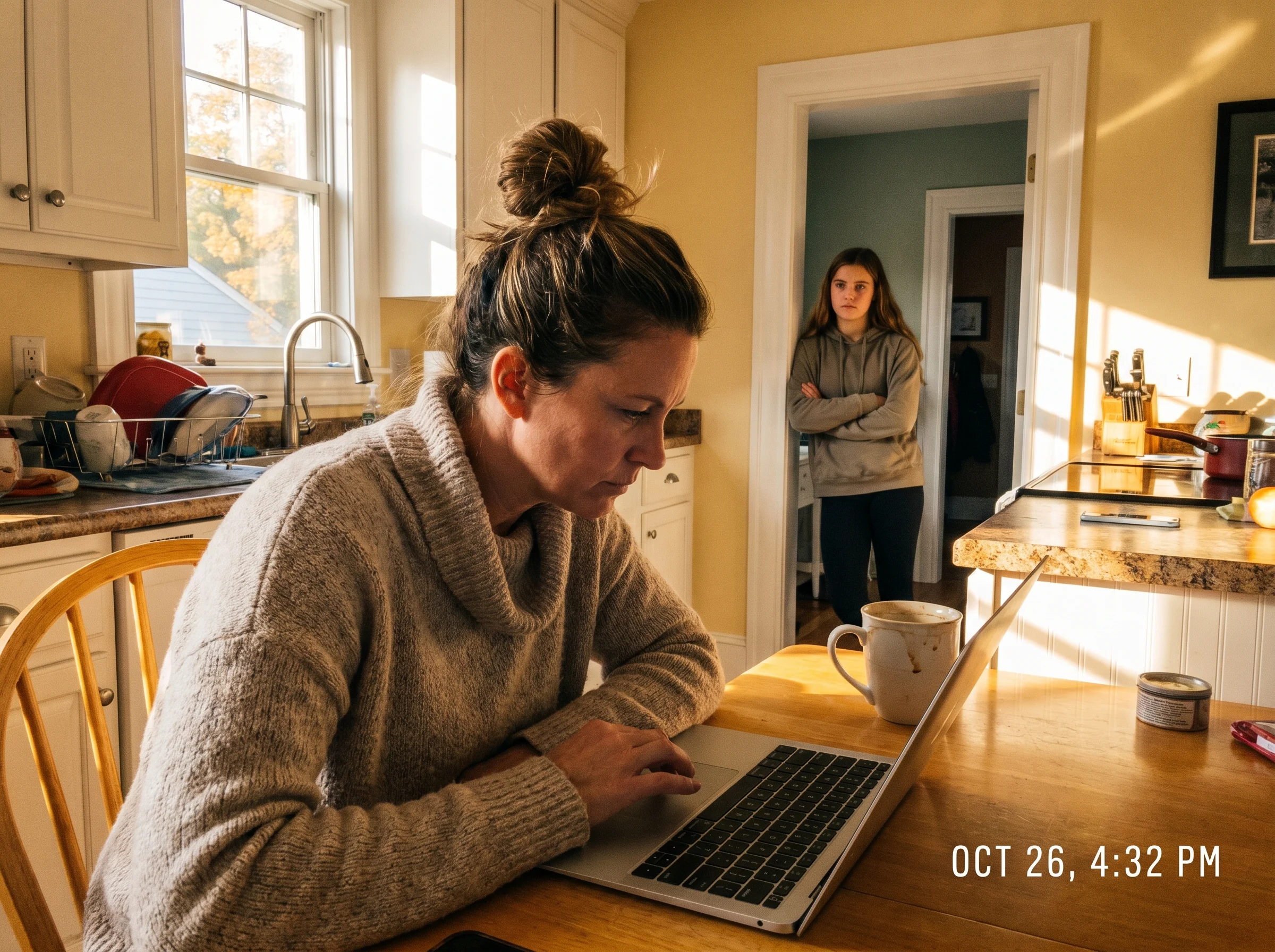
A few years ago, I told my daughter I was "totally fine" with her playing one more hour of Roblox before homework. I said the words. But I was looking at my laptop, sighing, and not turning around.
She paused at the doorway. "You're not fine."
I tried to argue. She just walked away. She knew.
When your words and your body language don't match, kids believe the body language. Every single time. They haven't spent 30 years learning to politely ignore mixed signals like adults do. They read raw.
This is why "I'm not mad" delivered through clenched teeth never lands. Why "I'm interested, keep going" said while scrolling your phone doesn't either. Your kid isn't being difficult when they don't believe you. They're being accurate.
What This Looks Like With a Gamer Kid
Here's the part nobody writes about, and it's the part that changed everything for me.
Gamer kids spend hours a day in voice chat. Discord, in-game comms, party chat, you name it. In those environments, they have zero body language to work with. No facial expressions. No posture. No eye contact.
All they have is words and tone. 7% and 38%.
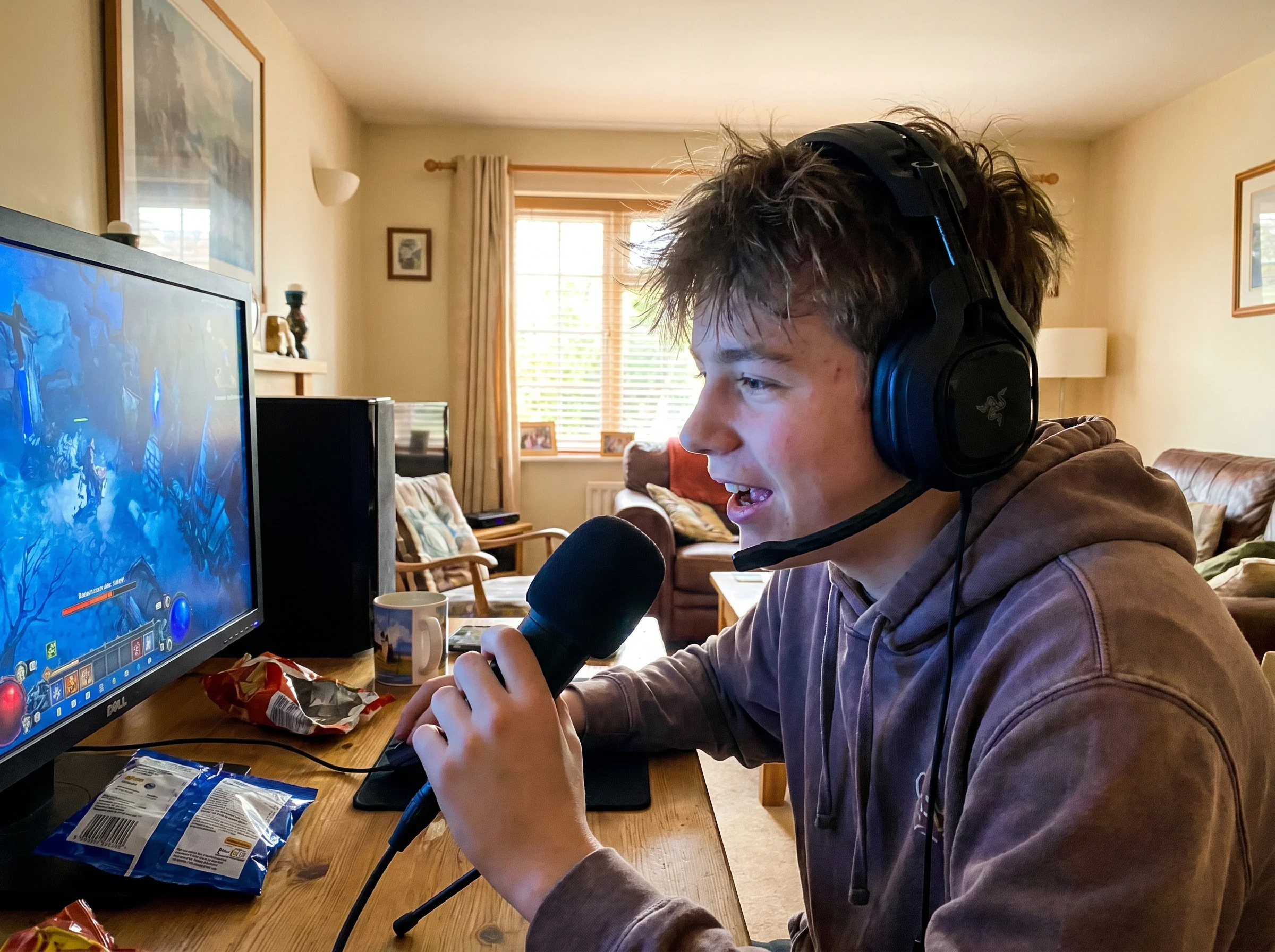
So what have they done? They've become hyper-tuned to vocal cues in a way most adults aren't. They can hear a one-second sigh on a headset and know their teammate is tilted. They can tell from a single "yeah" whether someone is actually paying attention or half AFK.
My son explained this to me one night. He said he could tell when his Fortnite duo was about to rage quit just from the way he breathed between rounds. I laughed at first. Then I realized: he was doing that to me too. He was reading my tone every time I asked about his day. And my tone was usually "I'm asking because I have to."
The kids are better at this than we are. We just keep underestimating them.
 When the headset comes offPause, Play, Connect: Core Deck$49 CAD • 172 promptsSee the deck
Three Mehrabian Moves That Changed My Conversations
Okay, theory's nice. Here's what actually works.
Drop what you're doing
The 55% starts with whether your body is even pointed at them. You cannot send "I care about this" while folding laundry with your back turned. Doesn't matter what words come out of your mouth. Turn around. Put the phone face down. Five seconds of full attention beats ten minutes of distracted "uh huhs."
Match your tone to your words
If you say "tell me more" like it's a chore, they'll stop telling you things. This sounds obvious. It is not obvious. I had to record myself once (long story) and realized I sounded annoyed even when I wasn't. Try saying "that sounds cool" the way you'd say it about something that actually sounded cool. Practice it if you have to.
Mirror their energy first
If your kid is hyped about a Minecraft redstone contraption they built, don't respond in monotone. Meet them where they are. You don't have to fake being a 10-year-old. You just have to show, with your voice and face, that their excitement is welcome here.

What Happens When the 93% Disappears
This is the modern parenting problem nobody had to deal with 20 years ago.
When your kid texts back "k" and you spiral, it's because all the warmth got stripped out. You're working with 7% of the message and a wild guess about the rest. Was she mad? Busy? Driving? You don't know. You can't know.
A few practical workarounds I've leaned on:
- Send voice notes instead of texts for anything emotional. Tone is back in the picture.
- Call, don't text, when something matters. Yes, even with teenagers who claim to hate phone calls.
- Use emoji on purpose, not as decoration. They're a clumsy substitute for facial expression, but they're something.
- Wait for the headset to come off before having a real conversation. "Let's talk when you're done with your game" isn't about screen time. It's about needing the other 93% back in the room.
How to Read Your Kid Using Mehrabian in Reverse
Most articles teach you how to send better signals. Here's the flip side: use the formula to decode what your kid is actually telling you.
Stop listening to their words. Watch the rest.
- "Fine" said with shoulders up by their ears means not fine.
- "I don't care" said while staring at the floor means they care a lot.
- A flat, monotone recap of their day after a gaming session usually means something happened in that game they don't want to talk about yet.
- Eyes lighting up when they mention a specific friend's name? That's the data. That's the part to follow up on.
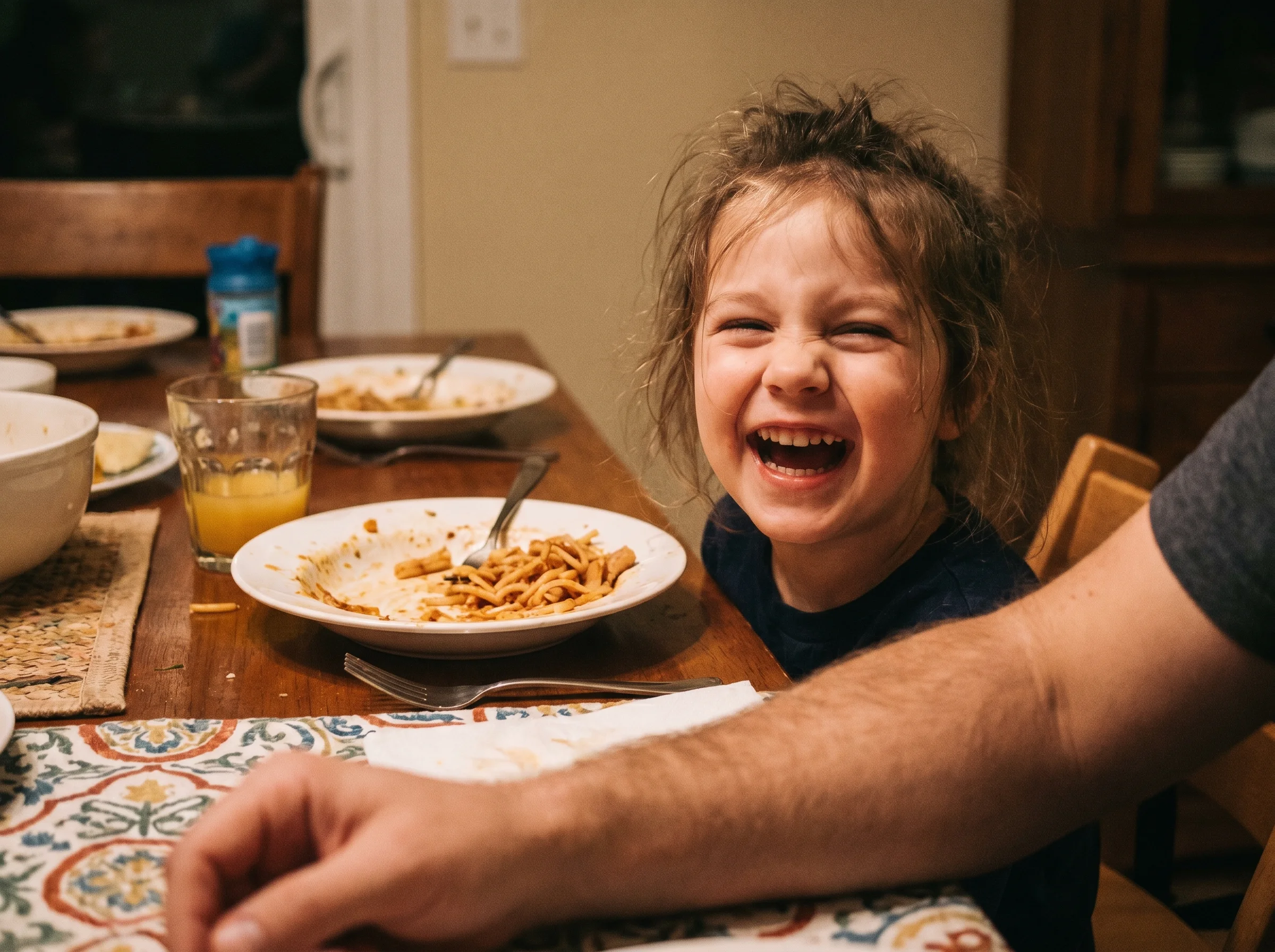
We've got a card in Yakety Pack that asks "what's something that made you laugh today?" The answer matters way less than whether they light up while answering. That's the Mehrabian moment. That's where the real conversation is hiding.
The One Thing Most Parents Miss
Here's what I finally understood after years of getting one-word answers and blaming my kids for them:
The Mehrabian formula isn't really about being a smooth communicator. It's about being a congruent one.
Kids don't need you to fake interest. They need your words and your body to agree. If you're tired, say you're tired. Don't fake-enthusiasm your way through a 20-minute Roblox debrief when you're running on three hours of sleep. They'll catch you, and now you've taught them that "interested" sounds like a lie.
"Hey, I'm wiped tonight, but I want to hear about this tomorrow at breakfast. Save it for me?"
That works. That's congruent. That's a kid who feels seen instead of performed at.
Authenticity beats performance. Every time.
So What Do You Actually Do Tomorrow Morning?
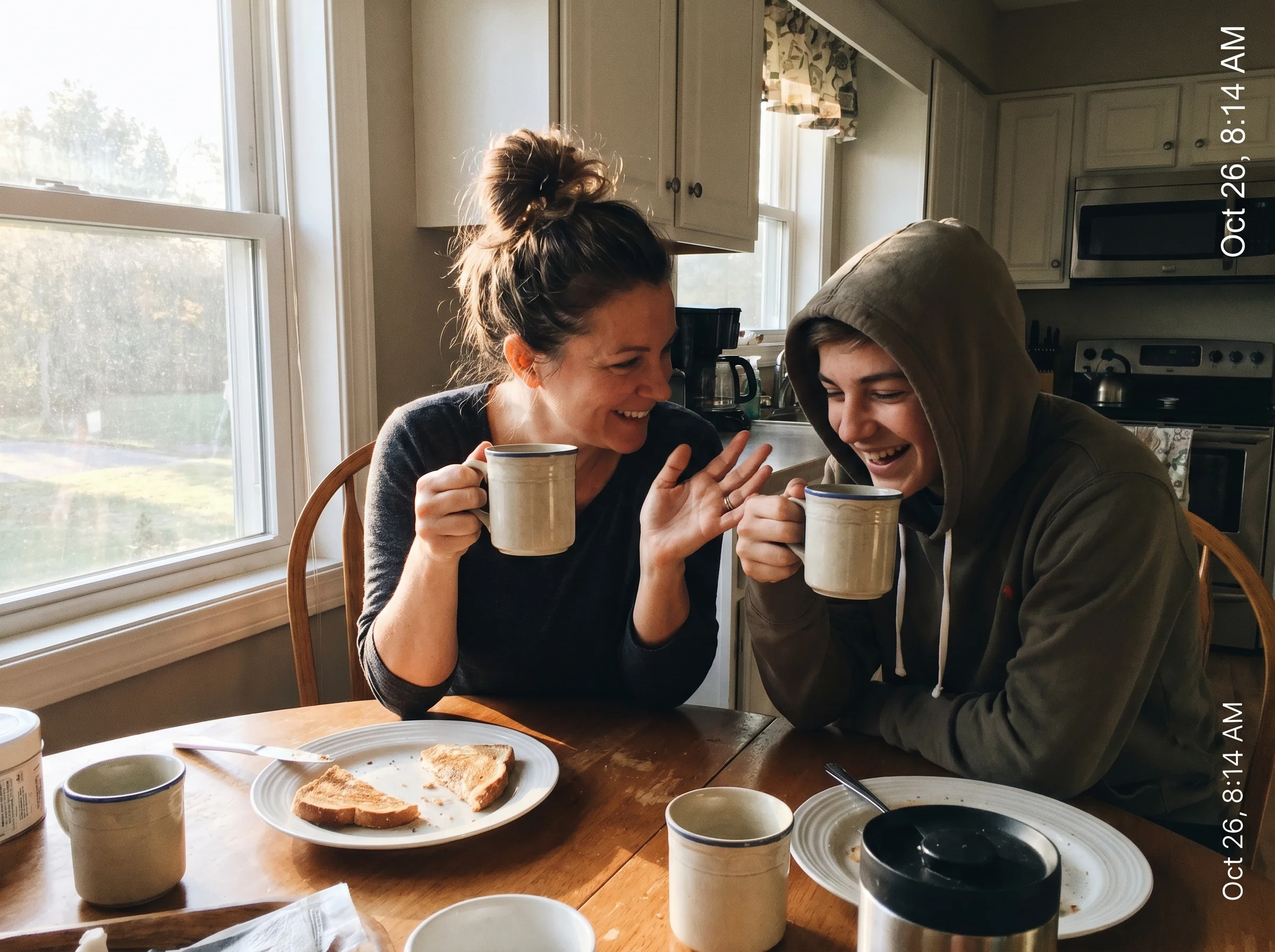
Pick one conversation. Just one. Maybe it's the after-school check-in, maybe it's the post-gaming wind-down.
Before you ask anything, do this: turn your body toward them. Put the phone away. Soften your face. Then ask whatever you were going to ask.
That's it. That's the whole experiment. See if you get more than a grunt.
We built Yakety Pack because we kept realizing the questions were never the hard part. Showing up with the right tone and the right body language, that's the part nobody teaches you. The cards just give you a starting line. The 93% is up to you.
Turn toward them and askPause, Play, Connect: Core Deck172 prompts that hand you the starting line, so all you have to bring is your attention.$49 CAD • 90 cards • 18 reviewsShop the deck
Related Articles
Looking for more? Check out these related articles:
