
For about two years, every conversation I had with my son about gaming was a negotiation. Time on. Time off. Homework first. Dinner now. Five more minutes. No, that was five minutes ago. We weren't communicating, we were managing each other.
Then one night I sat down on the floor next to him during a Fortnite match instead of doing my usual hover-from-the-doorway thing. I didn't say anything for about ten minutes. Just watched. Then I asked him to explain what a "build battle" was, because I genuinely didn't know.
He talked for twenty minutes. Twenty. From a kid whose previous answer to "how was school?" had been "fine" for approximately the last 400 days.
That night I figured out something I wish I'd known when he was seven: I'd been trying to communicate with my son about everything besides the one thing he actually cared about. And then wondering why he wouldn't talk to me.
So if you're a parent who feels locked out of your kid's world right now, this is the article I wish someone had handed me. It's about gaming communication skills for families, but more honestly, it's about using gaming as the actual conversation instead of fighting it.
Why "How Was Gaming Today?" Always Gets You a Grunt
Let's start with the question every parent asks and every kid hates.
"How was gaming today?" "Good."
"What did you play?" "Fortnite."
"Did you have fun?" "Yeah."
End of transcript. Now you're frustrated, your kid is annoyed, and you both think the other one is being difficult.
Here's what's actually happening: that question doesn't sound like curiosity. It sounds like a checkpoint. Like you're filling out a form. Kids, especially tweens and teens, can smell the difference between genuine interest and surveillance from across the house. "How was gaming today?" is what a parent asks when they're about to say "okay, time's up." Your kid knows this. So they answer in the smallest way possible, because the less they tell you, the less ammo you have.
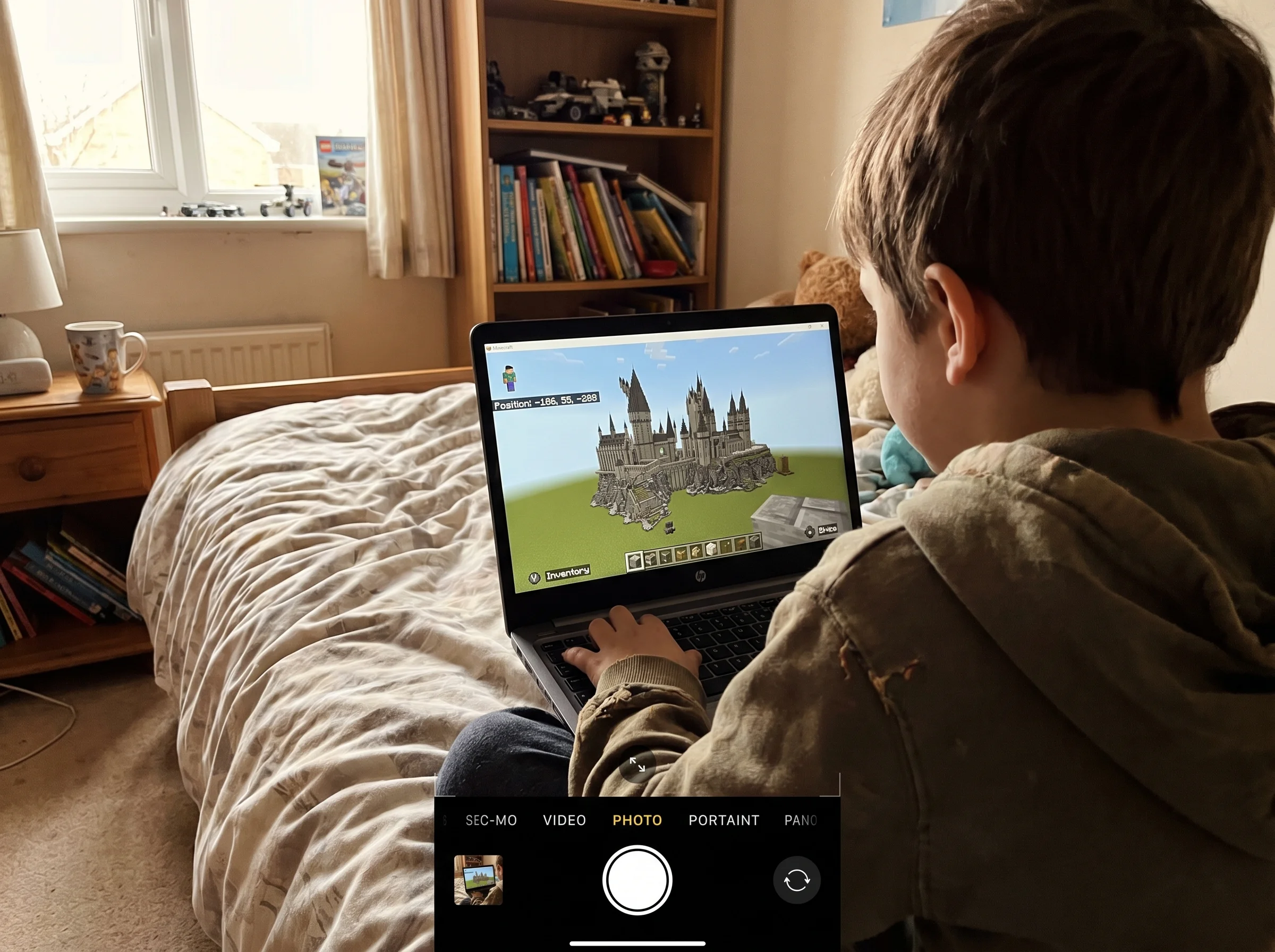
Compare that to the question I asked one night about Minecraft: "What's the craziest thing that happened in your world this week?"
He told me about accidentally flooding his entire village. He talked for twenty minutes. There were diagrams drawn on a napkin. There was a moral about water physics. There was a whole emotional arc.
The question mattered. Specifics matter. "What" beats "how." "Story" beats "feelings." Curiosity beats inspection.
If you take nothing else from this article, take this: stop asking yes/no questions about gaming. Stop asking questions that could be answered with one word. And for the love of everything, stop asking questions that sound like you're about to confiscate the console.
 Ask something worth answeringPause, Play, Connect: Core Deck172 prompts that are specific enough to get a real answer, not a grunt.$49 CAD • 90 cards • 18 reviewsShop the deck
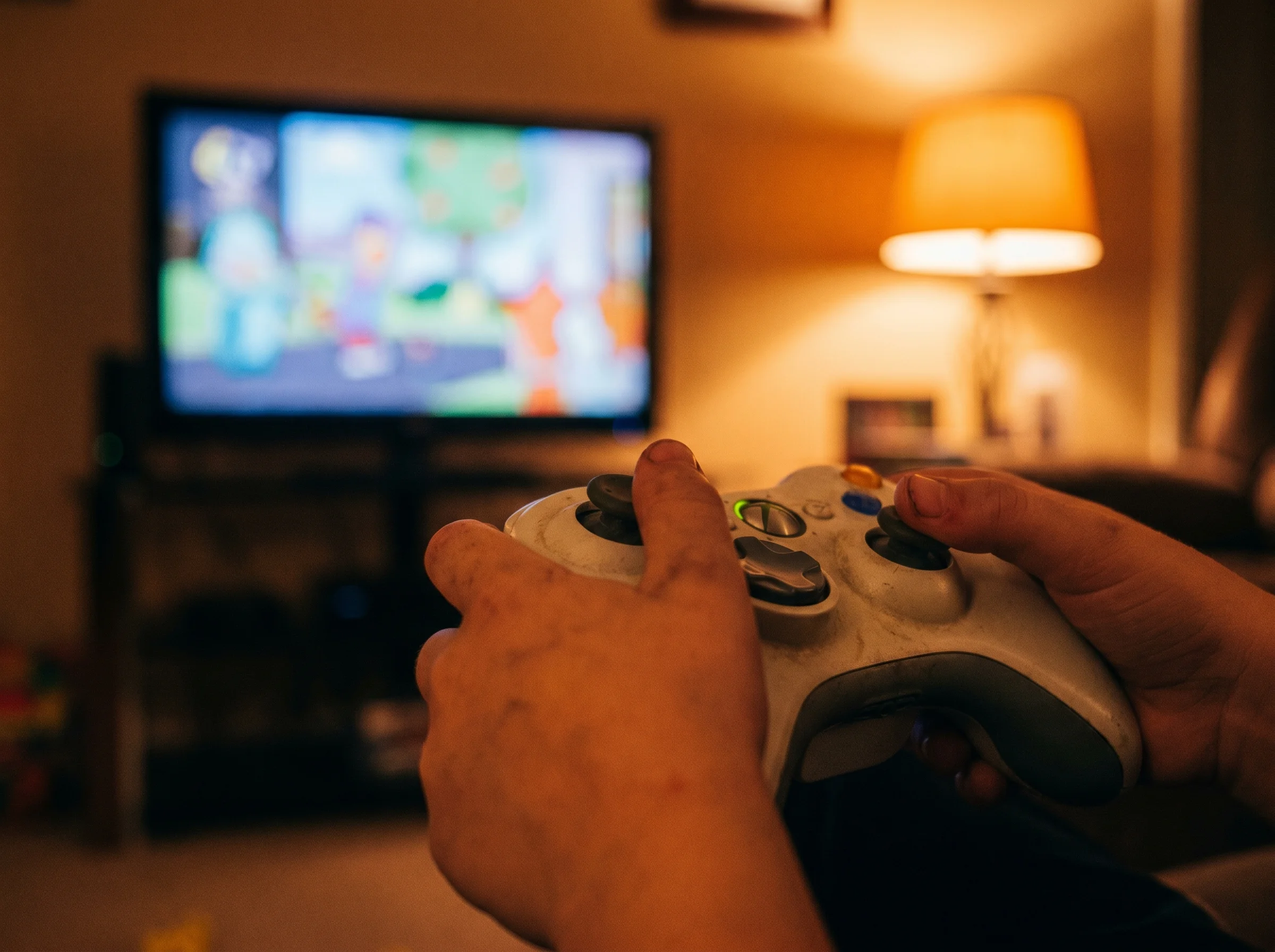
Learn the Words, Or Don't Bother Talking
You don't need to become a gamer. You don't need to grind for V-Bucks or build a Minecraft redstone computer. But you do need to know enough words to not sound clueless. Because the second you sound clueless, your kid stops translating. And once they stop translating, the conversation's over.
Here's a starter pack of gaming vocabulary that will get you about 80% of the way there:
- GG - "Good game." Said at the end of a match.
- Lag - When the game gets laggy/delayed. Often blamed for losses, sometimes accurately.
- Camping - When a player hides in one spot to ambush others. Considered cheap.
- Meta - The "best" current strategy or weapon. Changes constantly.
- Smurf - An experienced player using a low-level account to crush beginners. Hated.
- AFK - Away From Keyboard. Translation: "they walked off in the middle of the match."
- Grind - Repetitive gameplay to earn rewards or level up.
- Loot - Stuff you pick up. Weapons, items, gear.
- Build - In Fortnite, the structures you create. In Minecraft, also the structures you create. Different things.
- Third-partied - Two teams fighting, then a third team jumps in and wipes them both out. Universally rage-inducing.
- Battle pass - A seasonal reward track you can buy and "level up" by playing.
- Skin - A cosmetic appearance for your character. Kids care about these more than you can possibly imagine.
Then there's game-specific vocab. If your kid plays Roblox, you should at least know what Adopt Me is and that Brookhaven exists. If they play Fortnite, you should know what a Victory Royale is and what "zero build" means. If they play Minecraft, you should know the difference between Creative and Survival.
The first time I asked my son what "third-partied" meant, his whole face changed. He looked at me like I'd just spoken his language for the first time. Then he explained it for ten minutes, with hand gestures.
You don't have to memorize all this. Just look it up when you hear a word you don't know. Your kid will notice. That's the whole point. (If you want a deeper glossary, Common Sense Media has a solid one.)
The Best Conversations Happen DURING the Game, Not After
This is the section I wish I could go back and yell at 2019-Kevin about.
Every parenting article I read at the time said "have conversations about gaming after the session is over." Sit down. Make eye contact. Talk about it like adults. Which is exactly the kind of advice written by people who have never tried to extract a thought from a kid who just got eliminated in the final two.
Here's what I learned the hard way: the in-game moment is gold. Your kid is already in their world, already animated, already invested. If you can be present without being annoying, you'll get more real talk in 20 minutes of co-watching than in a week of dinner-table interrogations.
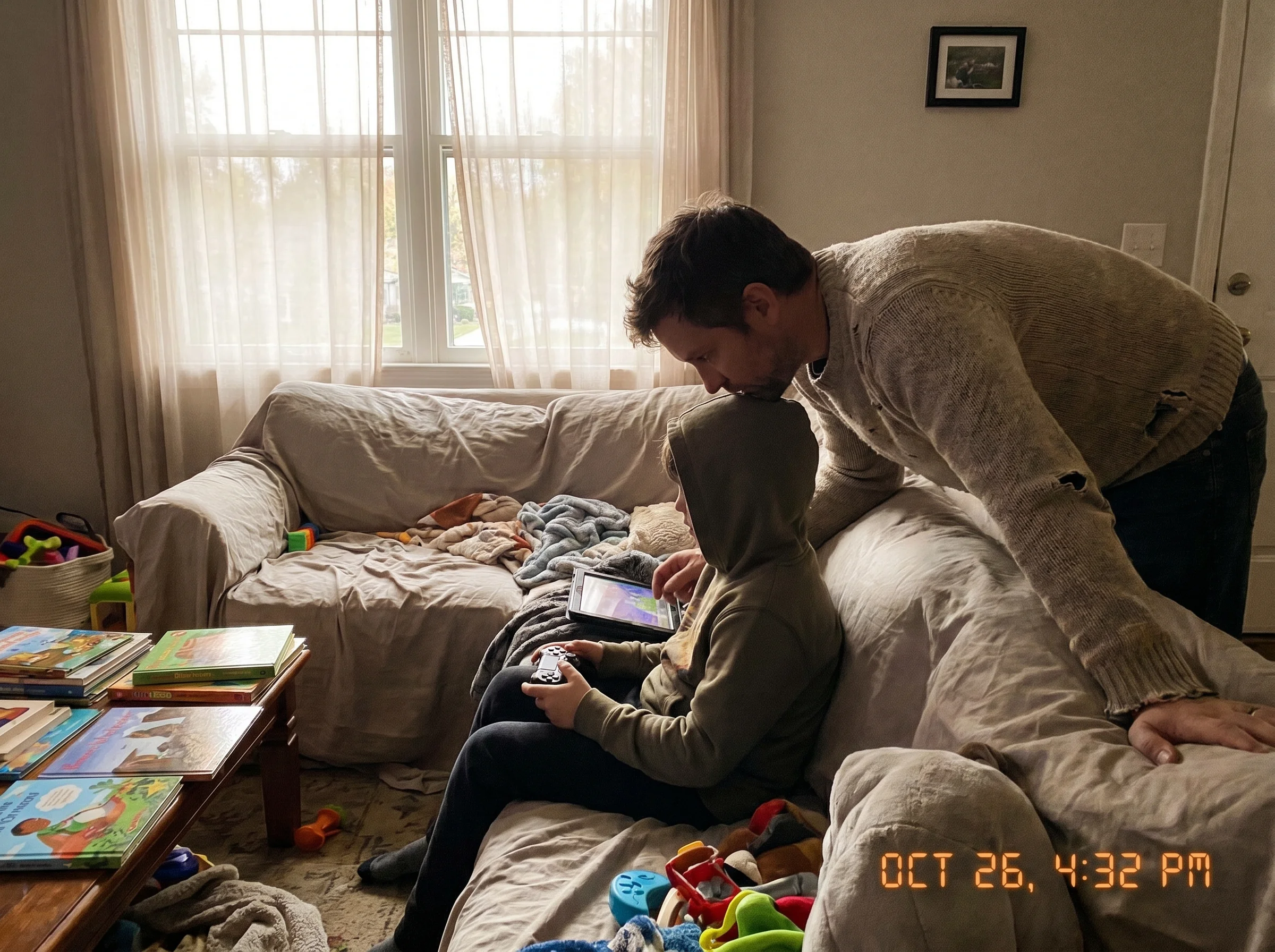
A few specific tactics:
Sit beside them, not behind them. Behind them is supervision. Beside them is companionship. This is a small physical shift that changes everything. I'm not exaggerating.
Comment on what you see, with curiosity, not judgment. "Whoa, who's that?" "What's that thing flying?" "Is that your friend?" Tiny questions, no agenda.
Ask them to teach you something specific. "How do you build that wall thing so fast?" "What's the best weapon in this game?" Kids LOVE being the expert. Parents almost never let them be the expert about anything.
Shut up during the intense parts. If they're in the final fight, in a boss battle, in a clutch moment, do not start a conversation. Wait for loading screens, lobbies, deaths, downtime. There's a rhythm to games. Learn it.
The build battle conversation I mentioned at the top of this article? That happened in a Fortnite lobby. Between matches. He explained it because the screen was idle and his brain wasn't busy keeping his character alive. Timing matters as much as the question.
 For the lobby between matchesPause, Play, Connect: Core Deck$49 CAD • 172 promptsSee the deck
Questions That Actually Unlock Kids
Okay, you've got the vocabulary, you're sitting beside them, you're picking the right moments. Now what do you actually say?
Here's my running list of questions that have, in my actual house, with my actual kids, produced real conversations. Steal them.
- "What's the most ridiculous thing that happened in your game this week?"
- "If you could redesign one thing about this game, what would it be?"
- "Who's the worst teammate you've ever had and why?"
- "What's the best play you've ever pulled off?"
- "What game character would you actually want as a friend in real life?"
- "If you could put one thing from this game into the real world, what would it be?"
- "What's the unwritten rule of this game that everyone just knows?"
- "Who do you think is the most overrated character/weapon/item, and why?"
Notice what these have in common. They're specific. They ask for stories or opinions, not feelings. They assume your kid is smart and has takes. They don't sound like questions a parent would ask. They sound like questions a friend would ask.
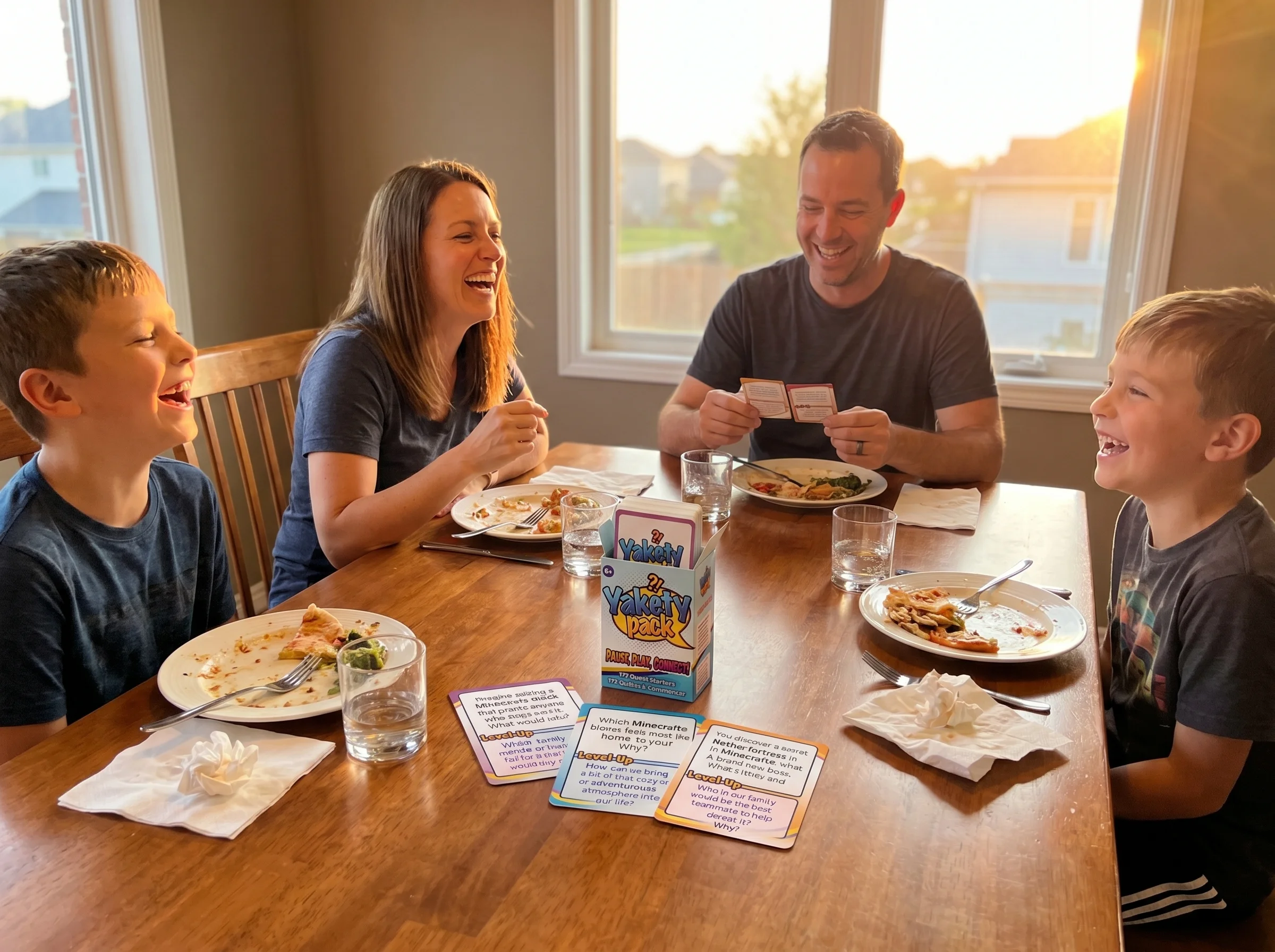
When we built Yakety Pack, this is the exact insight that drove the whole project. I realized my son could talk for an hour about gaming if the question was specific enough, but he'd freeze up if I asked him anything generic. So we wrote conversation cards that work the same way. One of them asks "What game character would you actually want as a friend?" That single question kicked off a dinner conversation in our house that went on for forty minutes. My younger daughter, who isn't a gamer, jumped in with her own version about a book character. My wife learned things about both kids she didn't know.
The cards aren't the magic. The specificity is the magic. The cards are just a shortcut so you don't have to be clever every single night.
How to Handle the Hard Moments
Gaming isn't all teaching-moments and bonding. Sometimes your kid throws a controller. Sometimes they slam the door. Sometimes they refuse to let you anywhere near their screen. These are the moments most articles skip, and they're the ones parents need help with the most.
When they rage
My son once threw a controller hard enough to chip the trim on our doorframe. (Hi, future homebuyer, that's what that mark is.) My first instinct was to charge in and lecture about respect and how this is exactly why we have screen time limits.
I didn't. Mostly because my wife gave me a look that said "do not do that right now."
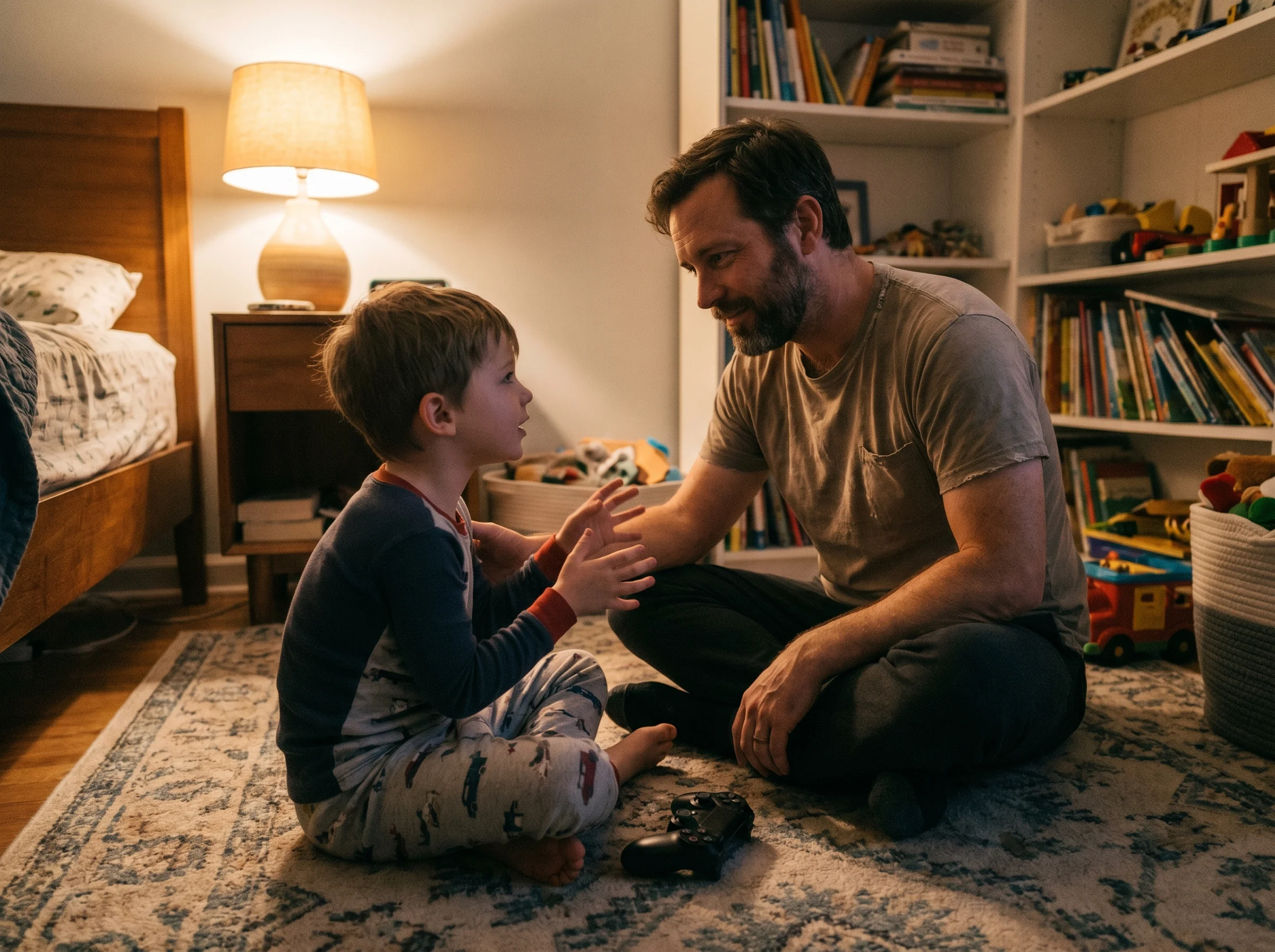
I waited. About an hour. Then I went into his room, sat on the floor, and said: "What happened?"
Not "why are you yelling?" Not "we don't act like that in this house." Just "what happened?"
He told me. He'd been on a seven-win streak, he was up against the last guy, he got third-partied by a duo and lost. Then his friend laughed at him in the voice chat and he lost it.
We talked about the friend thing for thirty minutes. That was the real issue. The game was just where it surfaced.
Rage moments are almost never about the game. They're about pride, friendship, fairness, frustration. Lecturing in the moment shuts the whole thing down. Waiting and asking "what happened?" opens it up.
When they won't let you watch
Especially around age 10-11, kids start guarding their screens. They'll snap the laptop shut when you walk in. They'll angle their phone away. This freaked me out at first because I assumed they were hiding something terrible.
Mostly they're not. Mostly they're just being normal tweens who want some privacy. (The American Academy of Pediatrics has good guidance on balancing privacy and oversight at this age.)
Respect it. Don't barge in. Instead, try: "Hey, when you do something cool, will you show me?" Or: "Save me a clip if anything crazy happens." Kids love sharing highlights. They hate being watched while they grind ranked.
You still need to know what they're playing and who they're playing with. That's non-negotiable. But the moment-to-moment surveillance can ease up.
When you have to enforce limits
Here's a hard one: you still have to be a parent. Sometimes you have to say "off in ten minutes." How do you do that without burning the goodwill you've been building?
Separate the conversations. Completely.
If you've spent the last 20 minutes co-watching and asking great questions, don't end it with "okay, that's enough, time to get off." You just made every nice thing you did feel like a setup.
Instead, give a time warning that's clearly disconnected from the conversation. Earlier. In a different tone. "Hey, you've got 30 more minutes today, just so you know." Then go back to being curious. When the time hits, it's not personal, it's the schedule.
The limit isn't the conversation. The game is the conversation. Keep them apart in your kid's mind, and they'll stop seeing every dad-walks-in moment as a threat.
What If You Genuinely Don't Like Their Game?
Permission slip: you are allowed to not love your kid's game.
You are not allowed to dismiss it.
Big difference.
I think Fortnite is, honestly, kind of dumb. The dances are weird. The skins cost too much. The whole loop of "land, loot, fight, die, repeat" is not my idea of a good time. I've told my son this.
What I haven't told him is that he's wasting his time, that the game is rotting his brain, or that I wish he liked something else. Because those things aren't true, and even if they were, saying them would only push him further away from the version of me he can actually talk to.
Honest curiosity sounds like: "I don't really get the appeal of this part, can you help me understand why this is fun?"
Passive judgment sounds like: "I just don't see how you can play this for hours." (Said with a sigh.)
Kids hear the sigh. They hear the eye-roll. They hear what you don't say. If you're going to engage, engage honestly. You can dislike a game and still respect your kid's love of it. Adults dislike each other's hobbies all the time and stay friends.
What about the harder stuff? Violence, language, online strangers? You can absolutely bring those up, but bring them up as questions, not verdicts.
"What's it like when you're in voice chat with people you don't know?" "Have you ever heard anything in chat that bothered you?" "How do you feel about the violence in this game compared to others?"
You'll learn more, and you'll keep the door open. The second you turn it into a lecture, the door slams.
Gaming as a Window Into Who Your Kid Is Becoming
Here's the thing nobody told me when I started actually paying attention to my son's gaming: you learn a tremendous amount about your kid from how they play. Research from the University of Oxford has even found links between thoughtful gameplay and well-being, which tracked with what I was seeing in my own house.
Some kids are builders. They want to make things, design worlds, create. Watch them in Minecraft and you'll see a future architect, designer, or engineer trying to surface.
Some kids are competitors. They love the ranked grind, the skill ceiling, the climb. They're the kids who'll grind toward anything once they care about it.
Some kids are helpers. They play support roles. They revive teammates. They're the ones in Roblox running the pet shop while their friends adventure.
Some kids are storytellers. They care about lore, character backstories, the world. They're the ones who'll read 4,000 words of game wiki at 11pm.
My son's a builder and a teacher. I didn't know that until I watched him play for a while and noticed: he loved explaining things to me. He loved making structures other people could use. That tells me something about who he is, and probably who he's becoming. I'd have missed it if I'd just kept yelling "time's up" from the hallway.
This is why we built Yakety Pack the way we did. The questions aren't designed to get kids off screens. They're designed to get parents into their kids' world. Gaming isn't the obstacle to knowing your kid. For a lot of kids right now, it's the easiest door in.
Common Mistakes I Made (So You Don't Have To)
A short list, because I made all of these:
- Asking questions that were really just time-check warnings in disguise. "Wow, you've been on a while, huh?" is not a conversation starter. It's a threat.
- Pretending to be interested when I wasn't. Kids see through fake enthusiasm faster than they see through fake surprise on Christmas morning. Real curiosity beats fake hype every single time.
- Trying to have the big conversation right after a loss. Bad idea. Wait for the emotional weather to clear.
- Making every gaming interaction educational. "What math did you use to figure that out?" Stop. Just let them tell you about the cool thing.
- Assuming silence meant they didn't want to talk. Sometimes it just meant I'd asked the wrong question. Try a different one in twenty minutes.
So you can stop improvisingPause, Play, Connect: Core Deck172 prompts so you do not have to invent a good question every night.$49 CAD • 90 cards • 18 reviewsShop the deck
Related Articles
Looking for more? Check out these related articles:
- helping introverted gamer connect with family members
- conversation cards for families with gamer kids
- How to teach reading body language?
- What is the 55-38-7 rule?
- What is the Mehrabian formula?
FAQ
My kid only grunts when I ask about games. What am I doing wrong? You're probably asking generic questions that sound like checkpoints. Try a specific, weird, story-prompting question. "What's the dumbest way you've ever died in this game?" gets a better answer than "how was gaming today?" every single time.
Should I play games with my kid? What if I'm bad at them? Yes, and being bad is actually an advantage. Kids love teaching parents. Just be honest: "Look, I'm going to be terrible at this, but I want to try." Your willingness to look dumb is the whole gift.
Is it bad that gaming is the only thing my kid wants to talk about? No. It just means gaming is the door. Walk through it. Other topics will follow once they trust you with this one.
My kid is a teenager and won't engage at all. Too late? Not too late, but you're going to have to be patient and not try to fix everything in one weekend. Start with the smallest version: ask one specific question, accept whatever answer you get, don't follow up with a lecture. Do that for a few weeks. The door opens slowly with teens.
What if I think the game is genuinely harmful? You're allowed to have rules. You're allowed to say no to specific games. But if you've already let them play it for a year and you suddenly want to ban it, you'll get a war. Have the harder conversation. Ask questions. Make decisions based on actual information, not just headlines.
One Thing to Try Tonight
You don't need to overhaul your parenting. You don't need a 12-step plan. You don't even need to buy anything.
Tonight, when your kid is playing, walk in, sit down next to them (not behind them), and don't say anything for five minutes. Just watch. Then ask one specific question about what you're seeing. Not "are you having fun." Something like: "Who's that character? What can they do?"
Then shut up and listen.
That's the whole drill. Do it a few times this week. Pay attention to which questions open them up and which ones shut them down. You're not trying to fix anything. You're trying to learn the language of their world.
If you want a shortcut, that's what Yakety Pack is built for. We made it because I got tired of trying to be clever every night, and I figured other parents were probably in the same boat. But the cards aren't the point. The shift is the point.
Gaming isn't the wall between you and your kid. It might be the easiest window you've got. Climb through.
