
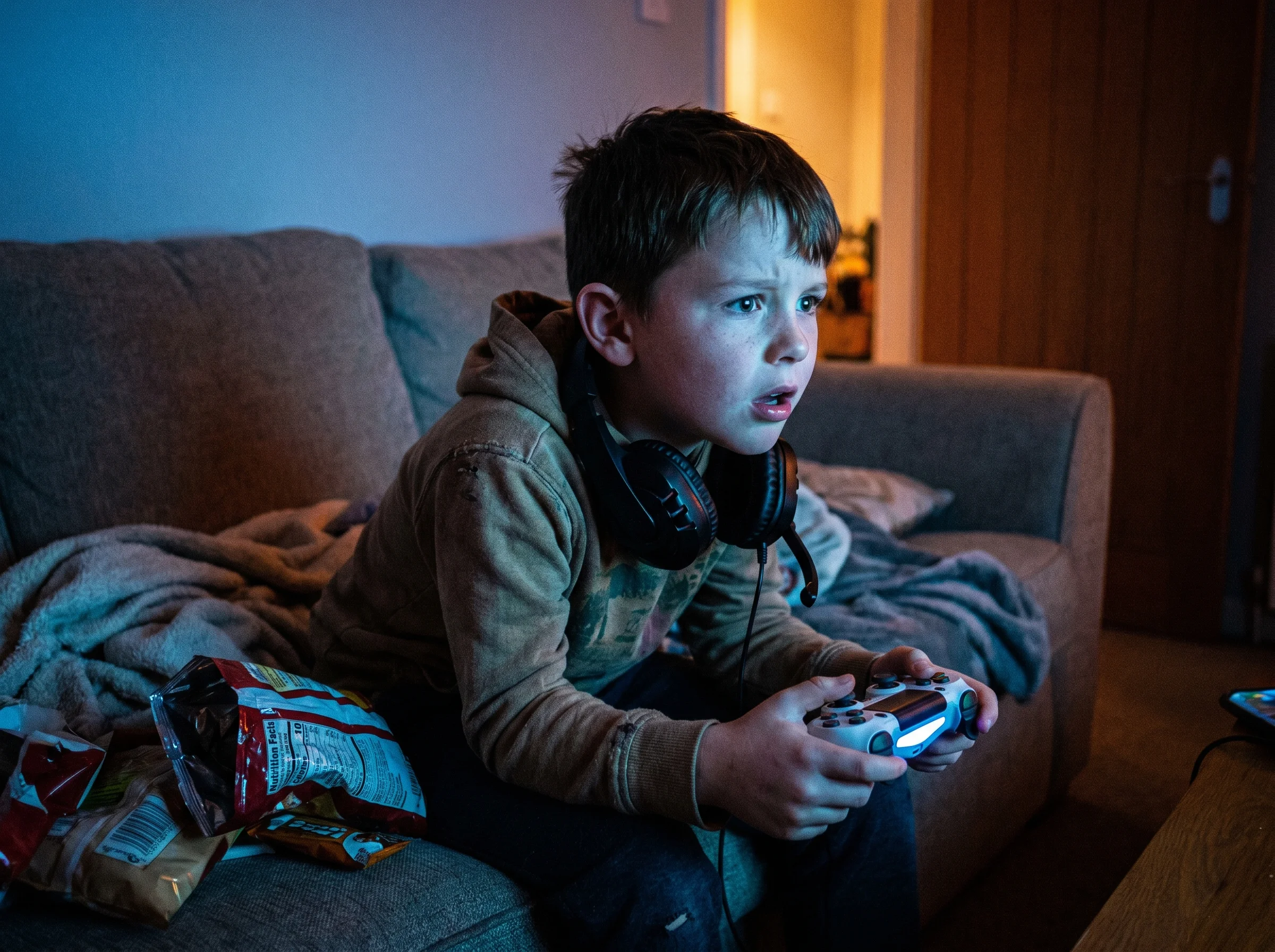
My son could tell you exactly what a Minecraft villager was "thinking" based on three pixels of facial animation. He could spot when a teammate in Fortnite was about to rage-quit before they even said a word. The kid had radar.
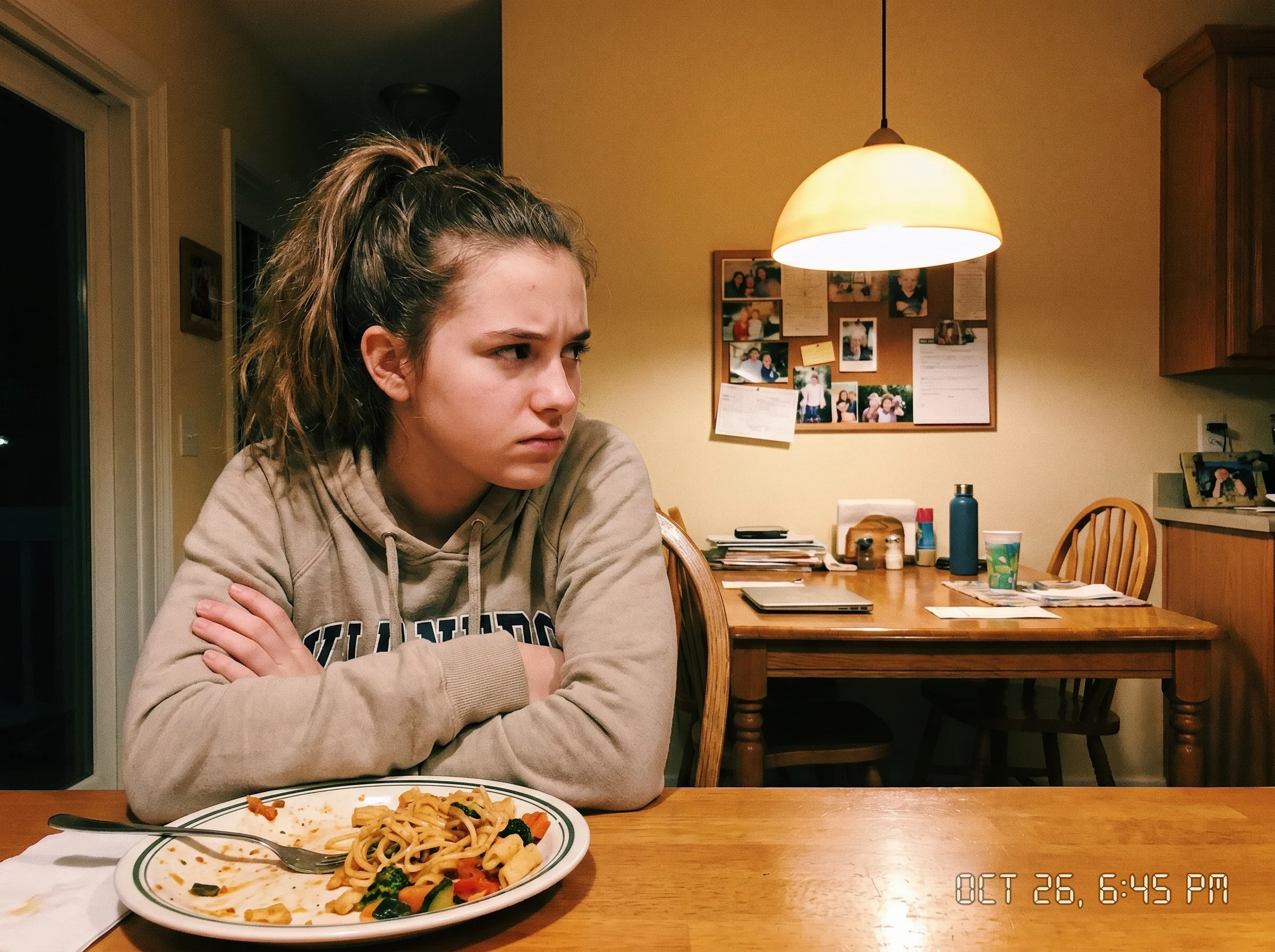
But last Tuesday, his little sister stomped off from the dinner table, and he genuinely turned to me and asked, "What's her deal?"
That's when it clicked for me. Figuring out how to teach reading body language to my kid wasn't about starting from zero. He already had the skill. It just lived in a different country, and nobody had taught him how to translate.
Your Kid Probably Reads Body Language Better Than You Think
Here's the thing nobody tells you about gamer kids: they're reading visual cues constantly. Enemy "tells" before an ambush. A teammate's emote choice that means they're frustrated. The exact tilt of a streamer's head right before they tab out and rage-quit. My son once paused a video and said, "He's done. Watch." Thirty seconds later, the streamer was gone.
That's body language reading. High-level, pattern-recognition, micro-expression body language reading. The skill is there. What's missing is the translation from "screen world" to "dinner table world," where the rules feel murkier and, weirdly, the stakes feel lower to a kid.
So when you're trying to figure out how to teach reading body language, step one is dropping the idea that you're teaching from scratch. You're not. You're a translator, not a teacher.
 Their radar, your questionsPause, Play, Connect: Core Deck172 prompts that give you something to ask, not a lesson to deliver.$49 CAD • 90 cards • 18 reviewsShop the deck
Start With Faces They Already Watch
The fastest way I've found to make this click is to use the media your kid is already glued to. Don't fight it. Use it.
Let's Play videos are a goldmine. Pause one and ask, "What's he feeling right now?" Then wait. Don't fill the silence. My son once told me a streamer was "embarrassed but trying to pretend he wasn't" and proceeded to break down the eyebrow thing, the half-smile, the way the guy looked off-camera. I couldn't have taught that in a workbook.
Modern cinematic games are even better. The Last of Us, Detroit: Become Human, Red Dead Redemption 2, these are motion-captured emotion masterclasses. Researchers have actually looked at how nonverbal communication shapes our reading of others, and game studios pour millions into capturing exactly those signals. Even Animal Crossing villagers and Stardew Valley animals have surprisingly clear body language. My son taught ME what a "tilted head plus ears back" means on a Stardew cat before he ever noticed his sister doing the same thing across the table.
Try this tonight: watch a YouTuber or game cutscene with your kid and ask, "Did you see his face when that happened? What was that?" That's the whole lesson.
The Three C's: Context, Clusters, Congruence
One cue means nothing. A kid with crossed arms might be cold, comfortable, or copying a YouTuber they think looks cool. The articles that say "crossed arms equals defensive" are doing kids a disservice.
What actually works is teaching three things together:
Context. Where are they? What just happened? Sister crossed arms after losing a game is different from sister crossed arms in a cold car.
Clusters. One signal is noise. Three signals that point the same direction? That's information. Crossed arms plus a clenched jaw plus a turned-away body? Now you've got something.
Congruence. Do their words match their body? "I'm fine" with a tight voice and no eye contact is not fine. Kids actually get this one fast because games train it. Every NPC who says "I'm okay" while bleeding out is a lesson in incongruence.
Practice this with characters first. Then, gently, with family. "Remember how Joel's face looked in that scene? Notice anything kinda similar with Grandpa today?"
 Cards, not a curriculumPause, Play, Connect: Core Deck$49 CAD • 172 promptsSee the deck
Real-Life Practice Without Making Your Kid Feel Studied
Kids shut down the second they smell a lesson. So you can't make it a lesson.
Things that actually work in my house:
- People-watching at restaurants. "What's that family's story? What do you think just happened?" My kids love this. It's basically detective mode.
- Muting the TV. Pick a dramatic scene, kill the volume, and try to narrate what's happening. Hilarious and weirdly effective.
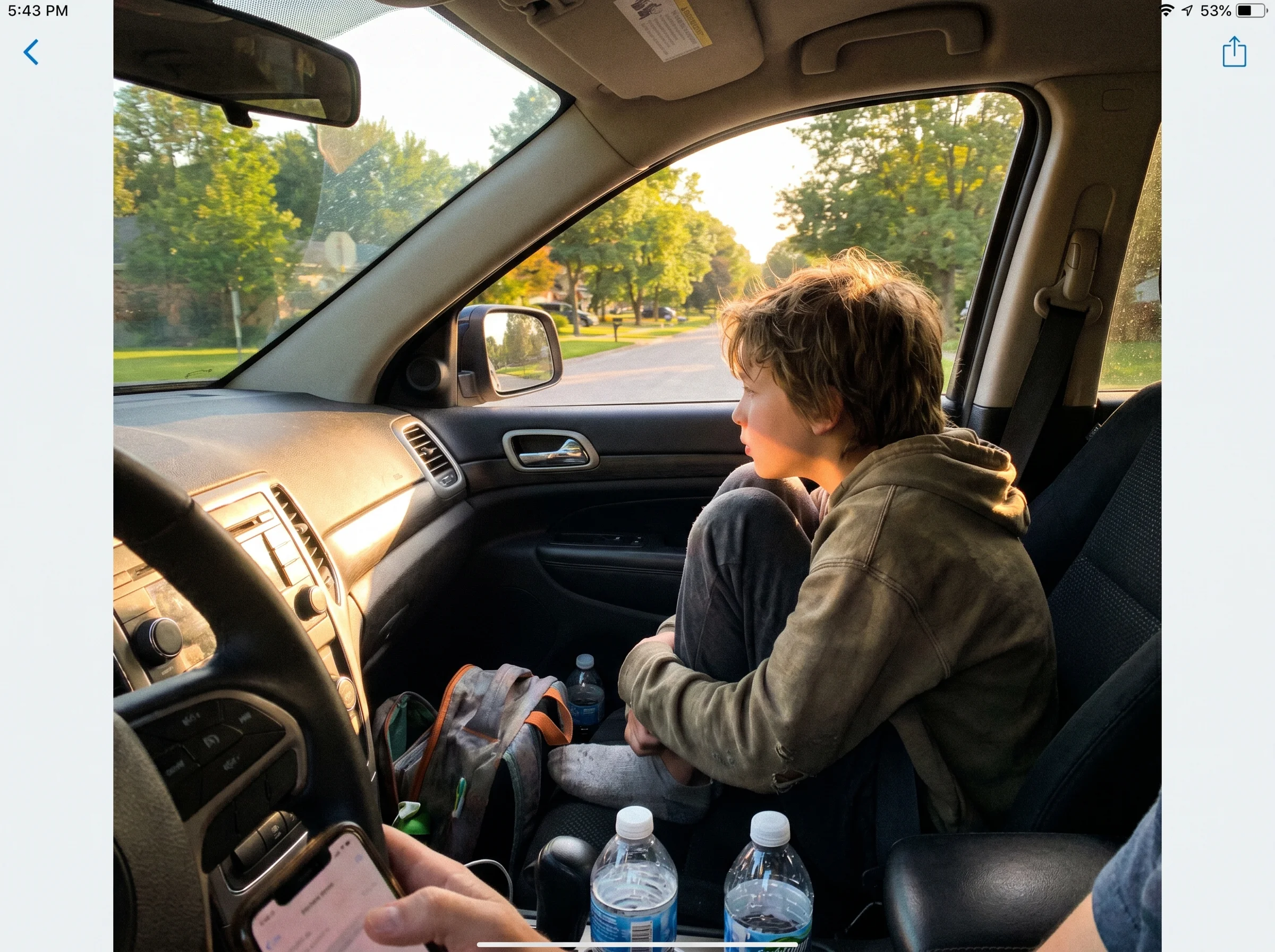
- Car rides. This is the cheat code. No eye contact, low pressure, kids talk. I genuinely get more honest conversation in a 12-minute drive to baseball practice than I do in an entire weekend at home.
This is actually why we made Yakety Pack. Car questions were the only ones my kids would reliably answer, but I kept running out of good ones. One card in the deck asks, "What's something you can tell about someone without them saying a word?" and that single question has cracked open conversations I couldn't get any other way. My daughter once spent fifteen minutes explaining how she could tell her best friend was mad at another girl just by the way she was standing at her locker. I learned more about her social world in that ride than in three months of "how was school" conversations that go nowhere.
Teaching the Reverse: Helping Kids Notice Their OWN Signals
Most articles on how to teach reading body language only cover reading others. That's half the job. The other half is helping your kid notice what their own body is doing.
This one's fun if you don't make it weird. Ask, "What does your face do when you lose at Fortnite?" They'll know. Probably demonstrate it. Then have them watch a clip of themselves playing. My son saw his own scrunched-up "lose face" on a recording once and laughed so hard he nearly fell off the couch. But the next time he caught himself making it, he told me, "I'm doing the lose face." That's gold. That's self-awareness.
Mirror practice works too, if you make it goofy instead of clinical. Exaggerated faces, swap emotions, guess what the other person is doing. Two minutes, max. Treat it like a game.
When It's Harder
Not every kid picks this up the same way. Neurodivergent kids, anxious kids, kids who just process the world differently, sometimes they need explicit teaching. And that's totally fine. There's zero shame in flashcards, emotion charts, or social stories. They work.
Honestly, games can be a safer practice ground for these kids than real life. The social stakes are lower. The cues are often clearer. A character's face doesn't suddenly shift mid-conversation in confusing ways. If your kid can read NPCs but struggles with people, that's not a deficit, that's a starting point. Build from there.
If you're hitting a wall, an occupational therapist or speech-language pathologist who works on social cognition can be a game-changer. The American Speech-Language-Hearing Association has solid guidance on what social communication support actually looks like. But don't rush there before you've tried meeting your kid in their world first.
When Your Kid Starts Reading YOU
Plot twist: once they get good at this, they'll call you out.
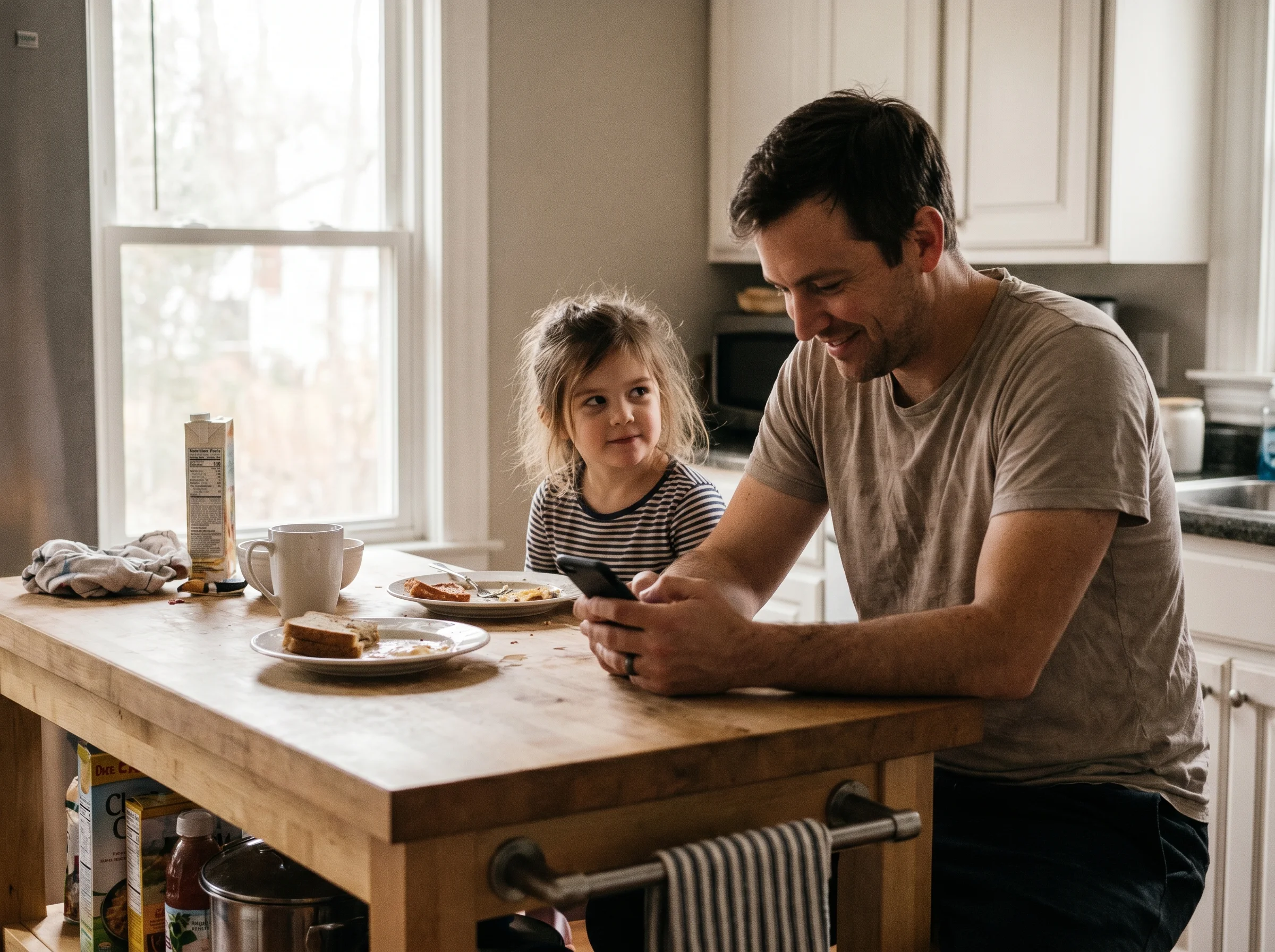
My daughter, about three months into all of this, looked up from the kitchen island and said, "Dad, you're not actually listening. You're doing the email face." I was, in fact, answering an email while pretending to listen. Busted.
This is the goal. Not a problem. When your kid can read you, it means the skill transferred. The right move is not to get defensive. The right move is to own it. "You're right. I'm distracted. Give me two minutes and I'll actually be here." That moment teaches them more about emotional honesty in everyday family life than any lecture could.
Also, fair warning: they will use this against you in negotiations. My son now knows exactly what my "I'm about to say no but I'm not sure yet" face looks like, and he times his asks accordingly. Respect.
One Thing to Try Tonight
Watch ten minutes of whatever your kid is into, a YouTuber, a game cutscene, a streamer, and ask one question: "What was he feeling right there?" Then shut up and let them talk.
That's it. That's the whole entry point. From there, the rest of this stuff layers in naturally over weeks and months. You're not building a curriculum. You're building a habit of noticing, together.
And if you want a shortcut for the car-ride version of this, that's exactly what we built Yakety Pack for. But honestly, even without it, the question above works. Try it tonight.
Your kid already has the skill. You just get to be the one who helps them find it.
For the habit of noticingPause, Play, Connect: Core Deck172 prompts that supply the next question, for the nights you cannot think of one.$49 CAD • 90 cards • 18 reviewsShop the deck
Related Articles
Looking for more? Check out these related articles:
