
For two years, I thought my son's "online friends" weren't real friends. I'd hear him laughing at his desk, talking to people I'd never met, and I'd quietly file these relationships under "not the real thing." Real friends, in my head, were the kids at school. The neighborhood kids. The ones you could see.
Then one of his gaming friends, a kid from Ohio he'd never met in person, mailed him a birthday card. An actual card, hand-addressed, with a folded-up drawing inside. My son taped it to his wall. It's still there.
That card recalibrated something in me. I'd been measuring his friendships with the wrong ruler. The kids had figured this out years before I did. They were forming the same kind of bonds I formed at the basketball court behind the elementary school, just in a different geography. I was the one who needed to catch up.
This is the article I wish someone had handed me back then. It's about online gaming friendships for kids, what they actually look like, how to meet them, how to support them, and the one thing I think most parents are missing entirely.
 Names, not just usernamesPause, Play, Connect: Core Deck172 prompts that get your kid telling you who these friends actually are.$49 CAD • 90 cards • 18 reviewsShop the deck
The "Is It Real?" Debate Is Over. The Kids Settled It.
You can still find a hundred articles asking whether online gaming friendships count as real friendships. I'd skip those. They were written by people who haven't sat in a kitchen and listened to a 10-year-old plan a birthday surprise for someone three time zones away.
Here's what these friendships actually look like day to day in my house:
They show up at the same time every night. Around 6pm, my son's crew logs into Minecraft. There's a hello ritual. There's catching up about the school day (theirs, not his, because they go to different schools in different states). There's an ongoing project they're building together that has lasted over a year. There are inside jokes I don't understand. There are arguments and apologies. There's "I gotta go, my mom's calling me for dinner, be back in twenty."
That's friendship. That's just friendship. The fact that it happens through headsets instead of in a treehouse doesn't change the substance of it.
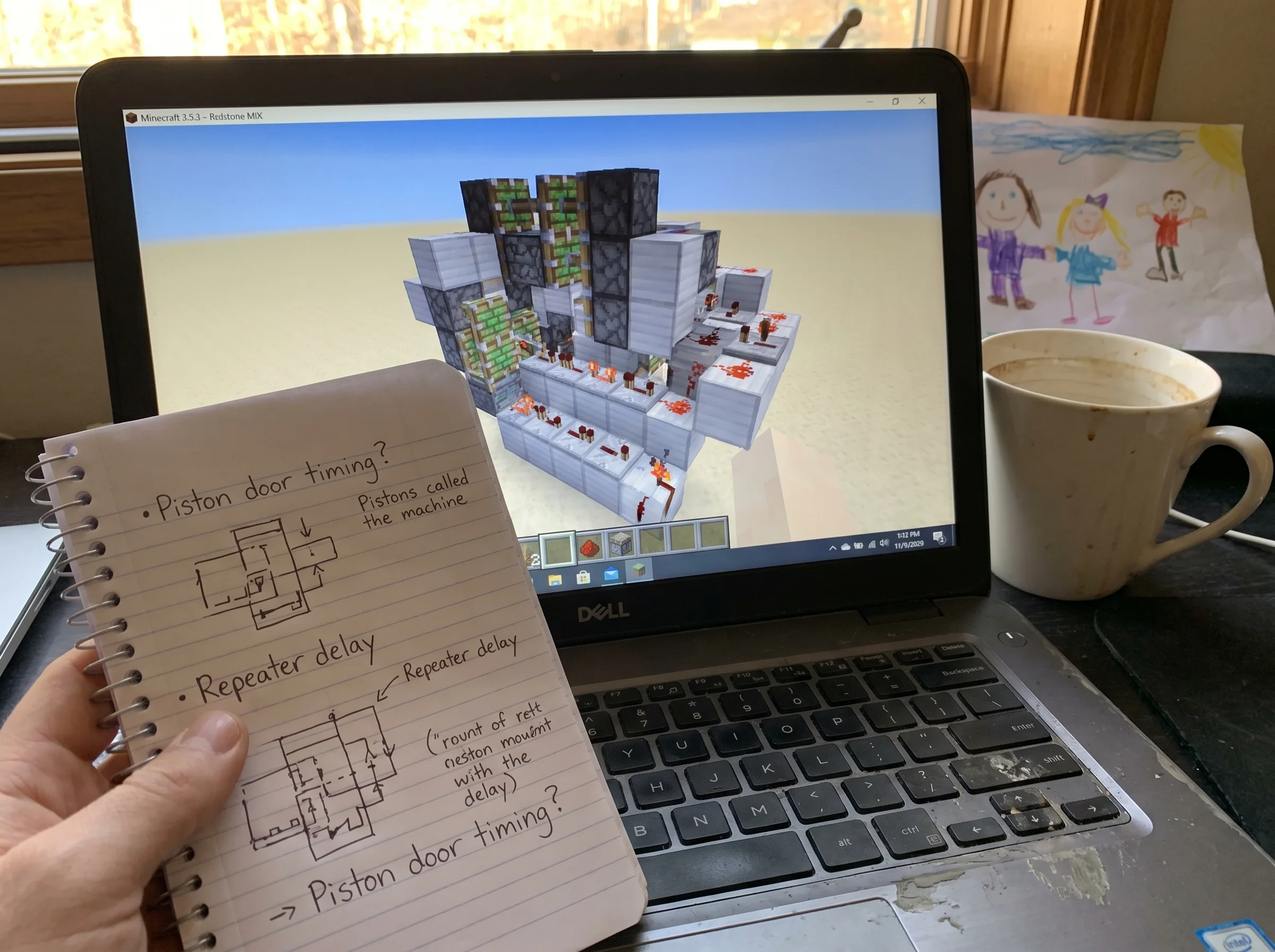
Proximity used to be the main ingredient in childhood friendship because proximity was the only delivery mechanism kids had. You were friends with whoever was nearby. Now the delivery mechanism is different, and the ingredient list changed with it. My son's closest friend isn't the kid two doors down. It's a kid in Ohio who shares his sense of humor and his obsession with redstone contraptions.
When COVID hit, this got real for me. My son's school friends drifted, the way kids do when they can't see each other every day. His Minecraft crew showed up. Every night. For a year. They were the social anchor of his life during the weirdest stretch of his childhood. I stopped calling them "online friends" after that. They're just his friends. Research from the Pew Research Center backs this up: a huge majority of teen boys say gaming helps them feel more connected to friends they know, and to friends they've only met online.
What Kids Actually Get From Gaming Friends
Most articles list the benefits of gaming friendships in generic bullet points. "Develops social skills." "Encourages teamwork." It reads like a brochure. Let me get specific about what I've actually watched happen.
Shared problem-solving that goes on for weeks. My son's group decided to build a working roller coaster across a server. That's not a fifteen-minute project. They argued about routes, divided labor, debugged each other's mistakes. One kid is the architect, one is the resource gatherer, one is the guy who keeps everyone laughing when it falls apart. That's a real working group dynamic, and they're eleven.
Inside jokes with serious staying power. A year ago, one of the kids accidentally said "I'll be right back, I have to feed the dishwasher." The phrase is still in rotation. They text it. They say it in voice chat. I love this. Inside jokes are the connective tissue of every real friendship I've ever had.
A consistent social outlet on bad days. When my son has a rough day at school, he doesn't sulk in his room alone. He logs in. Within minutes, three other kids are asking him what's up. They don't always go deep about it, but the presence matters. Kids show up for each other in voice chat the same way adults show up at each other's houses.
Practice with conflict and leadership. Last year, the crew voted my son "build leader" for a big project. I watched him handle disagreements over the next few weeks. He had to mediate when two friends wanted different things. He had to admit when one of his ideas wasn't working. He didn't get those reps anywhere else in his life. School doesn't ask him to lead. The basketball league doesn't ask him to lead. His Minecraft friends did, and his confidence shifted because of it.
You don't get those things from a worksheet on social-emotional learning. You get them from real social stakes with real friends, and right now, for a lot of kids, those stakes are happening in voice chat.
How to Actually Meet Your Kid's Gaming Friends (Without Being Weird)
Here's the section I wish someone had written for me three years ago. Everyone says "know who your kid is playing with." Nobody tells you how.
You don't have to interrogate. You don't have to monitor in a creepy way. You meet them, the same way you'd meet a kid who came over to play in your house.
Here's what works:
Sit in on a session occasionally. Just listen. Don't perform interest. Don't ask twenty questions. Just be in the room, doing your own thing, while the voice chat is happening. You'll learn more in twenty minutes of passive eavesdropping than you will in a month of interviewing your kid about his friends. You'll hear who's funny, who's bossy, who's kind, who's quiet. You'll start to know these kids as personalities.
Say hi in voice chat. Keep it short. Walk by, lean over your kid's shoulder, and just say, "Hey guys, I'm Carter's dad, you having fun in there?" That's it. Don't linger. Don't make a speech. The first time I did this, I was so nervous I sounded like a substitute teacher. Now I do it casually once a week and the kids barely look up from what they're building.
Let your kid introduce you. This one's better. "Hey, this is my dad, he's just grabbing me for dinner." It gives your kid the power in the moment, which makes them more likely to let you in next time.
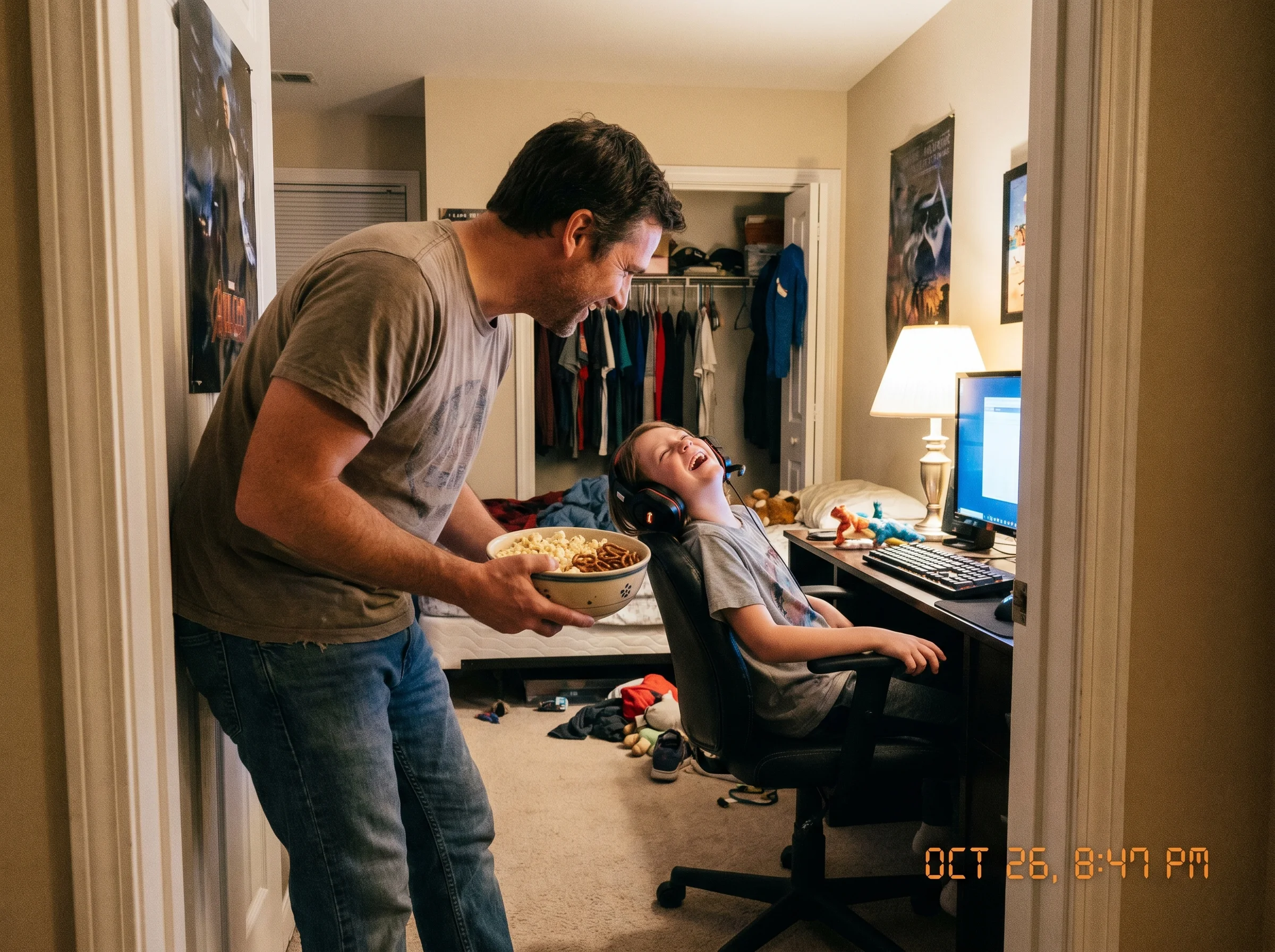
The snack delivery technique. This is my favorite. Bring snacks in. Say hi to the group on the way. "Hey guys, anyone need anything? Just kidding, I can't deliver Cheetos to Ohio." Get a laugh. Leave. You just became a person to those kids instead of a vague parental figure looming somewhere off-screen.
I joined a voice chat once during a particularly intense build session, accidentally said something dumb, and got a laugh from the whole group. I became "Carter's funny dad" in the friend group for about six months. It changed everything. When I'd walk by the desk after that, the kids would say hi to me by name. I was no longer an outsider to their friendship. I was a known, slightly embarrassing adjacent figure, which is exactly what I am to all of my son's other friends too.
That's the goal. Be a known quantity. Not a surveillance camera.
 Who made them laughPause, Play, Connect: Core Deck$49 CAD • 172 promptsSee the deck
The Questions That Actually Open Kids Up
For months, I asked my son "who'd you play with today?" I got "some kids." I asked "how was Minecraft?" I got "good." I was hitting a wall and I couldn't figure out why.
Then it clicked. I was asking questions that have one-word answers. Kids will always give you one-word answers to one-word questions. That's not a kid problem, that's a question problem.

Here are questions that actually work, tested in my own house:
- "What's the weirdest thing someone said in voice chat today?"
- "Who's the best builder in your group, and why?"
- "Who made you laugh today?"
- "If your gaming friends came over for a sleepover, who'd be the biggest troublemaker?"
- "What's something one of your friends is really good at that you wish you were better at?"
- "Is there anyone in your group who was having a bad day?"
Notice the pattern. They're specific. They're about people, not activities. They invite a story instead of a status update. They assume your kid has interior knowledge about these friendships, which they do, and they treat your kid like an expert on their own world.
When I asked "what's the craziest thing that happened in your world this week?" my son talked for twenty minutes about accidentally flooding his village. I learned about three of his friends in that conversation without ever asking about them directly.
The reason I'm such an evangelist about question quality is that it's the thing I got most wrong for the longest. I had the right intentions and the wrong vocabulary. We ended up making Yakety Pack because of exactly this problem. One of the cards asks, "Who's someone in your game world you'd want to meet in real life, and what would you do together?" That's not a trick question designed to limit screen time or surface red flags. It's a way into a conversation about who matters to your kid right now. I needed those prompts when my son was nine, and I didn't have them.
The questions you ask matter more than the rules you set. I'll die on that hill.
Handling the Messy Stuff
This is the part nobody writes about. Articles love to talk about benefits and best practices, but parenting through online gaming friendships for kids gets weird sometimes, and pretending it doesn't is unhelpful.
When a gaming friend says something inappropriate
It's going to happen. Some kid is going to repeat something they heard from an older sibling. Some kid is going to say a word they don't know the weight of. Your kid is going to bring it home.
My son once repeated something from voice chat that made me wince. My first instinct was to ban the kid. My better instinct was to slow down. We talked about what the word meant, why we don't say it, and whether his friend probably knew what it meant or was just copying something. We didn't ban anyone. That friend is still in his life three years later, and he's actually one of the kinder ones in the group. He just had an older brother who said dumb stuff.
The rule I use: one-time weirdness is a teaching moment, repeated patterns are a problem. Don't nuke a friendship over a single bad sentence.
When your kid wants to meet an online friend in person
This will come up. When it did for us, I was terrified. We did it carefully. Parents talked to parents. We picked a public park. We drove four hours. My son was nervous in the car the way I used to be nervous before a first date.

It went great. They played at the park, then we got pizza, then both families went home. My son was buzzing the whole ride back. The friendship leveled up that day in a way that's hard to describe. They'd already been close, but meeting in 3D unlocked something new.
I'm not saying every family should do this. I'm saying it's possible, and when both sets of parents are on board, it's often beautiful. Treat it like any other sleepover: vet the parents, meet in public, start small. Common Sense Media has solid guidance on the safety pieces if you want to think through what to ask.
When the friend's parents have wildly different rules
This is constant. One of my son's friends has unrestricted Discord at age 10. Another has zero voice chat. We're somewhere in the middle. The kids will absolutely tell each other about the differences ("my mom lets me play till 11"). You'll feel pressure to either tighten up or loosen up.
Don't. Hold your rules. Explain why. "Different families work differently" is a perfectly good answer that kids actually understand if you don't get defensive about it.
When your kid is the one being a jerk
This is the question almost no article asks, and it might be the most important one. Most pieces focus on whether the other kids are safe for your kid. Far less common: is your kid being kind in voice chat?
Listen sometimes. Not to surveil, just to know. If your kid is interrupting, mocking, freezing someone out, getting bossy in unkind ways, that's information you need. You're not raising a kid in a vacuum. You're raising a kid who is right now, this evening, practicing how to be a friend.
When I've heard my son slip into something unkind, I've talked to him about it later. Not in the moment, not in front of his friends. Later, calmly. "Hey, that thing you said to Jake earlier, how do you think that landed?" That's how character gets built. Inside the game, not around it.
The Long-Distance Friendship Era
I want to flag something that I don't think gets enough attention: kids are now maintaining real, deep friendships across states and countries for years at a time. This is genuinely new in childhood.
When I was a kid, if your best friend moved away, that was basically the end. You wrote a couple of letters. You drifted. Geography won.
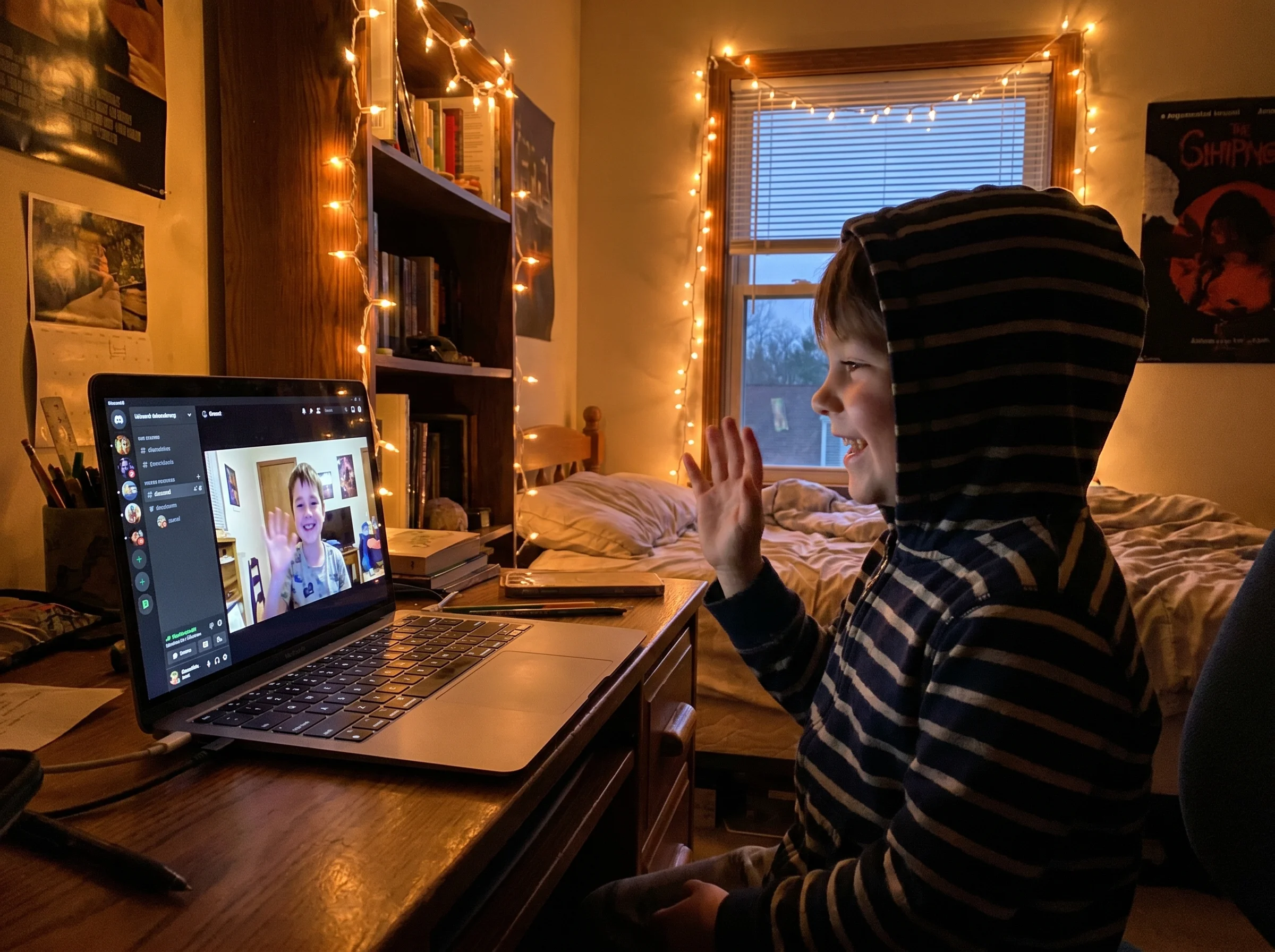
My son has friends he met at summer camp three years ago who are still in his life because they all play Minecraft together. He has a friend who moved from our town to North Carolina who he's actually closer to now than when they lived ten minutes apart. The move didn't end the friendship, it just changed the medium.
If your kid has a friend who moved, or a cousin who lives far away, or a camp friend they miss, gaming is one of the best long-distance friendship maintenance tools that has ever existed for kids. Take it seriously. Support it. Help them set up the Minecraft realm. Drive to the IRL meetup when it's feasible. These friendships are not a consolation prize for "real" ones. They might end up being some of the most enduring relationships your kid has.
The One Rule That Actually Matters
If you take one thing from this whole article, take this:
Stop monitoring for danger first. Start monitoring for character.
We've trained ourselves to look at gaming friendships through a risk lens. Is this person safe? Are they really a kid? Are they saying anything weird? Those questions matter, of course. You should still pay attention to them.
But they're not the most important questions. The most important question is: what kind of friend is my kid being in there?
Because that's the part you can influence. You can't fully control who your kid plays with. You can shape who your kid is when they're playing. You can praise it when you overhear it. ("Hey, I heard you let Marcus pick the game tonight even though you wanted something else. That was a good friend move.") You can name it when it's missing. You can talk about loyalty, kindness, taking turns, apologizing, listening. These are friendship skills, and they work the same whether the friend is in your basement or on a server in Ohio.
The shift from "is this friend safe for my kid" to "is my kid a good friend" is the whole game. It moves you from defense to coaching. It treats your kid as an active participant in their friendships, not a passive recipient of risk.
What to Do This Week
If you've read this far, you probably want a specific next step. Here it is.
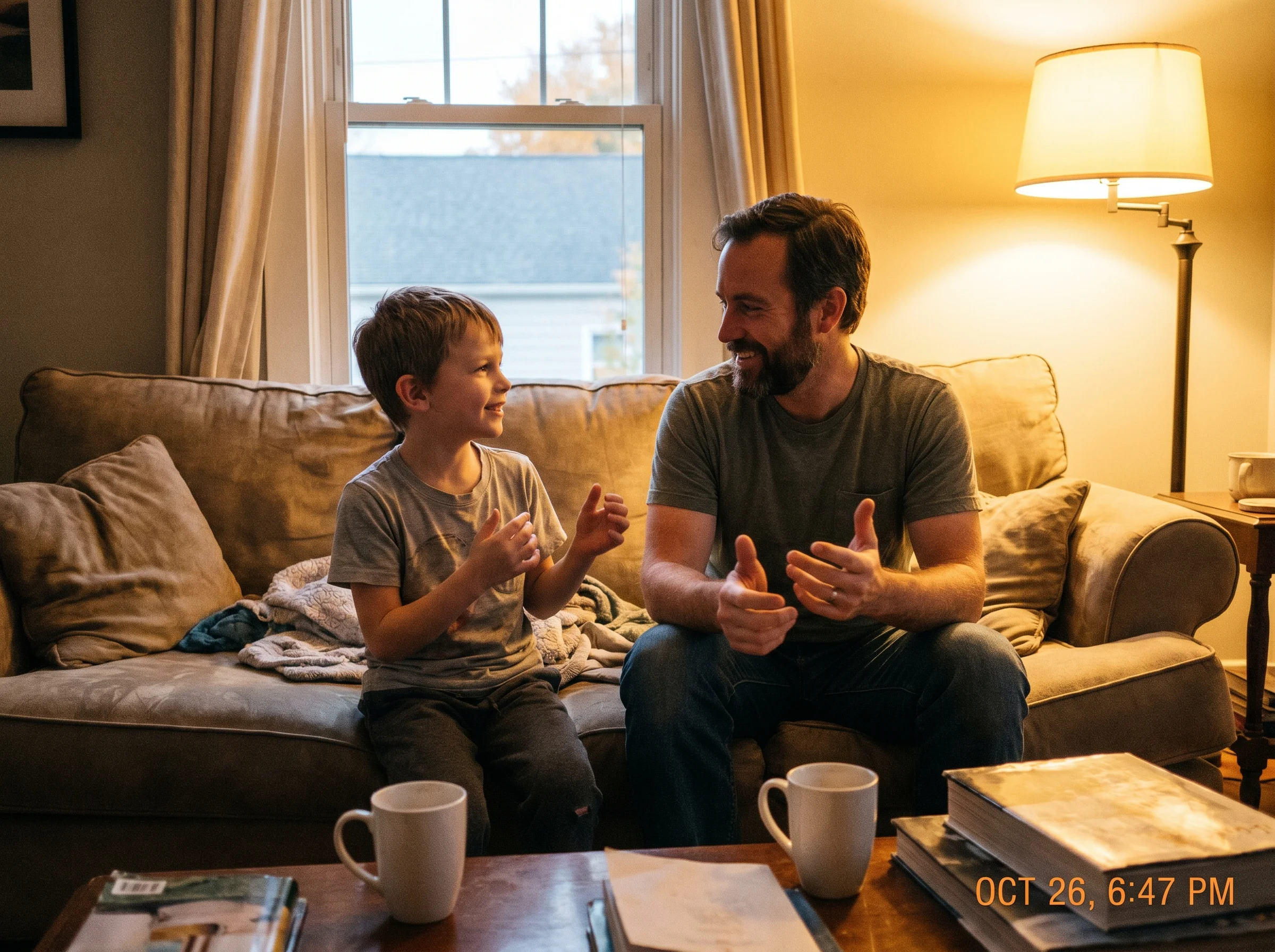
Tonight or tomorrow, when your kid is in a gaming session, walk in with a snack. Say hi to the group. Catch one or two names. Then later, at dinner or in the car, ask one specific question: "Who made you laugh in the game today, and what did they do?"
That's it. That's the whole assignment. One snack drop, one specific question. You'll learn more about your kid's friendships in those two small moves than you have in months of asking "how was your day."
The questions matter more than the rules. That's the whole reason we built what we built, and it's the thing I'd go back and tell myself three years ago, when I still thought my son's friends weren't real. They were. They are. And the best thing I ever did as his dad was finally take them as seriously as he did.

From this article
Pause, Play, Connect: Core Deck
Turning gamertags into people: The snack drop gets you in the room, but the car-ride question afterward is where the friendship stories actually come out. The Pause, Play, Connect Core Deck hands you that question on the nights you've run out of your own.
Keep reading
- When Online Gaming Friends Become Best Friends
- My Teenager Only Talks to Gaming Friends
- Should I Let My Kid Have Online Friends?
- My Kid Has No Friends, Only Plays Games Online
- How Does Online Gaming Affect Children?
- Are Online Gaming Friends Real Friendships for Kids?
- How to Tell if an Online Friend Is Real
- How to Identify a Toxic Friendship
Related Articles
Looking for more? Check out these related articles:

