
I spent two years telling my son "no" to multiplayer games because I was scared of who he'd meet online. I thought I was being a good dad. I thought I was protecting him.
Then one Sunday I picked him up from his grandma's house and he let slip that he'd been playing Fortnite with his cousin's friend group "all summer." Months. Behind my back. At my mom's house, where the rule was "you can play whatever Grandma lets you play."
I sat in the car feeling like an idiot. The question I'd been asking myself for two years, "should I let my kid have online friends?", was the wrong question. The right question was: "Do I know what's actually going on, and am I helping him do this well?"
If you're sitting where I was, this one's for you.
 Know who they play withPause, Play, Connect: Core Deck172 prompts that give you something better to ask than who are you playing with.$49 CAD • 90 cards • 18 reviewsShop the deck
The Question Behind the Question
When parents ask me if they should let their kid have online friends, what they usually mean is: "How do I keep my kid safe without making them a social outcast?"
That's a fair question. It's also a different question. Because here's the thing nobody told me when my son was 9: gaming friendships are real friendships. They're not lite versions. They're not pretend. Kids today are building genuine bonds in voice chat the same way I built bonds riding bikes around my neighborhood at 11. The medium changed. The friendship didn't. Research from the Pew Research Center backs this up: a majority of teens say they've made close friends online, and most of those friendships started through gaming. (I wrote more about that in our piece on online gaming friendships for kids if you want the deeper take.)
The cost of a blanket "no" isn't safety. It's secrecy. Kids who want to game will find a way. At a friend's house. At grandma's. On a Chromebook you didn't know had Discord installed. And when they do it without you, they do it without any of the skills you could've taught them.

Yes, But It Depends on Age
This is where most articles fail. They give you one rule for every kid. That's useless. An 8-year-old and a 15-year-old are in completely different worlds.
Under 8
Stick to known kids. Classmates, cousins, neighbors. Closed platforms where the only people they can talk to are people you've actually met. No open voice chat with strangers. Period. At this age, "online friends" should mean "the same kids from school, but on Roblox."
8 to 12
This is the bridge years. Start introducing supervised multiplayer with known friends. Maybe one game where they can play with kids beyond their immediate circle, with you nearby. This is the age to start the conversations, not lock everything down. The kids who get zero exposure here are the ones who go nuclear at 13 when their friends finally have phones.
13 and Up
More autonomy, but more conversation, not less. By now they're going to encounter strangers in voice chat whether you like it or not. Your job shifts from gatekeeper to coach. You're not picking their friends anymore. You're teaching them how to spot the weird ones.
The big distinction at any age: there's a massive difference between "friend of a friend from school we met in Roblox" and "random adult in voice chat we've never seen." Lumping those together is how parents either panic or shrug. Don't lump them.

How to Actually Vet an Online Friendship
Forget vague warnings. Here's a real checklist I use with my own kid:
- Do I know this kid's first name and how they met?
- Does my son talk about them like a person ("Jake's hilarious, his dog barks every time we're in a match") or like an avatar ("idk, he's just a guy in my squad")?
- If they voice chat, have I heard their voice? Does it sound like a kid?
- Does the friendship live only in one game, or are they DMing on other apps?
- Has my kid ever been asked to keep something secret from me?
That last one is the big one. Healthy friendships, online or offline, don't require secrecy from your parents.
A real example: my son had a "friend" in Apex who turned out to be a 22-year-old who streamed on Twitch. I freaked out for about 10 minutes. Then I actually watched a few of the guy's streams, listened to how he talked to my kid, and realized he was basically a chill college student running a wholesome squad. It was fine. But I needed to know. If I hadn't been asking questions, I never would've found out, and the next "older friend" might've been a very different story. (For more on this, check out our piece on how to tell if an online friend is real.)
The Voice Chat Conversation
Voice chat is where the real friendship happens. It's also where the real risk lives. You can't have one without dealing with the other.
Banning voice chat outright usually backfires. Kids will either find a workaround (Discord on a friend's phone) or feel like the actual fun part of gaming has been taken away.
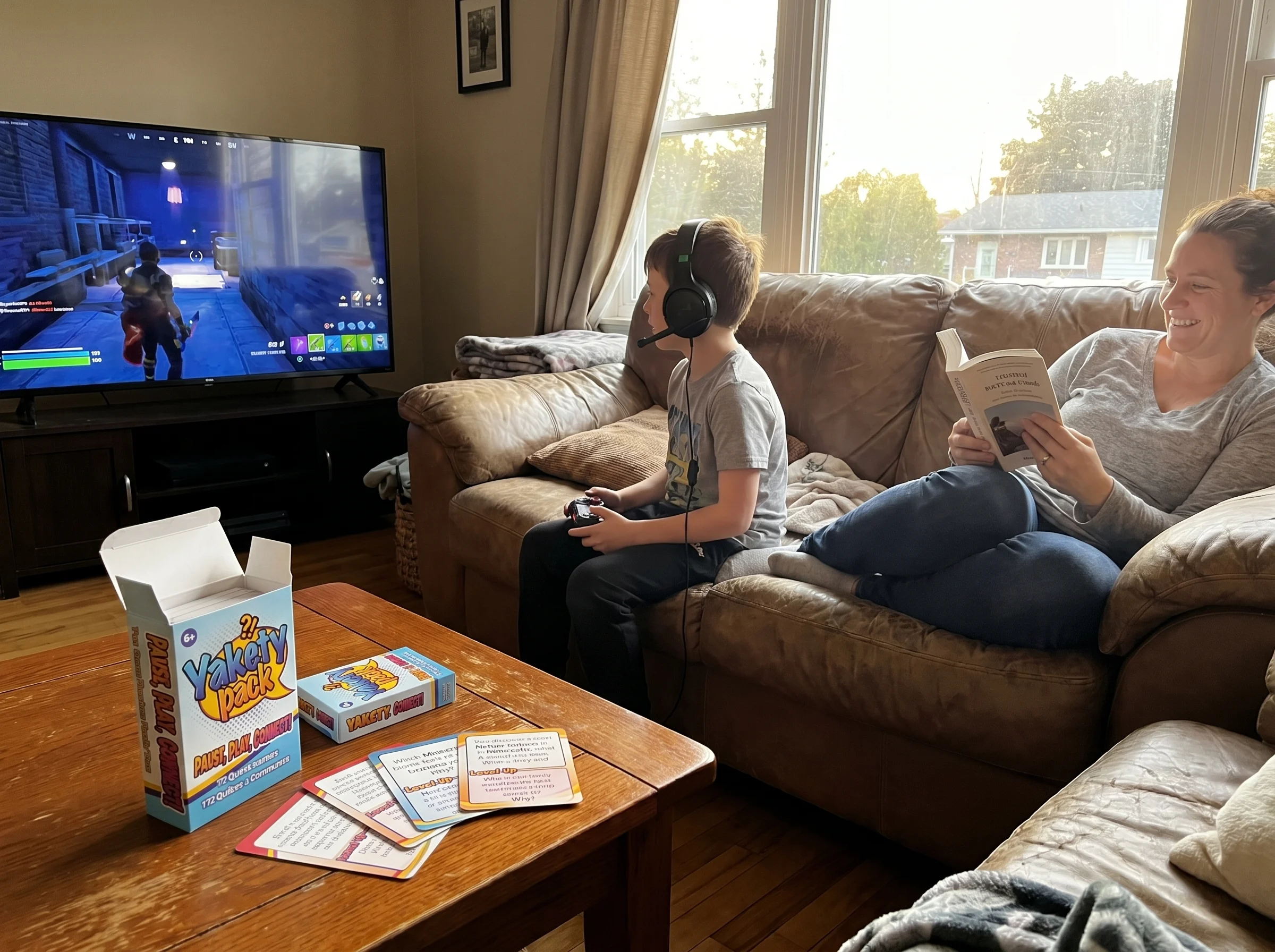
What works better: voice chat in shared spaces, not bedrooms. Headphones on the couch. Speakers in the living room when possible. You don't have to hover. You just have to be in earshot occasionally. The first time you hear something weird, you'll know exactly what to do about it.
Monitoring Without Spying
There's a difference between surveillance and involvement. Surveillance is reading their DMs in secret. Involvement is sitting next to them during a match and asking who Jake is.
Look, I tried asking my son "how was Fortnite today?" for weeks. I got grunts. Then one night I asked, "What's the craziest thing your squad did this week?" and he talked for twenty minutes about a teammate who kept getting eliminated by the same tree.
The question mattered.
This is actually why we started building Yakety Pack. Most of my early questions about my son's online friends were the wrong questions. Kids don't want to be interrogated. They want to be asked things they actually want to answer. A card in our deck reads, "Who's the funniest person in your squad and why?" That one question has gotten me more information about my son's online social life than two years of "who are you playing with?" ever did.
Red Flags vs. Normal Weird Stuff
Parents waste so much worry on stuff that doesn't matter. Here's the actual triage:
Real warning signs
- Asking your kid for personal info (real name, school, address, photos)
- Requests to move the conversation to private apps
- Anyone telling your kid to keep things secret from you
- Adult behavior from someone who claims to be a kid
- Gifts, gift cards, in-game currency from someone you don't know
Normal weird stuff that's actually fine
- Inside jokes you don't get
- Usernames like "BananaLord3000"
- Occasional late-night gaming binges
- Friendships that fizzle out after a month
- Your kid being more interested in their squad than in you for a stretch
If you're seeing the first list, act fast. The FBI has good guidance on online predator warning signs worth bookmarking if anything on the first list is showing up. If it's the second list, breathe. (And if you're ever wondering whether a friendship has crossed into something unhealthy, our guide on identifying a toxic friendship has more on the patterns to watch for.)
What to Do If You've Already Said No
If you've been the "no multiplayer" parent, like I was, it's not too late to change course. In fact, doing it now is way better than doing it never.
Here's roughly what I said to my son when I un-banned multiplayer:
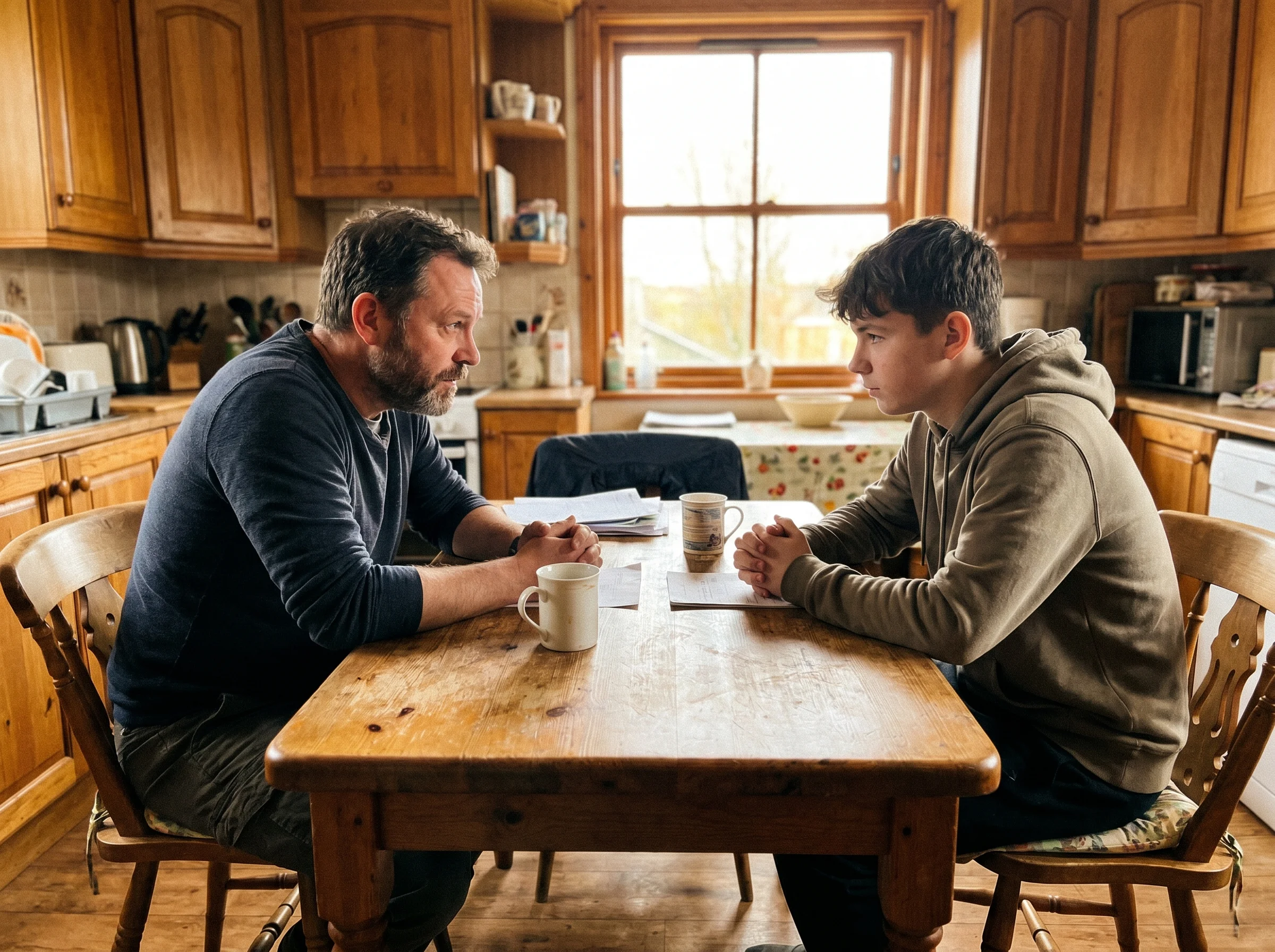
"Hey. I've been thinking about this. I said no to multiplayer because I was worried about who you'd meet. I still care about that, but I realize I was making it harder for you to do this with me instead of around me. So here's what I want to try. You can play with people you actually know, starting with your cousin's group. Voice chat stays in the living room. I'm going to ask you about it sometimes, not because I don't trust you, but because I want to actually know your friends. If something weird happens, I want you to tell me. I'm not going to take everything away if you do."
He looked at me like I had three heads. Then he said, "Okay." And that was it. Kids are way more forgiving of parental U-turns than we think.
 Worth asking before the meetupPause, Play, Connect: Core Deck$49 CAD • 172 promptsSee the deck
What If They Want to Meet in Person?
This one freaks parents out, but it's not an automatic no. Kids meet online friends in person all the time now. The conditions matter:
- Parents involved on both sides (you've talked to them)
- Public place
- You're there, at least the first time
- Reasonable age match
- Your kid has been friends with this person long enough that it's a real friendship, not a first-meet from last week
If all those check out, it can actually be a beautiful thing. I've watched my son meet a gaming friend at a tournament and they hugged like cousins.

The Honest Answer
Should you let your kid have online friends? Almost always yes. With conditions. With you involved enough to actually know what's happening.
The blanket-ban approach doesn't make kids safer. It just makes sure that when something goes wrong, you're the last person they'll come to. The kids with the healthiest online friendships are the ones whose parents took an interest, asked decent questions, and treated gaming as a real social world instead of a babysitter or a threat.
If you do one thing today, don't make it a new rule. Make it a question. Try this one tonight: "Who's the most interesting person you've played with this week, and what made them interesting?"
Then actually listen.
That's the start of everything.

From this article
Pause, Play, Connect: Core Deck
Coach, not gatekeeper: Every vetting checklist here runs on your kid volunteering details, and that only happens with questions they actually want to answer. The Pause, Play, Connect Core Deck keeps a stack of those within reach of the couch.
Related Articles
Looking for more? Check out these related articles:

