
My son went through what I now call his "Discord era." For about six months, the only voices in our house that made him laugh out loud belonged to kids I'd never met, in towns I'd never been to. He'd come home from school, inhale dinner in twelve minutes flat, and disappear into his room with a headset until I knocked on the door at 10pm.
I thought I was losing him.
Turns out, I was just out of the loop. And the way back in wasn't what I expected.
If you're reading this because your teenager only talks to gaming friends, I want to save you the six months of panic I went through. Here's what I wish someone had told me.
First, Let's Name What You're Actually Feeling
It's not really about the gaming. It's about the grief.
There's this specific, weird shame that nobody talks about: your kid would rather talk to strangers than you. The people making them laugh are people you've never met. You don't know their faces. You don't know their parents. You just know their gamer tags, and even those sound made up.
One night I stood outside my son's door and listened to him belly-laugh at something a kid named "ZachAttack42" said. I hadn't gotten a laugh like that out of him in weeks. And I felt jealous. Of a username. Of a kid who was probably eating Hot Pockets in a basement two states away.
That feeling is the real thing you're dealing with. Not the screen time. Not the headset. The quiet ache of watching your kid become a person who has a whole life you're not in.
Name it. Then keep reading, because I promise it gets better.
 For the five minutes insidePause, Play, Connect: Core Deck172 prompts that hand you a better question for the five minutes you get.$49 CAD • 90 cards • 18 reviewsShop the deck

Yes, These Are Real Friendships (Probably)
The Gen Z definition of "real friend" has changed, and our definition is outdated. For our kids, online IS in-person. The geography moved while we weren't looking.
Here's the test I use: Does your teen know things about these gaming friends? Like, real things. Do they know one of them has a dog named Biscuit? Do they know which one's parents are getting divorced? Do they know who's failing geometry?
If yes, that's friendship. That's not "gaming with strangers." That's hanging out, just on a different couch than the one you grew up on. Research from the Pew Research Center found that more than half of teens have made a new friend online, and most of those friendships start through games.
There's a difference between gaming WITH people and gaming NEAR people. The first one is social. The second one isn't. Your teen, laughing and strategizing and yelling about who got sniped, is doing the first one.
The thing that finally clicked for me was finding out my son had been checking on one of his gaming friends every night for a week because the kid was going through something rough at school. That's not a stranger. That's a friend. I just didn't recognize the shape of it.
Why Your Teen Chose Gaming Friends (And It's Not About You)
Teen brains are biologically wired to prioritize peers over parents. This isn't a screen problem. This is adolescence on schedule. If your kid suddenly cared more about your opinion than their friends' opinions at age 15, THAT would be the thing to worry about.
Gaming friends meet teens where they are. Low pressure. Shared interest already baked in. No awkward silences, because there's always a game happening. For a kid who's even slightly socially anxious, gaming removes the eye contact tax. They get to be funny and sharp and connected without all the body language stuff that makes teen socializing exhausting.
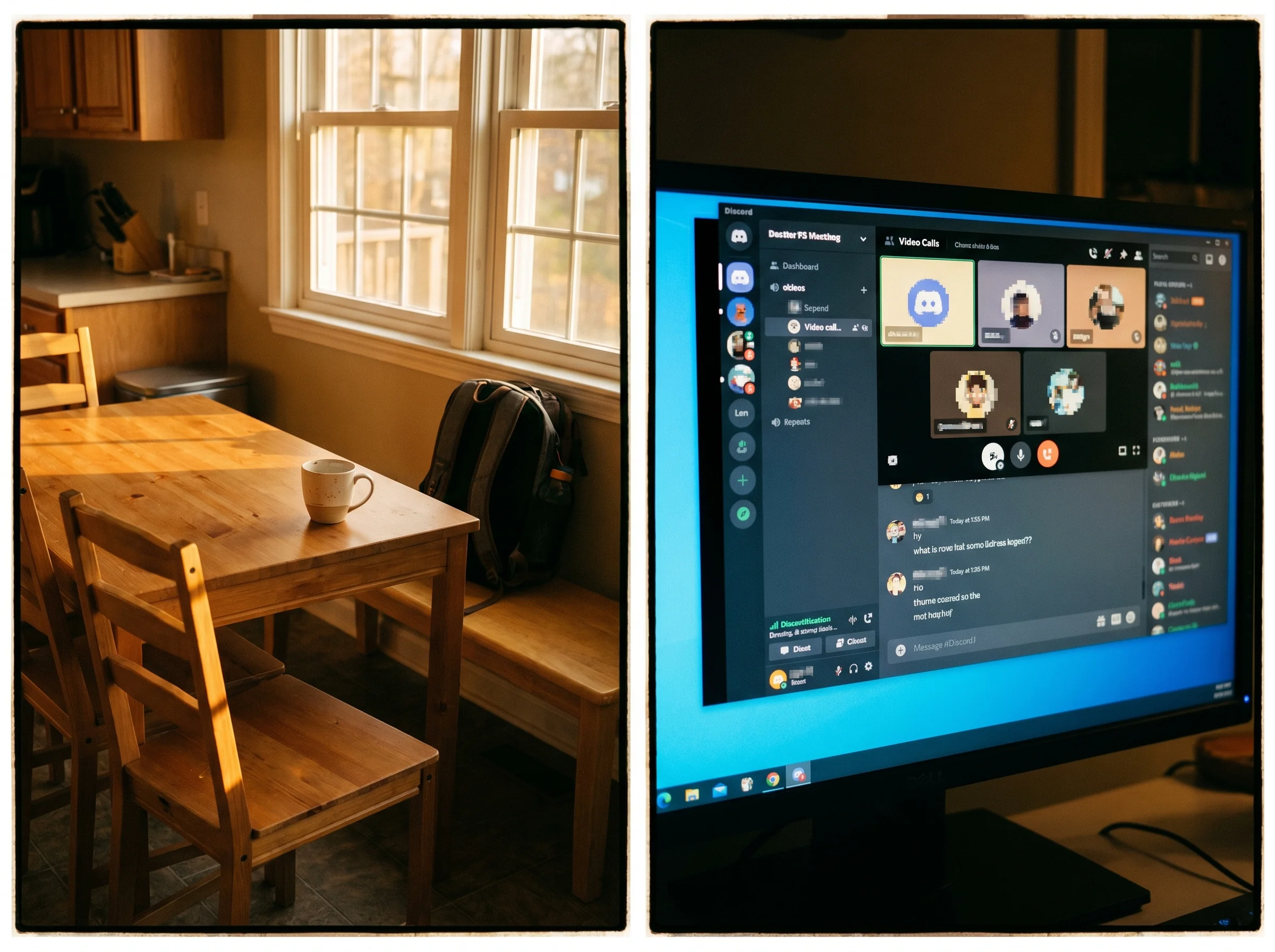
And here's the part nobody mentions: school friendships often fall apart in the teen years. The geography of teen life splinters. Kids change schools, change classes, change interests, change identities every six months. The friends who survive are usually the ones who share a hobby that gives them a reason to keep showing up. For a lot of teens now, that hobby is a game.
The Real Question Isn't "How Do I Limit This?" It's "How Do I Get In?"
This is the part I got wrong for months.
I kept trying to get my son OFF the game so we could talk. I'd knock and say "come downstairs, let's hang out." He'd come down, sit on the couch, stare at his phone, and wait for permission to go back upstairs. It was miserable for both of us.
The shift happened when I stopped trying to pull him out of his world and started asking about it.
Bad questions I tried first:
- "How was gaming today?" (Gets a grunt.)
- "Who were you playing with?" (Gets two names and a shrug.)
- "Is that kid even real?" (Gets an eye roll that could power a city.)
Questions that actually worked:
- "What was the funniest thing that happened in your game tonight?"
- "Who's the best player in your group and why?"
- "Has anyone in your Discord done something cool lately?"
- "What's something your gaming friends taught you this month?"
That last one is the question that got me a twenty-five minute monologue about a kid in Norway who's teaching my son chess. NORWAY. My kid has a chess tutor in Norway and I almost missed it because I kept asking "how was gaming."
The question mattered. The question always matters.
Honestly, this is where Yakety Pack came from. My co-founder and I kept fumbling for the right thing to say and landing on dumb ones. The cards aren't magic. They just put a better question in front of you when your brain's tired and your kid's about to disappear back upstairs.
How to Tell If the Gaming Friendships Are Healthy
Here's the quick framework I use now.
Green flags:
- Your teen laughs during gaming sessions
- They get excited about scheduled hangouts ("we're all on at 8")
- They mention friends by name, even if it's a gamer tag
- They defend these friends when you ask about them
- They sometimes mention things going on in those kids' lives
Yellow flags:
- The friend group constantly changes, new names every week
- Heavy secrecy about who they're talking to
- Mood crashes after gaming sessions that they won't explain
- Nobody ever gets mentioned by name, it's all vague
Red flags:
- Adults in the friend group
- Money being exchanged (this includes gift cards, V-Bucks, anything)
- Your teen seems to be performing for approval rather than just having fun
- Total withdrawal from EVERYTHING else, not just family time. Sleep, food, hygiene, old hobbies, all gone.
Most teens are sitting comfortably in the green and yellow zones. If you're seeing red flags, that's a different conversation, and it's worth getting a real professional in the loop. The American Academy of Pediatrics has solid guidance on when gaming behavior crosses into something that needs outside help.
 Next to the headsetPause, Play, Connect: Core Deck$49 CAD • 172 promptsSee the deck
What to Do If You Genuinely Don't Game
You're not at a disadvantage. You're an outsider with curiosity, and that's actually useful.
Three things that worked for me, a guy who has never finished a single Valorant match:
- Watch them play for ten minutes without commentary. Don't correct, don't ask if they should be doing homework, don't react when they swear at the screen. Just watch.
- Ask them to teach you ONE thing about the game. Take it seriously. Write it down if you have to.
- Use the "tell me who's who" approach. Ask them to introduce you to their gaming friends by gamer tag and what each one is good at. You're not asking to meet them. You're asking your kid to describe their world.
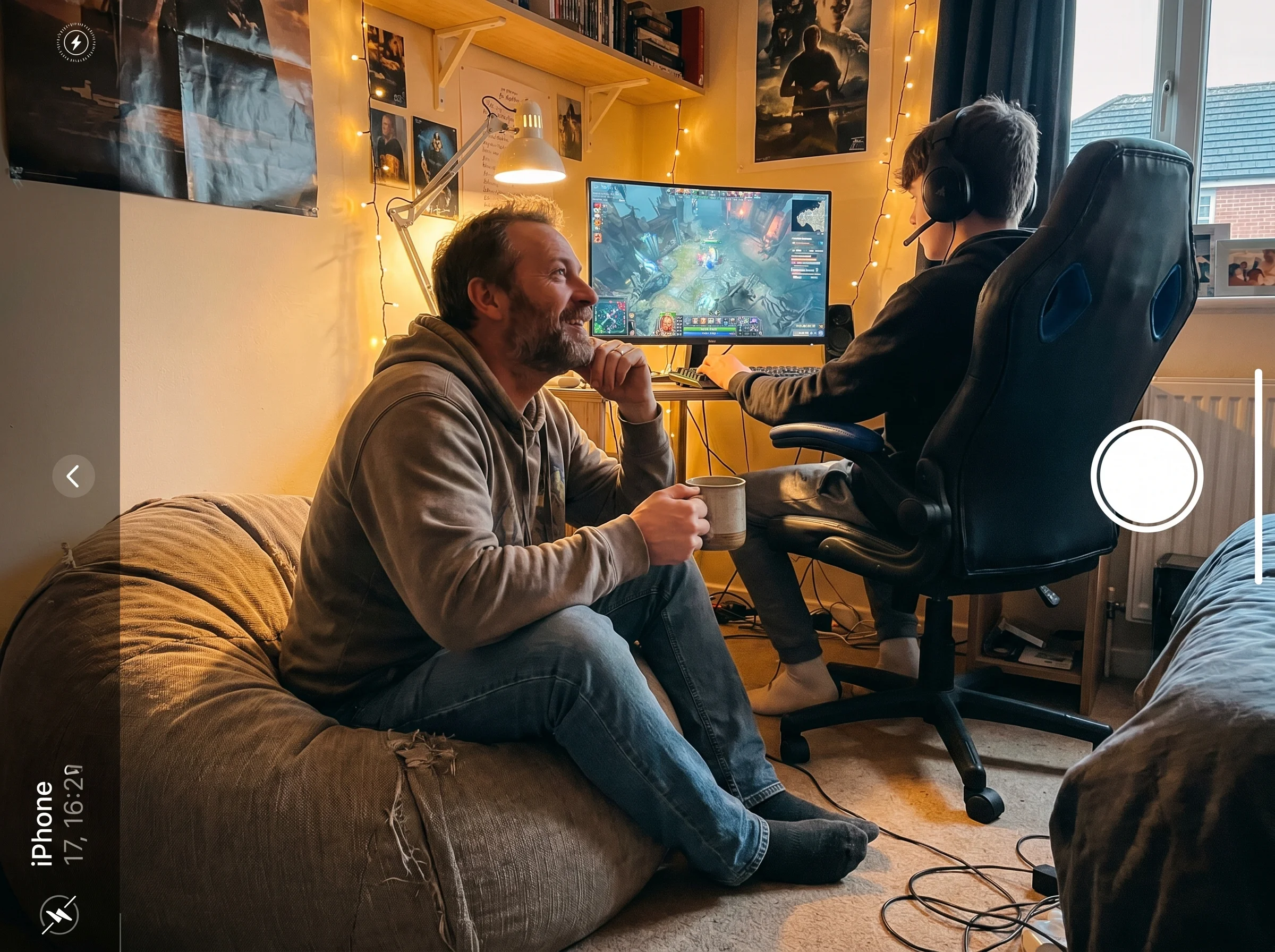
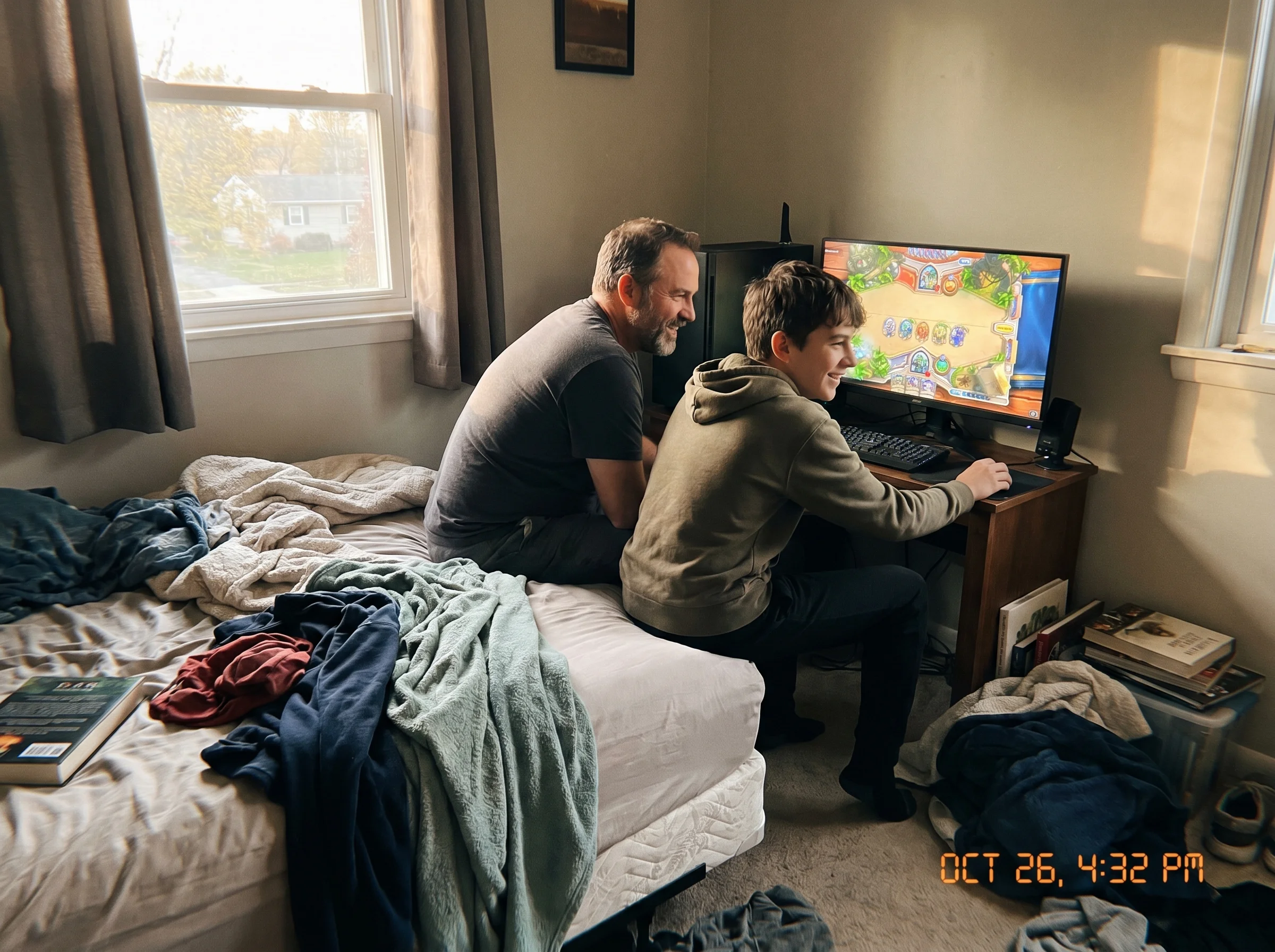
The night I asked my son to walk me through the different Valorant agents and what they do, I learned more about who he was becoming than I had in our last ten car rides combined. Not because Valorant is deep. Because he was finally talking to me about something he actually cared about, and I was finally listening to something I didn't already have opinions about.
When to Actually Worry (And When to Chill Out)
Worry less about:
- Your teen preferring gaming friends to family time (age-appropriate)
- Not seeing school friends much (school friendships often don't survive the teen years)
- Spending three hours a night socializing through a game (that's just socializing)
Worry more about:
- Skipping meals, sleep, or hygiene
- Anxiety or upset after gaming sessions that they won't talk about
- Complete withdrawal from in-person activity, including with the family they used to like being around
- Signs they're being treated badly inside the group
The honest truth I had to learn: most teens who only talk to gaming friends are fine. They've just found their people before you got a chance to meet them. That's not a failure. That's adolescence working.

The One Thing to Try This Week
Pick one night. Knock on the door. Don't ask them to come out. Ask if you can come in for five minutes and have them show you what they're playing.
Then ask: "Who in your group is the funniest?"
Sit with whatever answer you get. Don't follow up with three more questions. Just listen, laugh if it's funny, and leave when it gets quiet.
Do that once a week for a month. I promise you'll be surprised what happens.
Your teen having only gaming friends usually isn't the problem you think it is. The problem is that you're not one of the people they talk to about those gaming friends. Fix that, and the rest takes care of itself.
If you want to go deeper on whether these friendships are "real," I wrote a bigger piece on online gaming friendships for kids that covers the broader picture. But if you only do one thing today, do the knock. The knock is everything.

From this article
Pause, Play, Connect: Core Deck
After the knock: Getting invited into your teen's room is step one; having something worth saying when the headset comes off is step two. The Pause, Play, Connect Core Deck keeps a better question than "how was gaming" within arm's reach.
Related Articles
Looking for more? Check out these related articles:

