
Last Tuesday, my 9-year-old taught me that penguins can be jerks. We were playing KeyWe, where you control postal worker birds, and she kept "accidentally" pecking my character off ledges while giggling maniacally. Twenty-five minutes of chaos, laughter, and more connection than I'd gotten from a week of "how was school?" conversations.
That's the magic of quick co-op gaming sessions. No marathon gaming binges, no screen time guilt, just focused bursts of family fun that actually bring you together. After years of being the "get off that screen" dad, I've learned that the right games at the right length can create more genuine moments than most planned family activities.
Why 30 Minutes is the Sweet Spot for Family Friendly Co-op Games
For the bigger frame, see our pillar piece on turn screen time into connection time.
Here's what took me way too long to figure out: kids' gaming attention spans work differently than adults think. My 6-year-old is fully engaged for about 20 minutes before he starts pressing random buttons just to see what happens. My 11-year-old could play for hours, but after 30 minutes, the competitiveness ramps up and someone's feelings get hurt.
The 30-minute window kills the dreaded "one more level" negotiations. When the timer goes off, it goes off. No arguments, no pleading, no "but we're almost at the boss!" We set a kitchen timer, and when it dings, we wrap up. This simple rule transformed gaming from a battle into a treat.
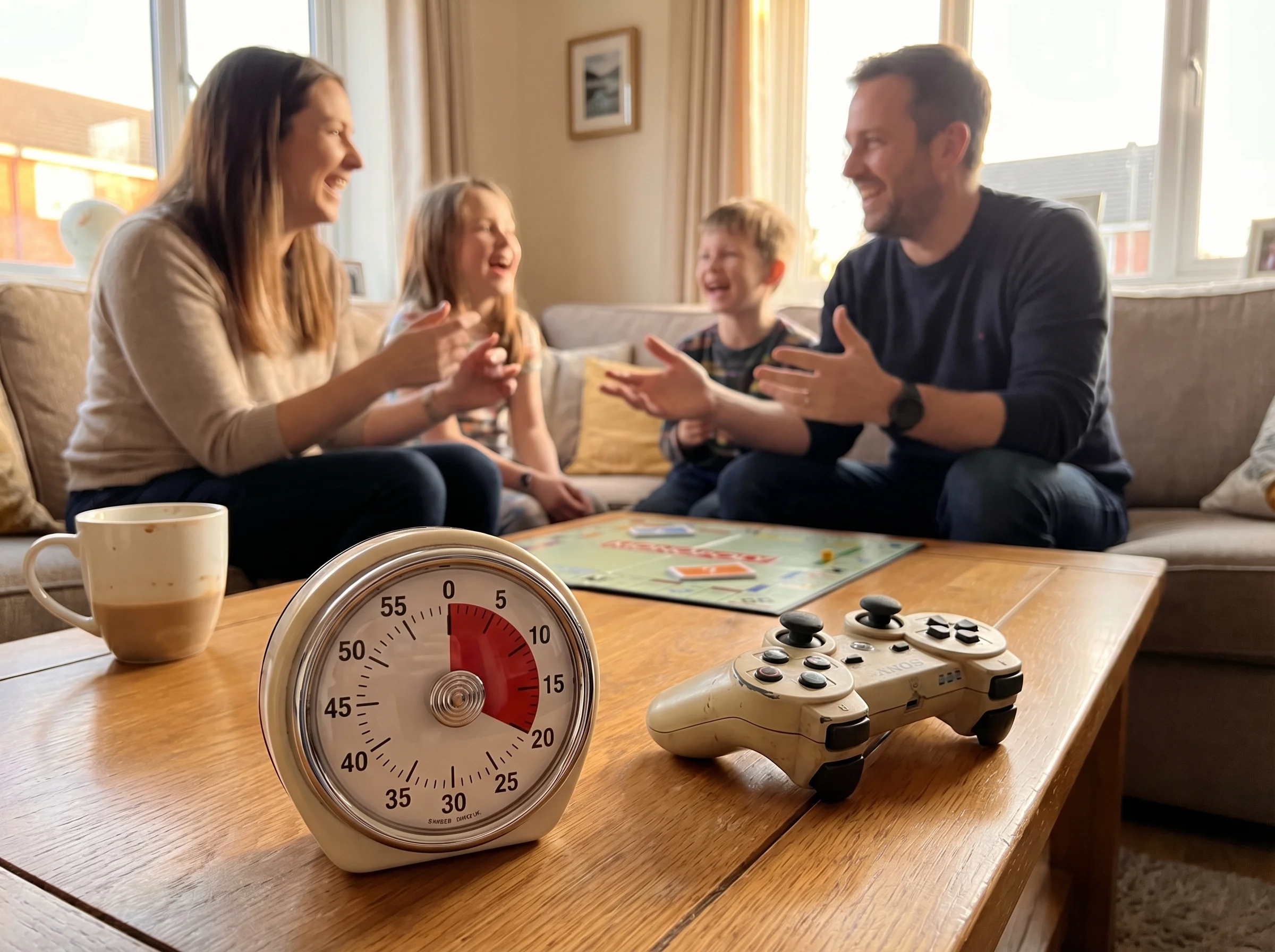
I stumbled onto this by accident. We were playing Overcooked one Saturday, and I'd promised my wife we'd only play for "a bit" before heading to the grocery store. I set a 30-minute timer to keep myself honest. When it went off, something interesting happened. The kids didn't melt down. They were satisfied. We'd had our fun, nobody was frustrated or overtired, and we were actually excited to play again tomorrow.
The Age Gap Challenge (And How to Solve It)
The hardest part of family gaming isn't finding games. It's finding family friendly co-op games under 30 minutes that work when your kids are at completely different skill levels. Nobody talks about this, but it's the reason most family game sessions end in tears.
Here's what actually works:
The Helper Strategy: In Lovers in a Dangerous Spacetime, my 6-year-old mans the shield while his sister pilots. He feels important, she handles the complex navigation, everyone wins. Games with defined roles let you assign tasks based on ability.
Built-in Handicapping: Some games are genius about this. In Heave Ho, you can give younger kids grippier hands or lighter characters. Nobody notices the advantage, but suddenly your kindergartener is keeping up with their older siblings.
The Support Role Flip: Sometimes I let my older kids play support to the younger ones. "Your job is to keep your brother alive" changes the whole dynamic. Instead of racing ahead and leaving him behind, they become protective teammates.
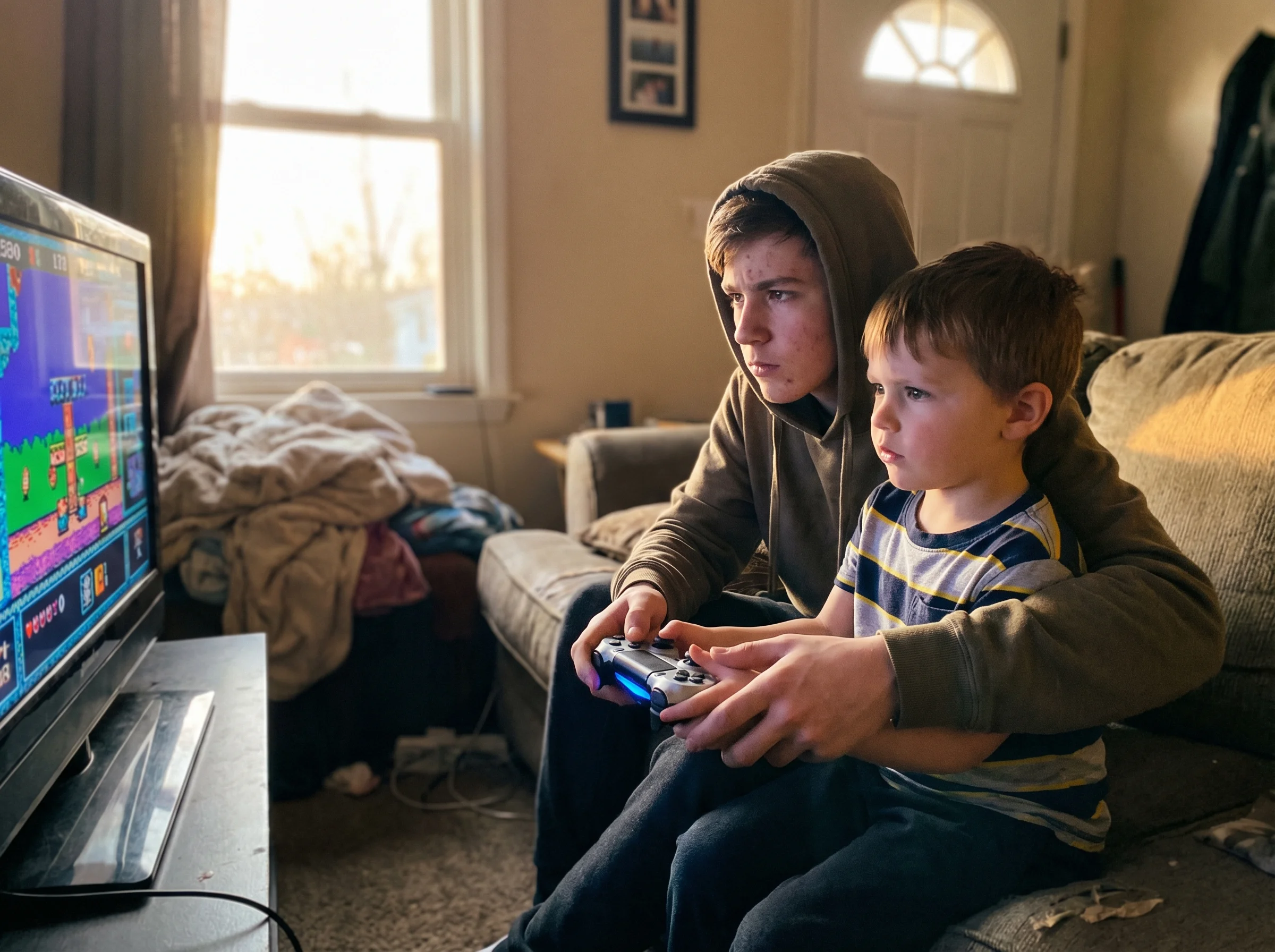
Last month, we discovered A Way Out has a perfect workaround. It's a two-player game, but we play it as a family with the kids sharing one controller, taking turns with decisions. The 11-year-old handles the action sequences, the 6-year-old does the exploration parts. They negotiate, strategize, and nobody feels left out.
Gateway Games for Non-Gamer Parents
"I don't do video games" was my wife's mantra for years. Controllers intimidated her. Too many buttons, too much happening on screen. Then I introduced her to Untitled Goose Game.
One button to honk. One button to grab things. That's it. Within minutes, she was terrorizing virtual villagers and cackling like a mad scientist. Now she asks ME if we can play "the goose game" after the kids go to bed.
Moving Out is another winner for gaming newbies. You're just furniture movers. Throw couches, break windows (on purpose!), and laugh when everything goes wrong. There's no way to fail, really. You just get a worse rating, which honestly makes it funnier.
Gang Beasts might look violent, but it's actually hilarious slapstick. The controls are intentionally clunky, which means everyone's bad at it. When nobody can control their character properly, suddenly mom's random button mashing strategy works just as well as anyone else's.
The secret is finding games where incompetence is part of the fun. When everyone's terrible, nobody's terrible.
The Free-to-Play Gems Worth Your Time
Look, I get it. Dropping $30 on a game your family might play twice feels risky. Here's what's actually worth downloading for free:
Rocket League Sideswipe: Car soccer. That's it. That's the game. Free on mobile, simple enough for anyone, exciting enough to hold attention. Fair warning: your kids will get scary good at this while you're still figuring out how to jump.
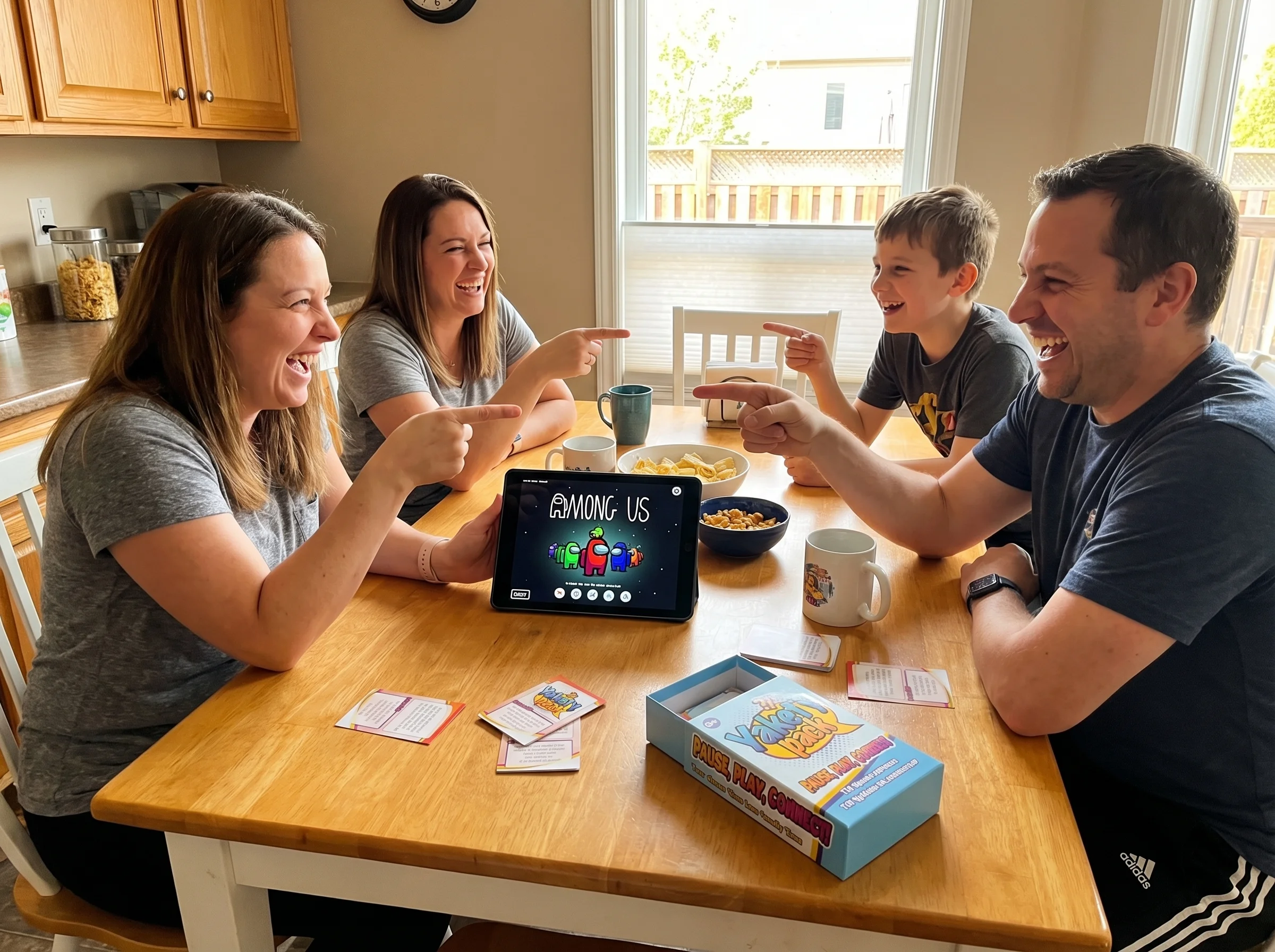
Among Us: When your family's all together, this becomes hilarious. Watching your 8-year-old try to lie about being the imposter? Priceless. Seeing your spouse's terrible poker face? Even better. Just play private games with family only.
Fall Guys (when it's free on PlayStation/Epic): Imagine if someone turned a bouncy castle into a competitive game show. You run, you jump, you get knocked off platforms by giant fruit. My kids spend more time laughing at my failures than trying to win.
Skip anything that mentions "in-app purchases" prominently. Skip anything that requires grinding to unlock basic features. If it's free but constantly asking for money, it's not really free.
For the Co-Play Window: A curiosity card lands during the in-between beats. Download the Yakety Pack app so a prompt is one tap away when you sit down together.
Managing the Meltdown Moments
For the Long Build: Connection grows from many small low-pressure conversations. A deck of conversation cards for families with gamer kids on the table makes those talks routine.
I'm going to tell you about The Overcooked Incident. We were on level 3-4, the one with the moving walkways. My son was chopping, my daughter was cooking, I was plating. Then everything caught fire. My daughter panicked, my son yelled at her for not watching the stove, she threw her controller, he called her a baby, and suddenly we weren't having fun anymore.
That's when I learned pre-game prep matters more than game selection. Now we have rules:
- Practice rounds don't count. First game is always for learning and messing up.
- Celebrate spectacular failures. When we lose badly, we high-five and laugh about it.
- Rotate roles every round. Nobody gets stuck with the "boring" job.
- Take a breath between attempts. Literally. We all take three deep breaths before retrying a level.
The biggest shift? I stopped caring about winning. When the kids see me laughing at my own mistakes, they relax too. "Did you see dad just walk straight off that cliff?" becomes the highlight, not the lowlight.
Beyond the Controller - Making Connections Last
The real magic happens after you put the controller down. That's when my kids replay the best moments, strategize for next time, or just giggle about dad's epic failures.
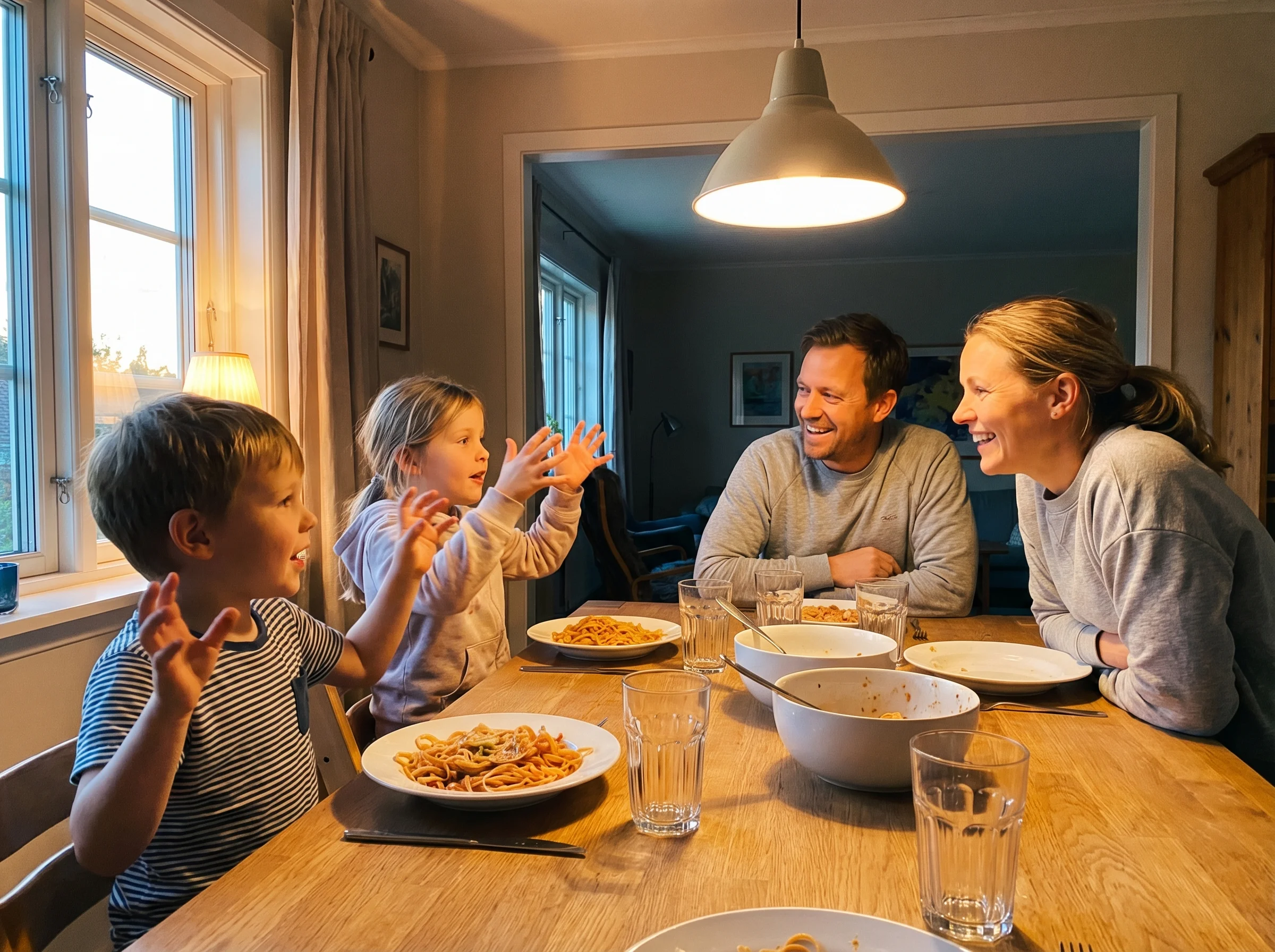
After a KeyWe session, my daughter spent dinner explaining her mail-sorting system to everyone. A simple "How would you organize a post office?" question led to a 20-minute discussion about efficiency, teamwork, and why penguins would actually make terrible mail carriers.
These game references become family shorthand. "Remember when you Overcooked it?" is now how we describe any situation where someone panics unnecessarily. "Pull a Gang Beasts" means to succeed through pure chaos rather than skill.
Sometimes I'll pull out a question from our Yakety Pack after gaming: "If you could add one rule to any game, what would it be?" My son once said he'd make it so in Minecraft, creepers gave you hugs instead of exploding. That led to talking about how games could be different, kinder, more creative.
Your Quick-Start Game Library for Family Friendly Co-op Games Under 30 Minutes
For Ages 5-8:
- Untitled Goose Game - One-button chaos, taking turns is easy
- Moving Out - Furniture moving mayhem, failure is funny
- KeyWe - Cute postal birds, simple controls
- Pikuniku - Weird physics, gentle humor
- Donut County - You're a hole. You eat things. Kids love it.
For Ages 8-12:
- Minecraft Dungeons - Minecraft without the building complexity
- Rocket League Sideswipe - Quick matches, easy to learn
- Portal 2 Co-op - Problem solving without time pressure
- A Way Out - Story-driven, decisions matter
- Fall Guys - Silly competition, losing is fun
For Mixed Age Groups:
- Lovers in a Dangerous Spacetime - Different roles for different abilities
- Overcooked (with practice rounds!) - Teamwork with clear tasks
- Gang Beasts - Everyone's equally terrible
- Heave Ho - Customizable difficulty
- It Takes Two - Requires teamwork, not just skill
The one game every family should try? Lovers in a Dangerous Spacetime. It teaches real cooperation, lets everyone contribute based on their ability, and when you defeat a big boss together, that shared victory feels earned.
For the Repeat Sessions: A deck of Yakety Pack conversation cards near the gaming setup keeps the post-game ritual going.
Making It Happen
Here's your homework: Pick one game from the list above. Set a 30-minute timer. Play with your kids tonight. Don't worry about winning. Don't stress about screen time. Just be present in their world for half an hour.
When the timer goes off, ask one question about the game. Not "did you have fun?" but something specific. "What was the hardest part?" or "If you designed the next level, what would you add?" Watch their eyes light up when they realize you're actually interested.
That's the secret none of the parenting blogs tell you. Gaming isn't about the games. It's about showing up in your kids' world, speaking their language, and creating inside jokes that last way longer than any high score.
My kids don't remember most of the games we've beaten. But they remember the time dad fell off the same cliff seventeen times in a row and laughed harder each time. They remember when mom became the Goose Game champion. They remember when we worked together to finally serve that stupid burger order in Overcooked.
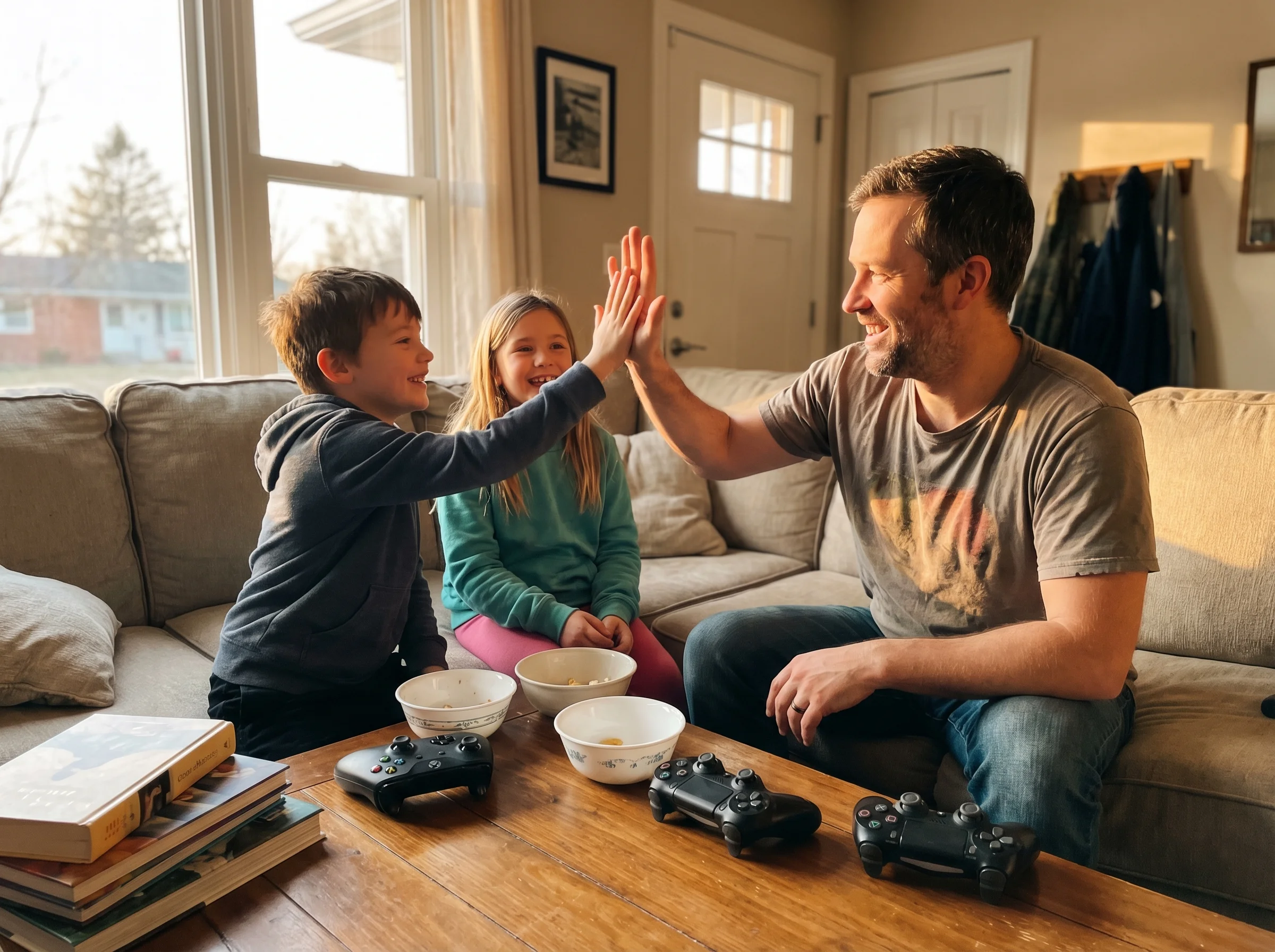
Thirty minutes. That's all it takes to build these memories. No guilt, no marathon sessions, no fights about "one more level." Just connection, one quick game at a time.
Now if you'll excuse me, I have a rematch with a certain postal penguin who thinks she's gotten away with too much. This time, I'm ready for her cliff-pushing tactics.
Turn Screen Time Into Connection Time
Yakety Pack is a conversation card game built for gaming families. 172 prompt cards that meet kids where they are, in the games they already love.