
I said no to Fortnite for almost a year.
Then I watched my son sit silently at a birthday party while six other boys talked about "the new season" like it was a foreign language he was supposed to speak. He nodded along. He laughed when they laughed. But I could see it on his face: he had no idea what they were saying, and he was trying really hard to hide it.
That night, driving home, I realized I wasn't protecting him from something. I was locking him out of something. And the something on the other side of the door wasn't a screen. It was his friends.
So if you're asking, "should I let my 10 year old son play Fortnite," you're probably standing where I was standing. Let me walk you through what I learned after I caved, because the answer is more nuanced than yes or no.
The Real Question Isn't Yes or No
Most articles on this frame it like a light switch. Allow or forbid. Good parent or bad parent.
That's not how parenting works, and it's definitely not how Fortnite works.
The better question is: "How do I let him play Fortnite in a way that brings us closer instead of pushing us apart?" Because here's the thing nobody wants to say out loud: in 2024, most of his friends are already playing. Pew Research data on teens and video games shows the vast majority of boys are gaming regularly by this age. When your kid is the only one not playing, he's not just missing a game. He's missing the running joke, the recess conversation, the "did you see what happened last night" stuff that ten-year-old friendships are built on.
That's a real cost. It might still be worth paying for your family. But pretending it doesn't exist is how parents end up confused why their "principled stand" turned their kid into the quiet one at lunch.
 Whatever you decide tonightPause, Play, Connect: Core Deck172 prompts that give you a way into the thing his friends keep talking about.$49 CAD • 90 cards • 18 reviewsShop the deck

Fortnite Isn't One Game (And This Matters)
Here's something I didn't know until I sat down with my son: Fortnite is basically a platform with six or seven different games inside it.
- Battle Royale: the famous one, 100 players, last one standing, building included
- Zero Build: same battle royale, no building (way less intimidating for new players)
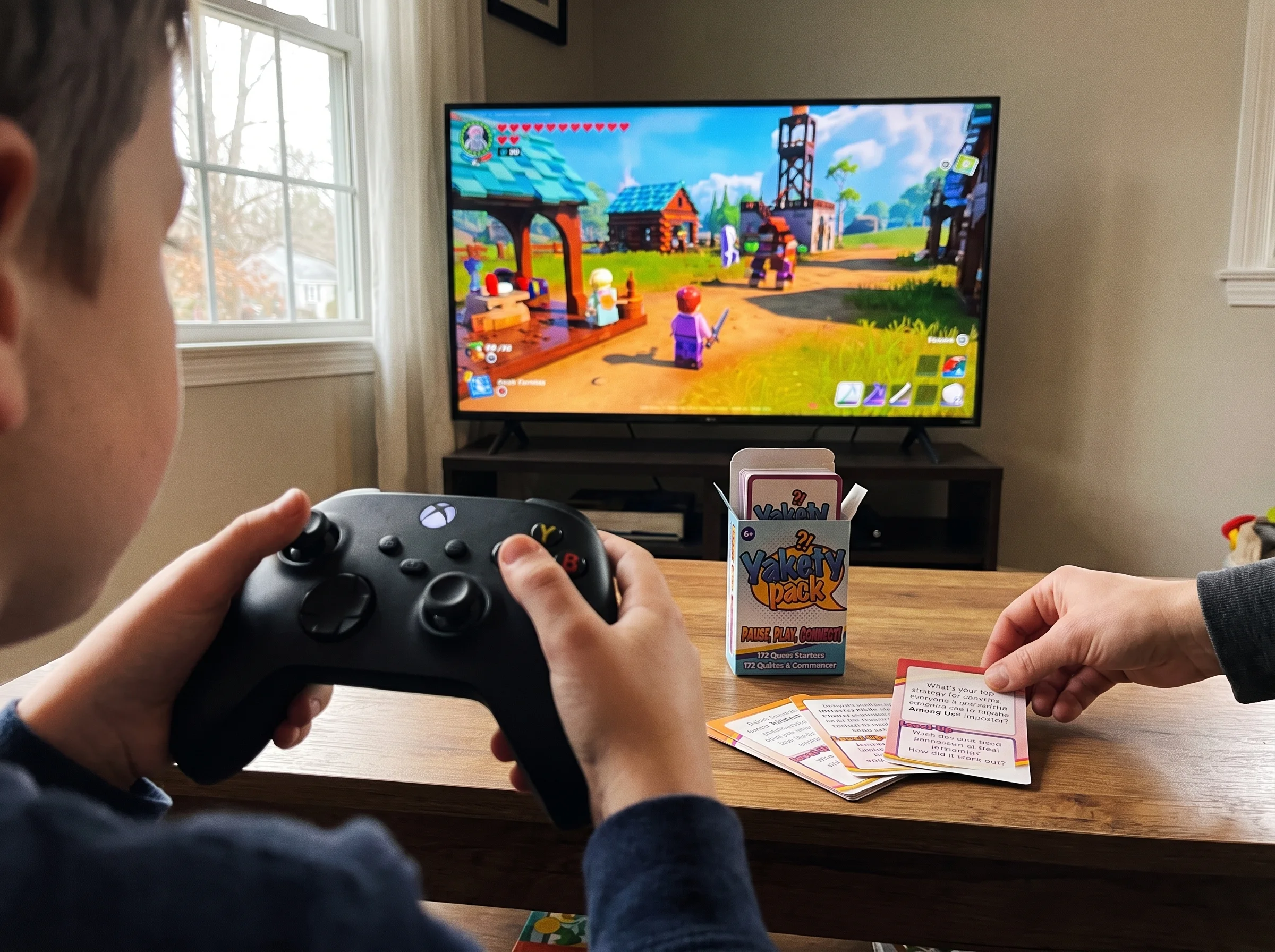
- LEGO Fortnite: basically Minecraft with Fortnite skins, mostly chill, no PvP required
- Festival: Guitar Hero-style rhythm game
- Rocket Racing: car racing
- Creative: user-built worlds, ranges from fun to sketchy
The violence is cartoonish. No blood. When you "eliminate" someone, they poof into a pile of loot. It's closer to Looney Tunes than Call of Duty. If you're worried about the violence specifically, I dig into that more in Is Fortnite bad for a 10 year old boy?, but the short version is: the violence probably isn't the thing you actually need to worry about.
My son started in LEGO Fortnite for about two months before he ever touched Battle Royale. He built farms. He fought skeletons. He learned the controls in a low-pressure mode. By the time he tried Zero Build, he wasn't getting dumpstered in 30 seconds and rage-quitting.
If your kid is brand new, start with LEGO Fortnite or Zero Build. Battle Royale with building is the deep end of the pool.
The Three Settings That Actually Matter
Every article tells you to "use parental controls" and then leaves you to figure it out. Here are the only three settings that really matter when you're setting up his account:
- Voice chat: off, or friends only. This is the big one. Random voice chat is where the strangers come in, and it's where the language gets ugly. Start with it fully off. I have a whole separate piece on how to stop your child from talking to strangers on Fortnite if you want the deeper walkthrough.
- Text chat: off for non-friends. Same logic. Friends only, or off entirely.
- Purchases: require parent approval, no saved card. This kills the impulse-buy V-Bucks problem before it starts.
Also: set up a Cabined Account if he's under 13. Epic basically locks down the social and purchase features by default, and you (the parent) approve what gets unlocked. It's the right starting point.
Spend twenty minutes on this. Seriously. Twenty minutes of setup saves you twenty months of headaches.
The V-Bucks Conversation You Need BEFORE He Plays
The actual fights you'll have with your son won't be about violence. They'll be about V-Bucks.
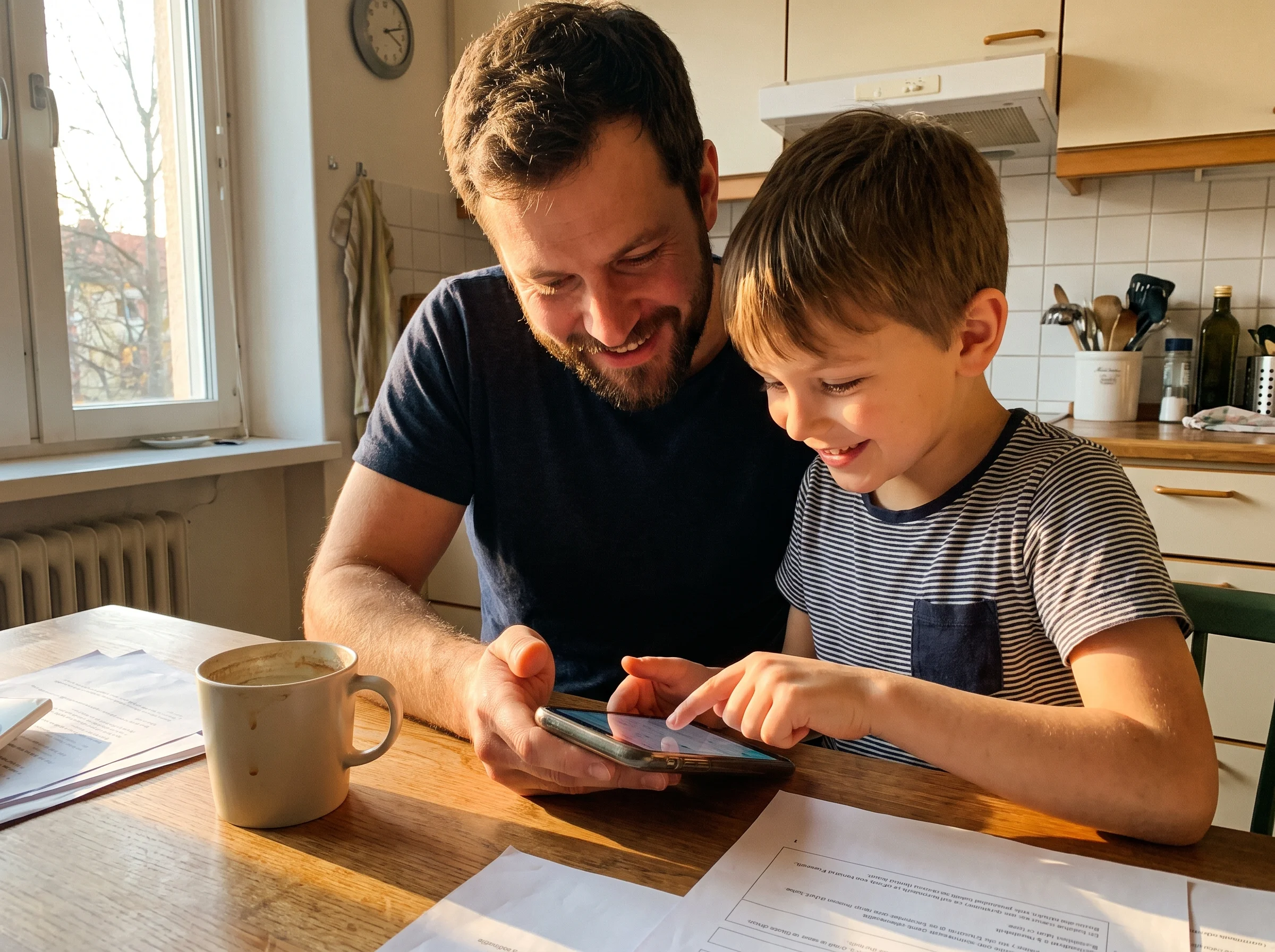
V-Bucks are Fortnite's in-game currency. You buy them with real money. You spend them on skins (costumes), emotes (dances), and the battle pass (a season-long unlock track). None of it affects gameplay. It's all cosmetic. It's all designed to make him feel like he's missing out if he doesn't have it.
The first time my son asked for the battle pass, I almost reflexively said no. Instead, I said, "Okay, explain to me what you actually get and why it matters." He talked for ten minutes. Some of it was real (he liked the skins). Some of it was pure FOMO (his friend had it). The conversation itself was more valuable than the decision.
My rule, which has held up: V-Bucks are birthday and Christmas only. Not weekly. Not for chores. Not "just this once." If he wants something mid-year, he saves his own money for it. This sounds harsh until you realize it teaches him that digital purchases cost real dollars, which most kids genuinely don't process.
If you've ever stared at the words "I said no V-Bucks" coming out of your own mouth and wondered if you're being unreasonable, I wrote about exactly that here. You're not.
 Forty losses, one good talkPause, Play, Connect: Core Deck$49 CAD • 172 promptsSee the deck
Play It WITH Him. Yes, Really.
This is the part most parenting articles skip, and it's the single best thing I did.
The first time I sat down to play Fortnite with my son, I got destroyed. Forty matches. Forty losses. At one point he said, very patiently, "Dad, you have to BUILD. You can't just stand there." I was standing there. I was definitely just standing there.
But here's what happened in those forty losses: I learned what he loves about the game. I learned his friends' usernames. I learned that he gets frustrated but doesn't quit, which told me something about him as a person I didn't know before. I learned the rhythms, the lingo, the inside jokes. I stopped being the dad who didn't get it.
You don't have to be good. You have to be present.
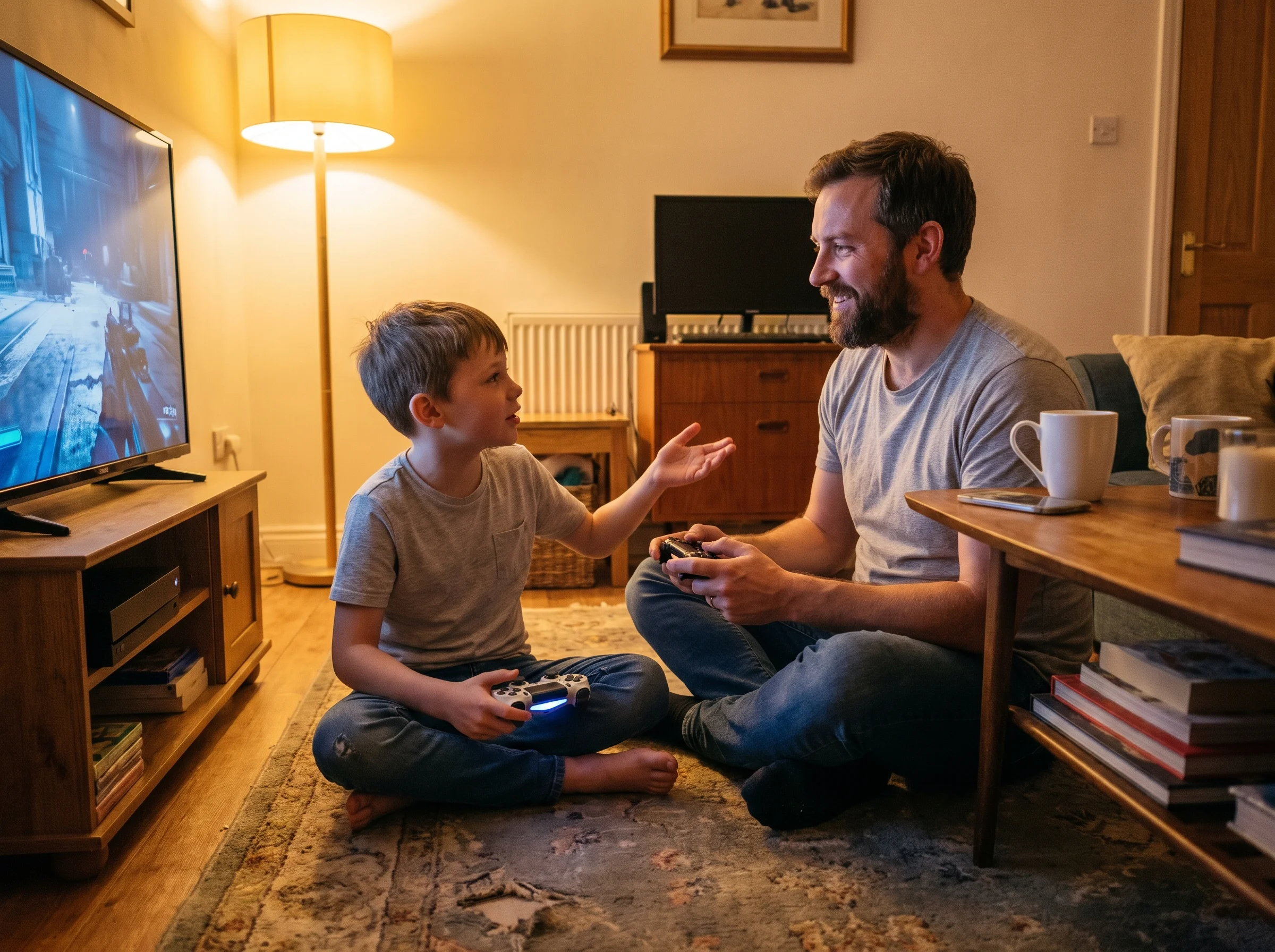
This is the whole reason we built Yakety Pack in the first place. We kept noticing that kids open up when you meet them in their world, not when you drag them into yours. One of our cards literally asks, "What game character would you want as a teammate in real life?" My son talked for fifteen minutes about why he'd pick a specific Fortnite character (something about a grappling hook, I lost the thread, but he was lit up). That conversation doesn't happen if I'm the dad who refuses to engage with the game.
The Time Limit Problem (And the Off-Ramp Meltdown)
"One hour" sounds reasonable until you realize a single Battle Royale match can take 20+ minutes. Cutting him off mid-match is like ripping the book out of his hands on the last chapter.
What works for us: match-based limits, not minute-based. "Finish your current match, then we're done." It gives him an off-ramp he can see. I also put a visible timer in the room so I'm not yelling from the kitchen every ten minutes.
He'll still lose it sometimes. Mine has. When that happens, I don't negotiate in the heat of the moment. The rule is the rule. We talk about it later, when the cortisol has cleared out. And if he can't handle the off-ramp consistently, we pull back for a week. That's not punishment. That's information.
Signs He's Ready to Play Fortnite (And Signs He's Not)
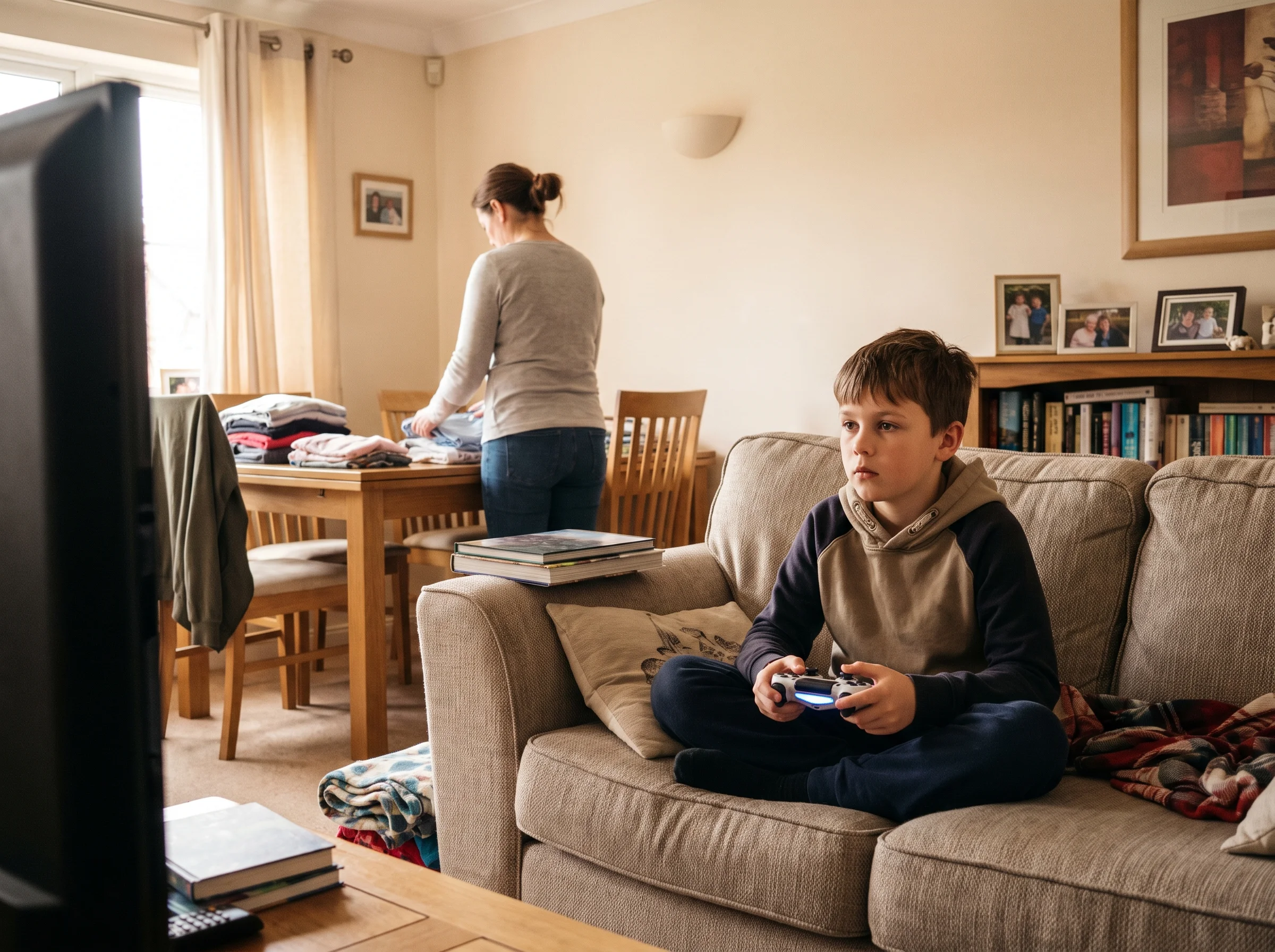
Ready looks like:
- He can lose a match without throwing the controller
- He stops when asked, even if grumpily
- He tells you about his matches without you prying
- He plays with friends he actually knows from school
Not ready looks like:
- Rage quits and broken stuff
- Lying about how long he's been on
- Withdrawn, irritable, or snappy after sessions
- Asking for V-Bucks constantly or sneaking purchases
If you're seeing the second list, it's okay to pause and try again in six months. This isn't a one-time decision. It's an ongoing one. Kids change. The right answer at 10 might be different at 10-and-a-half. Here's more on how Fortnite can actually affect kids' behavior if you want to dig into what to watch for. Common Sense Media's review of Fortnite is also a solid second opinion if you want one from outside the gaming world.
So, Should I Let My 10 Year Old Son Play Fortnite?
Here's my honest answer: probably yes, with conditions, with conversations, and with you sitting next to him at least sometimes.
The version of Fortnite I was afraid of, the unsupervised, headphones-on, talking-to-strangers-at-midnight version, is genuinely worth being afraid of. But that's not the only version. The version where you set up the account together, play it with him, talk about the V-Bucks ads, and use it as a window into his world? That version is actually pretty great.
You're not outsourcing his development to a 13-year-old squadmate named xXSniperGod420Xx. You're showing up.
If you want the bigger picture on how to actually talk to your kid about all of this, start with our pillar piece on Fortnite conversations with kids. It's the conversation framework that makes everything in this article actually stick.
And tonight? Ask him to teach you. Get destroyed. Laugh about it. That's the move.

From this article
Pause, Play, Connect: Core Deck
Make the yes count: Saying yes to Fortnite works best when the game becomes something you two talk about, not just something you monitor. The Pause, Play, Connect Core Deck gives you the post-match questions that turn his world into a shared one.

