
I was a "no" dad for almost two years.
My reasons sounded great at dinner parties. "It's too violent." "The chat is dangerous." "He's only 8." I'd nod along with other parents who agreed, feeling like we were the responsible ones, the ones who hadn't caved. If you've ever wondered why do parents say no to Fortnite, I had the full playbook memorized.
Then one Saturday I watched my son sit quietly at our kitchen table while three of his friends, who'd come over for a playdate, started planning a Fortnite night he couldn't join. They weren't being mean. They just moved on without him. He picked at his sandwich and didn't say much for the rest of the afternoon.
That night I realized I'd never actually examined why I was saying no. I'd just been saying it. So I sat down and made an honest list, and what I found surprised me.
The Six Reasons Parents Say No to Fortnite
When I started actually talking to other parents, not the polite version but the real version, the reasons clustered into six buckets:
- Violence and shooting. It's a game where you eliminate other players.
- Stranger danger via voice chat. Random adults talking to your kid.
- Addiction. "I can't get him off it."
- V-Bucks and predatory monetization. Skins, battle passes, the constant ask.
- It's a waste of time. "He could be doing literally anything else."
- I don't understand it. This one nobody says out loud, but it's underneath a lot of the others.
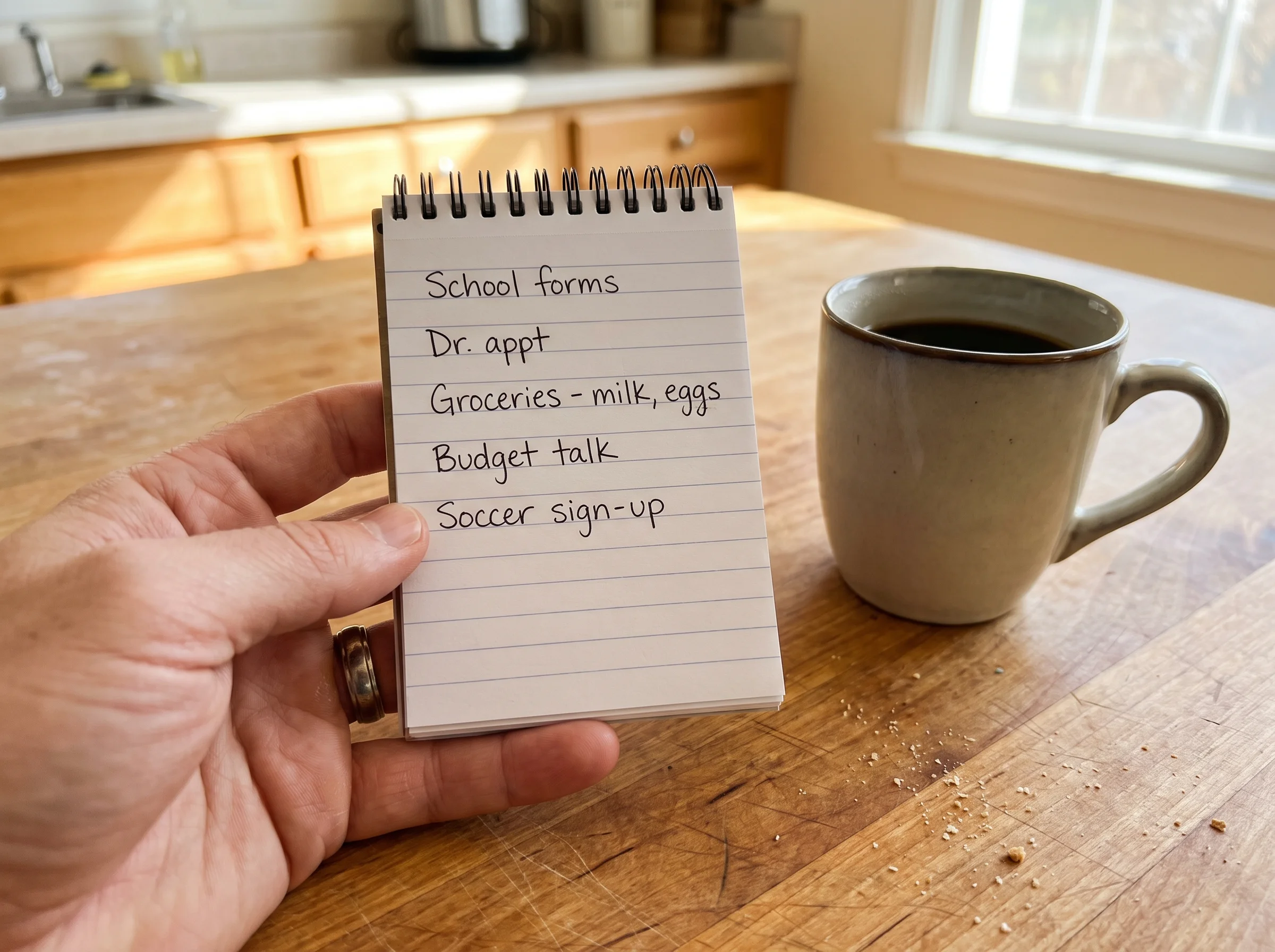
My own list, when I was holding the line, had all six. If you'd asked me to rank them by how confident I felt, I'd have put violence and chat at the top. If you'd ranked them by how informed I actually was, the order would have been embarrassing. I hadn't played the game. I hadn't watched a full match. I'd seen 30 seconds of a YouTube clip and decided.
 Understanding it before decidingPause, Play, Connect: Core Deck172 prompts that get a kid talking about what they actually love, in their own words.$49 CAD • 90 cards • 18 reviewsShop the deck
Which Reasons Actually Hold Up
Let me save you some time. A few of these are legit. Worth taking seriously. Worth building rules around.
Voice chat with strangers is real. Open lobby voice chat is genuinely sketchy. I've heard things in random fills that I wouldn't want my son to hear. But here's the thing nobody told me: you can turn it off. Party chat only, friends-only lobbies, voice chat disabled in settings. It takes about four minutes. The risk is real, the solution is simple, and "I'm scared of chat" isn't a reason to say no to the whole game. It's a reason to learn the settings. (If you want a baseline on online safety, Common Sense Media has a solid breakdown of Fortnite's settings and risks.)
V-Bucks and the spending pressure is real. This one matters. Fortnite is designed to make kids want stuff. Skins their friends have. The new battle pass. Limited-time emotes. If you say yes without a plan for the money part, you'll have a conversation about it every week. The day my son asked for $20 in V-Bucks, I made him explain exactly what he was buying and why. He stumbled. He didn't actually know the difference between the items he wanted, he just knew his friends had them. That turned into the best money conversation we've ever had. Not a lecture, an actual back and forth about value and pressure and what's worth your own money.
Time management is real, sort of. Kids will play as long as you let them. That's true of basically every game, every show, every YouTube rabbit hole. It's a parenting question, not a Fortnite question. If your kid can't self-regulate Roblox or Minecraft either, the issue isn't the specific game.
Which Reasons Don't Hold Up Like You Think
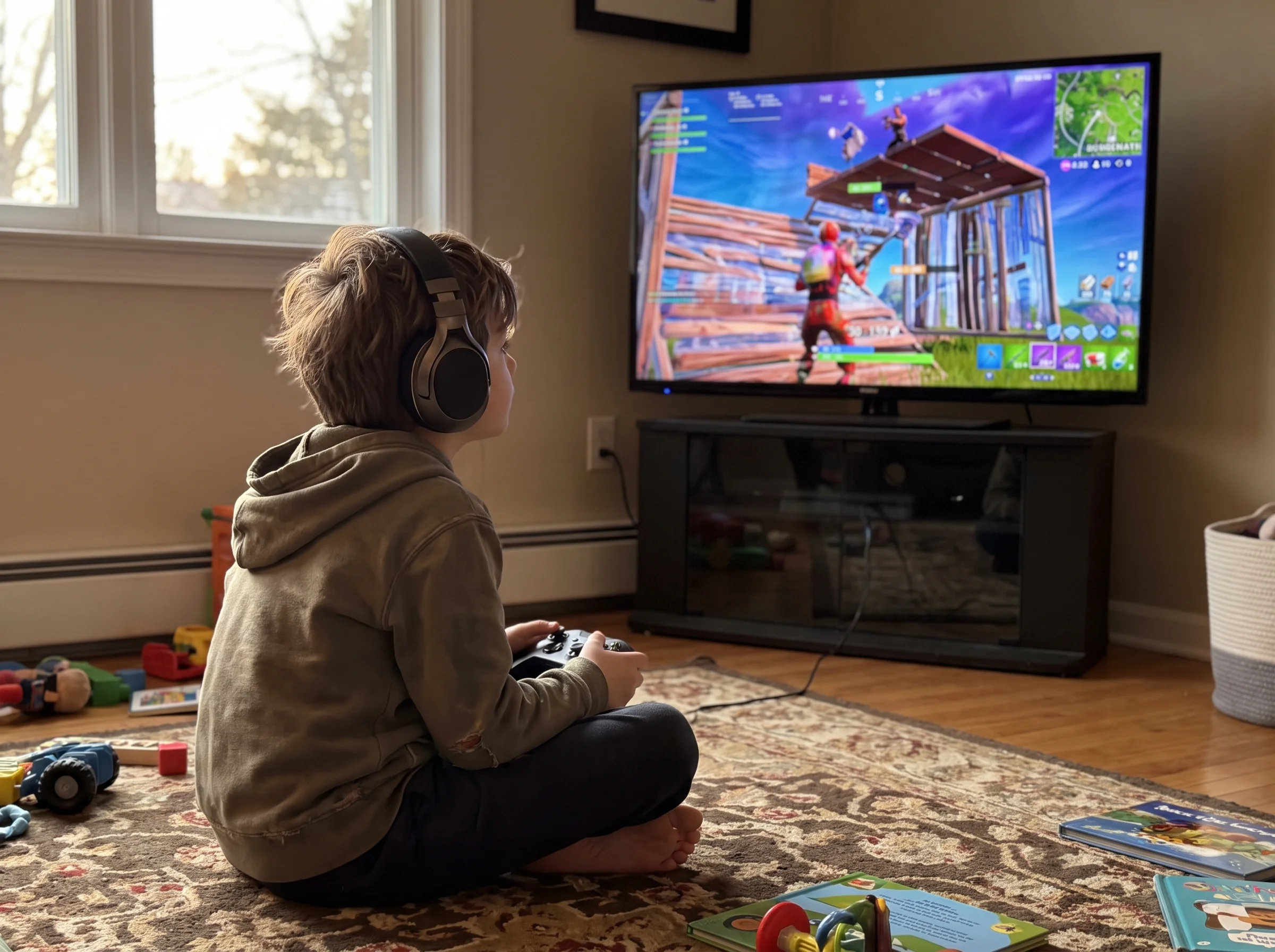
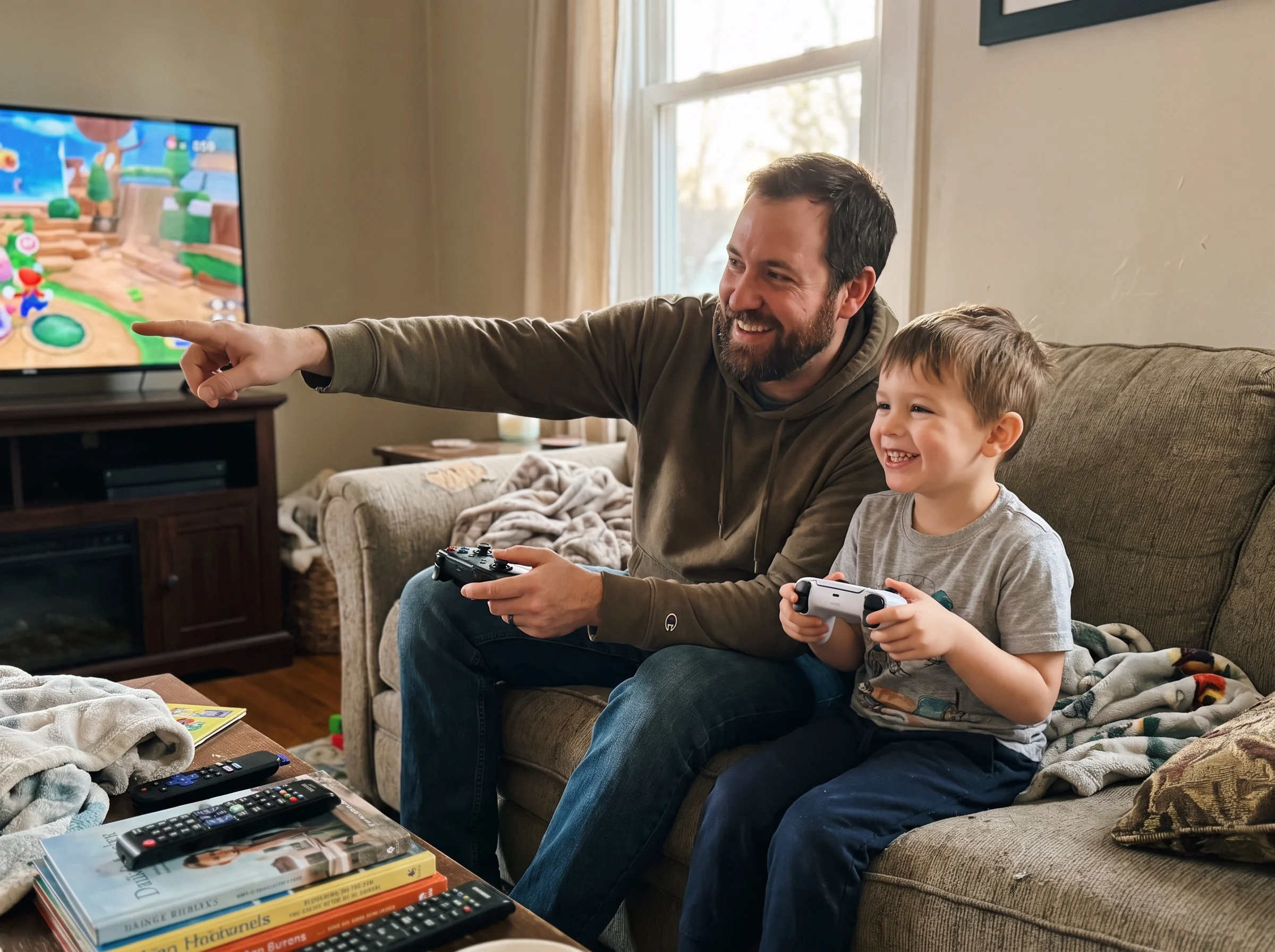
Violence. I'm going to be honest with you. Fortnite is closer to dodgeball than Call of Duty. There's no blood. Eliminated characters poof into a little cloud. Then your kid does a dance over where they used to be. It's goofy. It's cartoony. If you sit and watch a match, you'll see what I mean. The first time I actually played with my son after caving, I got eliminated in about 30 seconds by a kid wearing a banana costume who then did the floss dance over my body. My son laughed harder than he had in months. That's the tone of the game.
Addiction. Yes, games are designed to be engaging. So is every show on Netflix, every TikTok, every book worth reading. Most kids, with reasonable limits, self-regulate fine. The ones who don't usually have something else going on, and Fortnite is the symptom, not the cause. The American Academy of Pediatrics has shifted away from rigid screen time rules for a reason; context matters more than minutes.
Waste of time. When I dig into this one with parents, it almost always means "I don't see the value." Which is fair. I didn't either. Then I watched my son coordinate a build with two friends over headsets, calling out positions and making split-second decisions about resources and risk. It was teamwork. It was strategy. It wasn't piano lessons, but it wasn't nothing.
 When the answer stays noPause, Play, Connect: Core Deck$49 CAD • 172 promptsSee the deck
The Cost of "No" Nobody Talks About
Here's what gets left out of every article I read when I was researching this:
Fortnite is the playground now. Not for every kid, but for a huge chunk of 8 to 12 year olds, it's where the social stuff happens. Birthday parties. After-school hangs. Weekend nights. When your kid can't reference the game, can't recognize the skins, doesn't know what "cranking 90s" means, they're sitting out of conversations all day.

The hardest moment for me wasn't the birthday party. It was overhearing my son tell a friend he had a specific skin that I knew he didn't have, because he'd never played. He was lying to fit in. That's when I knew my "no" had a price tag I hadn't been looking at.
This doesn't mean you have to say yes. It means you need to factor it in. A no that costs your kid social capital might still be the right call. But you should make it with your eyes open.
The Middle Path Most Parents Miss
It's almost never "yes forever" or "no forever." Here's the ladder we used:
- I played a few matches by myself, just to see what it was.
- We played together, on my account, with him watching.
- He played LEGO Fortnite, which is basically Minecraft with Fortnite characters. No shooting.
- He played Battle Royale with one specific cousin, voice chat on with that cousin only.
- He played with friends, friends-only lobbies, voice chat limited.
That took about six months. Each step was a decision, not a default. And at any point I could've said "this isn't working" and pulled back. Knowing that made me less anxious about each yes.
How to Say No Without Losing the Conversation
If you land on no, or not yet, the goal isn't to win the argument. It's to keep the door open.
Phrases that work:
- "Not yet, and here's what we'll look at when we revisit."
- "Tell me what you love about it. I want to understand before I decide."
- "I might be wrong about this. Let's check back in a few months."
Phrases that don't:
- "Because I said so."
- "It rots your brain."
- "End of discussion."
Before I made my final call, I asked my son what he actually loved about Fortnite. Not in a gotcha way. Just curious. He talked for fifteen minutes about a specific friend he wanted to play with, a building style he'd seen on YouTube, and a skin he thought was funny. None of that was about violence or screens. It was about belonging and creativity and one specific friendship.
I learned more about my kid in that conversation than I had in weeks of "how was school."
That's actually why we built Yakety Pack. The "how was your day" stuff stops working around age 8, and most parents don't have a replacement. One of the cards in our deck asks "What's a game you wish I'd play with you?" The questions you ask shape what they'll tell you. If you only ask about school and homework, you'll get school and homework answers.
When to Revisit
Set a date. Six months out. A year. Their next birthday. Whatever feels right.
Three things will have changed: your kid's maturity, your understanding of the game, and the game itself (Fortnite is not the game it was even two years ago).
And if you change your mind, say so. The day I told my son "I was wrong about Fortnite, let's set this up together," his face did something I won't forget. Not just excitement. Relief. He'd been carrying my no around as proof that I didn't get him. Watching me change my mind, with him, taught him more about how good thinking works than any lecture I could've given.
The One Thing to Do Today
If you're sitting on a "no" right now, or wrestling with one, do this before you decide anything else: watch your kid's favorite YouTuber play a Fortnite match. The whole match. Then ask your kid what they love about it, and actually listen.
If you haven't done both, you don't have a position yet. You have a reflex.
You might still land on no. That's a real answer and sometimes the right one. But it'll be a no you can defend, to yourself and to your kid, and that makes all the difference.
If you do decide to let them play, the real game is the conversation around it.

From this article
Pause, Play, Connect: Core Deck
Whichever way you land: Yes or no, the relationship survives on whether your kid believes you actually get their world. The Pause, Play, Connect Core Deck gave me the "tell me what you love about it" questions before I had the courage to improvise them.

