
For two years, I assumed my son was wasting his life in Minecraft.
I'd walk past his room and hear him muttering about redstone and creepers and some kid named Marcus who apparently could not be trusted with diamonds. I'd shake my head, calculate how many hours of his childhood were being lost to a pixelated wasteland, and feel that low-grade dad guilt about not "doing something about it."
Then one afternoon, on a car ride to soccer, he explained supply and demand to me. Better than my college econ professor ever did. He was using diamonds, his friend Marcus, and the price-fixing scheme happening on their server. I almost ran a red light.
He'd been learning constantly. The whole time. I just didn't know how to see it.
If you've ever stood in your kitchen wondering whether your kid is absorbing anything from their gaming time, or whether you're raising a future engineer or a future couch cushion, this article is the one I wish I'd had. We're going to talk about measuring learning outcomes from gaming in a way that actually works at home, with real kids, and a real exhausted parent at the end of a real long day.
No spreadsheets. No charts. No Bloom's Taxonomy. I promise.
Why Traditional "Learning Outcome" Frameworks Fail Parents
Most articles about measuring what kids learn from gaming were written by people who have never tried to measure what their own kid learned from gaming. I can tell, because the advice always reads like a teacher's lesson plan.
They want you to do pre and post tests. They want you to track skill acquisition on a rubric. They want you to read about Kirkpatrick's Four Levels of Learning Evaluation, which, I cannot stress this enough, is something nobody in the history of parenting has ever applied to their child's Roblox session.
Here's what's wrong with the standard playbook:
It treats gaming like school. Schools measure learning because they have to prove ROI to taxpayers. Your house is not a school. Your kid is not your student. The minute you start grading their gameplay, you've killed the thing that made it educational in the first place: the fact that they were doing it because they wanted to.
It only counts "educational games." Articles will happily tell you Prodigy is teaching math and ABCmouse is teaching letters. They go quiet when you ask about Fortnite. But a kid running a four-person squad in Fortnite is doing real-time communication, spatial reasoning, role assignment, and rapid decision-making under pressure. That's not lesser learning. In many ways, it's harder.
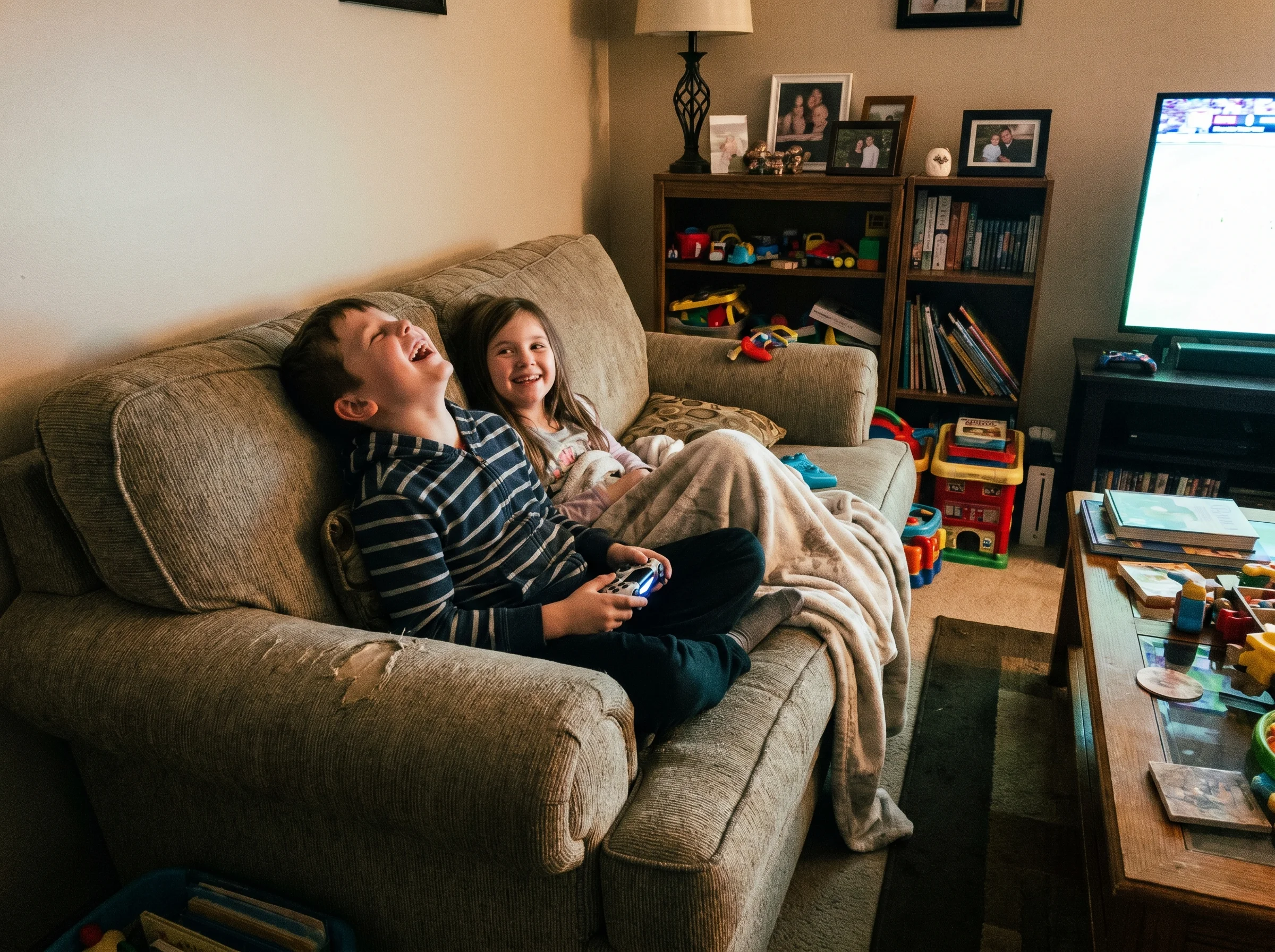
It uses frameworks built for grad students. I've read articles that suggest parents use the SAMR model to evaluate their kid's gameplay. I have a graduate degree and I had to Google SAMR. If your measurement tool requires a glossary, it's not a measurement tool. It's homework for parents.
I'll tell you what I tried first, because I want you to skip my mistakes. After the diamond economics revelation, I got excited. I started quizzing my son. "What did you build today? What did you learn? Can you explain how redstone works?" He shut down so fast you could hear it. Within a week he stopped telling me anything. I had turned his favorite thing into a pop quiz, and he correctly identified me as the threat.
It took me months to rebuild that trust. The lesson stuck though: if your measurement method makes your kid stop talking, you're not measuring anything. You're just causing damage.
 So dinner is not silentPause, Play, Connect: Core Deck172 prompts that give you a better opening than how was your game today.$49 CAD • 90 cards • 18 reviewsShop the deck
The Five Categories Worth Actually Tracking
Once I stopped trying to grade my kids, I started noticing patterns. There are five buckets of learning worth paying attention to, and the soft ones matter as much as the hard ones. Maybe more.
1. Cognitive Skills
This is the bucket everyone talks about. Problem-solving, planning, resource management, spatial reasoning. In Minecraft, this looks like figuring out how to keep mobs out of the base. In Stardew Valley, it's deciding which crops to plant based on season length and profit margins. In Fortnite, it's choosing when to build versus when to push.
Watch for: explanations that include "if, then" thinking, multi-step plans, and the ability to describe trade-offs.
2. Social Skills
Negotiation, collaboration, conflict resolution, leadership. The kid who organizes a Roblox group, divides up roles, and keeps three friends from quitting after a fight, that kid is doing project management. They just don't know it yet, and neither do most parents.
Watch for: how they describe other players, whether they take responsibility for group outcomes, and the language they use to handle disagreements.
3. Emotional Skills
Failure recovery, patience, identity exploration, frustration tolerance. This one is huge and almost completely ignored. A kid who dies in a dungeon and tries again with a new strategy is learning resilience in a way no worksheet can teach. Research from the American Psychological Association backs this up, gaming builds problem-solving and persistence in measurable ways.
Watch for: how they handle losses, whether they bounce back the same day, and whether they can explain what went wrong without blaming.
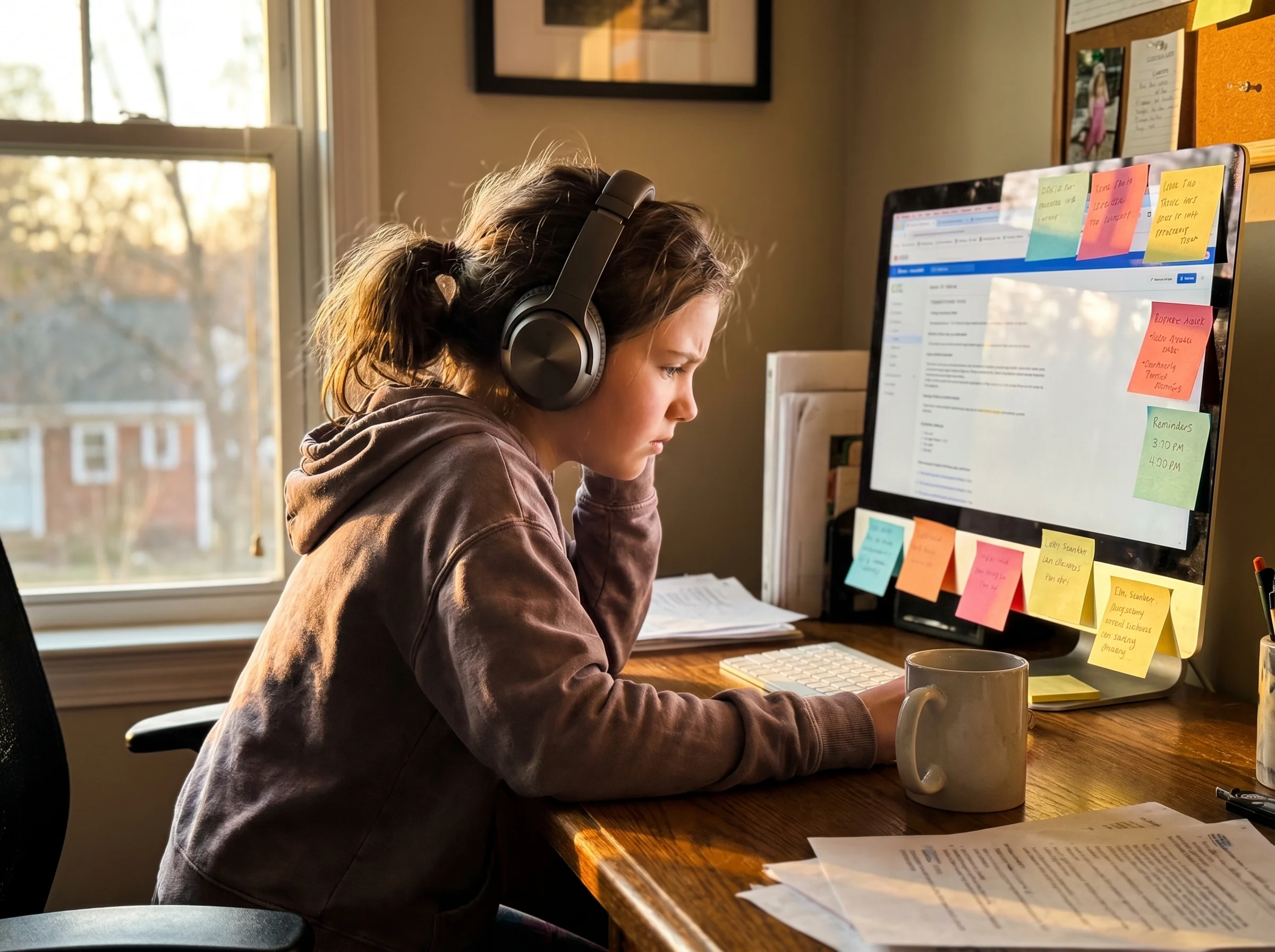
4. Creative Skills
Building, designing, storytelling, world-making. Minecraft and Roblox are essentially creative platforms with a game wrapper. Kids on these games are making things. Real things, with internal logic, that they're proud of.
Watch for: when they want to show you something they made, how they describe choices in their builds, and whether they're iterating (rebuilding, redesigning, improving).
5. Practical Skills
Typing, reading comprehension, basic economics, even some financial literacy. My daughter learned to read faster from Animal Crossing than from her assigned reading. Why? Because Tom Nook owed her money and she needed to know.
Watch for: vocabulary expansion, reading speed, mental math during trades, and any signs of budget-style thinking.
If you only track cognitive and ignore the other four, you're missing 80% of what's happening. Worse, you're telling your kid that only certain kinds of learning count. That's a bigger message than you mean to send.
The Dinner Table Method: How I Actually Measure Learning Outcomes From Gaming
Here's the part nobody else will tell you. The best measurement tool for learning outcomes from gaming is not a test, an app, or a checklist.
It's your dinner table.
The way your kid talks about their gameplay reveals what they're learning. The vocabulary they use, the cause and effect language, how they describe other players, the strategies they explain, that's your data. All of it. Every single night.
But there's a catch: you have to ask the right questions.
"How was Minecraft today?" gets you a grunt. Every time. Forever. I asked that question for actual weeks before I figured out it was the question's fault, not my kid's.
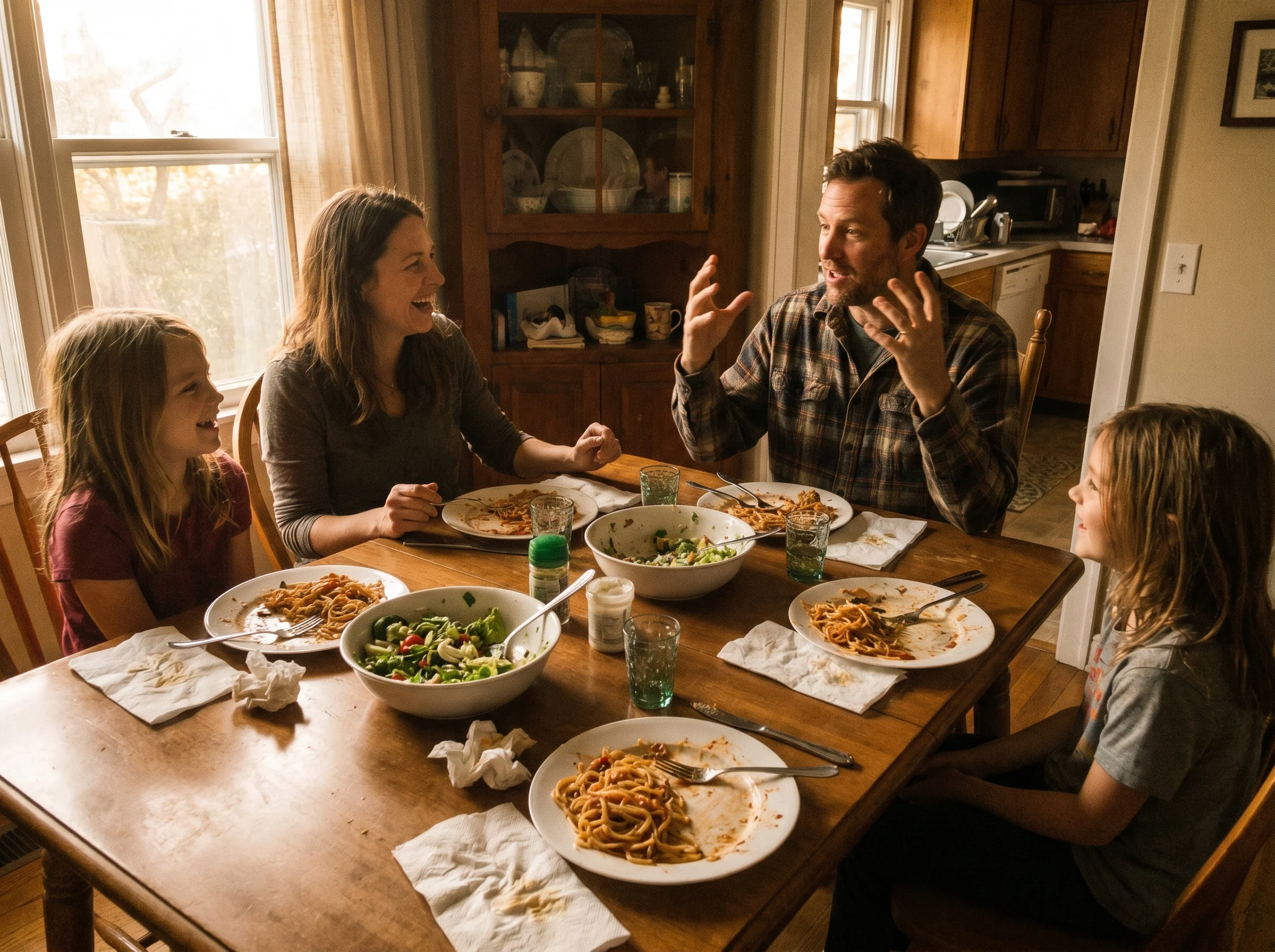
The questions that work are specific, curious, and impossible to answer with one word. Compare these:
- "How was gaming?" vs. "What's the craziest thing that happened in your world this week?"
- "Did you learn anything?" vs. "What's something you figured out that nobody told you?"
- "Who did you play with?" vs. "Who in your game would you actually want to hang out with in real life, and why?"
The second column gets you a story. Stories are where the learning lives.
Here's the proof. One night at dinner, my daughter, totally unprompted, started explaining how she'd negotiated a trade in Animal Crossing. The other kid was, in her words, "being weird about it, but I knew she really wanted my pears, so I waited her out and asked what she'd give me if I threw in a peach." She was nine. That was emotional intelligence, theory of mind, and basic negotiation strategy in one breath.
I would have missed it entirely if I'd asked "how was Animal Crossing?" She would have said "good" and gone back to her mac and cheese.
I'll be honest with you about something. I built Yakety Pack with my co-founder after years of asking my kids the wrong questions at dinner. The cards aren't gaming-specific, but a lot of them open doors to the kinds of conversations where gaming learning shows up. Because when you're cooked at the end of a Tuesday, you don't have the bandwidth to invent the perfect question. You need ammo. That's the whole point.
The dinner table method works because it's where your kid already wants to talk. They want to be interesting to you. They want to share. They've just been answering boring questions for years and gave up.
Age-by-Age: What to Listen For
Generic advice fails kids of every age. A 7-year-old's Minecraft learning looks nothing like a 13-year-old's. So here's what to actually listen for at each stage.
Ages 6-8: Foundations
- New vocabulary they're using correctly (even weird game words count)
- Basic if/then logic ("If I plant this, then I'll have food")
- Turn-taking and patience with other players
- The ability to describe what they made
If your 7-year-old can explain to you what a "spawn point" is and why it matters, that's reading comprehension, conceptual learning, and verbal articulation all in one. Don't dismiss it because the word sounds nerdy.
Ages 9-11: Strategy Emerges
- Multi-step plans they can explain
- Trade-off thinking ("I could do X or Y, but Y is better because...")
- Beginning collaboration with friends, not just playing alongside
- Frustration tolerance starting to show up (or not)
This is the age where you start to see real cognitive complexity. Listen for the word "because." It's a tell.
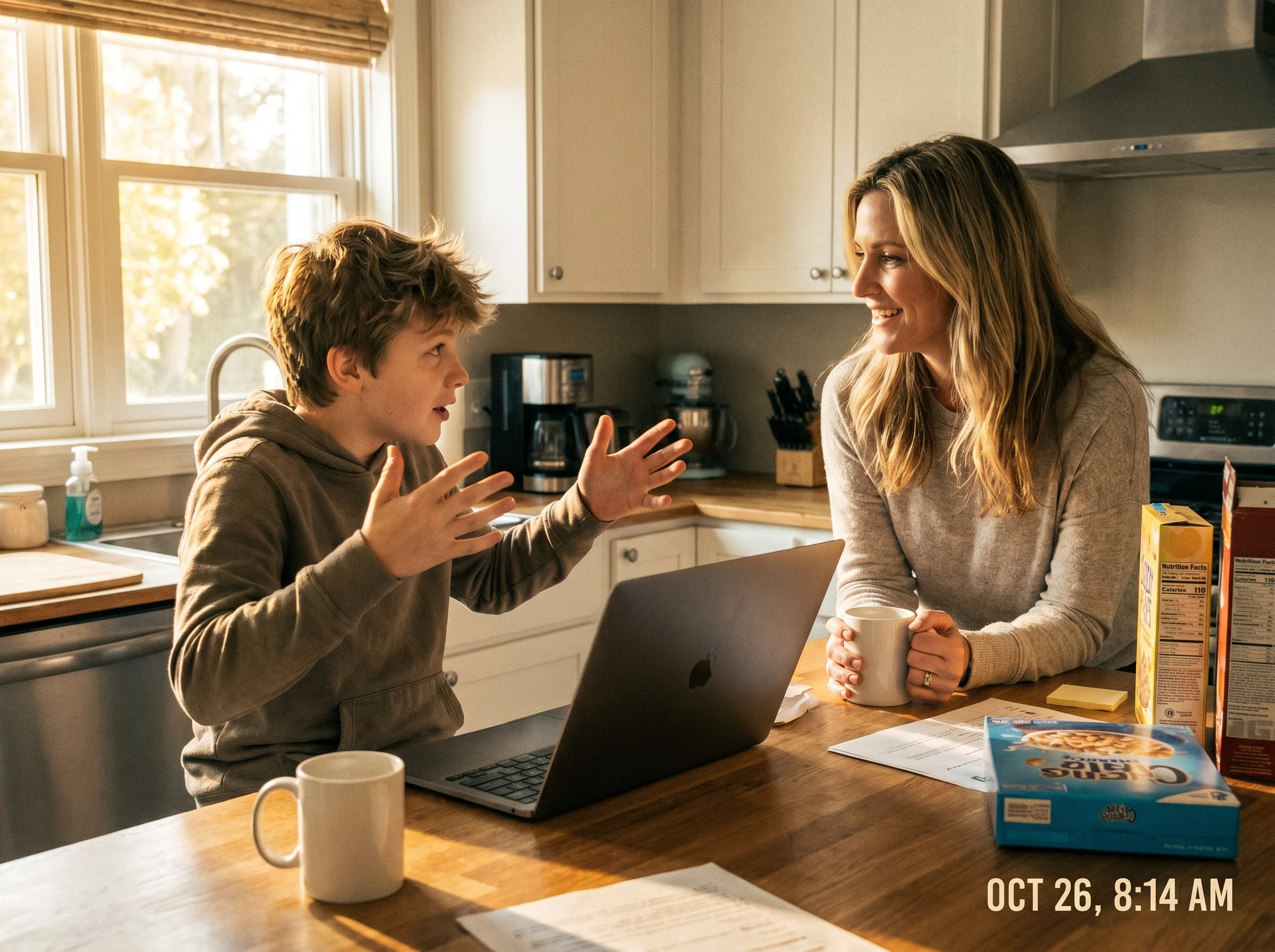
Ages 12-14: Identity and Leadership
- Taking roles in groups (leader, support, strategist)
- Complex planning across multiple sessions
- Trying on identities through avatars and usernames
- Stronger opinions about how teams should work
Adolescence shows up in gaming first, usually. The kid who suddenly cares about how their character looks is doing identity work. That's developmentally on-time, and games are giving them a safer sandbox for it than most other places.
Ages 15+: Systems Thinking
- Managing communities, clans, or servers
- Long-term project work (building economies, leading raids)
- Ethical reasoning about behavior in games
- Connecting in-game systems to real-world systems
If your teenager is moderating a Discord server attached to their game, congratulations, they are doing HR. Treat it accordingly.
 Keep one on the tablePause, Play, Connect: Core Deck$49 CAD • 172 promptsSee the deck
When Learning Transfers Out of the Game (The Real Win)
The gold standard of measuring learning outcomes from gaming is when the learning shows up somewhere else. School. Chores. How they talk to their sister. That's transfer, and it's the real win. The American Academy of Pediatrics notes that the quality and context of media use matters far more than raw time, and transfer is one of the clearest quality signals you can spot at home.
One spring, my daughter was planning her chore schedule for the week and announced she was going to "rotate" them so she didn't burn out on one thing. She compared it to crop rotation in Stardew Valley. She was twelve and had just applied agricultural economics to her allowance strategy. I almost cried.
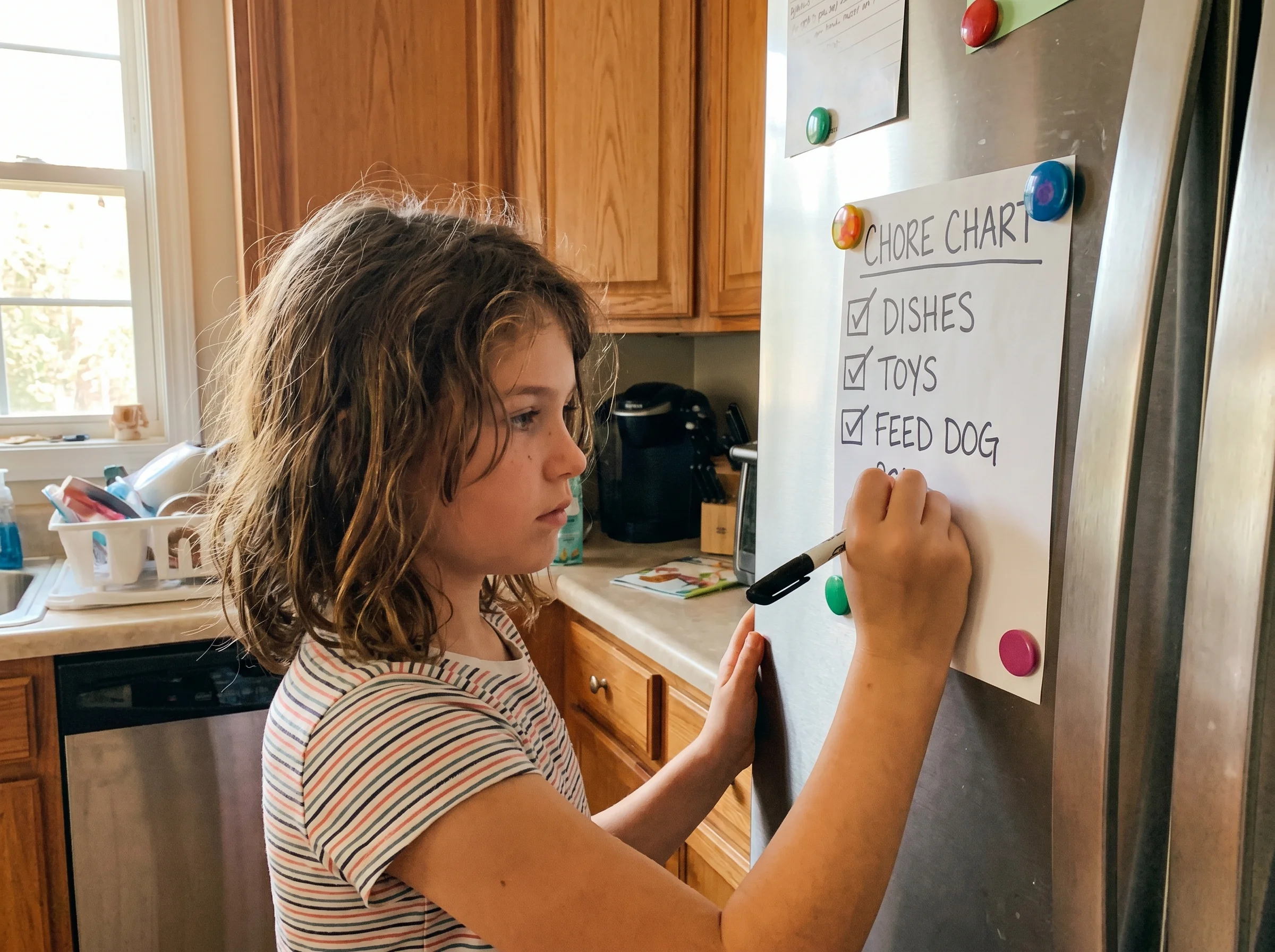
Signs that learning is transferring out of the game:
- They use game vocabulary to describe real situations ("This homework is like a boss fight")
- They apply strategies from games to non-game problems
- They reference game lessons in conversations about school or friends
- They describe real-life problems using game logic
When you see transfer, that's your evidence. That's the receipt. You can show that to a doubting spouse, a worried grandparent, or your own anxious brain at 11pm when you wonder if you're a bad parent. Gaming taught your kid something useful, and now they're using it in the world.
What "No Learning Happening" Actually Looks Like
I want to be honest with you. Sometimes gaming isn't producing much. It happens. Not every session is golden.
Warning signs that real learning has stalled:
- No new vocabulary in weeks
- Can't explain choices they made ("I just did it")
- Plays passively, doesn't engage with the systems
- Same patterns over and over with no iteration
- Watches more streams than they play
- Gets nothing emotionally out of it, not joy, not frustration, just flat
If you see these signs, don't panic and don't ban the game. That's the wrong move. The right move is to change the conversation.
Try playing with them. Not over their shoulder, in the game. Even badly. Especially badly. Your kid being better than you at something is one of the great parenting cheat codes.
Try asking different questions. "Show me the coolest thing in your game" beats "what are you learning."
Try widening their world. Sometimes kids are stuck in passive loops because they've exhausted what the game offers them. Introducing a new game, or a creative mode, or a multiplayer element can reignite the whole thing.
The point is, low learning isn't a moral failing. It's a signal. Read it, respond to it, don't punish it.
The 5 Questions That Reveal Everything
If you do nothing else from this article, try these five questions over the next week. One per night. Watch what happens.
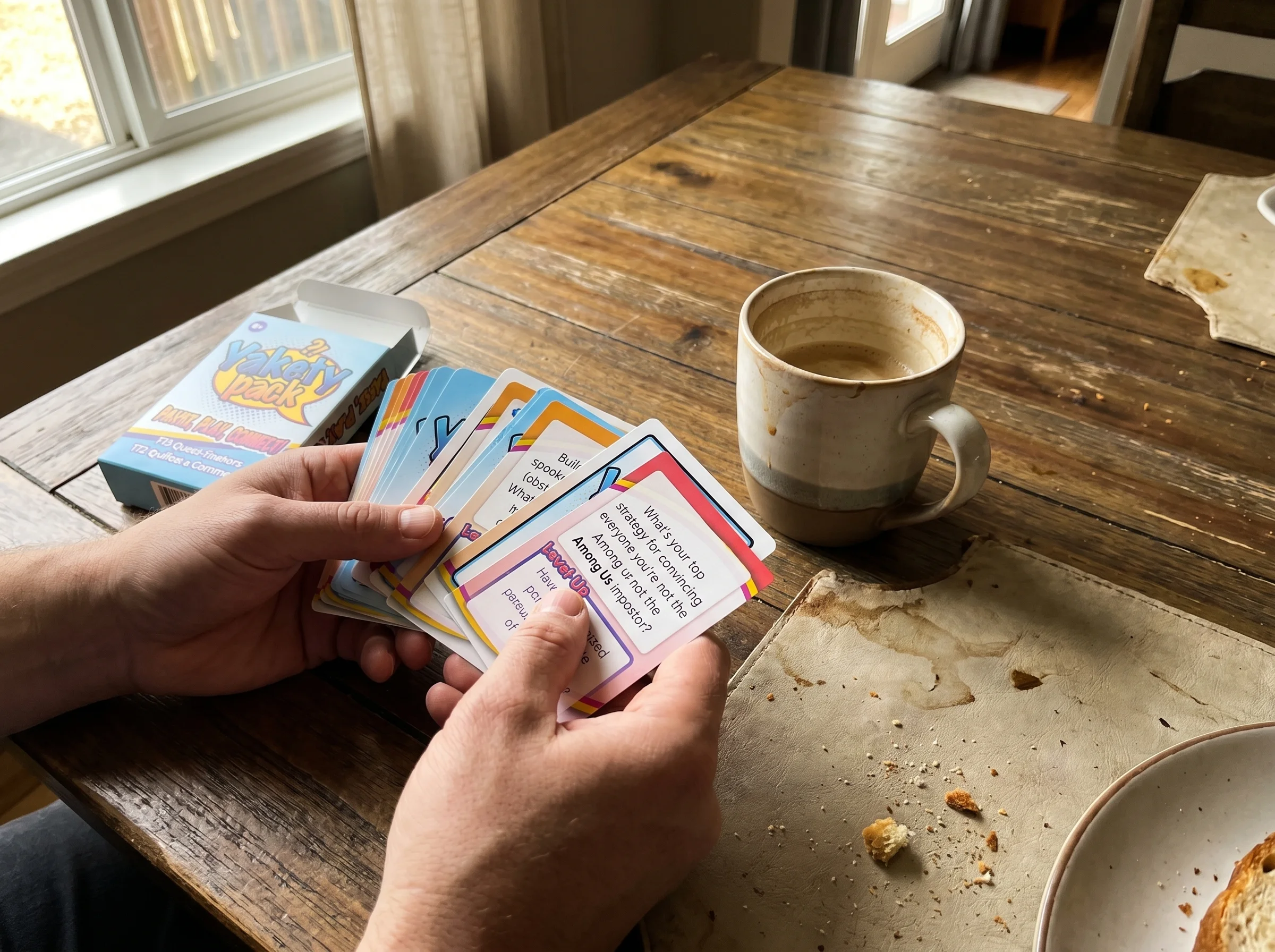
1. "What's the hardest thing you tried this week?"
Reveals: frustration tolerance, problem-solving approach, what they consider challenging. If they can name a hard thing and describe what they tried, they're learning.
2. "Who in your game would you want as a friend in real life, and why?"
Reveals: social discernment, what they value in people, how they read other players. The "why" is everything.
3. "What's something you figured out that nobody told you?"
Reveals: self-directed learning, discovery, the ability to articulate insight. This is the question that catches the diamond-and-Marcus moments.
4. "What's a rule in your game you wish existed in real life?"
Reveals: systems thinking, values, how they understand fairness and design. You'll learn a lot about your kid's ethics from this one.
5. "Tell me about the worst player you played with this week."
Reveals: conflict, social navigation, how they handle other people's behavior. Bonus points: it's often hilarious.
These questions are the philosophy behind every Yakety Pack card we make. Parents need real ammo when they're tired, and "how was your day" is not ammo. It's a white flag.
FAQ
Are educational games actually better than regular games?
Not really. Educational games teach specific skills in narrow ways. Open-world and multiplayer games teach broader, transferable skills, often more deeply. Both have value. Don't let the marketing fool you into thinking "educational" is a tier above.
My kid plays 3 hours a day. What's the ROI?
Wrong question. Time spent isn't the metric. Engagement and transfer are. A kid playing 30 passive minutes is getting less than a kid playing 3 active hours building, collaborating, and problem-solving. Watch for the signs above, not the clock.
Should I quiz my kid about what they learned?
Please don't. I did. It backfired hard. Ask curious questions, not test questions. The minute it feels like school, the learning goes underground and you'll see none of it.
How do I explain to my spouse or in-laws that gaming has value?
Don't argue. Collect evidence. The next time your kid does something impressive that traces back to a game, point it out. "She got that idea from Stardew Valley." Stories beat debates every time.
What if my kid plays games I think are bad for them?
Different article, but short version: know the game, know the why, and have the conversation. Banning without understanding usually backfires. Curiosity first, judgment second.
Your Practical Next Step
Tonight at dinner, ask one question from the list above. Just one. Then shut up and listen.
Don't follow up with a lecture. Don't connect it to school. Don't say "see, gaming IS educational!" Just listen, ask a follow-up question, and let your kid talk.
That's measurement. That's the whole method. The data is in the conversation, and the conversation only happens when you ask the right thing.
If you want a stack of those questions sitting on your table so you don't have to remember them when your brain is fried, that's exactly what we built Yakety Pack for. But honestly, even just the five questions above will change what you see in your kid's gaming, starting this week.
Your kid is learning. They're telling you about it every day. You just have to know how to listen.

From this article
Pause, Play, Connect: Core Deck
Where the data lives: Every learning sign in this guide shows up in how your kid talks about their game, so the question you ask is the whole measurement tool. We keep the Pause, Play, Connect Core Deck on the table for nights when my brain has nothing left.

