
For about a year, I told myself my son was "probably learning something" from gaming because that's what the parenting articles vaguely promised. Probably wasn't good enough for me. I wanted to actually know. So I started asking the real question: what are the tools to measure learning outcomes when your kid is gaming on the couch, not sitting in a classroom?
So I went looking for tools to measure it. What I found was a stack of education jargon written for teachers with lesson plans and budgets. Rubrics. LMS dashboards. Bloom's taxonomy worksheets. Nothing built for a dad sitting on the couch watching his kid blow up his own Minecraft village.
So I built my own toolkit. Seven tools, most of them free, none of them require turning your living room into a classroom. Here's what actually works.
Why Standard "Learning Outcome" Tools Don't Work for Parents
Search "tools to measure learning outcomes" and you'll get hammered with software meant for educators. Kahoot quizzes. Pre-tests and post-tests. Standardized rubrics. Beautiful for a 4th grade science unit. Useless for figuring out if Fortnite is teaching your kid anything.
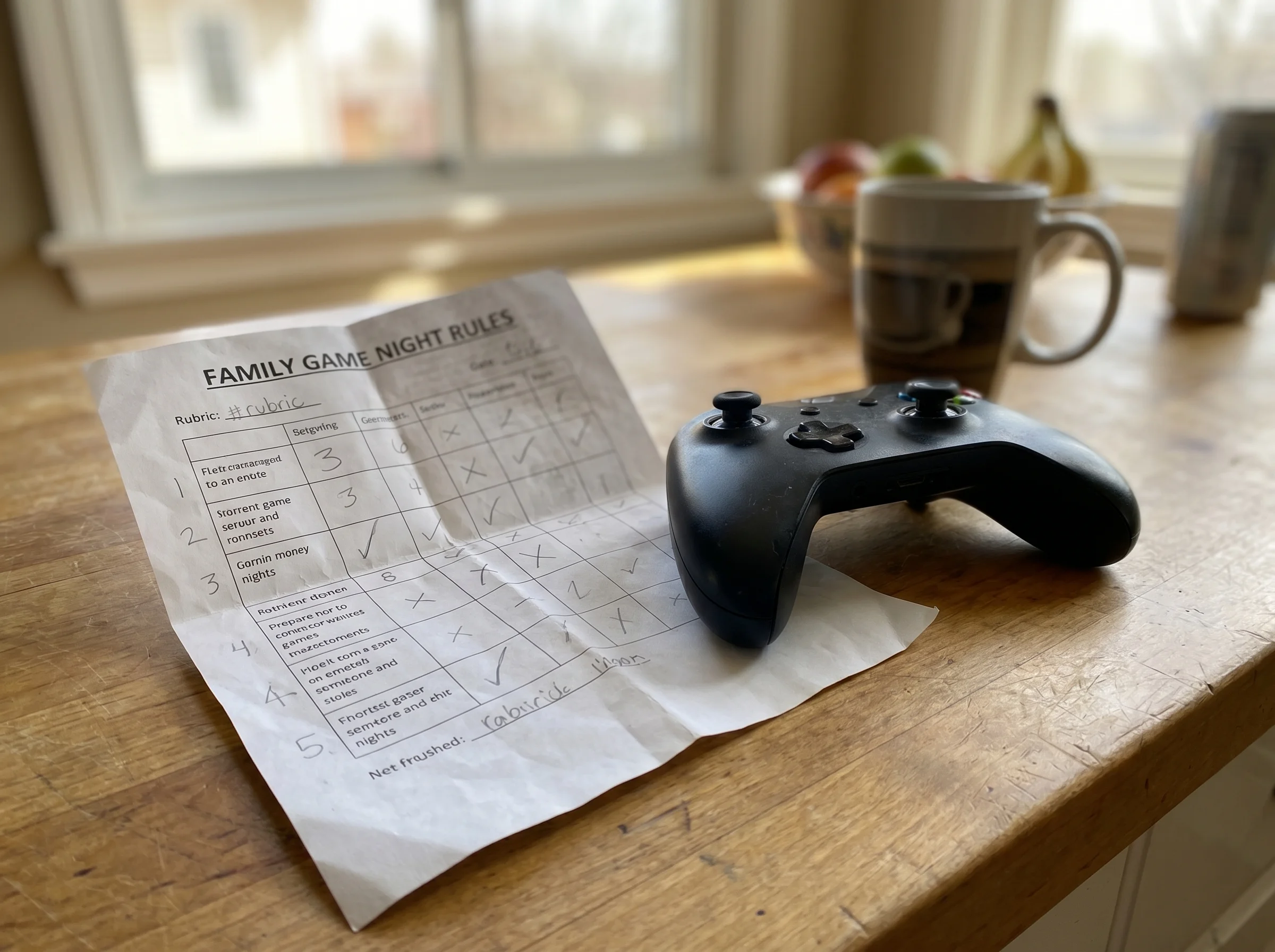
I tried once. Made a literal rubric for Minecraft. Categories like "resource management" and "spatial reasoning" with little checkboxes. My son walked over, looked at it, and asked if he was in trouble. That was the end of that experiment.
The shift parents need is from testing to observing. Classroom tools measure what a kid can prove on demand. Parent tools measure what a kid actually does when no one's grading them. Big difference. Way more useful.
 The couch, not the clipboardPause, Play, Connect: Core Deck172 prompts that give you an easy opening when you sit down next to them.$49 CAD • 90 cards • 18 reviewsShop the deck
Tool #1: The In-Game Stats Screen (You Already Have This)
Almost every modern game tracks something. K/D ratios. Build times. Accuracy percentages. Win rates. Decision-making scores. Most parents never look at this data, and when they do, they don't know what it means.
Rocket League has a stat screen that shows positioning, shot accuracy, and a "teamwork score" based on passing and rotation. Minecraft has an achievement log that's basically a problem-solving journal. Fortnite tracks shot patterns. These aren't just bragging numbers. They're a window into how your kid thinks.
One night I asked my son to walk me through his Rocket League stats. Not to quiz him. Just genuinely curious. He explained rotation, boost economy, and why his "shot %" was low on purpose because he was learning to pass. I learned more about his cognitive development in 10 minutes than I had in the previous year of guessing.
The trick: don't snoop, sit down with them. Make it a conversation, not surveillance.
Tool #2: The Observation Journal (Old School, Still Works)
A notebook. Or the Notes app on your phone. That's it. That's the tool.
What to log: phrases your kid uses, problems they solve, how they handle frustration, who they choose to play with. Three columns is plenty. Date. What happened. What skill it might map to.
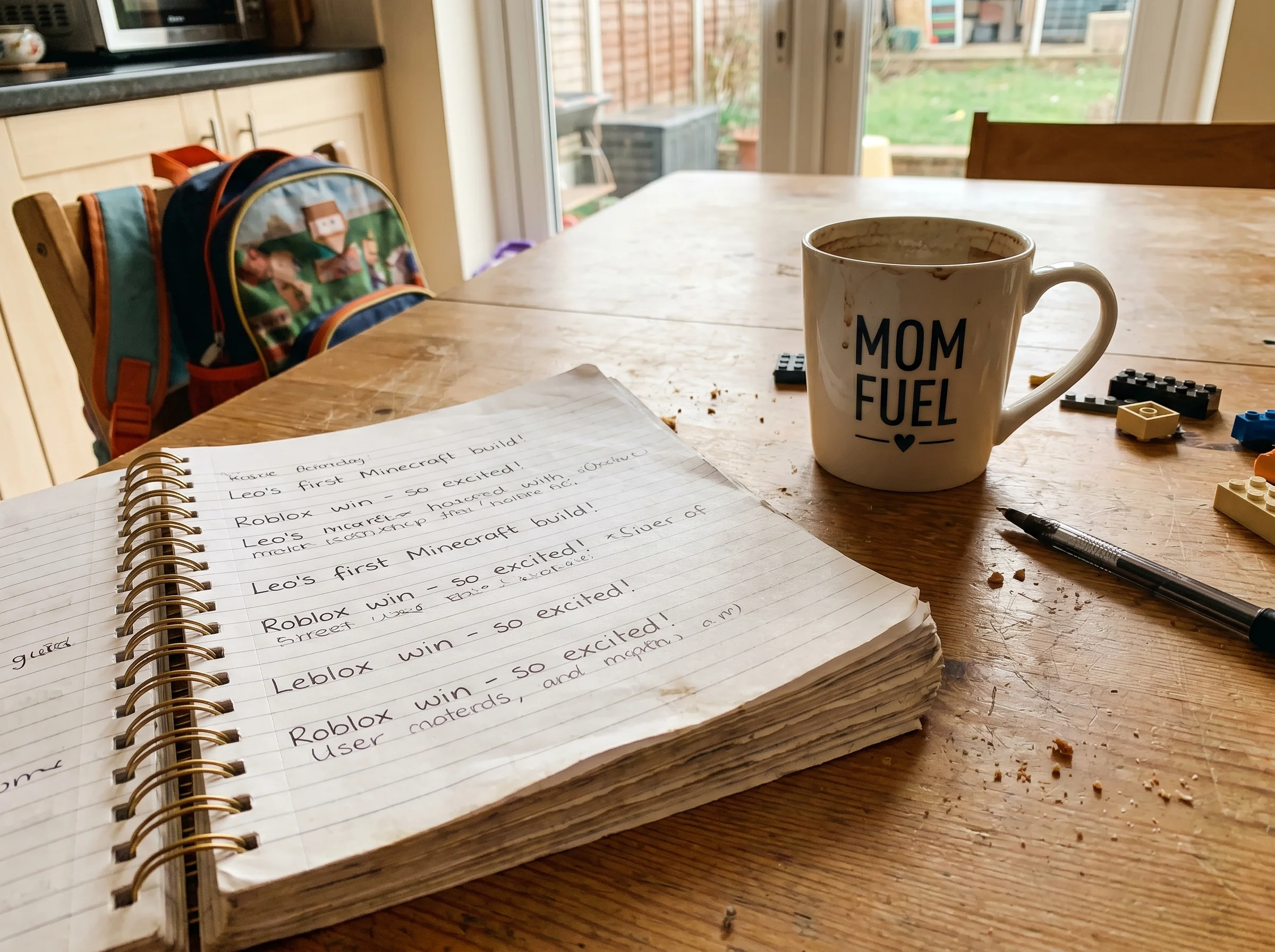
My younger one started using the word "strategy" three weeks after she got into Among Us. Casually, in the kitchen, about her cereal. That's vocabulary acquisition. If I hadn't been half-paying attention and jotting things down, I'd have missed it entirely. Once a week, I skim the notes. Patterns show up that I'd never catch in real time.
Tool #3: The Question Stack (The Most Powerful Tool I've Found)
Look, I tried asking my son "how was Minecraft today?" for weeks. Got grunts. The question itself was broken.
Better questions, mapped to what you're trying to measure:
- Problem-solving: "What was the hardest part to figure out?"
- Collaboration: "Who'd you play with and what did each of you do?"
- Resilience: "When did you almost give up, and what changed?"
- Creativity: "If you could redesign one thing in the game, what would it be?"
For months I was making a different mistake: leading questions. "Did you have fun?" "Did you learn anything cool?" Kids smell those a mile away. They give you the answer you obviously want and the conversation dies.
This is actually why my co-founder and I built Yakety Pack. I realized the questions I was asking my kids weren't landing, and I wanted a deck of prompts that didn't feel like an interview. One card asks "What game character would you want as a real friend?" When my daughter answered, she didn't talk about powers or weapons. She talked about loyalty and which character "would actually listen." That single question told me more about her values than any school report had in three years. Questions are measurement. They just don't look like it.
Tool #4: Built-In Replay and Video Tools
Fortnite, Rocket League, Overwatch, most competitive games have replay features. Most parents never touch them. Huge missed opportunity.
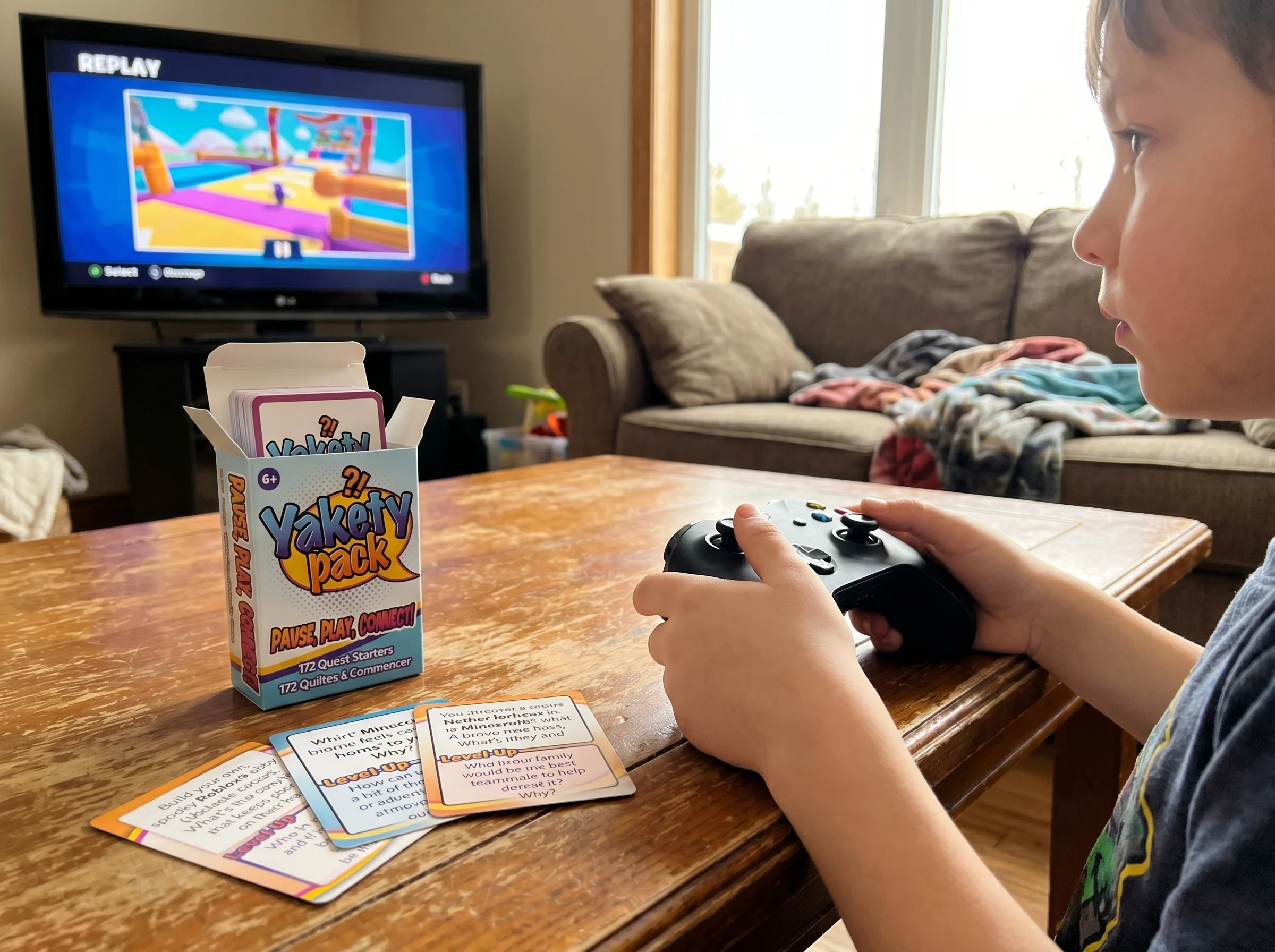
Watching a replay with your kid is gold because they narrate. They explain choices. They point out things they regret. That's metacognition, the ability to think about thinking. It's one of the hardest learning outcomes to measure in any setting, and your kid will hand it to you for free if you ask them to show you a clip.
My son rewatched a Rocket League play once and said, "I should have rotated back." He was 11. That's strategic self-correction. No quiz on earth captures that.
For games without replay, phone screen recording works fine. Five minutes of footage is enough.
 A prompt when you blankPause, Play, Connect: Core Deck$49 CAD • 172 promptsSee the deck
Tool #5: The Transfer Test (Real Life Application)
This is the one nobody talks about, and it's the whole ball game.
Transfer means the skill shows up off-screen. If your kid only "knows" something inside the game, it might just be muscle memory. If it leaks into real life, learning happened.
Watch for it. Vocabulary in dinner conversation. Problem-solving approaches during homework. How they negotiate with siblings. You can also set up little transfer prompts: board games, group Lego builds, puzzles that require planning.
My son was building Lego with his cousin and I heard him say, "Let's pre-plan before we start." That phrase came straight out of Minecraft. He'd internalized planning as a skill, not just a Minecraft thing. That's transfer. That's real learning.

Tool #6: Co-Op Sessions as Live Assessment
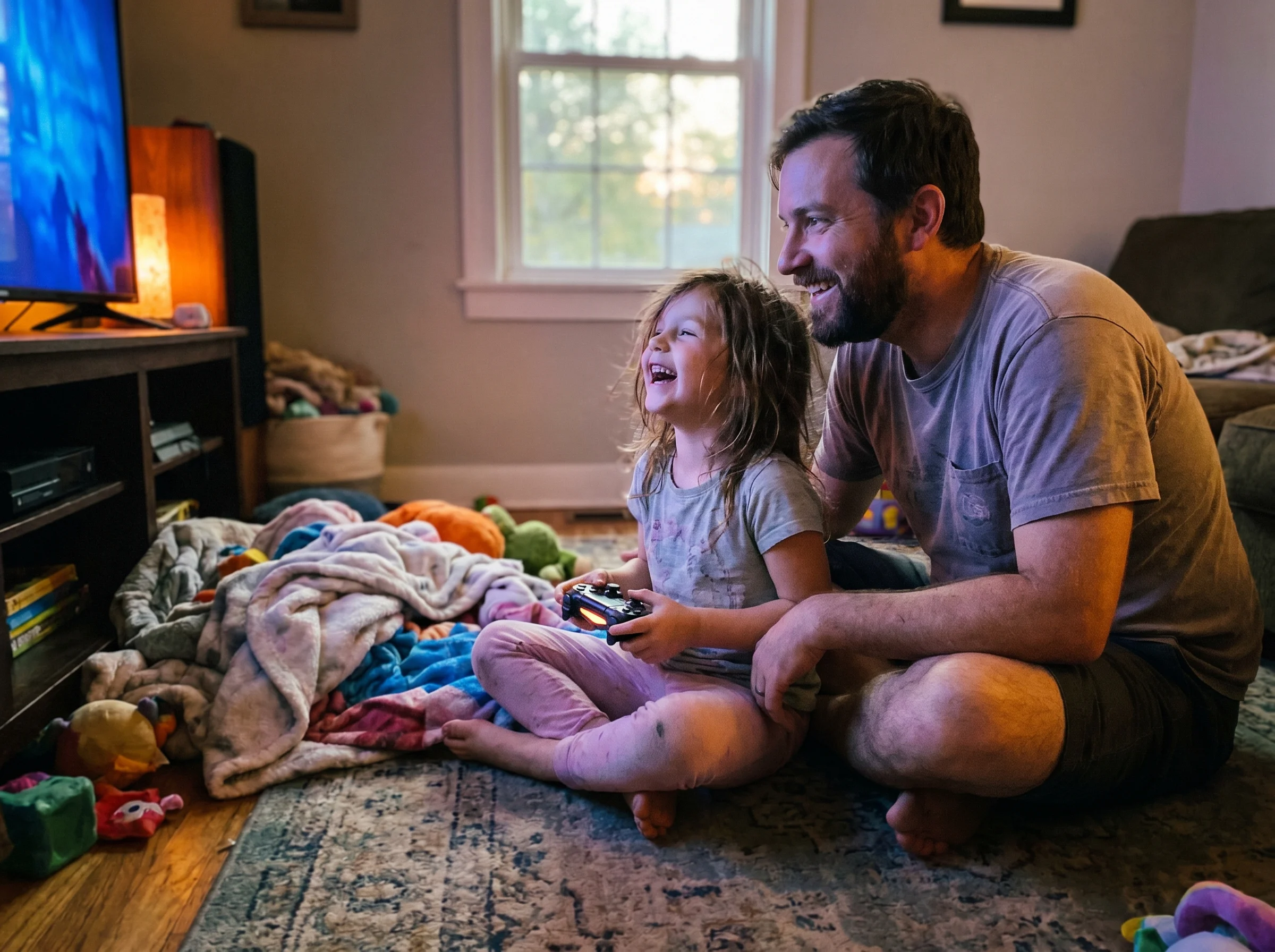
Sit down and play with them. Even badly. Especially badly.
Thirty minutes of co-op tells you more than 30 hours of watching from the doorway. You see in real time how they think, communicate, lead, and recover from mistakes. You see who they are as a teammate.
Bonus: when you're bad at the game, they have to teach you. And teaching is the highest form of mastery. If they can explain drift mechanics to you while you crash into walls in Mario Kart, they've mastered it. (Ask me how I know.)
You don't need to be good. You need to be present and willing to look ridiculous.
Tool #7: Third-Party Tools Worth Knowing About
Some legitimate options if you want digital help:
- Bark and Qustodio: monitoring tools with activity insights. Use them as conversation starters, not replacements for talking.
- Common Sense Media: their reviews tell you which skills a specific game tends to target.
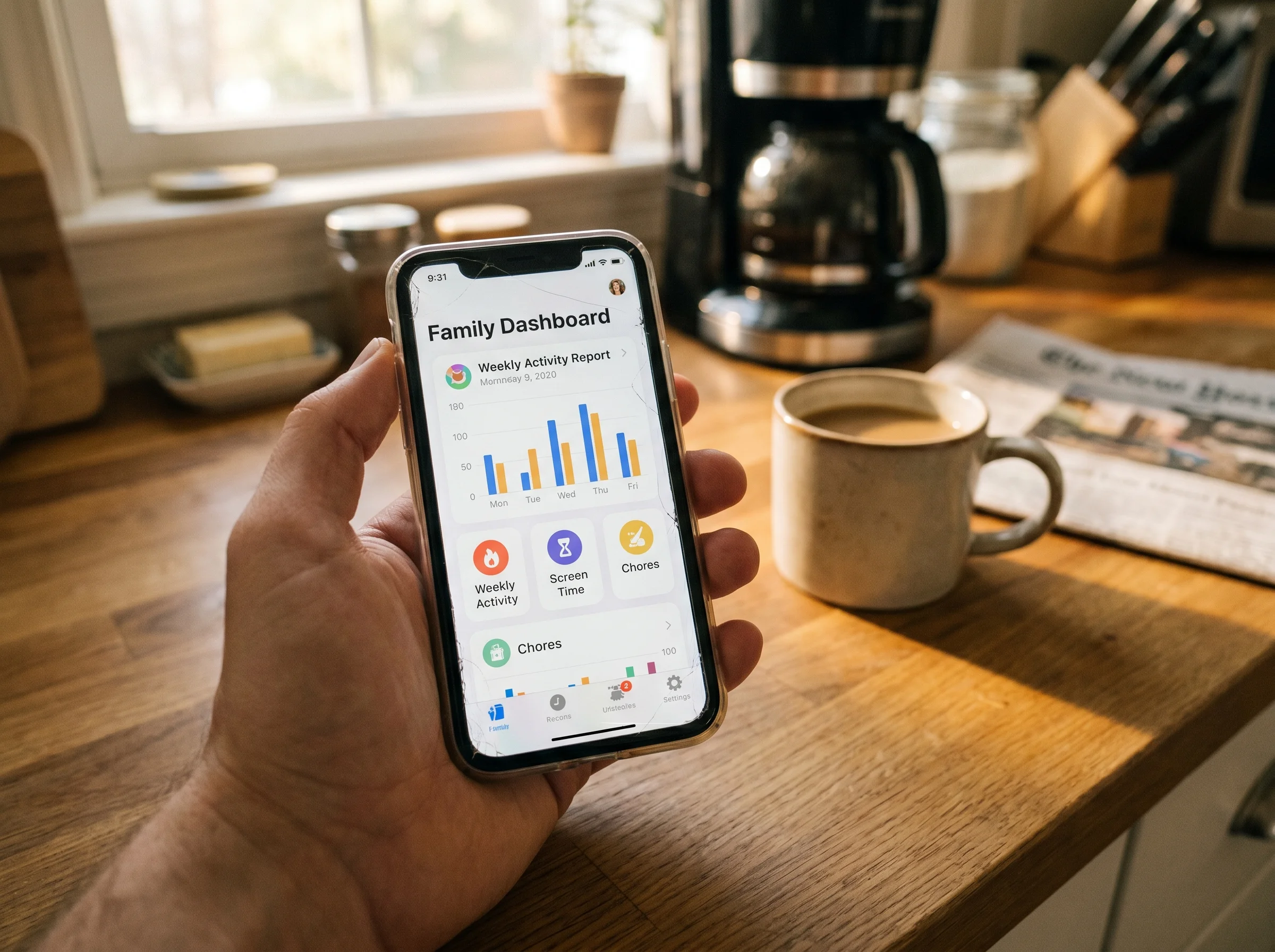
- Steam, Xbox, and PlayStation family dashboards: built-in time and activity reports. Free, already there.
- Game-specific tracking sites like tracker.gg for Rocket League and similar tools for other competitive titles.
Honest take: these measure activity, not learning. They tell you what your kid played and for how long. They don't tell you what stuck. Pair them with the human tools above or they're just expensive screen-time receipts.
A Simple Weekly Rhythm
You don't need to do all seven things every day. Here's the rhythm that works for our family:
- Daily: one good question. Two minutes.
- Weekly: glance at in-game stats together. Ten minutes.
- Monthly: notice transfer, skim your journal notes. Fifteen minutes.
Thirty minutes a month. That's it. And you'll know more about your kid's actual learning than any standardized test would tell you.
The Real Answer to What Tools Measure Learning Outcomes
If you came here looking for an app that answers "what are the tools to measure learning outcomes" from gaming, I'm sorry to disappoint you. The best tool isn't an app. It's your willingness to be bad at the game, sit on the couch, and ask better questions while your kid coaches you through it.
Everything else is just data. The learning shows up in the conversation.
If you want a head start on the questions part, that's literally why Yakety Pack exists. But honestly? Even a sticky note on the fridge with "What was the hardest part to figure out today?" written on it will get you further than most parents ever get. Start there.

From this article
Pause, Play, Connect: Core Deck
Upgrading the question stack: Tool #3 is the one that measures what actually stuck, and a sticky note runs out of questions fast. The Pause, Play, Connect Core Deck is that fridge note times fifty, built so the observation journal fills itself.

