
Look, I spent two years convinced my son was throwing his future away every time he hopped on Valorant after school. His GPA was a 3.3. Fine but nothing special. I figured a full ride was off the table unless he became a different kid, the kind who joins Model UN and tutors orphans on weekends.
Turns out I had the math completely wrong.
The GPA that gets you a full ride depends entirely on what else is on the table. And for gaming families, that "what else" might be sitting in your living room right now with a headset on, yelling at someone named xXShadowReaperXx.
Let me break down what I've learned, because nobody told me this stuff when I needed it.
The Honest Answer Nobody Gives You
There's no magic number. Anyone who tells you "you need a 3.8" is either selling you something or hasn't actually looked at how full rides work in 2024.
Full rides come in roughly four flavors, and each one weights GPA completely differently:
- Pure academic full ride: 3.8 to 4.0 unweighted, plus strong test scores. This is the hardest path and the rarest.
- Athletic (D1): NCAA minimum is a 2.3, but realistically coaches want 3.0+ so you don't become an eligibility problem.
- Esports: Most programs want 2.5 to 3.0 minimum. Your in-game rank matters more than your transcript.
- Need-based full rides (like QuestBridge): Usually 3.5+ combined with demonstrated financial need.
A friend of mine has a daughter who got a full academic ride at 3.7 unweighted. Not because of the GPA. Because she'd published a research paper on water quality in her county. The grades got her in the room. The paper closed the deal.
Pure GPA almost never closes the deal anymore. It's a ticket to be considered, not a winning lottery ticket.
 Grades are not the topicPause, Play, Connect: Core Deck172 prompts that have nothing to do with school, and get a teenager talking anyway.$49 CAD • 90 cards • 18 reviewsShop the deck
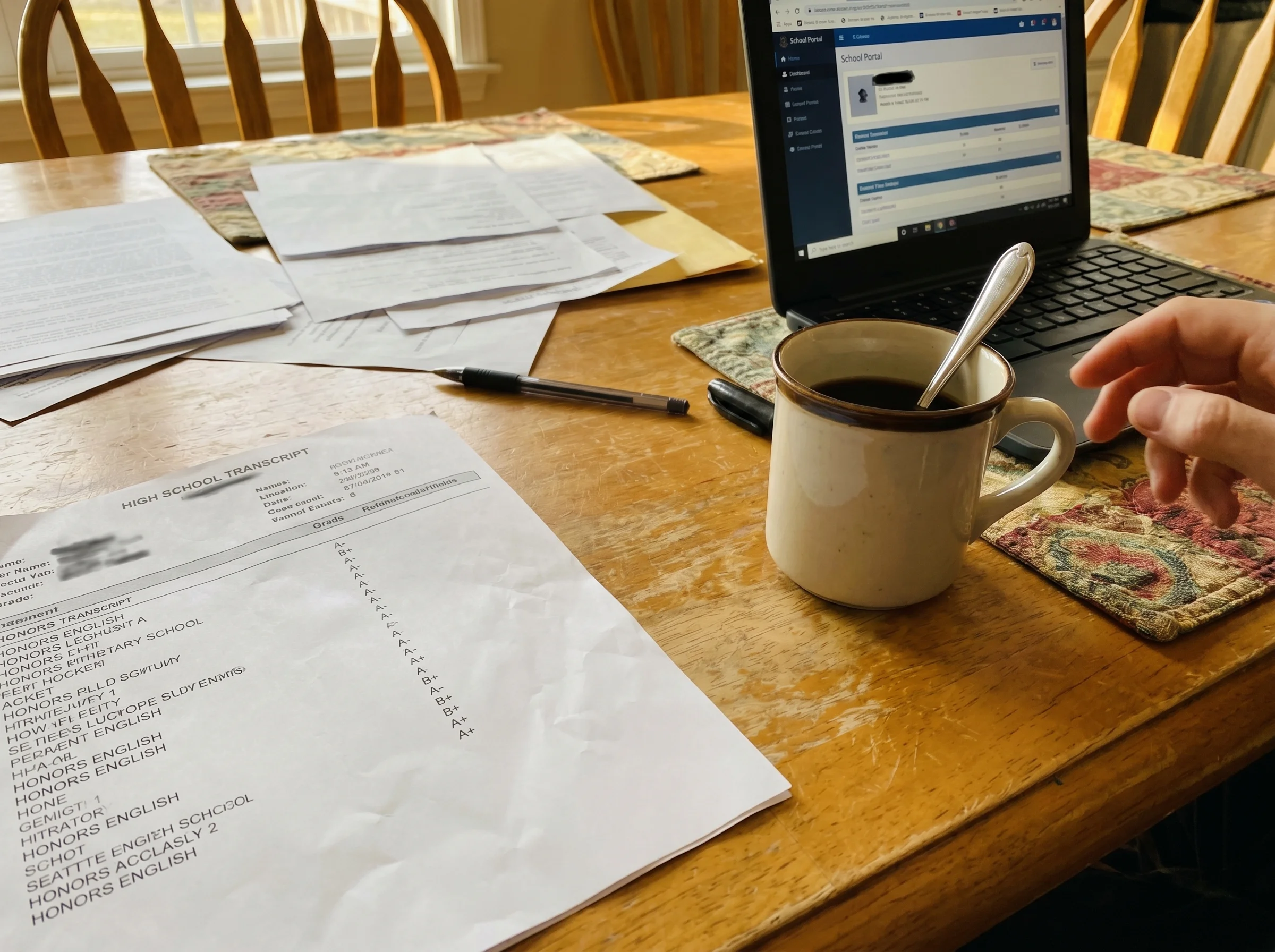
The Esports Full Ride Path (And Its Surprisingly Reasonable GPA)
Here's the part most "what GPA do you need" articles completely miss.
There are now over 175 colleges with varsity esports programs, and most of them require a 2.5 to 3.0 GPA minimum to be eligible for their scholarships. Programs like Maryville, Harrisburg University, and UC Irvine have offered serious money, including full rides in rare cases, to players with 3.0 GPAs and elite rank.
What they actually evaluate:
- Your in-game rank (Diamond, Immortal, Radiant, Grandmaster, depending on the game)
- VOD reviews of your gameplay
- Scrim performance against current roster
- How you communicate on comms
- Whether you'll fit the team
When my son finally explained to me what "Immortal" meant in Valorant, I learned it's roughly top 1% of all players. I'd been treating that like a hobby for two years. It's a credential. A real one. If he were Immortal in tennis I would've hired a coach and a nutritionist by sophomore year.
Full rides specifically in esports are still rare. But partial scholarships of $5,000 to $25,000 per year at a 2.8 GPA? Those are very real and very gettable for kids with rank to back it up. Stack two or three of those with a need-based grant and you're basically at a full ride.

GPA Plus What? The Combo That Actually Lands the Money
Here's the formula nobody spells out:
GPA + (elite skill OR leadership OR recruited talent OR demonstrated need OR underrepresented background) = full ride
You almost never see a full ride go to a "just grades" kid anymore. There are too many 4.0 students. Schools want a 4.0 who also founded something, won something, built something, or represents a community they want on campus.
Which means:
- A 3.5 with a state championship beats a 4.0 with nothing extra.
- A 3.0 with a Diamond+ rank and a captain role on a varsity esports team can beat a 3.7 with a few generic clubs.
- A 3.3 with a published Twitch following or a self-built indie game beats both.
The kid who tries to be the best at one specific thing usually wins. The kid who tries to be slightly above average at twenty things usually loses.
Weighted vs. Unweighted (The Number That Trips Everyone Up)
This one cost me about three weeks of unnecessary panic.
Unweighted GPA is the standard 4.0 scale. An A is a 4.0, B is a 3.0, no bonus for difficulty.
Weighted GPA adds bonus points for honors and AP classes, so it can go above 4.0. Your kid might come home with a 4.3 weighted and you think they're golden.
Here's the thing: most full-ride scholarships use the unweighted GPA, or they recalculate everything to their own scale. That 4.3 weighted might be a 3.6 unweighted when the committee looks at it.
Action item: Ask your counselor for both numbers today. Know which one matters for which scholarship. Don't get blindsided in March of senior year.

The GPA You Need to KEEP a Full Ride (More Important Than the One to Get It)
Nobody talks about this and it's the part that bites families hardest.
Most academic full rides require maintaining a 3.0 to 3.5 college GPA. Esports scholarships often require 2.5 to 3.0 just to stay on the roster. Athletic scholarships have their own NCAA eligibility rules on top of the school's requirements.
Here's the brutal truth: college GPA is way harder than high school GPA for most kids. The student who needed tutoring to hit 3.4 in high school is going to struggle to hold a 3.0 in college, especially while balancing 20+ hours of practice or scrims.
If your kid is borderline academically, the scholarship is only half the battle. You need a plan for keeping it. That means asking schools about academic support, tutoring availability, and what happens if your kid drops below the GPA threshold for a semester. Some schools give a grace period. Some don't.
 Cards, not a calculatorPause, Play, Connect: Core Deck$49 CAD • 172 promptsSee the deck
What to Do If Your Kid's GPA Isn't "Full Ride Material"
Don't write the whole thing off. Stack the other side of the equation.
Here's what I wish I'd done two years earlier:
- Identify what they're actually elite at. Not what they like. What they're top 5% at. Gaming, art, coding, music, debate, anything.
- Find the programs that recruit for that thing. For esports, that's looking up which colleges have varsity programs for your kid's specific game.
- Stack scholarships. A $15K esports scholarship plus a $10K Niche scholarship plus a $20K need-based grant equals a full ride at most state schools.
- Start the conversation now. Not senior year. Now.
That last one is where I got stuck for the longest time. I'd ask my son "how was school" and get a grunt. I'd ask "what do you want to do with your life" and get a shrug. Useless.

This is genuinely where Yakety Pack came from. My co-founder and I built it because we needed a way to actually understand what our kids cared about without it turning into an interrogation. One of the cards asks "what's something you're better at than most adults?" My son talked for ten minutes about his game sense in Valorant. How he reads angles, predicts rotations, calls out for his team. That's literally the kind of stuff scholarship essays are made of. I'd had no idea any of it was happening in his head.
You can't help your kid fund their college if you don't know what they're great at. And you don't know what they're great at if you've never asked a question that lets them tell you.
The Conversation Most Parents Don't Have Until It's Too Late
If your kid is in 9th or 10th grade, you have a massive advantage. Use it.
Find out:
- What game they play most
- What their current rank is (and what that rank actually means percentile-wise)
- Whether their high school has an esports team (most do now)
- Whether they'd want to play in college
Then go look up the esports programs that recruit for their specific game. Rocket League recruiting looks nothing like Valorant recruiting. League of Legends programs are different from Smash programs. The landscape is specific.
If you wait until junior year to have this conversation, you've lost most of your runway. Coaches want to see consistent rank over time, tournament results, and a kid who can communicate. None of that gets built in six months.
FAQ
Can you get a full ride with a 3.5 GPA? Yes, but rarely on academics alone. A 3.5 plus a recruited sport, elite esports rank, demonstrated need, or a standout achievement (research, business, art) can absolutely land a full ride.
What GPA do you need for a full ride to a D1 school? NCAA minimum is 2.3, but most D1 coaches want 3.0+ to keep recruits academically safe. Academic full rides at D1 schools usually require 3.8+ unweighted plus high test scores.
Does esports require a high GPA for scholarships? No. Most college esports programs require 2.5 to 3.0 minimum. Skill matters more than transcripts.
What if my kid's GPA dropped sophomore year? Not the end of the world. Schools and scholarship committees look at trends. A dip followed by a recovery actually shows resilience. A consistent upward trajectory from junior year onward can offset a rough sophomore year.
Is weighted or unweighted GPA used for scholarships? Usually unweighted, or recalculated to the school's internal scale. Always ask which one a specific scholarship uses.
One Thing to Do This Week
Sit down with your kid. Not to lecture. Not to "have a talk." Just to actually find out what they're good at and what they care about.
If they game, ask them what their rank means. Ask them to show you a clip they're proud of. Ask them what role they play on their team and why.
You might be looking at the credential that funds their college. I almost missed mine because I was too busy worrying about a 3.3.
Don't be me from two years ago.

From this article
Pause, Play, Connect: Core Deck
Finding the credential first: The scholarship math only works once you know what your kid is elite at, and grunts won't tell you. A few cards from the Pause, Play, Connect Core Deck at dinner surfaced my son's Valorant story before any counselor meeting did.

