
A buddy of mine spent two years telling his son to "grind harder" in Valorant. He'd read an article about full ride esports scholarships and decided that was the plan. College fund problem solved. Kid practiced six hours a day, dropped his other hobbies, and by sophomore year he was burnt out and uninstalled the game. No scholarship. No more Valorant. And a relationship with his dad that took another year to repair.
So when parents ask me, "Can you get a full ride scholarship for esports?" I want to give them the real answer, not the YouTube highlight reel version.
Yes, full rides exist. They're also rare as hen's teeth, and the path to one looks nothing like what most parents think.
Let me break it down.
 Past the highlight reelPause, Play, Connect: Core Deck172 prompts that get a gaming kid talking about what they actually play and why.$49 CAD • 90 cards • 18 reviewsShop the deck
The Short Answer (And Why It's Misleading)
Full ride esports scholarships are real. A handful of schools offer them, places like Maryville University, Harrisburg University, Miami University of Ohio, Boise State, and Shenandoah have all funded top-tier players at full or near-full ride levels.
Here's the part nobody puts in the headline: most esports scholarships are partial awards in the $500 to $8,000 a year range. When my son came home and told me his friend "got a scholarship for gaming," I asked how much. After some digging, it turned out to be $1,000 a year toward a $45,000 tuition bill. That's not a scholarship strategy. That's a discount code.
So yes, you can get a full ride for esports. The same way you can get one for tennis or fencing. It happens. It's just not the realistic outcome for 99% of kids who play competitively.

What a Full Ride Esports Scholarship Actually Means
When schools say "full scholarship," they usually mean tuition-only. Room, board, books, and fees are still on you. At a $50,000-a-year private school, that can leave your family owing $12,000 to $15,000 annually even with a "full" award.
A true full ride, tuition plus room and board plus books, exists at a few programs for elite recruits. Think the kid who's already streaming to 5,000 viewers, ranked in the top 0.1%, with tournament wins on their resume. Those are the unicorns.
Read the fine print. Ask the recruiter directly: "Does this cover tuition only, or does it include housing and meals?" You'd be shocked how often families assume one and get the other.
Which Games Actually Get You Recruited
This trips up more parents than anything else. Your kid being a Fortnite legend is great. It's also mostly irrelevant if the schools you're targeting only fund certain titles.
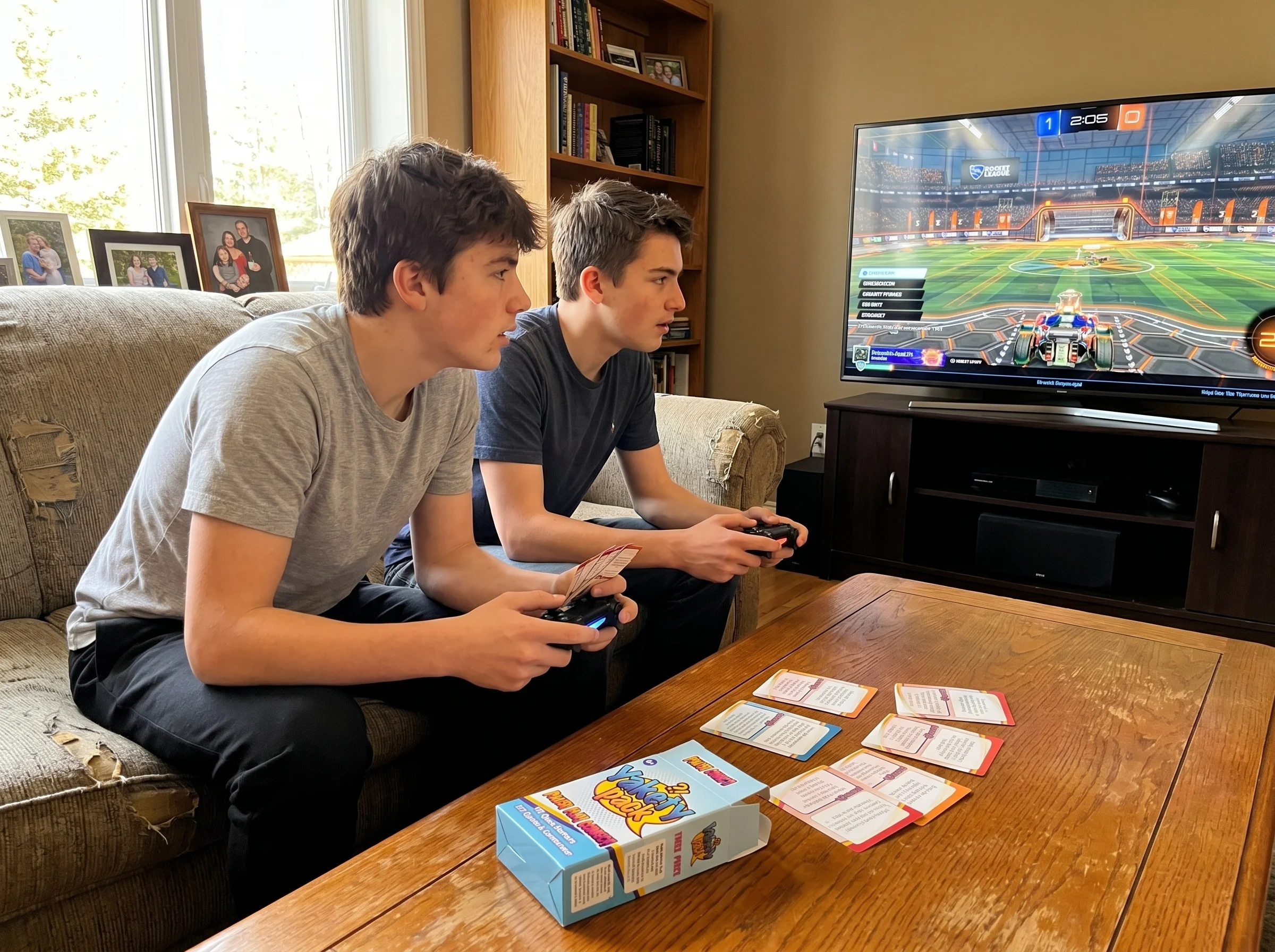
Here's where the scholarship money actually lives right now:
- League of Legends (the biggest by far)
- Valorant (growing fast)
- Rocket League
- Overwatch 2
- Super Smash Bros. Ultimate
- Counter-Strike 2
Fortnite and Apex Legends have surprisingly limited college-level support compared to their popularity. Mobile games like Clash Royale or Mobile Legends? Almost nothing.
My son spent a year deep in a game that has zero college pathway. Knowing that didn't change his love for the game. But it did change how we talked about college, and it kept me from selling him a dream that wasn't there.
The Skill Bar Is Higher Than You Think
Here's what nobody publishes clearly. Rough benchmarks for being on a recruiter's radar:
- League of Legends: Diamond minimum. Masters or Challenger for top programs.
- Valorant: Immortal at minimum. Radiant gets you noticed.
- Rocket League: Grand Champion or higher.
- Overwatch 2: Top 500 or high Grandmaster.
- Smash Ultimate: Verifiable tournament results, regional or national placement.
And rank alone isn't enough. Coaches want VODs. They watch for game sense, team communication, attitude in voice comms, and whether you tilt under pressure. A Radiant player who flames teammates is less recruitable than an Immortal who calls clean rotations and stays calm.
If your kid hasn't competed in PlayVS, the High School Esports League, or online qualifiers, they're invisible to most recruiters. The talent has to be documented.
 When grinding replaced talkingPause, Play, Connect: Core Deck$49 CAD • 172 promptsSee the deck
Where the Money Actually Is (And Where It Isn't)
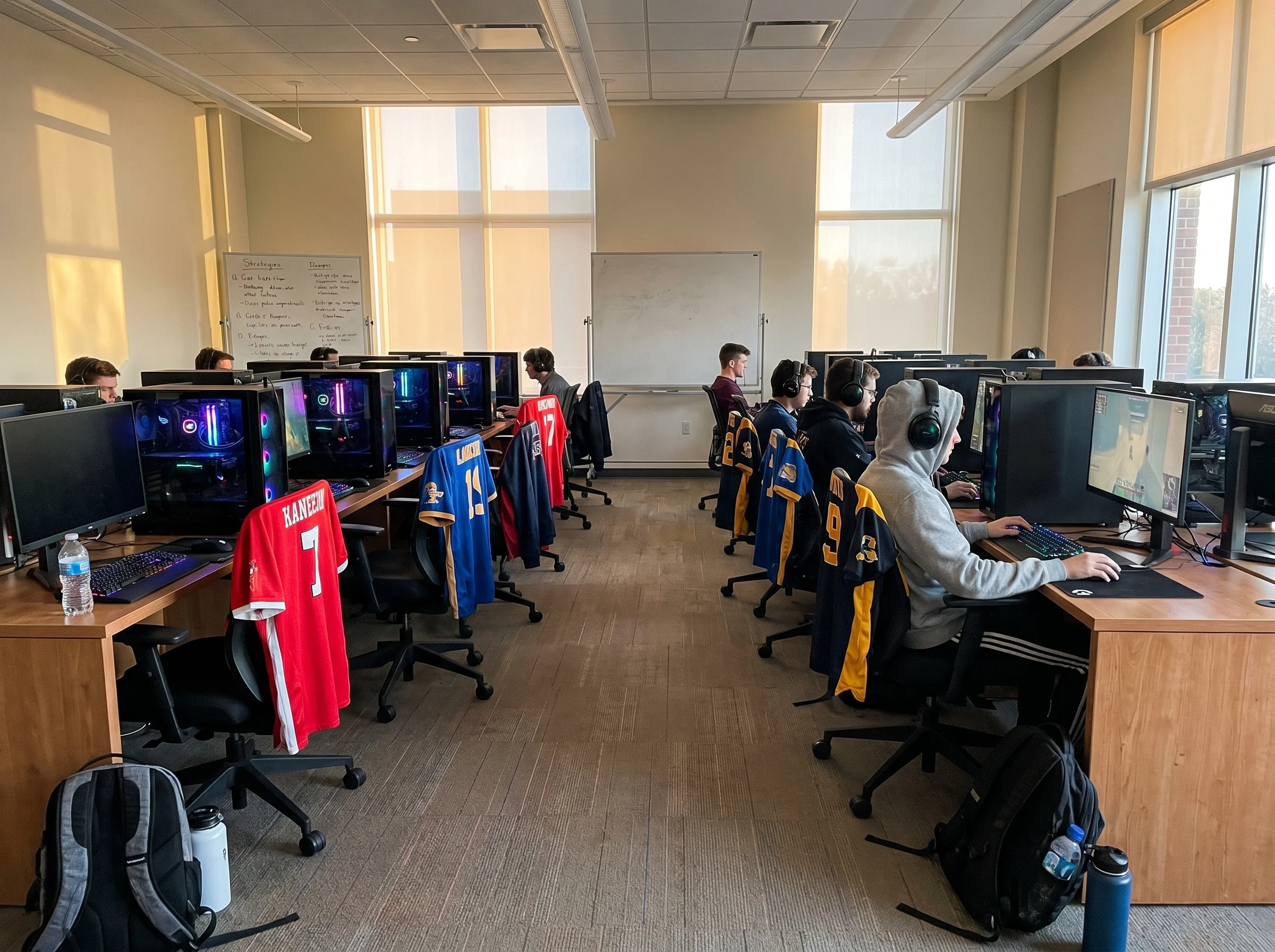
This is the NCAA confusion that trips everybody up: the NCAA does not currently sanction esports. Most varsity esports programs and scholarships live in the NAIA, junior colleges, and smaller private universities.
That means the big-name schools your family daydreams about? Mostly not in the game yet. The schools actually writing scholarship checks are places like Maryville, Harrisburg, Miami (OH), Shenandoah, Becker (now part of Clark), UC Irvine, and Boise State.
This isn't a bad thing. These programs are often excellent. It just means recalibrating expectations. Your kid isn't getting recruited to Alabama for Valorant.
The Academic Side Parents Forget About
Kids think esports skips the academic stuff. It doesn't.
Most programs require a 2.5 to 3.0 GPA minimum just to be considered, and you have to maintain grades to keep the scholarship. Practice schedules run 15 to 20 hours a week on top of a full course load. Miss too many practices because you're behind on a paper, and you lose your roster spot. Lose your roster spot, and the scholarship can disappear.
If your kid can't manage their schoolwork now, esports won't fix that. It'll expose it.
How to Actually Know If Your Kid Has a Shot
Here's the part I wish someone had told me earlier. You cannot evaluate your kid's competitive ceiling if you've spent years rolling your eyes at the screen.
The parents I know whose kids actually got recruited had a few things in common. They knew their kid's main game. They knew the rank. They knew the teammates' first names. Not because they were micromanaging, but because they were genuinely curious.
For two years I asked my son "how was Minecraft today" and got grunts. Then on a car ride I asked, "Who's the best person you've ever played against?" Twenty minutes. He told me about a kid in his ranked lobby who'd later signed with an org. He told me where he thought he stacked up. He told me, unprompted, that he didn't think he had the reflexes to go pro but he loved coaching his younger friends.
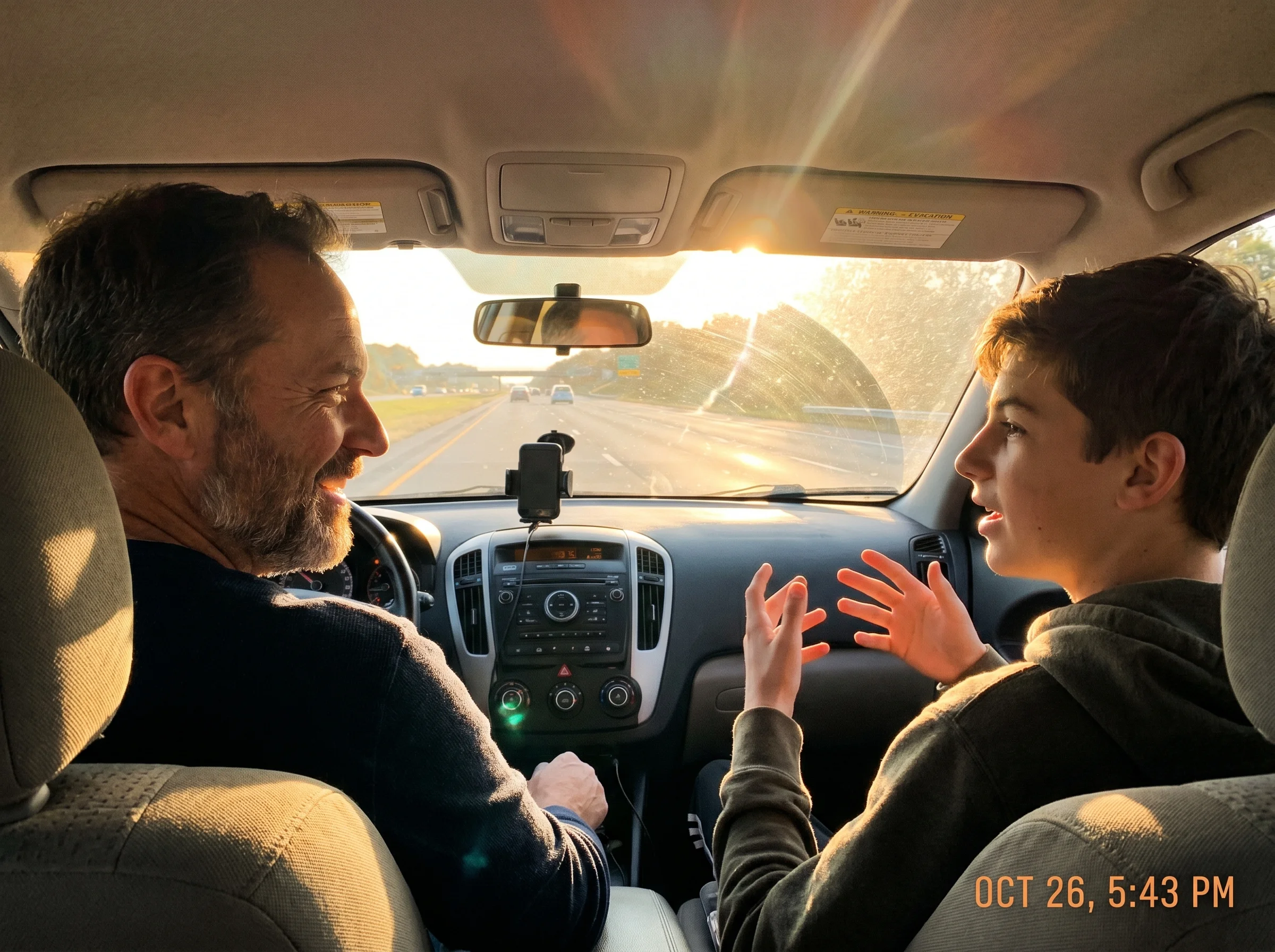
That one conversation taught me more about his competitive ceiling than two years of generic check-ins. We built Yakety Pack around exactly this idea: the right question opens a door that grunts keep closed.
If you want to know whether your kid is scholarship-track or just passionate, ask:
- What's your rank, and what's it take to climb to the next tier?
- Have you played in any organized leagues or tournaments?
- Are any coaches or org reps reaching out to you, or are we going to be cold-emailing programs?
- Who do you look up to in this game, and why?
Their answers will tell you everything.
The Plan B Conversation
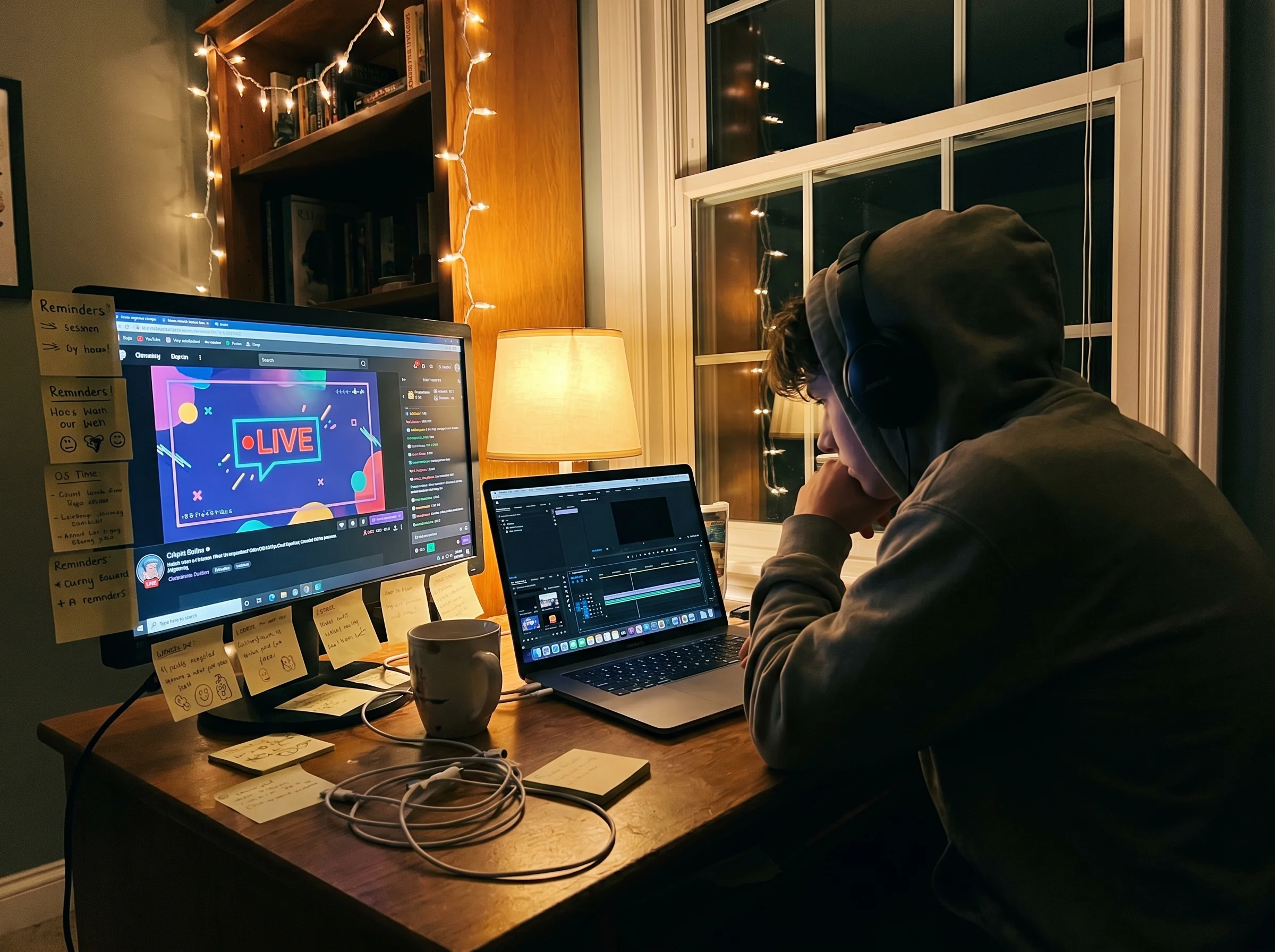
Even if the full ride doesn't materialize, there are real paths in this industry. Shoutcasting, coaching, content creation, esports management, game development, marketing for game studios. A lot of schools now offer esports management degrees, and those programs often come with smaller scholarships that are easier to land than a varsity roster spot.
The full ride is the goal. The major can still be the win.
The Honest Bottom Line on Esports Scholarships
Can you get a full ride scholarship for esports? Yes. It's possible. For a tiny percentage of players, at a small number of schools, in a specific list of games, with documented competitive results and the academics to back it up.
But here's the thing I want every parent to hear. The kids who actually land these scholarships aren't the ones whose parents pushed them into grinding. They're the ones who built skill organically because they loved the game, and whose parents were close enough to notice when that love crossed into something exceptional.
You can't scout talent you've been ignoring.
So the question isn't really "can my kid get a full ride." The question is, "Am I close enough to my kid's gaming life to even know?"
Start there. Ask a real question this week. Not "how was gaming," but something specific. Something that says you've been paying attention. The answer might surprise you, in either direction, and either way, you'll know more than you did yesterday.
That's the scholarship strategy nobody talks about. And it's the only one that doesn't cost your kid the thing they love along the way.

From this article
Pause, Play, Connect: Core Deck
Scouting starts at home: Whether your kid is Radiant or just plays for fun, the recruiters' first question is one you should be able to answer too. The Pause, Play, Connect Core Deck makes those car ride questions easy to reach for, no grinding required.

