
My son was Diamond in Valorant for eight months before I knew what Diamond meant.
While I was busy negotiating screen time limits and asking him to "find some balance," he was sitting in a rank that college coaches actively scout. I didn't know that. I didn't know what op.gg was. I didn't know what a VOD review was. I definitely didn't know that the kid I kept telling to "do something productive" was already doing the productive thing, I just couldn't see it.
If you're a parent or a player trying to figure out how to get recruited for an esports scholarship, let me save you the two years I wasted being the obstacle.
First, Understand What Coaches Are Actually Looking For
Here's the thing nobody tells you: college esports coaches are not showing up at LAN tournaments with clipboards. They're not calling your high school. They're in Discord servers, watching Twitch streams, and pulling up ranked profiles on tracker sites.
When they evaluate a player, they're looking at roughly four things:
- Rank and consistency. Not peak rank. Current rank, held over months.
- VOD review. Game sense, decision-making, positioning, and how a player reacts when things go sideways.
- Communication. This is huge. Coaches will straight up pass on a mechanical god who tilts in comms.
- Academics. Most programs want at least a 3.0 GPA. Some want higher. NCAA-style eligibility rules don't apply to most esports programs, but academic standards still do.
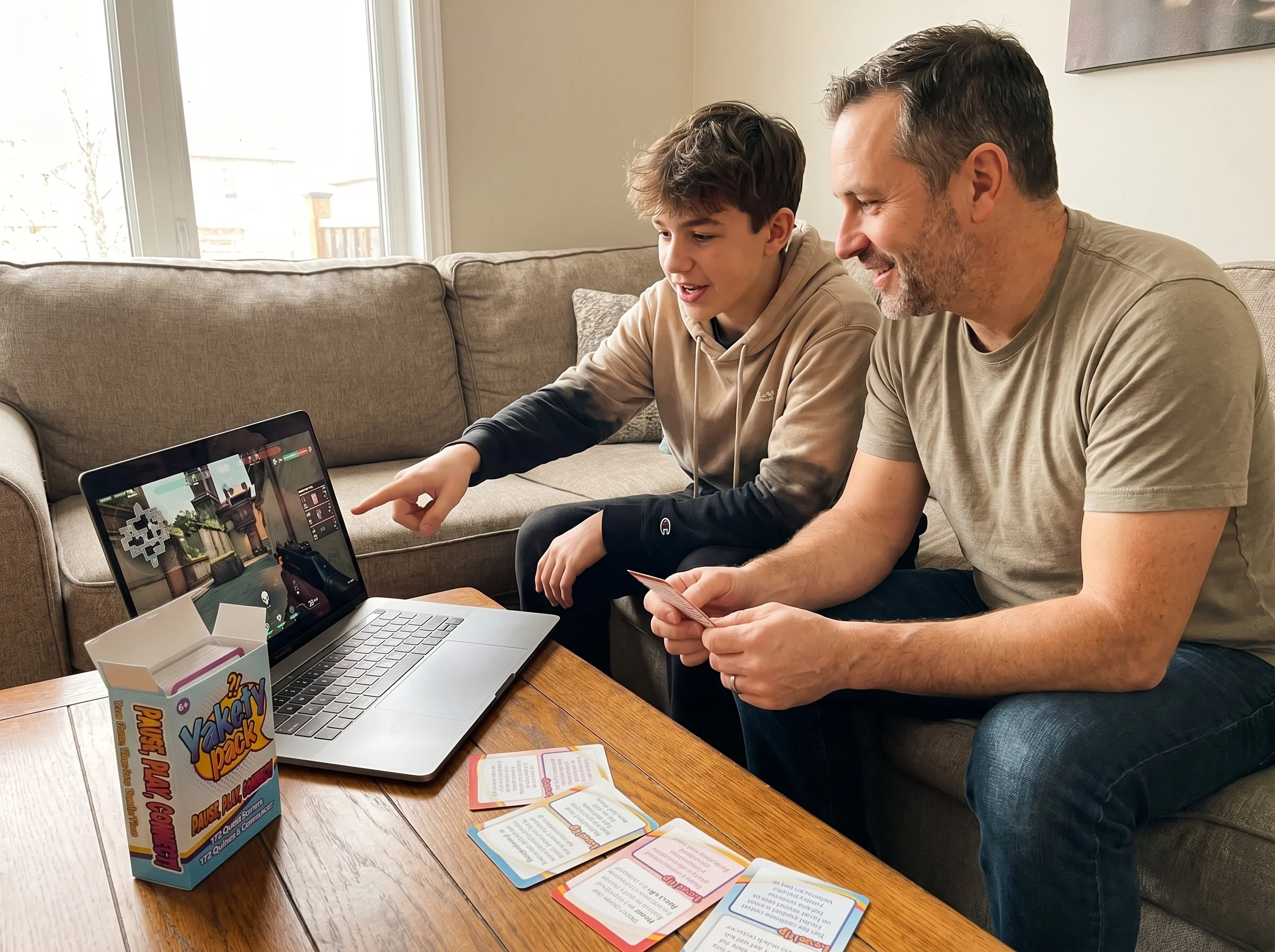
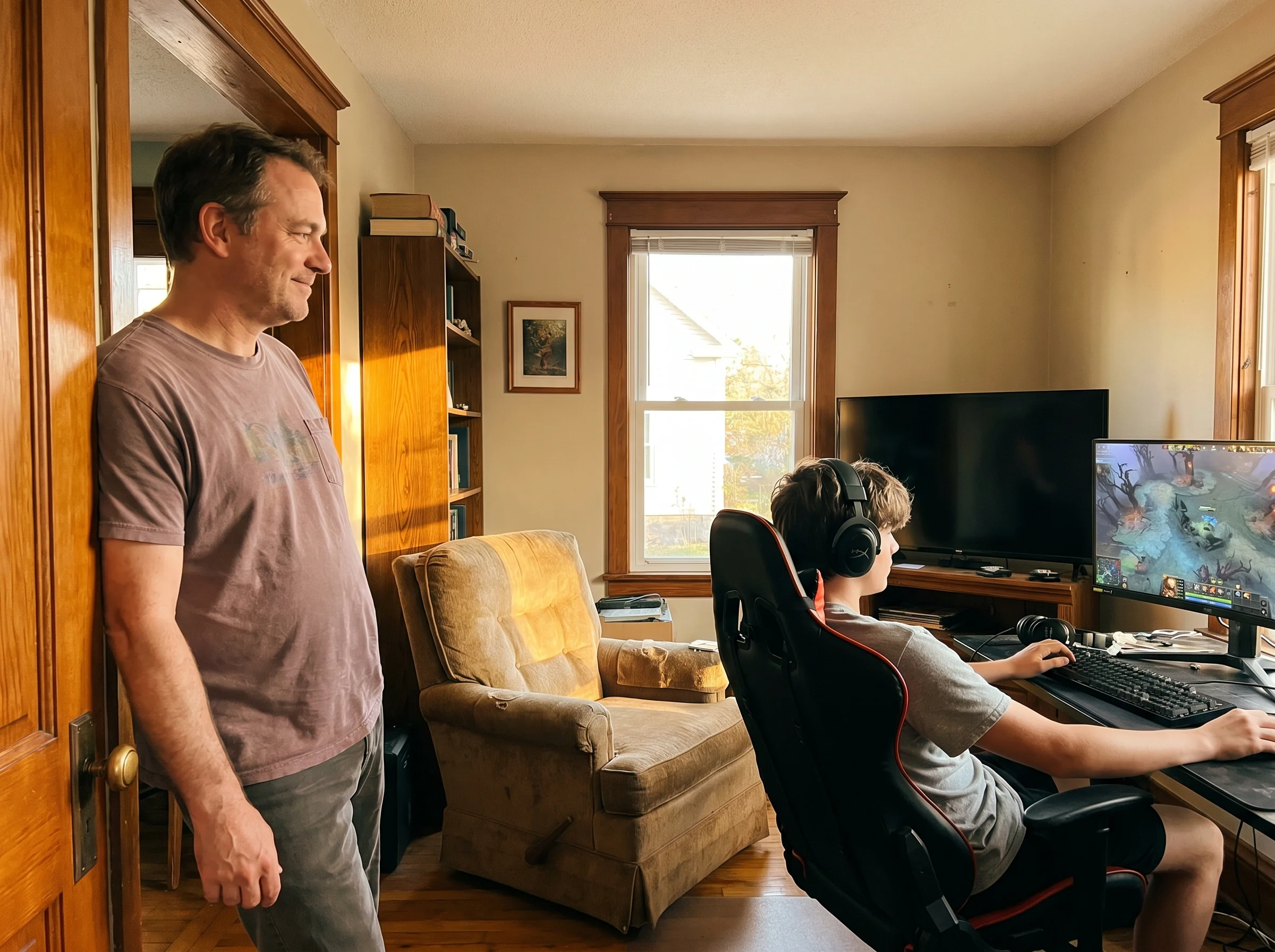
The first time I sat down to actually watch my son play, I didn't know what I was looking at. So I asked him, "What makes a clip good?" He talked for 40 minutes. He explained crosshair placement, util usage, why a flashy ace was actually a worse round than a boring 3K. That one conversation taught me more than any article I'd read.
If you're a parent, that's step one. Sit down. Shut up. Ask.
 Nothing to do with rankPause, Play, Connect: Core Deck172 prompts that get a quiet kid explaining something they know far better than you do.$49 CAD • 90 cards • 18 reviewsShop the deck
Pick Your Game (Or Be Realistic About the One You Already Play)
Not every game has a real scholarship pipeline. In 2024-2025, here's the honest landscape:
Games with real college money:
- League of Legends
- Valorant
- Overwatch 2
- Rocket League
- Super Smash Bros. Ultimate
- Counter-Strike 2 (growing fast)
- Hearthstone (smaller but real)
Games with thin or shrinking pipelines:
- Fortnite (mostly tournament prizing, few program scholarships)
- Most mobile titles
- Fighting games outside Smash
A piece of advice that'll get me hate mail: don't switch games to chase a scholarship. Coaches can smell it. A kid who's been grinding Rocket League for four years and loves it will beat a kid who jumped from Fortnite to Valorant six months ago hoping to cash in.
Bonus tip: niche games like Rocket League and Smash have fewer roster spots, but they also have way less competition. The National Association of Collegiate Esports lists hundreds of member schools, and the spread across titles is wider than most parents realize.
The Rank Question: What's "Good Enough"?
Here are rough guidelines. Verify these against the current season because ranks shift:
- Valorant: Immortal+ for D1 consideration, Diamond for smaller programs
- League of Legends: Diamond+ for D1, Platinum for tier-2 schools
- Rocket League: Champion 2+ for serious consideration, Grand Champ for top programs
- Overwatch 2: Master+ for D1, Diamond for entry-level programs
- Smash: PGR ranking or strong regional placements
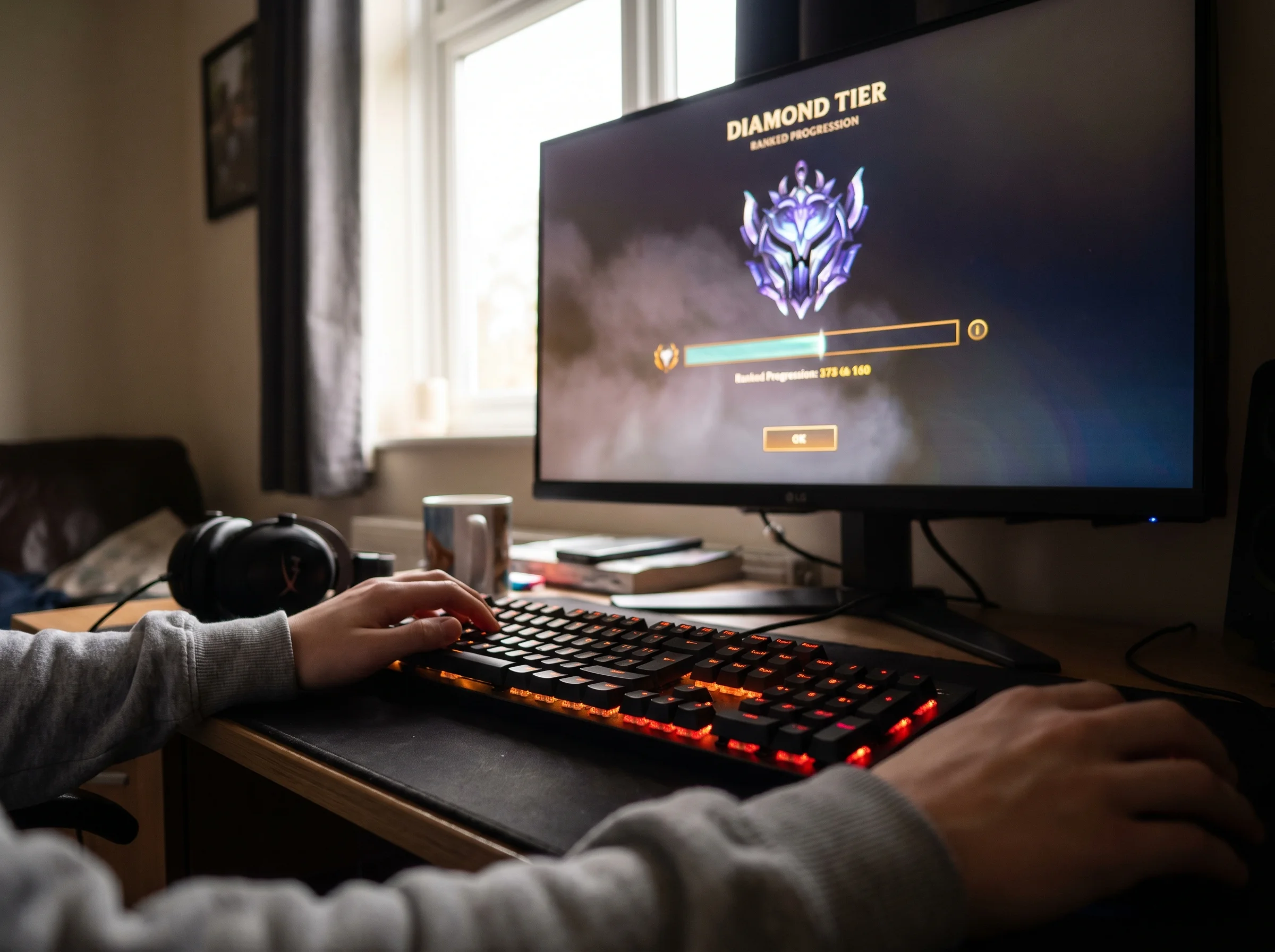
Consistency beats peak. A kid who's been Diamond for six months looks way better than one who hit it once on a hot streak and dropped to Plat.
I learned what "decay" was the hard way when my son told me he had to play every weekend to keep his rank. I thought he was making up a fake reason to skip mowing the lawn. He wasn't. Ranked decay is real, and if your kid is chasing scholarships, weekend grinding is part of the job.
Build the Recruiting Package
Forget the highlight reel. Or rather, don't lead with it.
Here's what coaches actually want to see when figuring out how to get recruited for an esports scholarship:
- A tracker link (op.gg, tracker.gg, ballchasing.com depending on the game) showing current rank and recent performance
- A clean Twitch VOD archive with full matches, not just clips. Coaches want to see what you do on a bad day.
- A short intro video or written profile: who you are, what role you play, what team experience you have
- A communication sample: a clip with comms on, ideally during a clutch or a comeback
- Academic info ready to go: GPA, transcript, intended major
Have all of this in one Google Drive folder before you ever send a single message.
 Away from the tracker linksPause, Play, Connect: Core Deck$49 CAD • 172 promptsSee the deck
How to Actually Contact Coaches (Without Being Cringe)
Coach contact info usually lives on the school's esports program page or in the NACE and NECC directories.
When you DM or email, keep it short. Specific. No attachments, just links. Mention something real about their program. Here's a template that works:
Hey Coach [Name],
I'm a junior at [School], currently Immortal 2 on Valorant, primary Controller. I've been following [Specific Player or Team Result] this season and I'd love to be considered for a tryout next cycle.
Tracker: [link] Recent VODs: [link] Quick intro: [link]
GPA is 3.6, planning to major in computer science. Happy to send anything else helpful.
Thanks for your time, [Name]
Follow up once. Not five times. Coaches talk to each other, and being a pest is a faster way to torch your reputation than you'd think.
Also: showcases and combines are real. The ESPN Esports Combine, PlayVS, HSEL (High School Esports League), and Generation Esports all host scouted events. Discord servers tied to college programs are gold mines.

The Conversations Parents Need to Have
This is the section I would've skipped two years ago, and it would've cost me.
Stop asking "how was school." Start asking these instead:
- "What rank are you climbing to right now?"
- "What's your team working on this week?"
- "What would you do if you could build a career around this?"
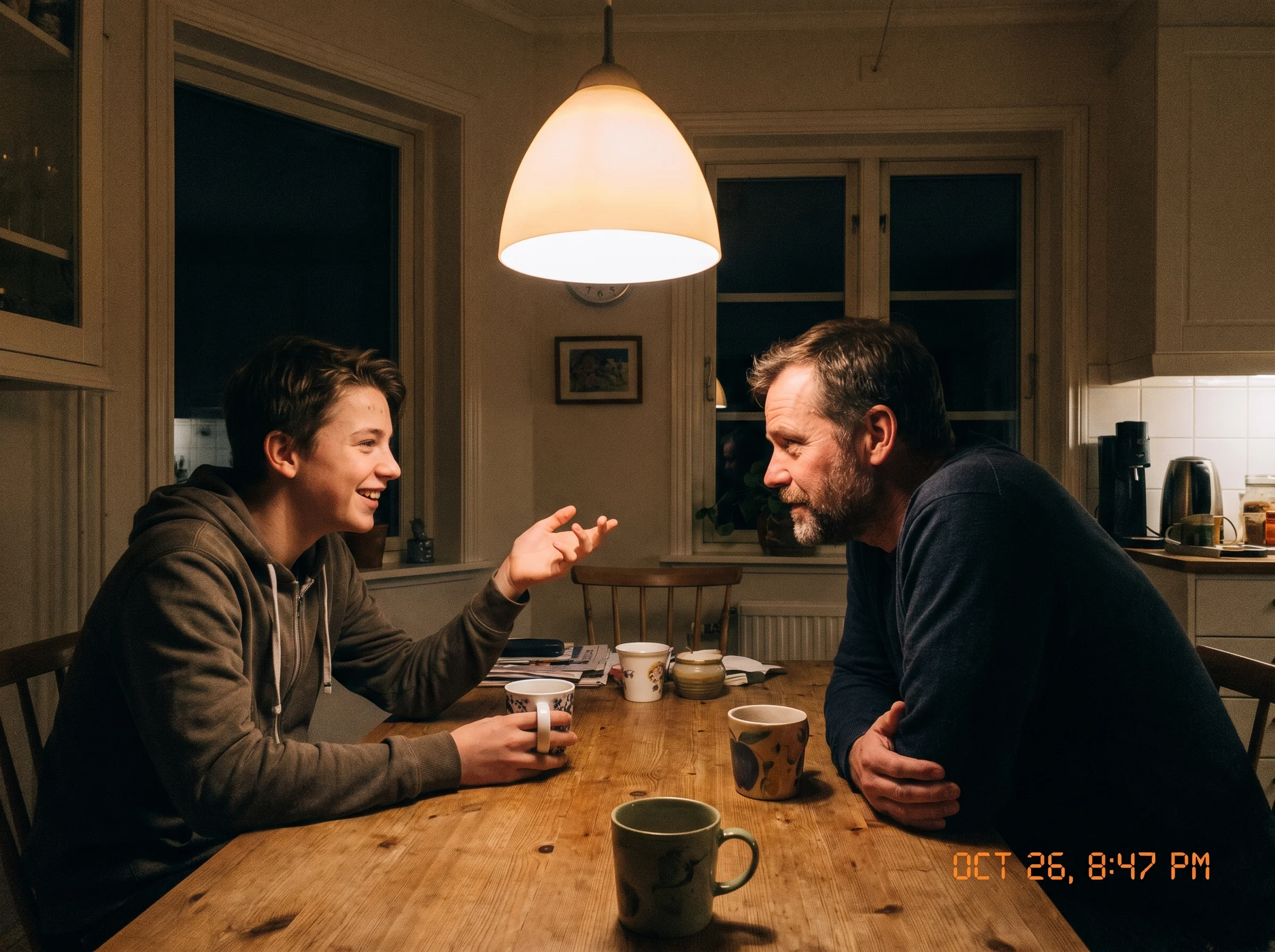
The third one almost killed it for us, by the way. Not the question. The way I asked it the first time. I framed it as, "If you're going to play this much, it better lead somewhere." He shut down for two months. Two months of grunts.
When I came back and asked it like a real question, no pressure, no agenda, he opened up about wanting to coach eventually. Coach. Not pro. That's recruitment-relevant info I would've never gotten with "how was school."
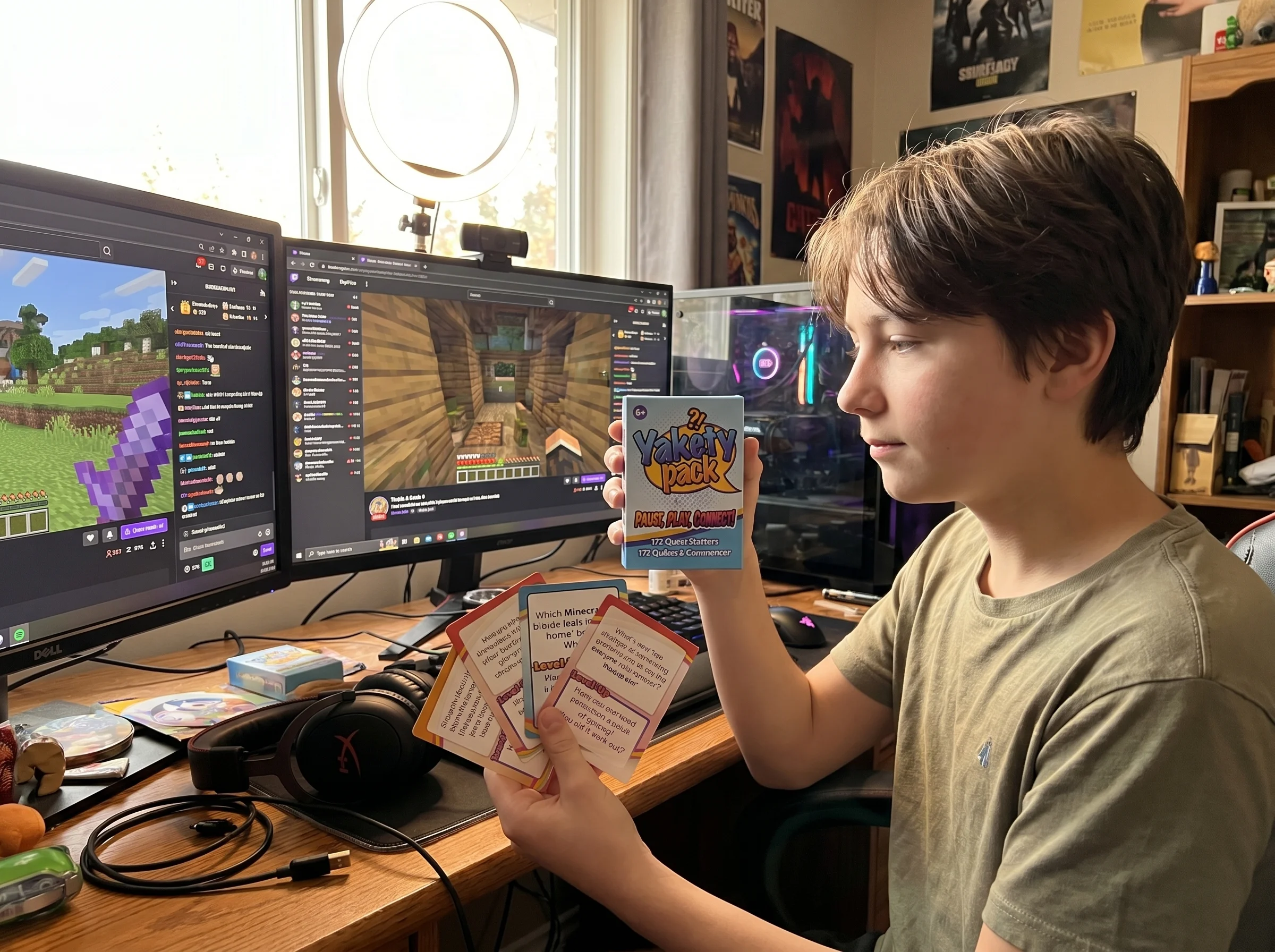
We made Yakety Pack because I kept fumbling these conversations. One of the cards in the deck asks, "What's a goal in your game you're working toward right now?" That question opened doors that "are you taking this seriously?" slammed shut.
A few red flags to watch for when evaluating programs:
- No dedicated coach (just a faculty advisor)
- No facilities or practice space
- Vague scholarship promises with no paperwork
- No academic support structure
- A program that's less than a year old with no track record
Ask about graduation rates, post-grad outcomes, and whether the scholarship is renewable. If they hesitate on any of those, walk.
The Backup Plans Nobody Talks About
Most kids won't be Faker. That's fine. There's a whole ecosystem of esports scholarships that don't require top 1% mechanical skill:
- Shoutcasting and commentary. Smaller scholarships, but they exist. If your kid loves talking about the game, this is a real path.
- Content creation and streaming. Some programs offer scholarships to players who can build the program's social presence.
- Team manager, coach, and analyst roles. Often scholarship-eligible at bigger programs.
- Community college esports. Real stepping stones with real transfer pathways to four-year programs.
- Esports management and game design majors. Parallel academic paths that connect to the industry.
If your kid is good but not top 1%, this is the territory to explore. It's underrated and uncrowded.
A Realistic 12-Month Timeline
If your kid is a junior in high school, here's how the year should look:
- Months 1-3: Lock in the game. Climb rank. Set up tracker accounts. Start a Twitch channel even if nobody watches.
- Months 4-6: Build a VOD archive. Stream consistently (even 2-3 times a week). Research 15-20 programs across tiers.
- Months 7-9: Reach out to coaches. Attend combines and showcases. Submit college applications.
- Months 10-12: Tryouts. Offer conversations. Decisions.
Junior year is the sweet spot. Senior year is doable but tight. Sophomore year is a great time to start the rank climb without the pressure.
The Counterintuitive Take
Here it is, the thing that'll bother some parents: if your kid is seriously chasing an esports scholarship, gaming isn't something to balance. Gaming IS the thing. The same way swimming is for a kid going D1 for swim. The same way violin is for a kid going to Juilliard.
You wouldn't tell a swim recruit to "cut back on the pool." Stop telling your gamer to cut back on the game. Help them get serious instead. Set up the practice schedule. Make sure they're sleeping and eating. Ask about their goals. Show up.
That doesn't mean no limits, no school, no life. It means treating it like a craft instead of a vice.
One Thing to Do Today
Sit down next to your kid while they play. Don't say anything for the first ten minutes. Then ask, "What's the smartest thing you did in that round?"
Listen to the answer. That's the start of the conversation that leads to a recruiting pipeline.
If you want to go deeper on the money side, our pillar on esports scholarships covers the full landscape, and our spoke on full-ride esports scholarships gets into the realistic numbers around what schools actually pay.
The kid you've been worried about might already be halfway recruited. You just have to learn what you're looking at.

From this article
Pause, Play, Connect: Core Deck
Recruiting starts at home: Before the tracker links and coach emails, the parent who knows their kid's rank and goals has the real head start. The Pause, Play, Connect Core Deck makes those "what are you climbing toward" talks a weekly habit instead of a lucky accident.

