
For weeks I asked my son the same question every night. "How was Fortnite today, bud?"
"Good."
That was it. One word. Sometimes I'd get a "fine" if I caught him in a great mood. I kept thinking he was shutting me out. Turns out he wasn't shutting me out, he just had no idea how to answer a question that broad. It'd be like someone asking you "how was work?" every single day. After a while, "good" is the most efficient response.
Then one night I asked, "Hey, who'd you carry tonight?" He looked up at me like I'd just spoken a language he didn't know I could speak. Then he talked for thirty straight minutes. About his squad. About the kid who keeps quitting mid-match. About the new map. About a guy named "Tyler with the sweaty build skills."
I learned more about my 10-year-old's social life in that one conversation than I had in the previous six months. The question I was asking was the problem, not the kid. If you want better Fortnite conversations with your 10 year old son, you don't need more time. You need different questions.
Why "How Was Fortnite?" Doesn't Work
Ten-year-old boys don't process head-on. You can't ask them a feelings question and expect a feelings answer. You'll get a shrug, a grunt, or the dreaded "I dunno." But ask them about something specific, something they're already thinking about, and the feelings come out sideways without them even noticing.
"How was Fortnite?" is the conversational equivalent of "how are you?" Nobody answers that honestly. Ever.
Here's the shift that changed everything for me. Dead-end questions are open-ended and generic. Live-wire questions are specific and demand a real answer.
Dead-end: "Did you have fun?" Live-wire: "What was your best elim tonight?"
Dead-end: "How'd it go?" Live-wire: "Did your squad actually communicate or were you solo-queuing again?"
Dead-end: "Who'd you play with?" Live-wire: "Was Tyler on tonight? Is he still salty about last weekend?"
See the difference? The first column gets you nothing. The second column gets you everything, because you're showing that you've been paying attention.
 Say something he can answerPause, Play, Connect: Core Deck172 prompts that trade how was Fortnite for something a ten-year-old can actually answer.$49 CAD • 90 cards • 18 reviewsShop the deck
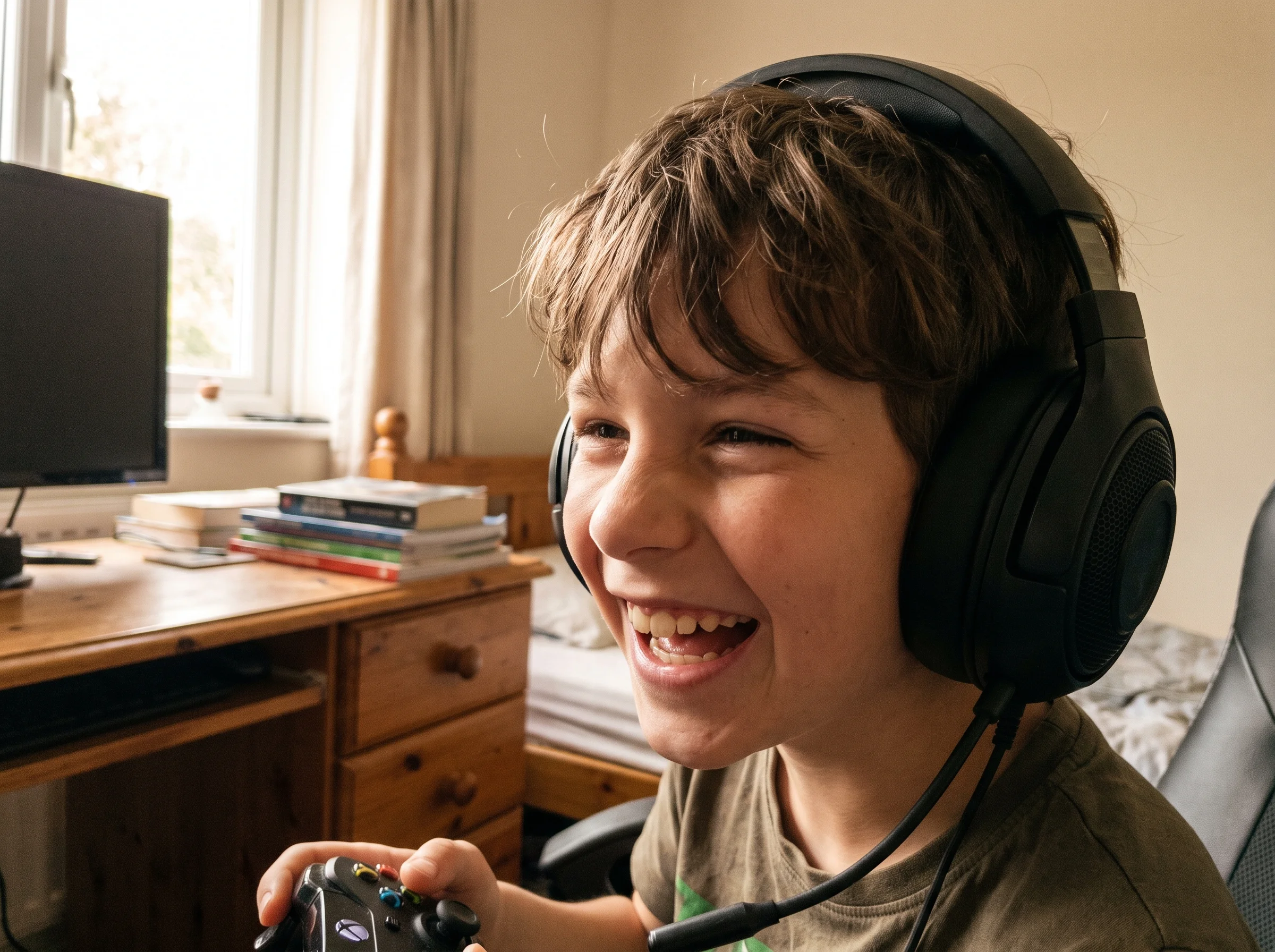
Watch a Match Before You Try to Talk
You cannot ask good questions about something you don't understand. I learned this the hard way.
Early on, I called a skin an "outfit." My son and his friend laughed at me for a solid two minutes. They still bring it up. "Hey Dad, you wearing a cool outfit today?" Roasted. Forever.
Before you try to have any real conversation about Fortnite, sit down and just watch him play for twenty minutes. Don't talk. Don't quiz him. Just watch. Notice the storm closing in. Watch him build a ramp. See how he loots a chest. Notice when he gets stressed and when he gets hyped.
You'll start to pick up the rhythm. You'll notice he plays Zero Build mode mostly, or that he prefers Reload, or that he only plays Duos with one specific kid. That's data. That's gold.
You don't need to become a Fortnite expert. You just need to know enough to ask a question that proves you've been paying attention. Twenty minutes of silent watching beats twenty articles about gaming and child development. (For what it's worth, the American Academy of Pediatrics actually recommends co-viewing and co-playing media with your kids over strict time limits. They're onto something.)
The Best Fortnite Questions to Ask Your 10 Year Old Son, By Situation
This is the part I wish someone had given me two years ago. Forget generic conversation starters. Use the right question for the right moment.
Right after a Victory Royale (he's hyped)
- "Who got the most elims?"
- "What was the final circle like? Build battle or sneaky?"
- "Show me the replay."
After a brutal loss (he's deflated)
- "What would you do different next time?"
- "Was it the squad or the lobby?"
- Don't ask anything for ten minutes. Just be in the room.
During a slow car ride (he's bored, you've got him captive)
- "If you could design a skin from scratch, what would it look like?"
- "Who's the best player you've ever been in a lobby with?"
- "What's your dream collab? Like, if Fortnite added anyone, who?"
When he's been quiet for a few days
- "Show me your locker."
- "What's the worst skin you've seen this season?"
- "Who's tryharding the most right now?"
These work because they let him be the expert. Ten-year-old boys spend all day being told what to do by adults. When you flip the dynamic and ask him to teach you something, his whole posture changes. He's not being interrogated. He's being asked to share.
 Different question, different nightPause, Play, Connect: Core Deck$49 CAD • 172 promptsSee the deck
The V-Bucks Conversation Is Really an Identity Conversation
Here's something I missed for way too long. Skins aren't cosmetics to a 10-year-old. They're identity.
When my son begged for a specific skin last fall, I went into Dad-economist mode. "It's just digital. It doesn't do anything. It's $15 for nothing." We had a fight about it. I won the fight and lost the conversation.
Later I found out he wanted that specific skin because his best friend had it. They wanted to match in their squad. It wasn't about the skin. It was about belonging.
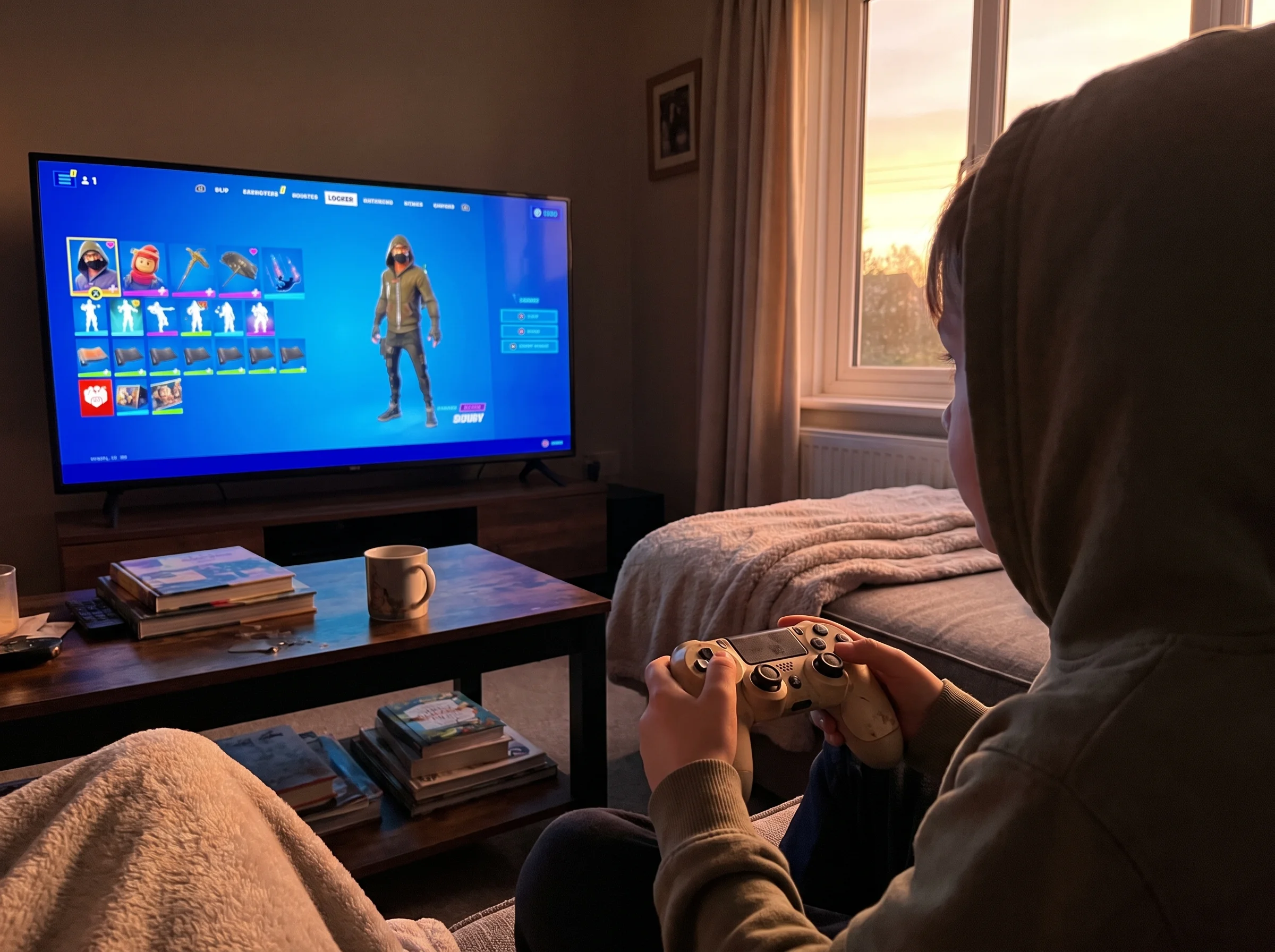
When your son asks for V-Bucks, the actual question to ask him isn't "why do you want to spend my money on pixels?" It's "why that one specifically?" Listen to the answer. He'll tell you about who he wants to be seen as. Who he wants to be seen with. Whether he sees himself as the sweaty competitive kid or the goofy emote-spamming kid. That's worth knowing.
Researchers at the Pew Research Center have found that gaming is one of the primary ways boys this age form and maintain friendships. The skin isn't pixels. It's a jersey.
This is actually why we built Yakety Pack the way we did. One of the cards just asks, "If you could design a character to play as, what would they look like?" It's not about gaming, exactly, but it opens the same door. Identity questions disguised as fun questions.
When He's Tilted, Don't Probe. Just Be There.
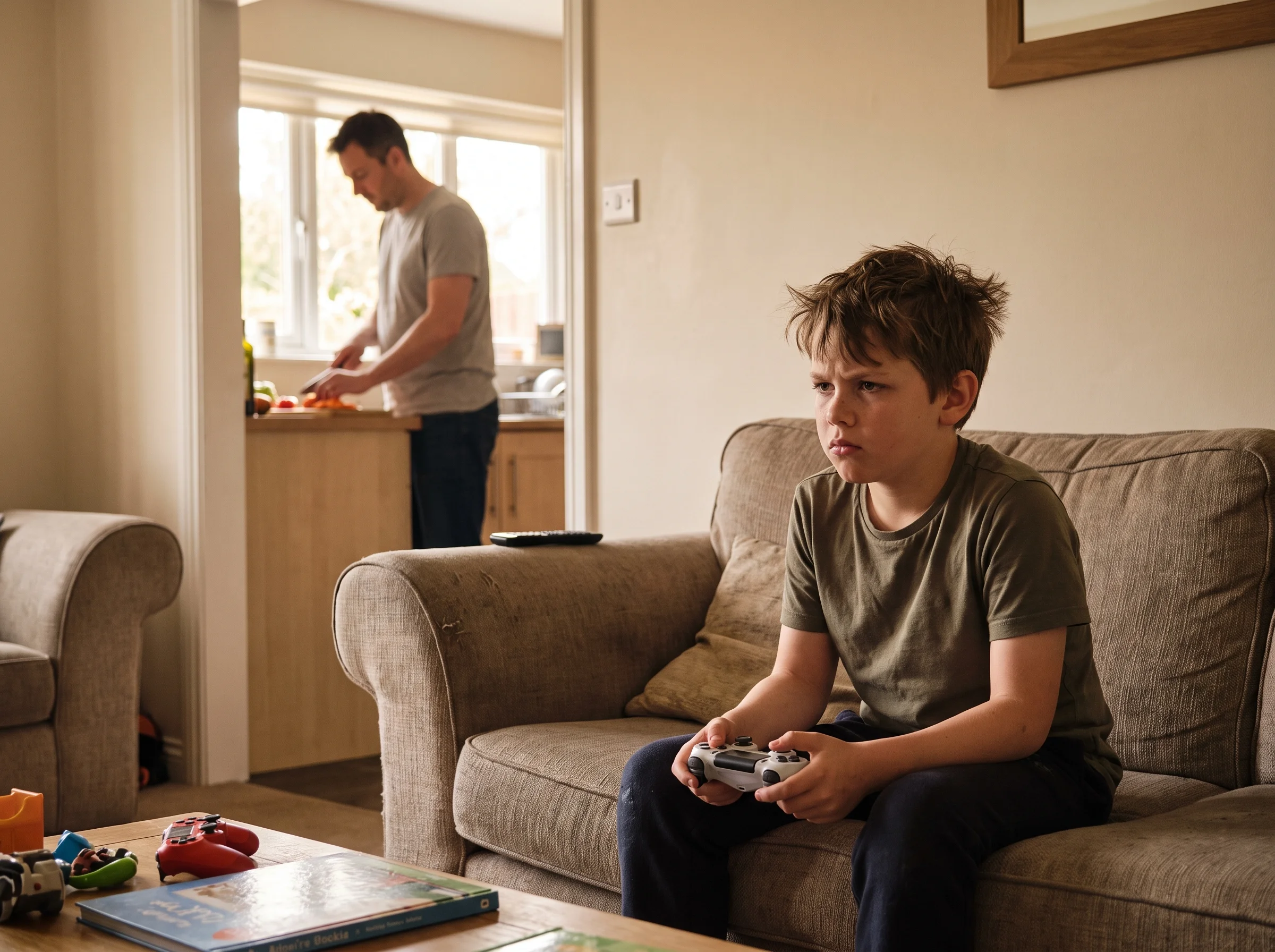
A few months back, my son lost a game he'd been grinding for an hour. Final two. Should've won. Got third-partied. Slammed the controller down and stormed off.
My instinct was to lecture. "This is why I worry about gaming and your emotions, bud." I had the whole speech ready.
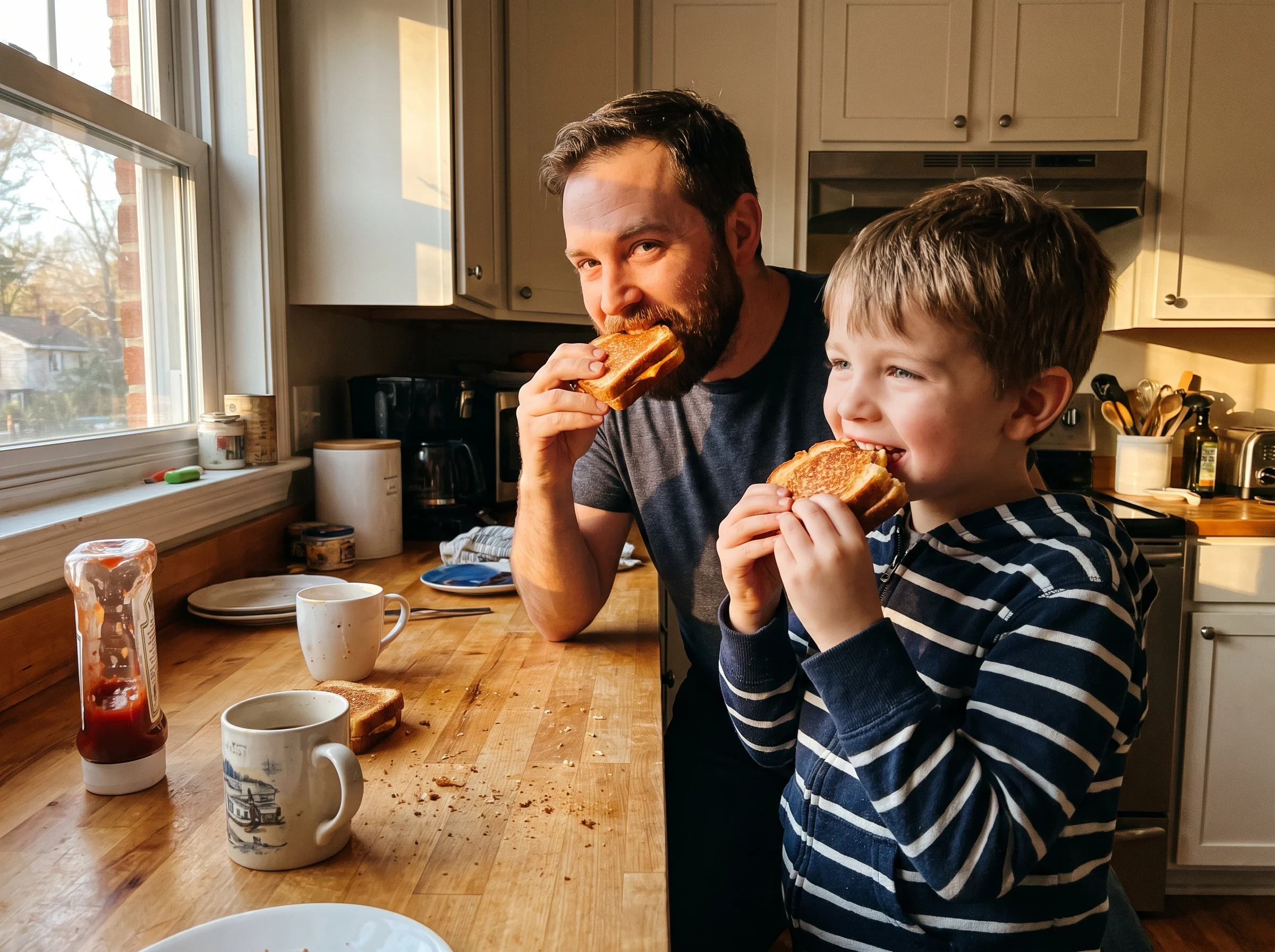
Instead, I made grilled cheese.
I didn't say anything about the game. I didn't ask if he was okay. I just made a sandwich and put it on the counter. An hour later, he came over, ate the sandwich, and said, "Dad, you're not gonna believe what happened." And he told me the whole story.
The worst time to ask a 10-year-old "what's wrong" is when he's tilted. He doesn't have the words yet. He's flooded. The 10-minute cool down rule is real. Sometimes it's 30 minutes. Sometimes it's a sandwich. The conversation comes later, on his timeline, not yours.
How to Tell If He's Got Real Friends or Just Squad-Mates
Pay attention to who he asks to play with versus who he just randoms in with. Names that come up repeatedly matter. Listen for who he laughs with on voice chat versus who he just trash-talks.
Good question to ask on a Friday afternoon: "Who do you want to play with this weekend?" That answer maps his friendship landscape better than any school pickup conversation will.
Also notice the silence. If he's playing with kids and the voice chat is just dead silence, those aren't his friends. Those are co-workers. Real friends are loud, dumb, and constantly roasting each other.
What If You Don't Let Him Play?
If you've said no to Fortnite, you still need to have these conversations. Because every other kid in his class is playing it, and he's navigating that whether you like it or not.
Watch some Fortnite content on YouTube together. SypherPK, Lachlan, whoever. It's not the same as playing, but it lets him be the expert and it lets you understand what his friends are talking about at recess.

Ask him about it without playing it. "What's your friend Jake's favorite skin? What do they do in the game? What's the new season about?" You don't have to endorse it to be curious about it.
And have the conversation about WHY you said no, on his terms. Not as a lecture. As a real two-way conversation. He might not agree with you. He might be angry. But "I said no because I love you and here's my actual reasoning" beats "because I said so" every time.
The One Thing to Try Tonight
Pick one specific question from the list above. Just one. Use it tonight after he plays. Don't follow up with three more questions. Don't make it weird. Just one specific question, then shut up and listen.
That's it. That's the whole thing.
The questions in this article are the kind we collect in Yakety Pack, the ones that get past the grunt and into the actual conversation. Not because gaming is a problem to solve. Because it's a door, and most of us are just knocking on the wrong part of it.

From this article
Pause, Play, Connect: Core Deck
Knock on the right door: coming up with the "who'd you carry tonight" opener is the hard part. The Core Deck keeps a boxful of them by the couch for grilled cheese hour.
If this is becoming your family's ritual, the full bundle adds the Parent Power-Up deck and two digital parent guides, $146 of family fun for $59.

