
The first time we sat down for a "family screen time meeting," it lasted eleven minutes and ended with my son in his room and my wife giving me a look that said that was your big plan?
I'd printed a contract. I had bullet points. I had a list of approved apps in one column and "concerns" in another. What I didn't have was any idea what my kid actually did on his screen all day. And he knew it. He sat there with his arms crossed, watching me perform "open discussion" like a guy who'd never been in a discussion in his life.
If you've been in a version of that meeting, this article is for you. Here's what I wish someone had told me before I printed anything. The trick to a family discussing screen time rules well isn't a better contract. It's a better starting point.
Why Most Screen Time Conversations Fail Before They Start
Most family meetings about screens aren't discussions. They're sentencings dressed up as discussions. Parents walk in with a verdict, ask a couple of token questions, and then "land" on the rule they already decided in the kitchen the night before.
Kids smell this instantly. My son was twelve and he could've spotted my fake collaboration from orbit.
The other problem is the template trap. Every parenting article has a downloadable "family media contract" with the same fill-in-the-blanks. Kids look at that and see homework. They don't see democracy. They see a worksheet with their signature line at the bottom.
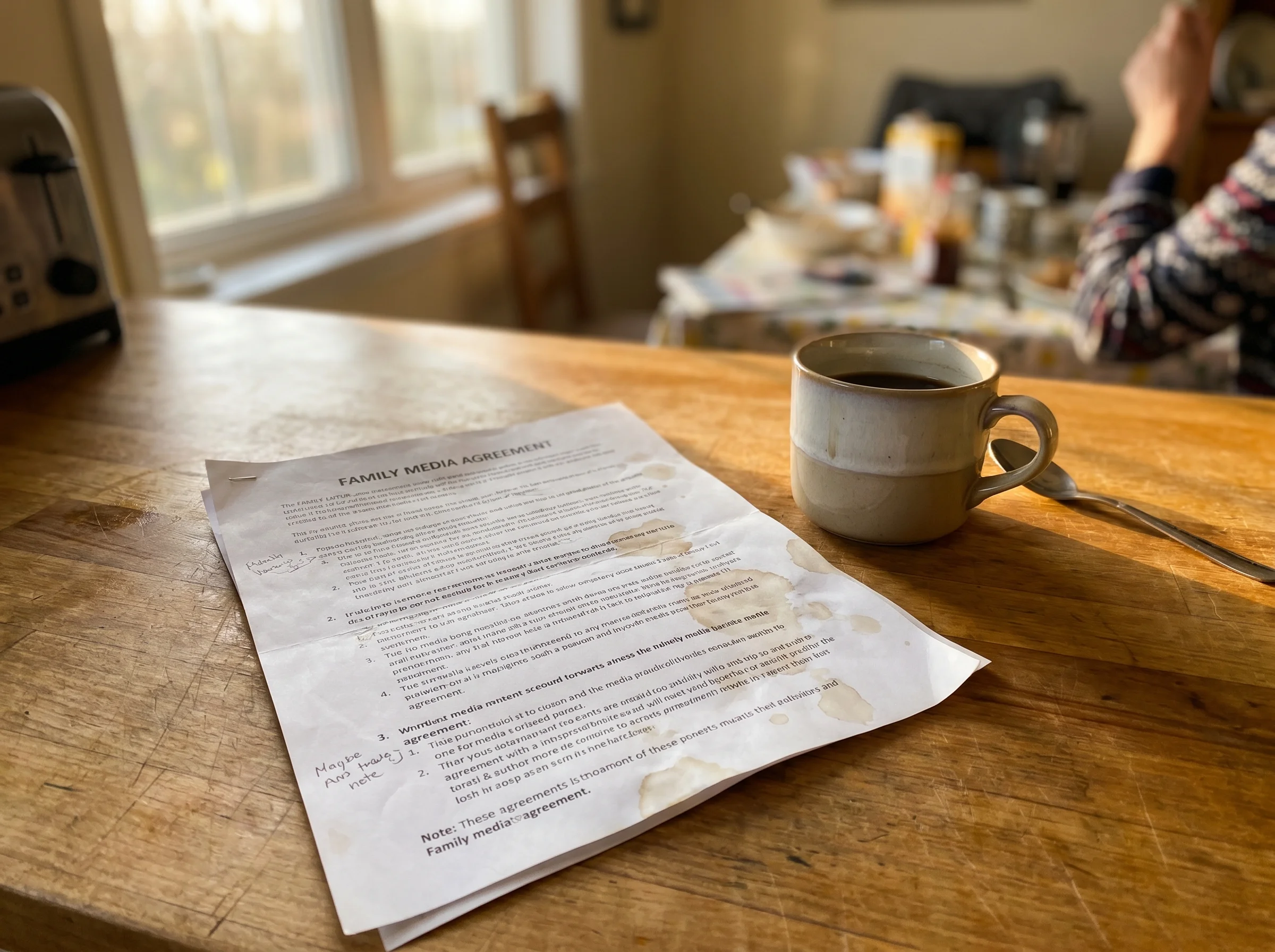
And the deepest problem: you're trying to legislate something you don't understand. You're writing traffic laws for a country you've never visited. Of course it falls apart.
 Learn the country firstPause, Play, Connect: Core Deck172 prompts that get a kid showing you their world instead of defending their hours.$49 CAD • 90 cards • 18 reviewsShop the deck
Have the Content Conversation BEFORE the Rules Conversation
This is the counterintuitive part, and it's the thing I'd put on a billboard if I could: don't talk about rules yet. Talk about what they're actually doing on there first.
For a few weeks. Maybe longer. Just learn.
Because "screen time" is a garbage unit of measurement. A kid grinding TikTok for 90 minutes and a kid building a Redstone calculator in Minecraft with three friends are not doing the same thing. Discord with a buddy from camp is not Instagram doom-scroll. If your rule treats them the same, your rule is broken before you write it. Research from the American Psychological Association backs this up: it's the type of use, not the total minutes, that matters most for kids.
The way you learn is you ask your kid to show you, not tell you. "How was Roblox?" gets you a grunt. "Can you show me the world you've been working on?" gets you twenty minutes of actual conversation.
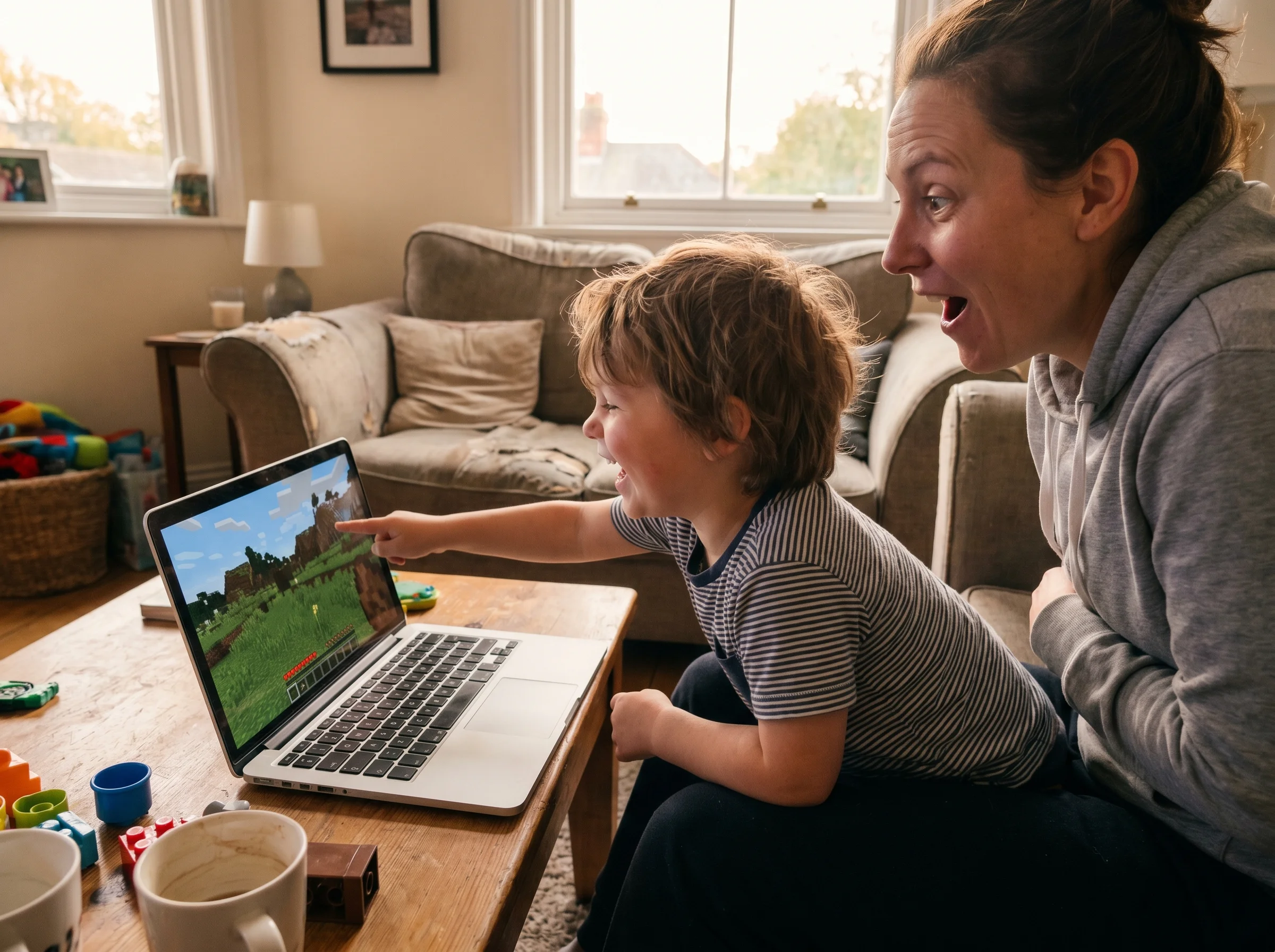
Better questions I've stolen and use constantly:
- "What's the craziest thing that happened in your game this week?"
- "Who do you play with most? How'd you meet them?"
- "What's the coolest thing you've ever built or done in a game?"
That last one is actually a card in Yakety Pack, the conversation deck my co-founder and I built because we got tired of striking out with our own kids. It's not a screen time tool. It's just a question that gets you in the door, which is the whole game.
Here's why this stage matters so much. About six months into me being a clueless dad, I finally sat on my son's bed and asked him to walk me through his Minecraft world. Twenty minutes in he mentions "Jake." I ask who Jake is. Turns out Jake is a kid in Texas he'd been building with for almost two years. Two years. They'd designed an entire city together. They talked almost every day.
And my rule, the one I'd been so proud of, was "no screens after 7pm."
Which, from my son's point of view, translated to: "end your friendship at 7pm." Yeah. I would've fought me on that too.
You cannot write good rules from outside the window. You have to look through it first.
Let Them Draft the Rules First
When you do get to rules, flip the script. Ask them what they think is fair.
I know. It feels like handing the keys to a fourteen-year-old. But here's what I've seen in our house and in friends' houses over and over: when kids feel actually respected, they propose stricter rules than you would have.
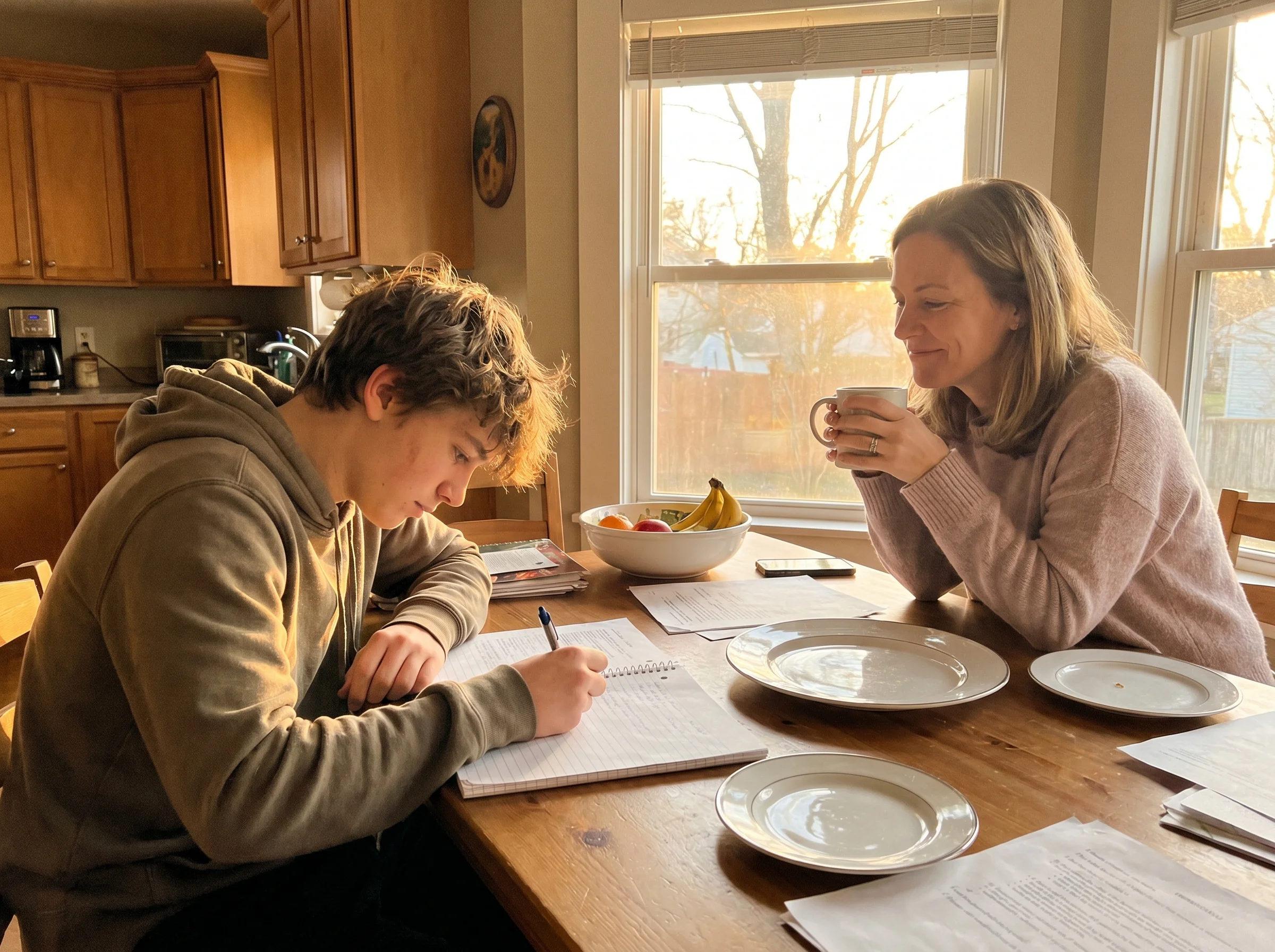
Not always. Sometimes they lowball. "I think four hours a day is reasonable." Fine. You negotiate. You don't lecture. You ask, "What would you do if you were the parent and you saw your kid on a screen for four hours straight? What would worry you?" Now they're thinking like a parent, not defending against one.
The night this clicked for me, my son was the one who proposed no phones at dinner. Because he was tired of me being on mine.
That's a separate story. We'll get to it.
Family Screen Time Rules That Actually Work (Hint: Not Time-Based)
Once you've done the content work, the rules almost write themselves. And they almost never look like "two hours a day."
Frames that work better in our house:
Content-based. "Solo scroll" gets a small budget. "Social play" with real friends gets more. Creating something gets the most. We treat passive consumption and active creation completely differently, because they ARE completely different.
Context-based. No screens during conversations. No screens at meals. No screens for the first hour after school (decompression, but in-person). These rules apply to me too, which is the only reason they work.
Relationship-based. "Show me something you made this week." Once a week, kid shares something they built, drew, beat, or figured out. It's not a check-in disguised as surveillance. It's just normal interest. And it keeps the window open.
 Put the phone downPause, Play, Connect: Core Deck$49 CAD • 172 promptsSee the deck
The Parent Part Nobody Wants to Talk About
Your screen time is part of the family screen time conversation. Full stop.
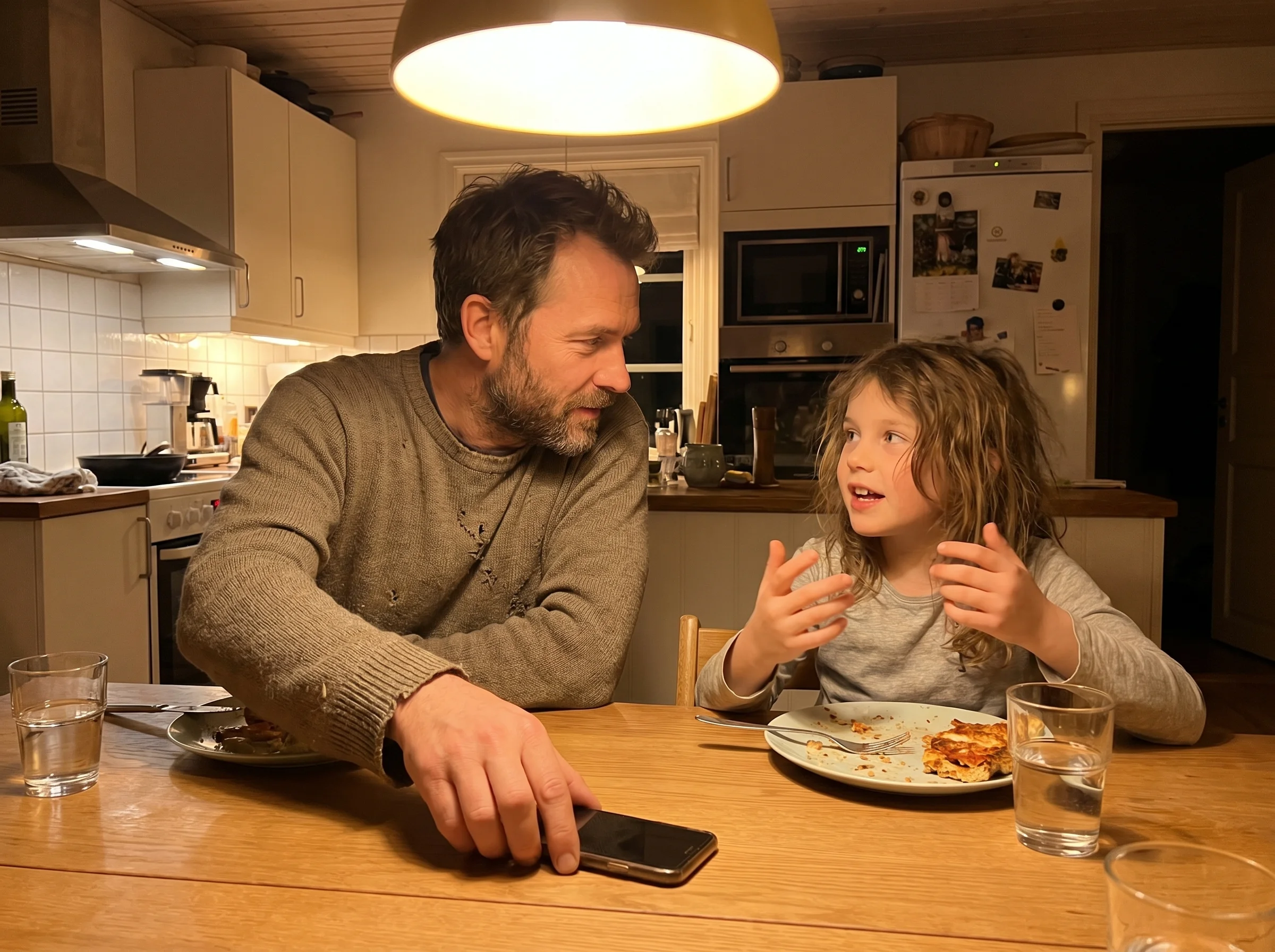
A couple of years ago my daughter was giving me a tour of her Roblox house. Real tour. Walking me through the rooms, telling me which friend helped her decorate. I was nodding and "mhm"-ing, and then she stopped and said, "Dad. You're checking your phone."
I was. Slack. On a Saturday.
I put it down and apologized. Not a "sorry honey" apology. A real one. "You were showing me something important and I wasn't paying attention. That was disrespectful. I'm sorry."
She looked at me like I'd grown a second head. And then we kept going on the tour.
That apology bought me more credibility on screen time rules than any contract ever could. Because she saw the rules apply to me. They weren't a thing I did to her. They were a thing we did together. There's actually good research from Common Sense Media showing that parent phone use is one of the biggest predictors of kid frustration around screens. We model more than we lecture.
If your kid sees you scrolling at dinner, your rules are worth nothing. I'm sorry. I don't make the laws of parenting, I just report them.
When the Rules Break (Because They Will)
They will break. Usually around week two.
The mistake I made early was treating rule-breaking as betrayal. Like my son had violated a treaty. He hadn't. He was a kid who got home from a hard day at school and wanted to disappear into something familiar. The rule didn't account for that, so the rule broke.
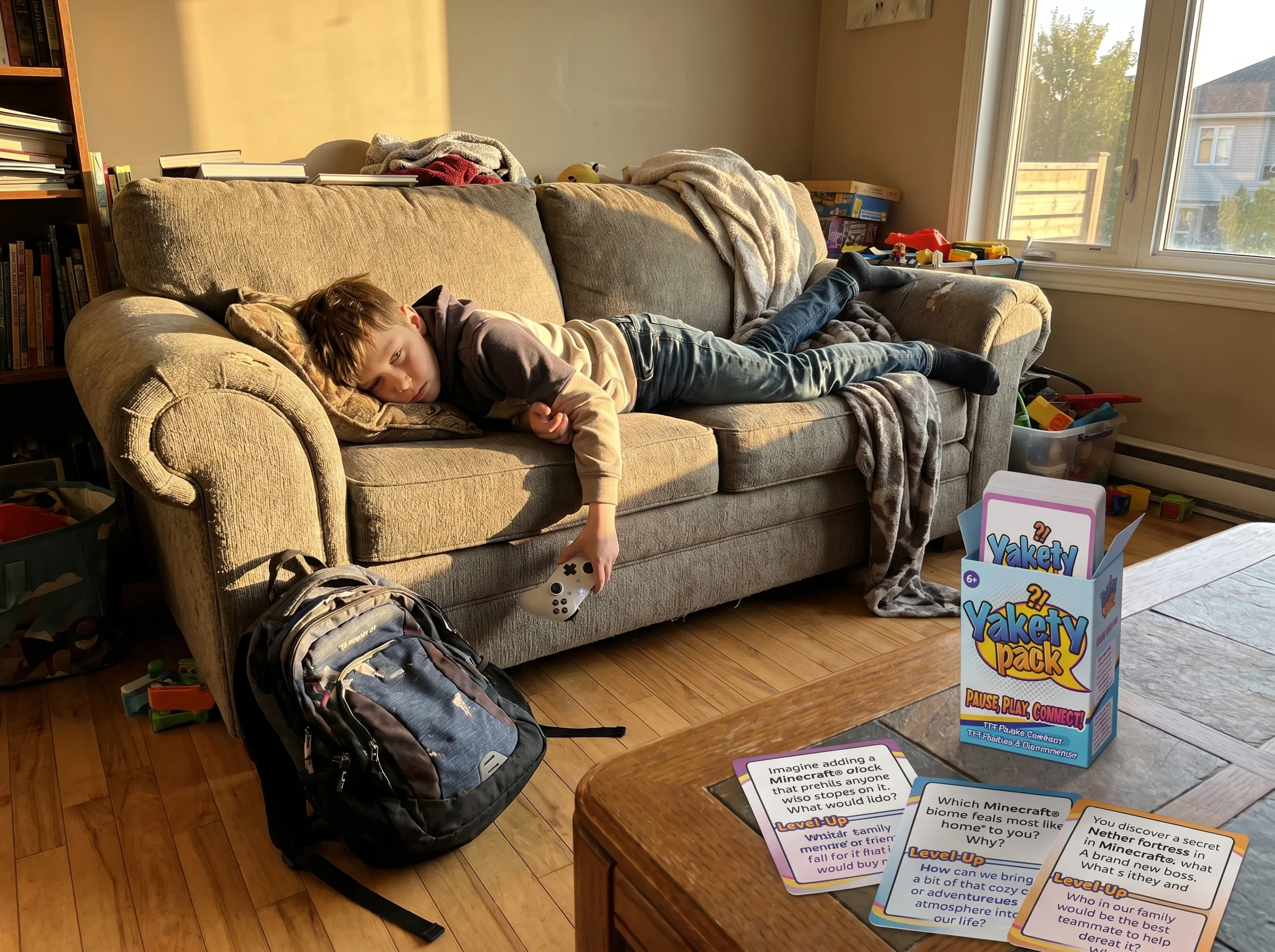
Treat broken rules as data, not betrayal. What does the breakdown tell you? Maybe the rule was too rigid for school nights with big tests. Maybe weekends need a different framework entirely. Maybe your nine-year-old and your fifteen-year-old genuinely need different deals, and pretending otherwise causes the "UNFAIR!" screaming you're trying to avoid.
Renegotiate. Don't punish first. Punishment makes them hide the next breakdown from you. Renegotiation makes them bring it to you.
The Conversation You'll Have Every Few Months
The biggest thing nobody tells you: this isn't one meeting. It's a rhythm.
New school year? Renegotiate. Summer? Renegotiate. New game drops that all their friends are playing? Renegotiate. New friend group, new platform, mood shifts, big life stuff? You guessed it.
The goal isn't a perfect rule set. The goal is keeping the door open so they tell you about the new thing BEFORE you find out the hard way.
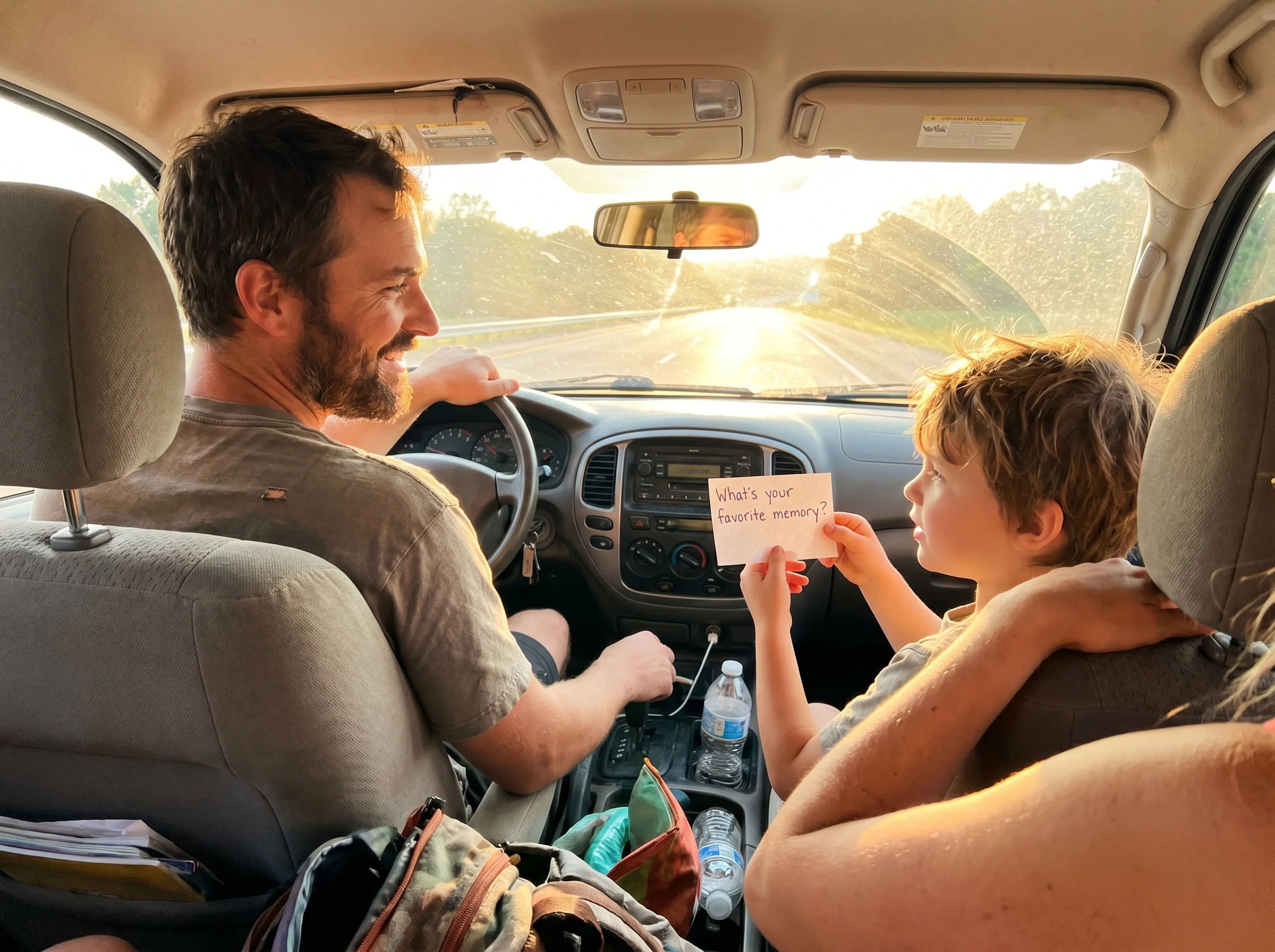
Our family does most of these check-ins in the car now. Not at the kitchen table. The kitchen table has too much eye contact and feels like an interview. The car is side-by-side, low pressure, and nobody can storm off. We've got a stack of Yakety Pack cards in the glove box and we pull one on long drives. Half the time it's a goofy question. Sometimes one of them cracks open something real about a game, a friend online, a thing that's been bugging them. That's where our actual screen time conversations happen. Not in the meeting I tried to run when he was twelve.
If you take one thing from this article, take this: before you write a single rule, spend two weeks just learning what your kid is actually doing on there. Sit on their bed. Ask them to show you. Meet Jake from Texas.
The rule you write after that will be ten times better than the one you were about to print out tonight.
And it'll probably last longer than eleven minutes.

From this article
Pause, Play, Connect: Core Deck
Instead of the contract: The two weeks of learning go faster when a good question is already in the glovebox. That stack we pull from on long drives is the Pause, Play, Connect Core Deck, and it has met a lot of Jakes from Texas.
If you want the whole toolkit, the full bundle adds the Parent Power-Up deck plus two digital parent guides, $146 of family fun for $59.

