
I used to think my son was wasting his time on Rocket League.
Then one Saturday I sat down on the couch behind him and actually watched him play for about an hour. No phone in my hand. No half-listening from the kitchen. Just watching. And I counted at least four different types of learning happening in real time. He was teaching a younger kid how to aerial. He was making split-second decisions about positioning. He was managing his frustration after a brutal loss. He was using vocabulary I'd genuinely never heard before in my life ("flip reset"? "ceiling shot"? Okay).
Turns out there's a 50-year-old framework that explains exactly what I was watching. I just didn't know to look for it. So if you've ever asked yourself what are the 5 categories of learning outcomes, and what your kid is actually getting out of all those hours on a screen, let me walk you through them, and how to spot every single one in your kid's gaming sessions.
Where the 5 Categories Come From (the Short Version)
Back in 1972, an educational psychologist named Robert Gagné laid out five categories of learning outcomes: verbal information, intellectual skills, cognitive strategies, motor skills, and attitudes. It's still the most widely used framework in instructional design today. Every corporate training program you've ever sat through, every school curriculum, probably traces back to Gagné in some way.
Now you might be thinking, "Cool, but I'm not designing a classroom." Fair. Here's why it matters anyway: Gagné's five categories are basically a parent's decoder ring. They give you language for what your kid is doing when they're doing it. And once you have the language, you can have actual conversations about it instead of just "how was school?" / "fine."
Let's go through them.
 Only they can tell youPause, Play, Connect: Core Deck172 prompts that hand you something to ask your kid once the game is over.$49 CAD • 90 cards • 18 reviewsShop the deck
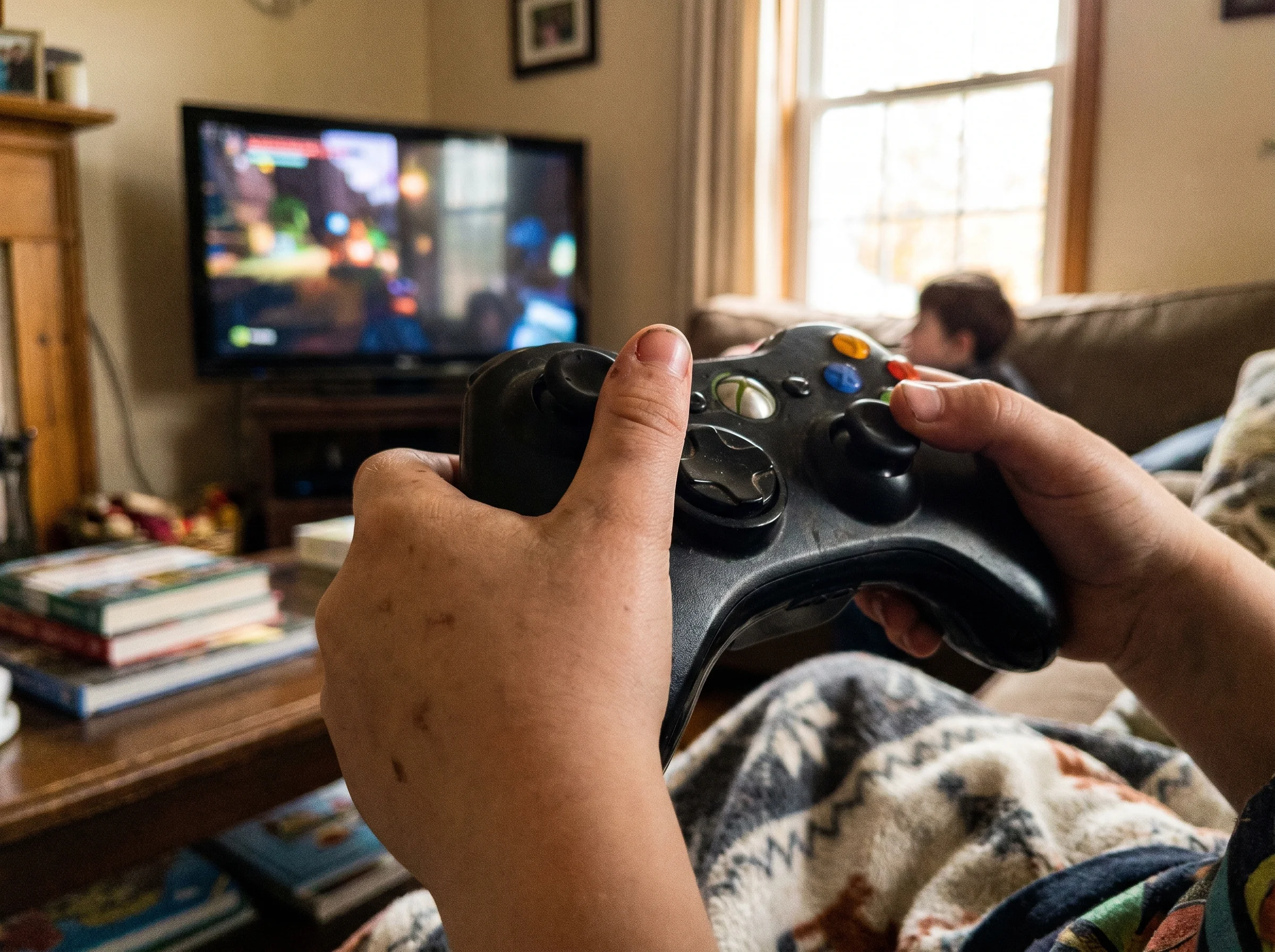
Category 1: Verbal Information (the "What" Knowledge)
This is the facts, names, labels, dates, and vocabulary stuff. The trivia layer.
In the wild, it looks like a kid who can rattle off every Pokémon evolution chain in order, who knows the exact damage stats of every weapon in Fortnite, or who can name every champion in League of Legends with their abilities.
My son knew the entire roster of Super Smash Bros. characters before he could reliably spell the word "character." For years I dismissed this as useless trivia. But here's what I missed: verbal information is the foundation everything else gets built on. You can't strategize about something you don't have words for. You can't problem-solve in a domain you have no vocabulary in.
When your kid is memorizing Minecraft crafting recipes, that's the same cognitive muscle that lets them memorize multiplication tables. Same wiring. Different content.
Category 2: Intellectual Skills (the "How" Knowledge)
This is rules, concepts, and applying knowledge to new situations. Not just knowing facts, but using them.
Look for it when your kid is figuring out a Minecraft redstone circuit, building a base layout in Fortnite that funnels enemies into a chokepoint, or executing a six-button combo in Smash. They're applying concepts. They're problem-solving in real time.
I know a kid who struggles with long division on paper but can calculate loot drop probabilities in his head while raiding. That's not because he's lazy at math. It's because intellectual skills click when they're attached to something he cares about. The skill is real. The application is what makes it visible.
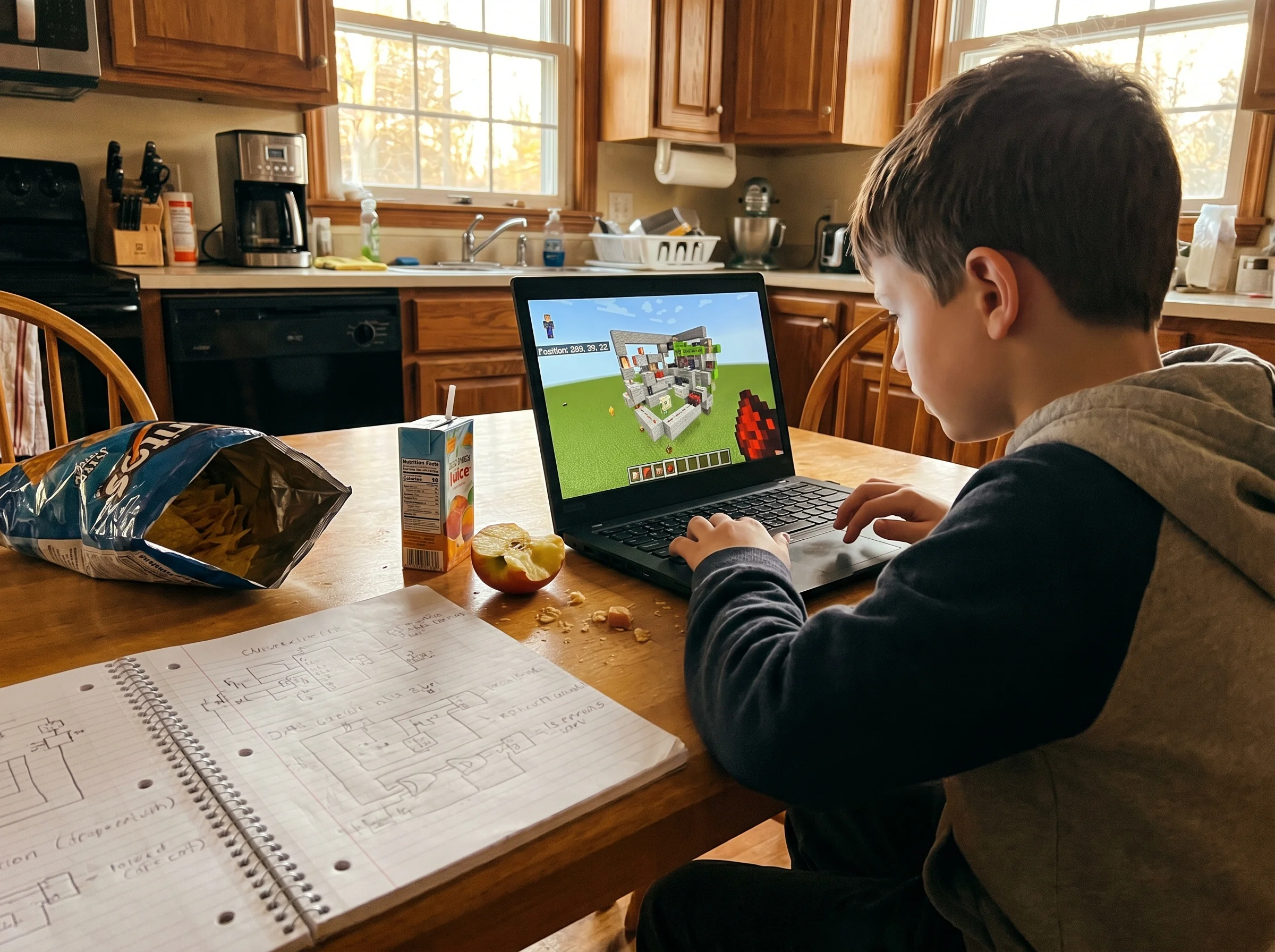
Category 3: Cognitive Strategies (the "Thinking About Thinking" Part)
This one is the most underrated category, hands down. Cognitive strategies are how a learner manages their own learning. It's planning, self-correction, knowing when to switch approaches.
You'll hear it when your kid says, out loud, "Okay, that loadout isn't working, let me try something else." Or when they pause a hard level, watch a YouTube tutorial, and come back to try again. Or when they say "I keep dying in the same spot, what am I doing wrong?"
The night I really clocked this in my own kid, he was stuck on a boss fight and started coaching himself out loud. "Don't dodge yet. Wait for the second swing. Okay, now." He was narrating his own learning. That's metacognition, and it's one of the strongest predictors of long-term success in any domain. School, work, relationships, all of it.
If your kid does this, even a little, that's gold. Don't interrupt it. Notice it.
 The story you didn't seePause, Play, Connect: Core Deck$49 CAD • 172 promptsSee the deck
Category 4: Motor Skills (Yes, This Counts)
Physical coordination, dexterity, precision, reaction time. The body part.
I know some parents bristle at this one because gaming doesn't look "physical." But fine motor control, hand-eye coordination, and reaction time are absolutely motor skills. There's a reason surgeons who grew up gaming test better on laparoscopic precision tasks. It's the same wiring.
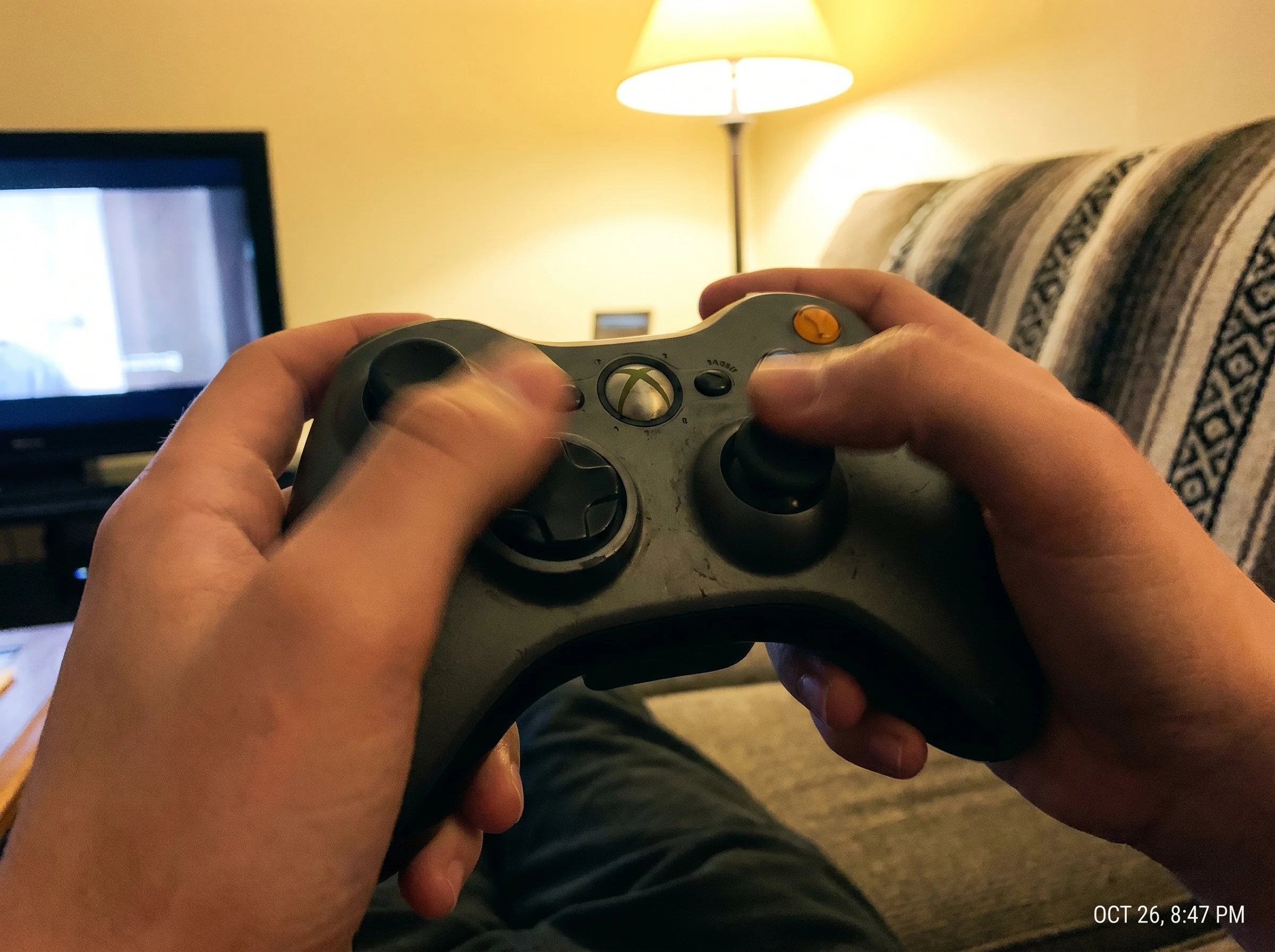
This doesn't mean gaming replaces running around outside. Kids need that too. But the controller skill your kid is developing is real. It's measurable. And in a world where esports is now a college scholarship category, dismissing it as "just button mashing" is the same energy as parents in 1960 telling their kids that basketball wasn't a real future.
Category 5: Attitudes (the One Nobody Talks About)
Attitudes are internal choices. Values. Persistence. How your kid responds to losing. How they treat teammates. Whether they keep trying when something is hard.
This is the category I pay the most attention to. And honestly, it's the one that will matter most for the rest of your kid's life.
Here's a story I'm not proud of. A while back, my son lost a Rocket League match in overtime, and he threw his controller. Hard. Said some words I didn't know he knew. My first instinct was to take the game away for a week. Old me would have done exactly that.
Instead, I waited until he cooled down, then I sat with him and asked, "What were you actually mad about?" Turned out it wasn't the loss. It was that his teammate had been blaming him the whole match and he'd been bottling it up.
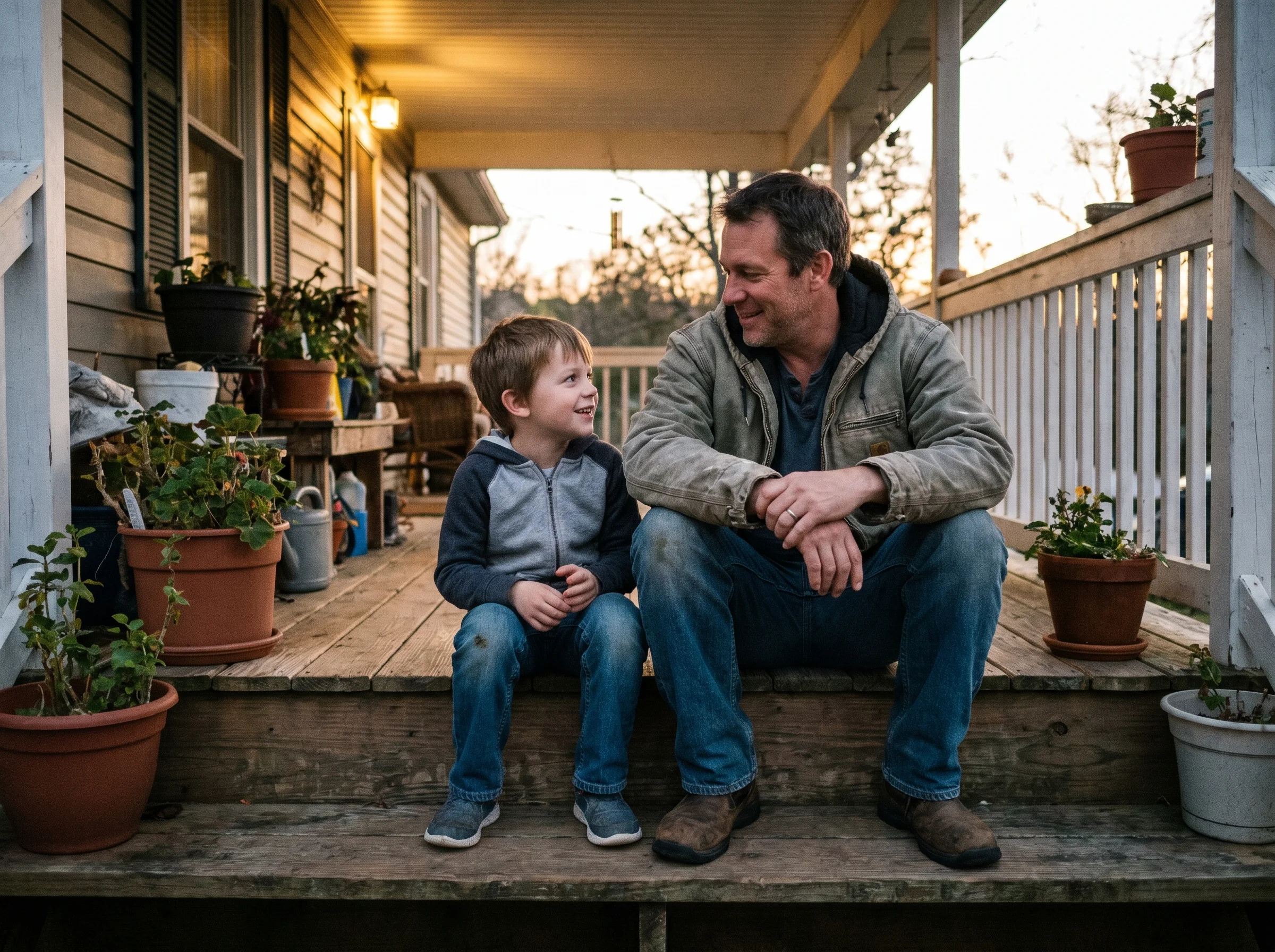
That conversation wasn't about gaming. It was about how he handles frustration, how he advocates for himself, how he treats people who treat him badly. Those are attitude outcomes. And they were being shaped, right there, by the thing I'd been ready to confiscate.
Gaming, the thing most parents worry about, is one of the best laboratories on earth for developing attitudes. Sportsmanship. Persistence. Handling failure. Working with a team of people who annoy you. You can't manufacture those lessons in a worksheet.
How to Actually Use the 5 Categories of Learning Outcomes as a Parent
You don't need to test your kid. You don't need a clipboard. You just need to notice.
Here's what works for me:
Pick one category per week. Just one. This week, you're watching for cognitive strategies. Next week, attitudes. You'd be shocked how much you start seeing when you're actually looking.
Use the categories as conversation starters, not evaluations. Don't say "I noticed you demonstrated strong intellectual skills today." Your kid will move out. Instead try:
- Verbal info: "What's something in your game you could explain to me that I'd have no idea about?"
- Intellectual skills: "What's the hardest problem you had to solve in there today?"
- Cognitive strategies: "What's something you got better at this month? How'd you figure it out?"
- Motor skills: "Is there a move you're working on right now?"
- Attitudes: "Who was the worst teammate you had this week? How'd you handle it?"
That last category one is a goldmine. Try it tonight.
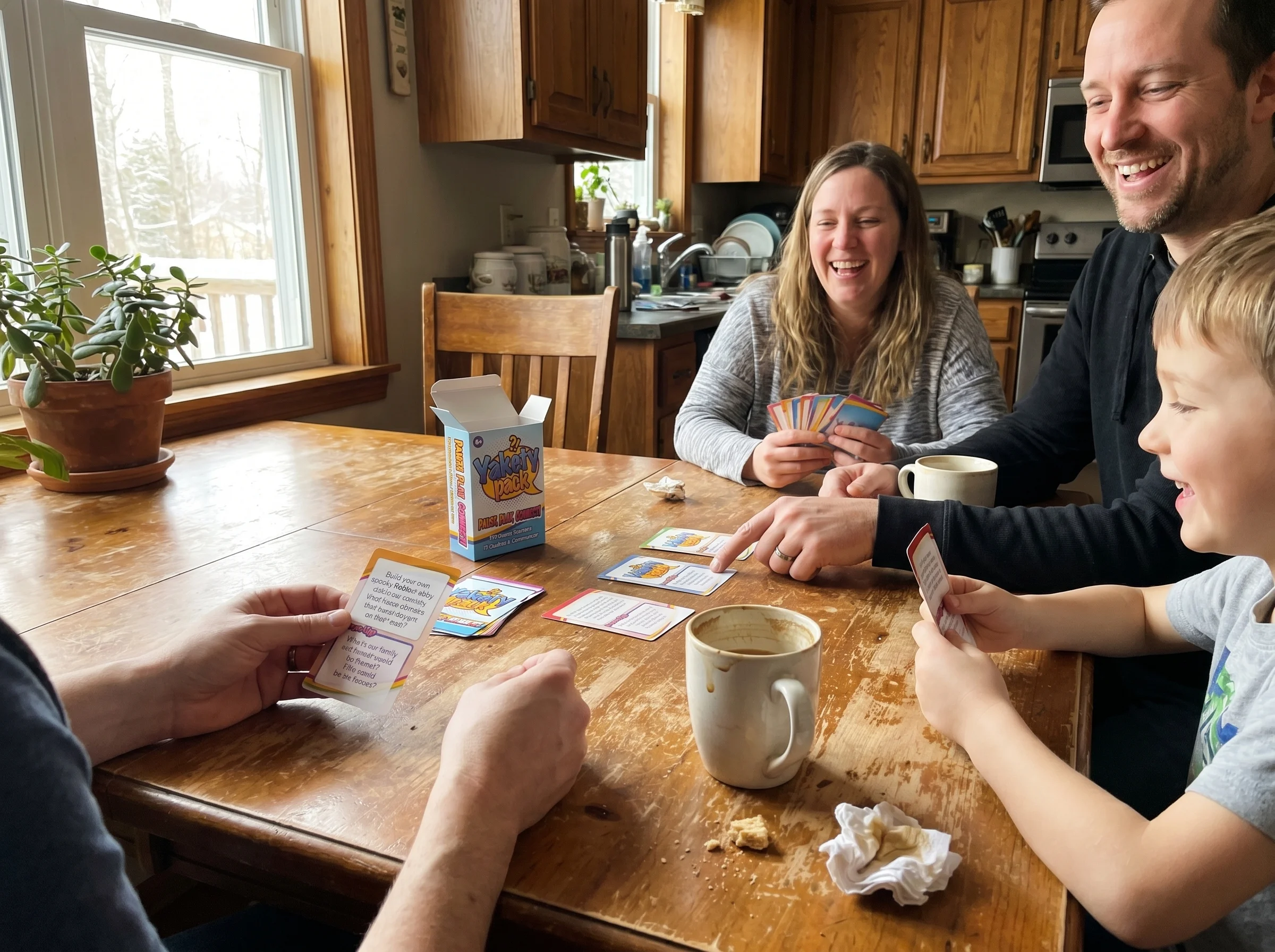
This is actually why we built Yakety Pack the way we did. We kept noticing that kids open up when you ask the right kind of question, not a generic one. One of our cards asks "What's something you got better at this month?" That's a cognitive strategies question wearing a normal-conversation costume. Most kids will talk for ten minutes if you ask it the right way.
The Counter-Intuitive Take
If I had to bet on which of the five categories most predicts how my kid's life goes, I wouldn't pick the academic-sounding ones. I'd pick attitudes. Every time.
The kid who knows how to lose, get up, and try again will out-earn, out-relationship, and out-live the kid who knows more facts. And gaming, for all the hand-wringing, might be the most consistent attitude gym we've got right now.
So before you count screen-time minutes, count something better. Count which of these five categories you saw today. You'll start having different conversations almost immediately.
If you want to go deeper on how to actually track what your kid is learning through gaming, start here with the bigger picture on measuring learning outcomes from gaming. That's where I'd point you next.

From this article
Pause, Play, Connect: Core Deck
Spotting the fifth category: Attitudes only show up when your kid actually talks about the loss, the teammate, the retry. One card from the Pause, Play, Connect Core Deck after a session gets you that story without it feeling like a quiz.

