
The last time I suggested a "family challenge night," my 11-year-old looked at me like I'd asked him to file our taxes. Full slow blink. Full "please leave my room."
So I stopped pitching family time like it was a Pinterest board. I started thinking about what a challenge actually is at its core: a small competition, a shared goal, a tiny bit of stakes. Something that ends. Something you can win or lose. Turns out the good ones, the ones that answer the real question of what are some fun family challenges kids will actually say yes to, don't require poster board, a Bluetooth speaker, or 45 minutes of setup while your kid slowly loses interest in the kitchen.
Here's what actually works in my house, with kids who care more about Fortnite than family game night.
What Makes a Family Challenge Actually Fun (Hint: It's Not the Activity)
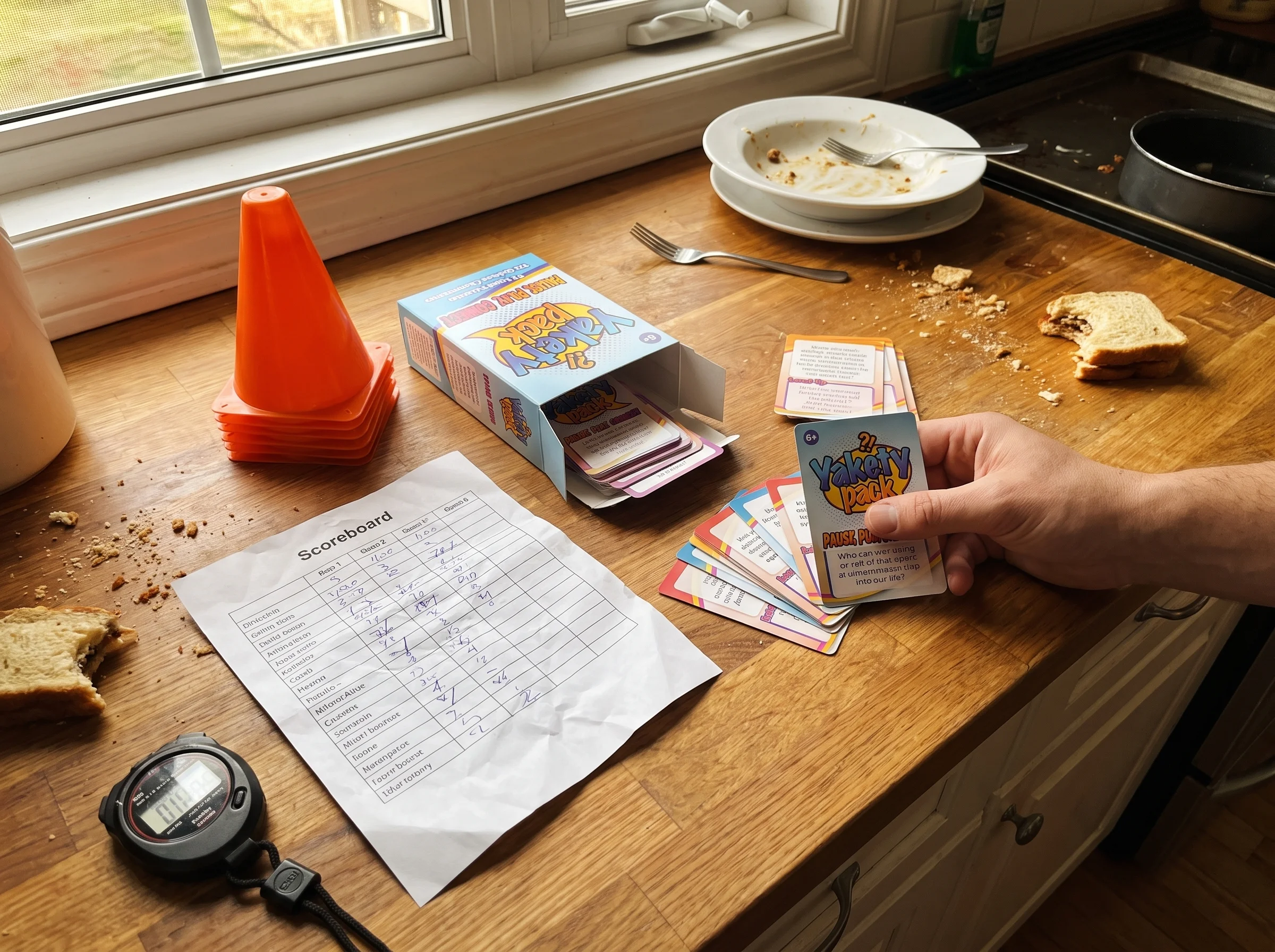
I ran a "family field day" in the backyard once. Cones, stopwatch, a printed scoreboard. My kids were done in 12 minutes. Twelve. I had spent 40 minutes setting it up.
A week later, on a random Tuesday, I said "Mario Kart, best of 5, loser makes the popcorn." That one got requested three nights in a row.
The difference wasn't the activity. It was:
- Real stakes (popcorn duty, chore swap, bragging rights)
- A clear end (best of 5, not "let's hang out and see what happens")
- My kid actually had a shot at winning (spoiler: he had more than a shot)
- It was short (15 to 20 minutes, not an evening-long production)
- I was willing to lose (and lose loudly, with theatrical devastation)
That last one matters more than anything else. If your kid smells that you're going easy on them, or worse, that you can't handle losing, the whole thing dies. The best family challenges I've ever run are the ones where I got beat.
 When the setup kills itPause, Play, Connect: Core Deck172 prompts that take no setup, so a challenge can start the second someone sits down.$49 CAD • 90 cards • 18 reviewsShop the deck
Gaming-Based Fun Family Challenges (Where Your Kid Is the Coach)
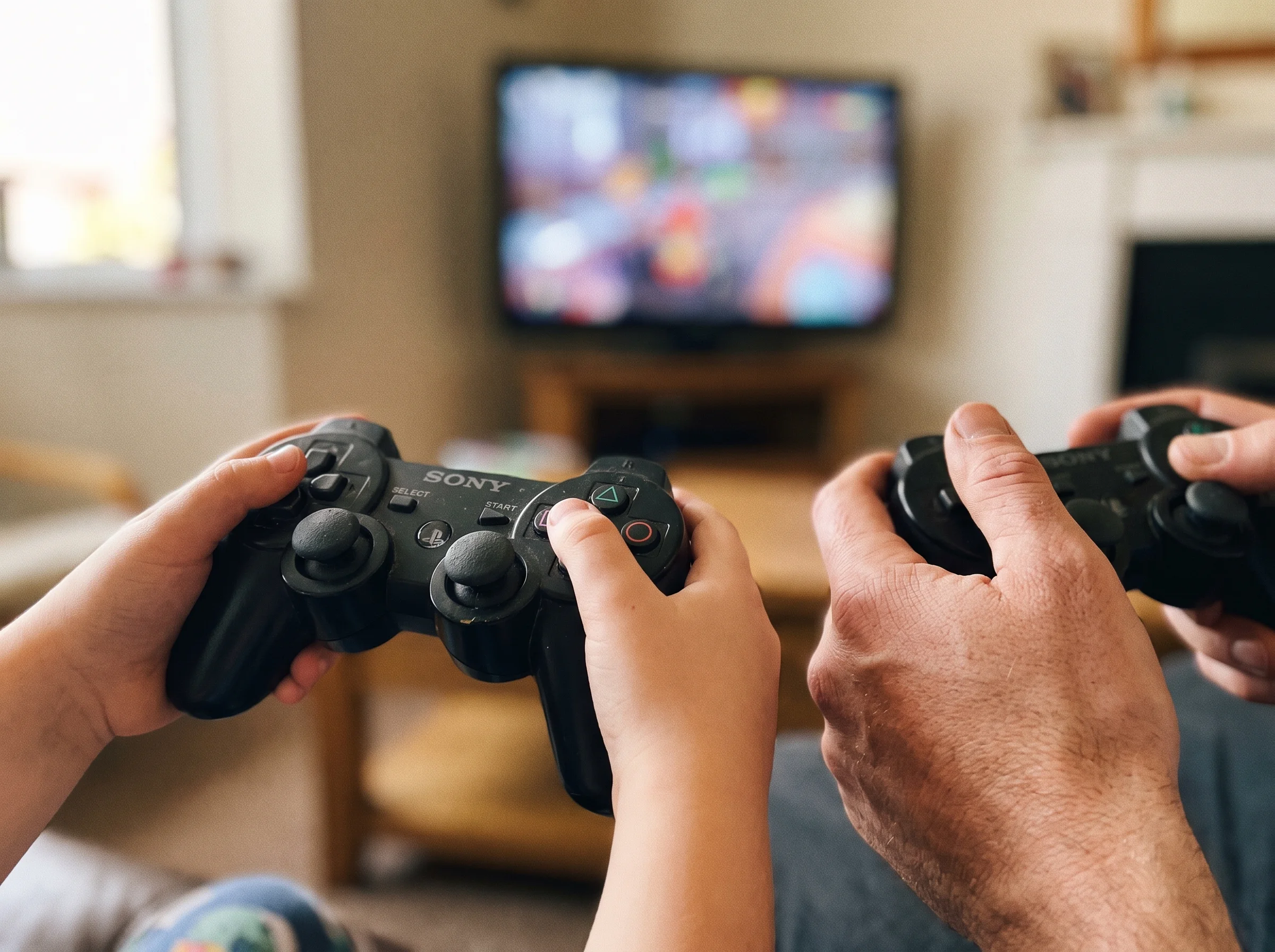
This is the category every other family-challenge article skips. I don't get it. Your kid already loves games. Use the thing. Research from the American Psychological Association has shown that cooperative and competitive video gaming can actually boost social bonds and problem-solving, not just screen time totals.
Here's what works in our house:
- Minecraft "Build in 15" contest. Kid picks the theme. Timer on. Present your builds and roast each other. My son once had me build a "haunted mailbox" and I still don't know what I made.
- Mario Kart tournament with a rotating handicap. Whoever's winning has to use Baby Peach next round. Keeps it close.
- Rocket League 1v1, narrate your strategy out loud. Sounds dumb. It's hilarious. Also you learn what your kid is actually thinking.
- "Teach Dad" challenge. Kid has 10 minutes to teach me one skill in their game. Then I have to perform it under pressure. I fail. They cackle. Repeat.
- Fortnite Creative dance-off or no-scope challenge. Low skill floor, high laugh ceiling.
Last month my son beat me 11 to 0 in Rocket League. Not exaggerating. Eleven to zero. And it was somehow the best hour we'd had in weeks, because he could not stop laughing. That's the win. Not the score. The laughing.
Before I did any of this, I'd been asking him "how was Minecraft today?" for weeks and getting grunts. One night I asked "what's the craziest thing that happened in your world this week?" and he talked for twenty minutes about accidentally flooding his entire village with a misplaced water bucket. The question mattered. The competition around the game mattered even more.
90-Second Challenges for Weeknight Dinners
Not every challenge needs to be an event. Some of the best ones happen in the 10 minutes between "sit down" and "can I be excused."
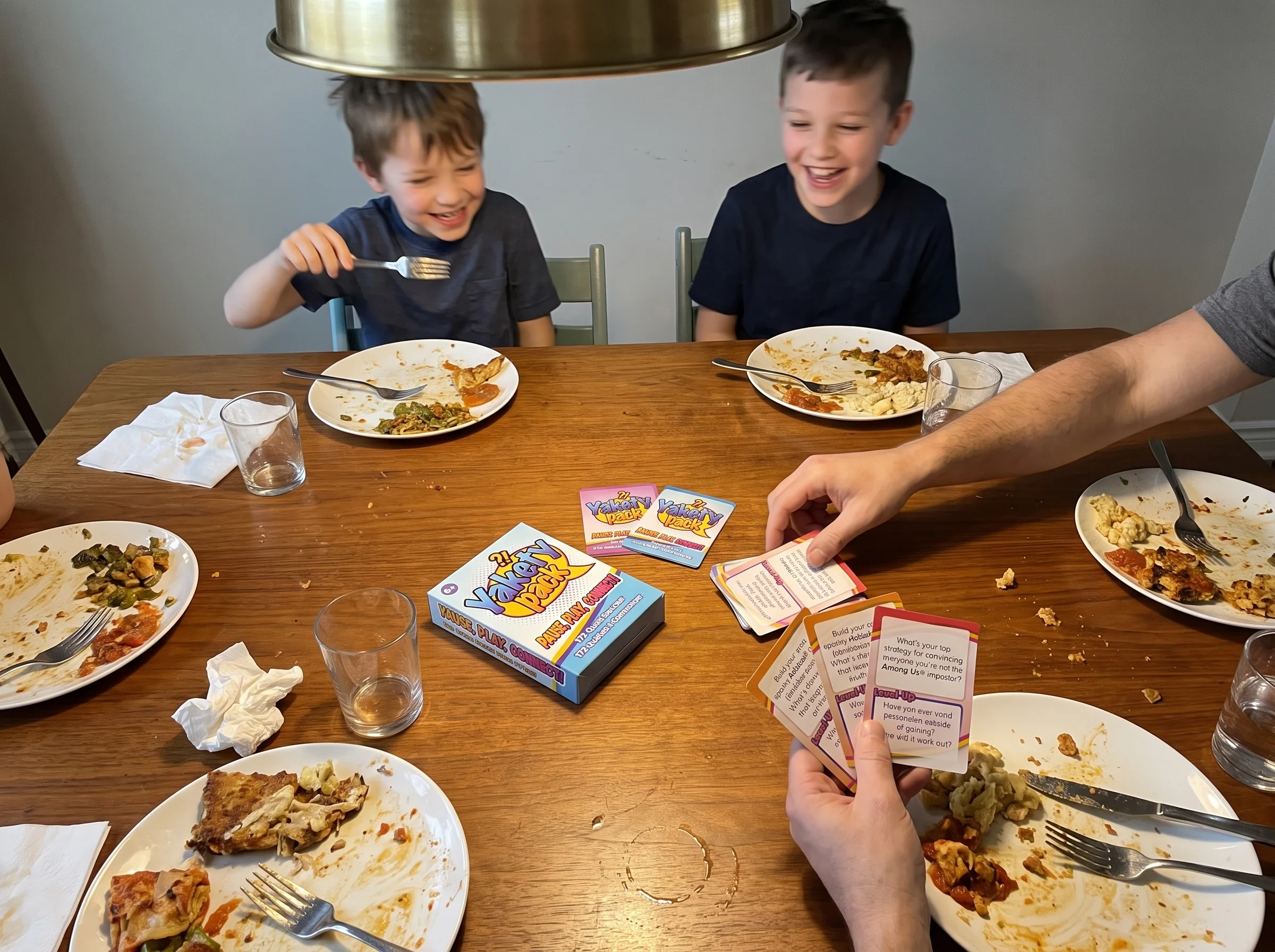
Dinner at our house used to be status updates about school. "Fine." "Nothing." "Idk." Now we've got a rotating set of prompts:
- Highest, lowest, weirdest of your day. Everyone answers.
- One-word story. Each person adds one word until it collapses into nonsense.
- Would-you-rather with stakes. Loser clears the table.
- Guess the character. Someone picks a video game character. Others get 10 yes/no questions.
- Impressions round. Do a family member. No mean ones. (There are always mean ones.)
We use Yakety Pack cards for a lot of these. It's the thing my co-founder and I built because we kept forgetting the good prompts in the moment. One card asked "what's a game character you'd want as a friend?" and my daughter, who I did not know played Stardew Valley, launched into a 20-minute breakdown of why Sebastian is misunderstood. I learned more about her that dinner than I had in a month of "how was school."
These are challenges too. Just tiny ones. And honestly, they're the ones that build the muscle for everything else. Bonding doesn't happen in a scheduled event. It happens in reps. Harvard's Making Caring Common project has some solid research on how these tiny daily interactions shape kids over time.
Physical Challenges That Don't Require a Backyard or Equipment
For the nights someone's got energy to burn but nobody wants a whole production:
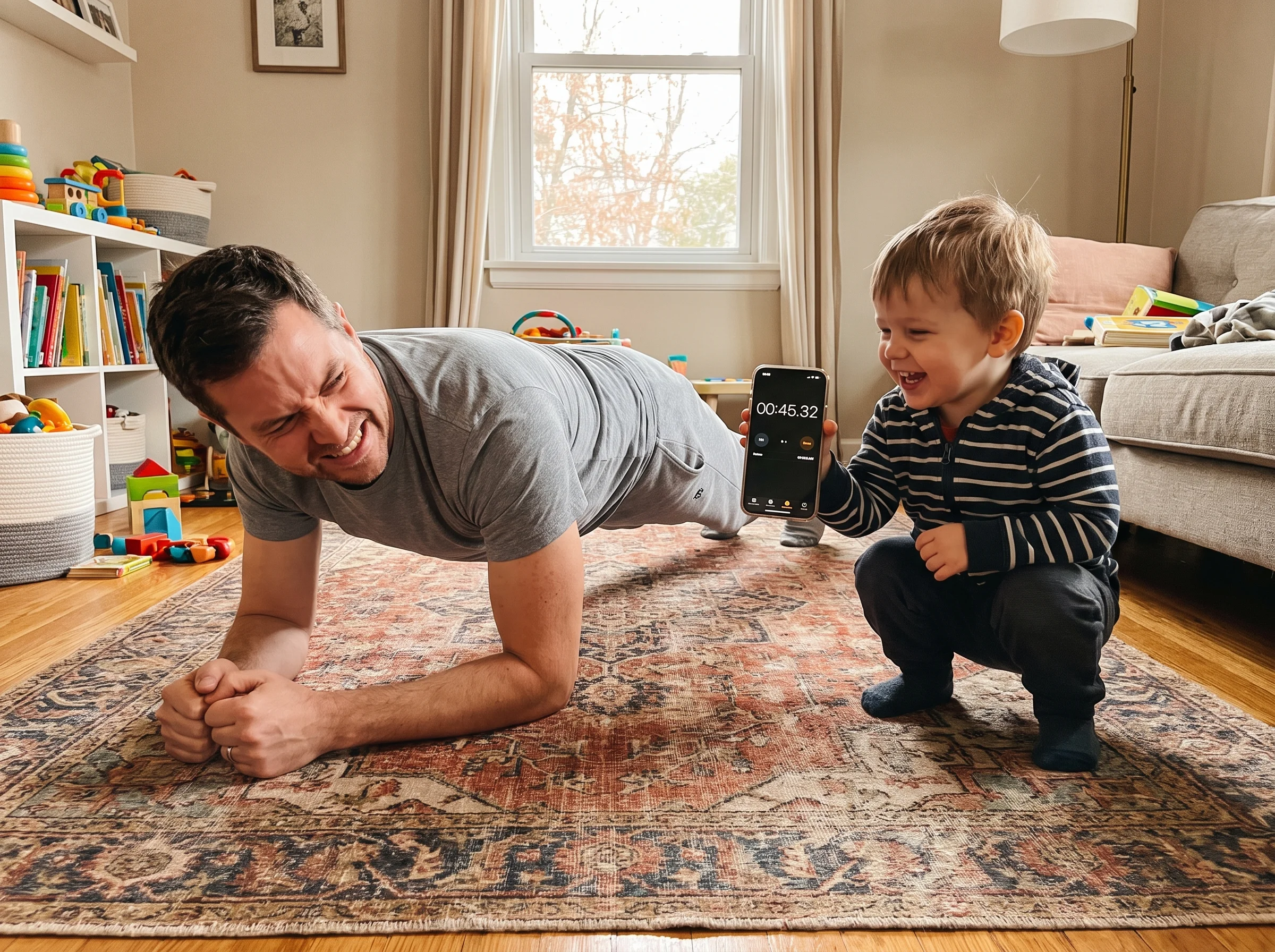
- Plank-off. Longest hold wins. Loser owes a chore.
- Paper ball into the trash can. Best of 10, gets harder every round (step back one foot).
- Timed stair sprint. Up and down, best time.
- Pushups in 60 seconds.
- Living room obstacle course. Kid designs it. You attempt it. You will pull something.
I got demolished in a plank-off by my son and had to do his trash duty for a day. He talked about it for a week. Worth every second of my quivering forearms.
 For the rematch cooldownPause, Play, Connect: Core Deck$49 CAD • 172 promptsSee the deck
Cross-Generational Challenges (Where the Kid Gets to Coach)
This is the unlock. Almost every family challenge is set up with the parent as camp counselor and the kid as reluctant participant. Flip it.
- Kid teaches you a TikTok dance. You perform. Family judges.
- Trade phones for an hour. Report back what you noticed.
- You teach them a childhood game. Four square, MASH, hand-clap games. Then compete.
- They show you their favorite YouTuber and explain why they're funny. At the end, you have to name three of the YouTuber's catchphrases.
- Kid picks a song, you sing along by ear. No lyrics allowed.
I tried to learn a dance from my daughter last year. Failed catastrophically. She filmed it. That video is now family currency, deployable at any holiday gathering. She gets to be the expert. I get to be the goofball. Everyone wins.
Fun Family Challenges You Can Turn Into Traditions
The one-off challenge is fine. The recurring one is where it gets good.
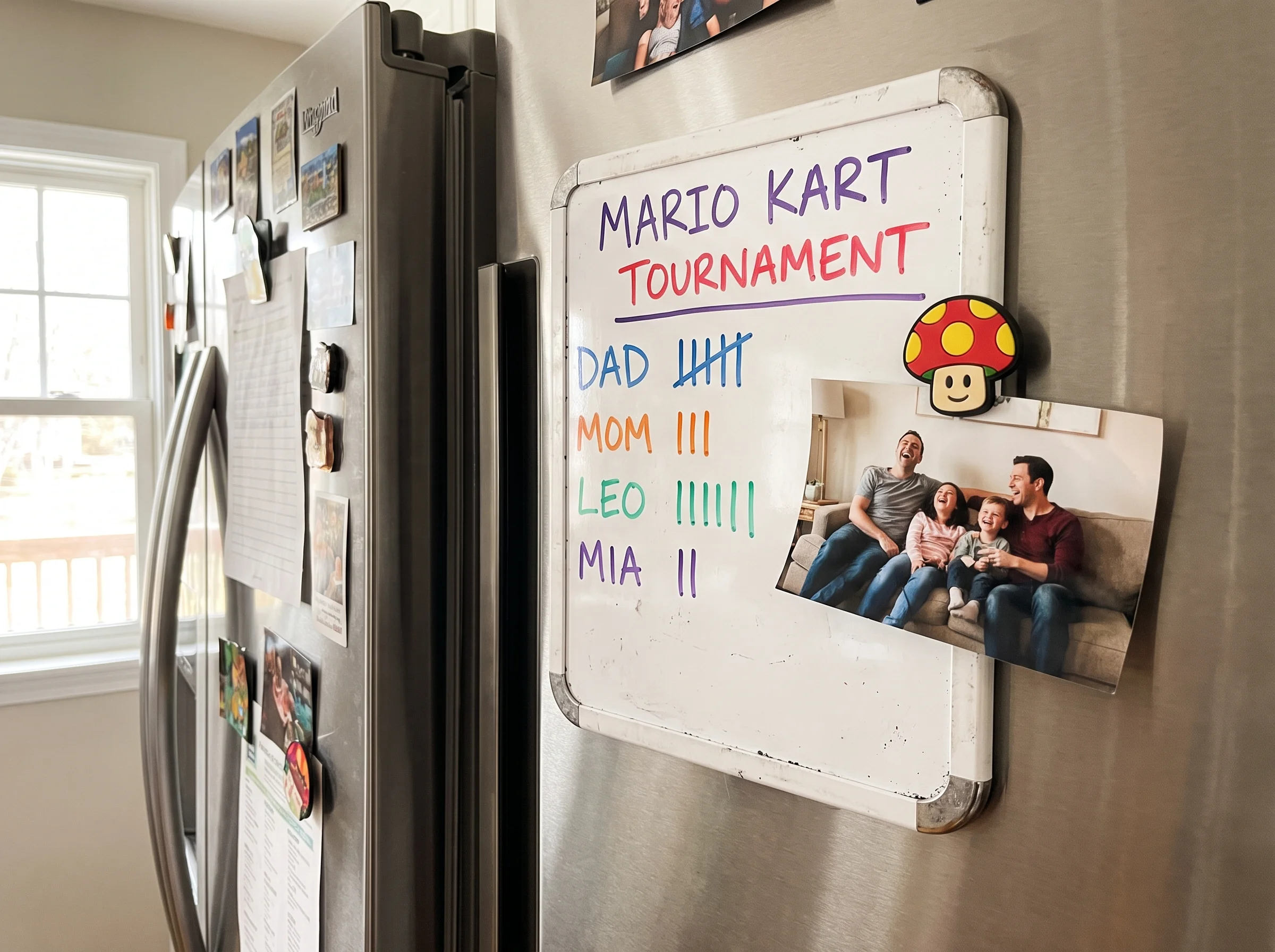
Our Sunday Mario Kart league started as a random idea. Eight months later there's a whiteboard in the kitchen with standings. My son texts me from his mom's house asking who's in the lead. That is a wildly different relationship than "hey buddy how's school."
Some ideas:
- Sunday tournament with a rotating game and a tracked leaderboard.
- Monthly "new thing" where everyone tries something none of us have done.
- Annual bracket challenge. Best snack. Best movie. Best pizza place in town. Vote it out.
- Birthday roast and toast. One roast, one toast, per family member.
The trick is same time, same structure, low stakes to show up. Rituals beat events.
What to Do When the Challenge Flops
It's going to flop sometimes. Just accept it now.
My "family talent show" lasted four minutes. My daughter refused to go. My son did a "talent" that was just yelling. I got mad. Everyone left. It was a disaster.
It's also now a running joke that comes up at least once a month. "Remember the talent show?" And we're weirdly closer because of it.
When a challenge flops:
- Don't lecture. Do not say "we tried to do something nice as a family." You will torch six future attempts.
- Try shorter next time. If 20 minutes died, try 5.
- Let them pick the next one. Even if it's dumb. Especially if it's dumb.
- Let the flop become the joke. The self-deprecating dad who tried gets way more mileage than the disappointed dad who quit.
The Actual Next Step
Don't plan a family challenge night. Seriously. Skip it.
Instead, pick one 90-second challenge and try it at dinner tonight. "Highest, lowest, weirdest." That's it. See what happens. Do it again tomorrow. Do it Thursday.
That's the muscle. Once you've got that going, the bigger stuff, the Mario Kart tournaments, the plank-offs, the Sunday leagues, all becomes way easier because you've already established that your family does small competitive weird stuff together.
We built Yakety Pack because we kept wanting those little prompts and forgetting them in the moment. But you don't need a product to start. You need one question, tonight, at dinner.
Don't overthink the big family challenge night. Get good at the 90-second ones first. That's where the reps happen. That's where the real stuff shows up.

From this article
Pause, Play, Connect: Core Deck
Win the 90 seconds: the dinner-table reps are the whole game, and remembering a good prompt in the moment is the hard part. The Core Deck keeps the rotation stocked so the small challenges never go stale.
If challenge night becomes a habit, the full bundle adds the Parent Power-Up deck and two digital parent guides, $146 of family fun for $59.

