
My son came home from kindergarten one day talking about something called "Char-zard." He said it like I should know who that was. I didn't. I nodded along, made some dad noise, and figured it would pass.
It did not pass.
That night I watched twenty minutes of Pokémon on Netflix and felt like I'd walked into a foreign country with no map, no phrasebook, and a tour guide who was five years old and judging me. So how do you introduce Pokémon to kids when your kid is already three steps ahead of you? Here's what I wish someone had handed me on day one.
 On the couch, episode onePause, Play, Connect: Core Deck172 prompts that turn a show your kid loves into a real back and forth.$49 CAD • 90 cards • 18 reviewsShop the deck
First, Decide What "Introducing" Actually Means
Here's the thing nobody tells you: you probably aren't introducing Pokémon to your kid. The school bus is. Or their cousin. Or that one kid at daycare with the older brother. Or YouTube. Pokémon is in the air, like pollen, and at some point your kid is going to inhale.
So the real question isn't "how do I introduce Pokémon to my kid." It's "am I going to be on the inside of this thing with them, or on the outside watching it happen?"
I made the wrong call the first time. I treated Pokémon like background noise my son was into. Some cartoon. Some cards. I'd nod when he talked about it and go back to my phone. By the time I realized it wasn't a phase, it was a doorway, he'd already built a whole world I didn't have keys to. Took me months to catch up.
Your job isn't to gatekeep the intro. Your job is to decide you're going in too.
Match the Entry Point to Your Kid's Age
Most articles will tell you to "start with the original 151" like your kid cares about 1996. They don't. They care about whatever their friend mentioned at recess.
That said, age matters. Here's what actually works:
Ages 3-5: Start with the show. Pokémon Journeys on Netflix is gentle, colorful, and the battles are pretty cartoony. Skip the games (too complex) and skip the cards (way too complex, also a money pit). Just watch.
Ages 5-7: Show plus Pokémon Go is the sweet spot. Walking around the neighborhood catching imaginary monsters with your kid is genuinely one of the best parenting hacks I've found. It's free. It's outside. It's something you do together. There's even research from UC San Diego showing Pokémon Go nudges players to walk more, which is a nice bonus.
Ages 7 and up: Now you can talk about the video games. Pokémon Scarlet and Violet, Legends Arceus, the older ones on the eShop. This is also when the trading card game starts to make sense, but read the section below before you drop money on it.
Watch the Show Together (Yes, You Too)
You do not need to watch 1,200 episodes. You need to watch maybe five.
Start with "Pokémon, I Choose You!" That's the original pilot from 1997 and it absolutely still holds up. It's the episode where Ash meets Pikachu, and Pikachu hates him, and they have to learn to trust each other. That's the whole show, really. Battles are the action, but friendship is the engine.
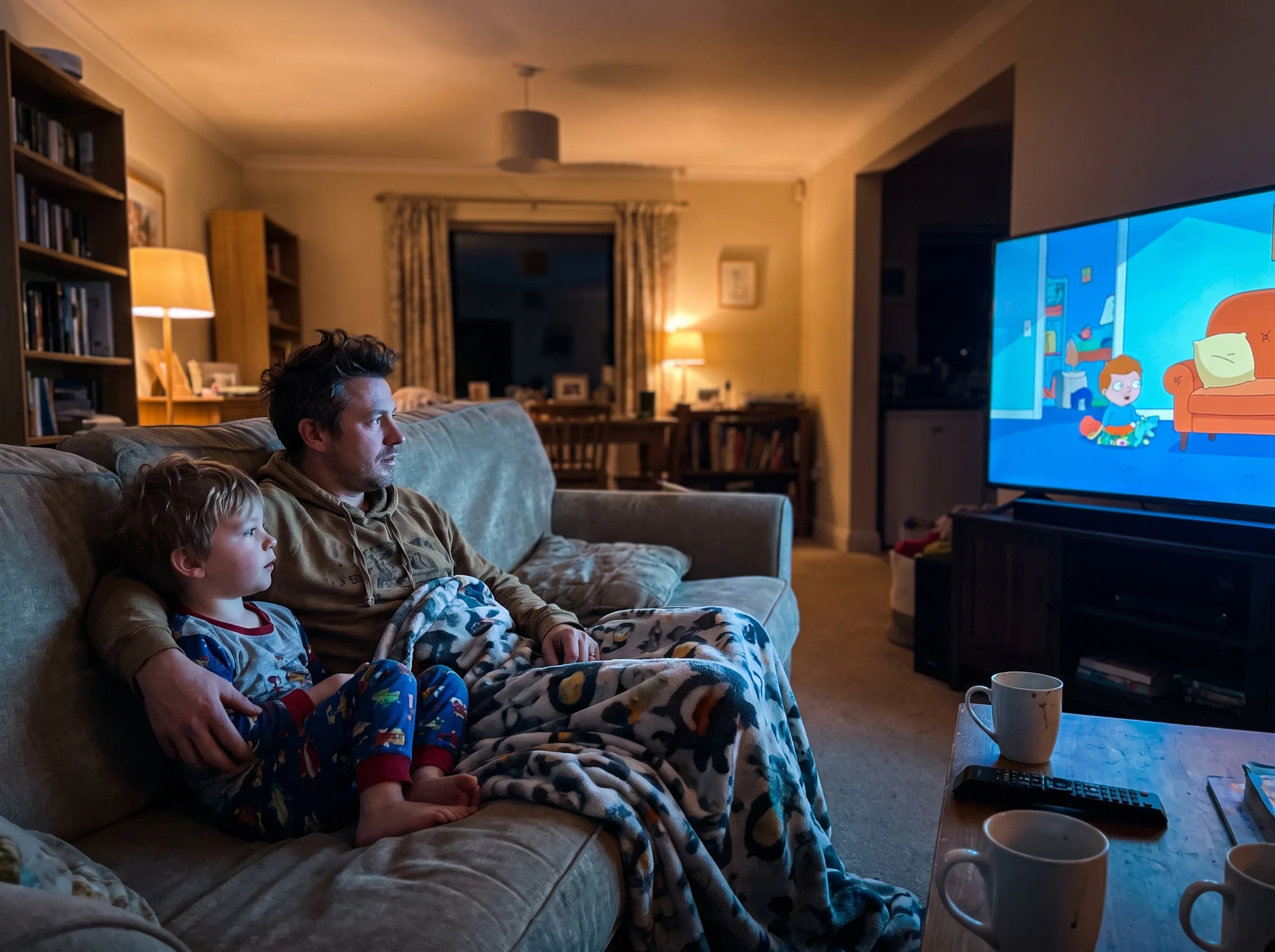
While you're watching, don't ask "do you like this show?" You'll get a yes, and that's the end. Ask "which one would you want to hang out with?" or "why do you think Pikachu doesn't want to go in the ball?" Now you're talking.
The night I actually sat down with my son and watched a full episode, I expected to be bored. Instead I found myself low-key rooting for Pikachu against some smug little kid named Gary. My son looked over at me halfway through and went "see, dad? See?" That was the moment. That was the door opening.
 Ask which one is whichPause, Play, Connect: Core Deck$49 CAD • 172 promptsSee the deck
Learn Just Enough to Not Be the Clueless Parent
When parents ask me how do you introduce Pokémon to kids without faking it, this is the part I always come back to. You don't need to memorize 1,000 Pokémon. You need maybe ten.
Learn the starters: Pikachu, Charmander, Bulbasaur, Squirtle. Those four will get you through 80% of conversations. Add Eevee, Mewtwo, Gengar, Snorlax, and the current generation starters and you're basically fluent.
Learn the type system at the kindergarten level: water beats fire, fire beats grass, grass beats water. It's rock paper scissors with monsters. That's it. You don't need to know that Steel resists Fairy. Your kid will tell you. Loudly.
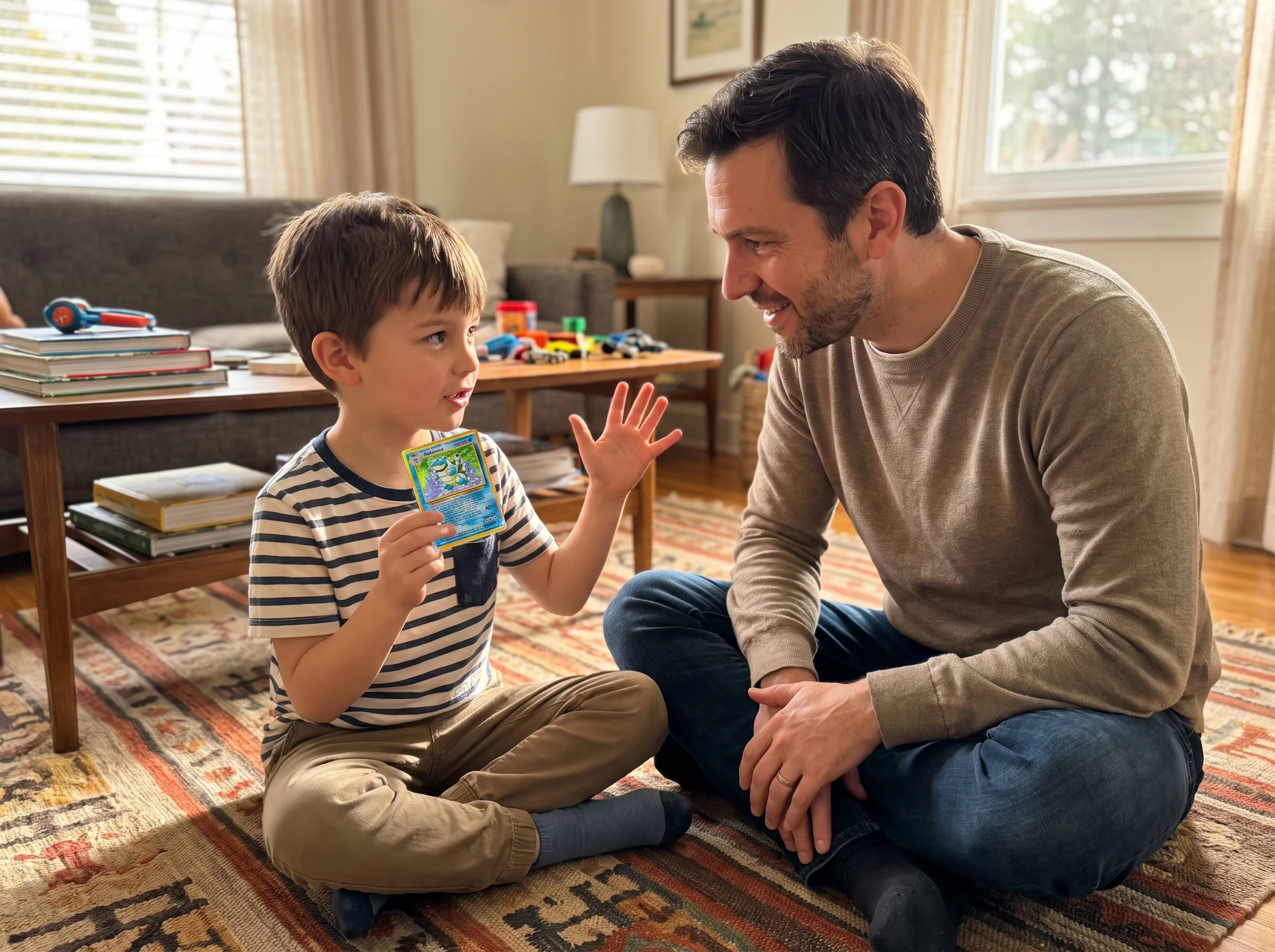
And here's the secret weapon: ask your kid to teach you. Don't fake it. Don't pretend you already know. Say "wait, what's that one?" and watch them light up. Kids almost never get to be the expert. When you give them that role, they remember.
Don't Panic About the Obsession Phase
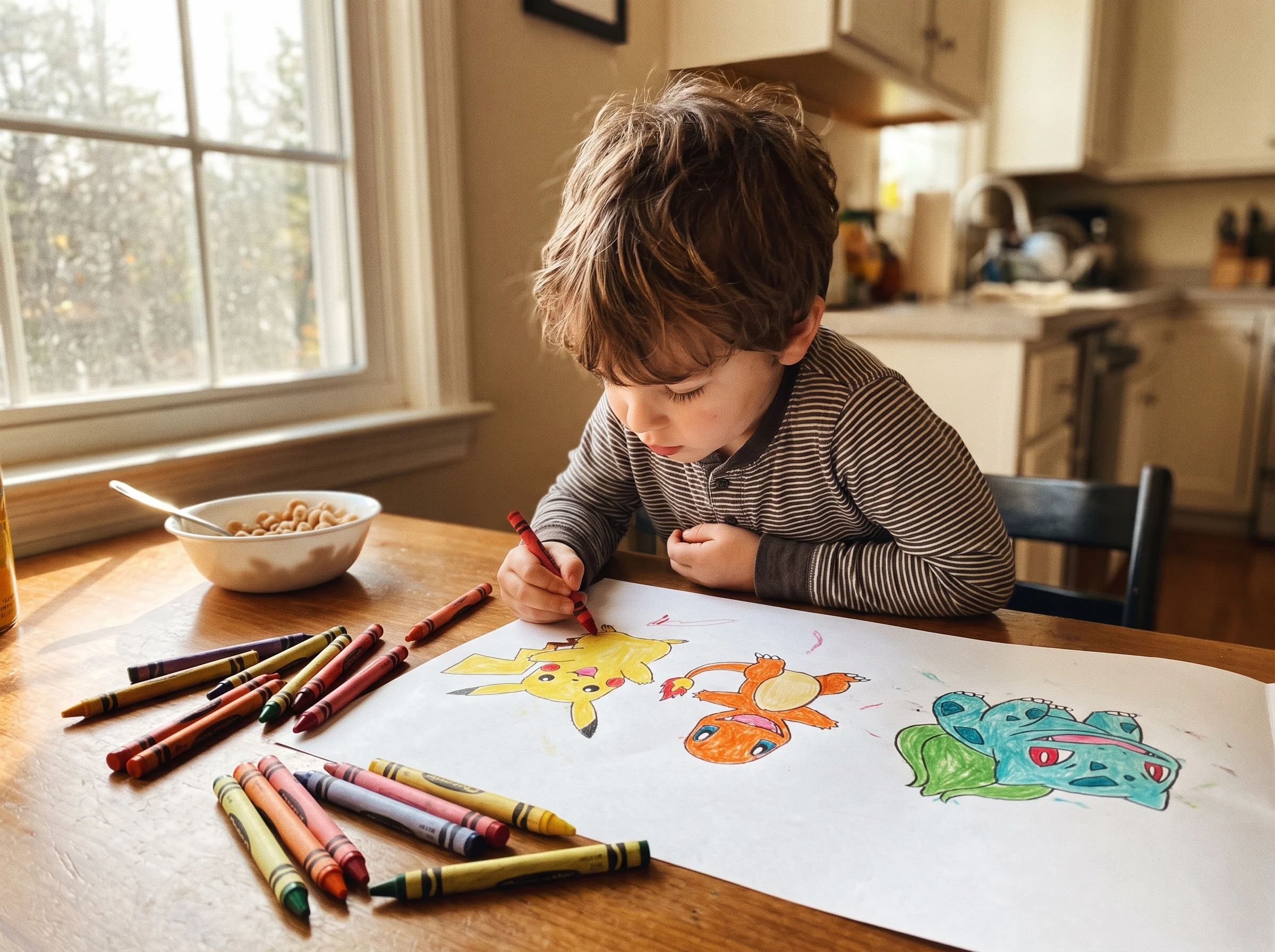
Pokémon hits hard. Expect six to twelve months of full immersion. Pokémon at breakfast. Pokémon in the car. Pokémon drawings on every surface you own.
This is not a problem to solve. It's a window into how your kid loves things.
There was a week when my son drew Pokémon on every homework assignment he turned in. His teacher emailed me. Polite email, but you could feel the eyebrow. My first instinct was to crack down, take the markers, lay down the law. Glad I didn't. Instead we made a deal: homework first, in pencil, no Pokémon. After that, he could draw whatever he wanted on the back. The drawings got wild. Some of them are still on the fridge.
Kids who feel judged for loving something stop sharing it with you. That's a much bigger loss than some Charizards in the margins of a math worksheet. Child development researchers have been saying for years that intense interests are how kids practice deep focus and identity, so the obsession isn't a bug, it's a feature.
Turn Pokémon Into Conversations, Not Just Content
The best Pokémon talks aren't really about Pokémon. They're about why your kid likes what they like. Which is to say: who they are.
Questions that work:
- "If you could have any Pokémon as a real pet, which one and why?"
- "Which Pokémon do you think is most like you?"
- "What would your team of six be?"
- "What's a Pokémon you used to love but don't as much anymore?"
Questions that do not work:
- "Did you have fun playing Pokémon today?" (You'll get a grunt.)
- "How was Pokémon?" (Grunt.)
- "Tell me about Pokémon." (Long sigh, then grunt.)

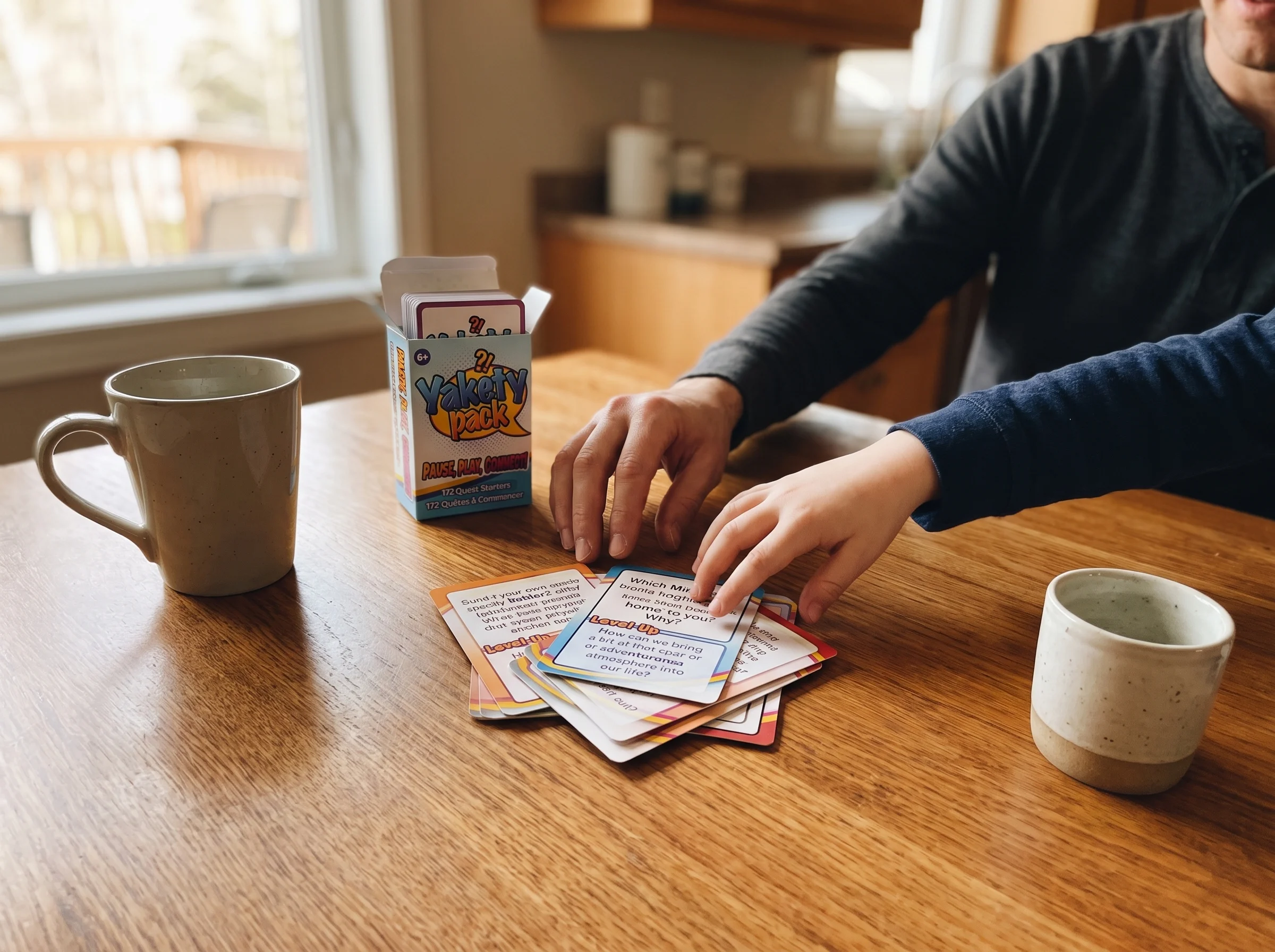
We actually built Yakety Pack because I kept fumbling these conversations and wanted better prompts in my back pocket. One of the cards asks something like "what character or creature from a game would you want as your sidekick?" My son once spent ten minutes explaining why he'd pick Gengar over Mewtwo. Something about Gengar being sneakier and also funnier. I learned more about how his brain works in those ten minutes than I had in a month of "how was school."
The One Trap to Avoid: Buying Your Way In
Do not, I am begging you, do not walk into Target and drop $200 on Pokémon cards thinking it'll bond you to your kid.
The trading card game is a real hobby. It has rules. It has a meta. It has expensive cards and cheap cards and a whole secondary market full of grown adults trying to flip Charizards. As an entry point for a young kid, it's a disaster. You'll end up with a pile of shiny cardboard, your kid won't know how to play, and you'll have spent dinner-out money on a Pokémon called Bidoof.
If you want to try the cards, get a single Battle Deck for around fifteen bucks. They come ready to play, with instructions. That's plenty.
Connection doesn't come from stuff. It comes from sitting on the couch together watching Ash and Pikachu lose to a kid named Gary and feeling, for some reason, personally offended.
A Practical Next Step
If your kid's already deep in Pokémon, here's the move tonight: ask them to pick the episode. Don't pick it yourself. Don't Google "best episodes for parents." Let them be the guide. Watch the whole thing. Ask one real question at the end. See what happens.
If they're brand new and just starting to mention names you don't recognize, pull up "Pokémon, I Choose You!" on Netflix this weekend and watch it with them. Twenty-two minutes. That's the investment.
You'll learn more about your kid in three weeks of Pokémon talk than in three months of "how was school." That's not a Pokémon thing. That's a kid thing. Pokémon's just the door.
And if you want to go deeper on the conversation side, I've written more about Pokémon conversations with kids and what they actually open up. Worth a read once you've got a Pikachu or two under your belt.
Now if you'll excuse me, I have to go find out why Gengar is funnier than Mewtwo. Apparently it's important.

From this article
Pause, Play, Connect: Core Deck
Your co-pilot for the intro: Watching that first episode together is the easy part; keeping the "why do you like Gengar" talks alive is where the payoff hides. The Pause, Play, Connect Core Deck gives you a prompt for every couch session after the credits roll.

