
My 10-year-old once spent three hours building an automated wheat farm in Minecraft. Resource budgeting, multi-step planning, contingency plans for creeper attacks, the works. He drew a diagram. He calculated how many redstone repeaters he'd need. He talked through what would happen if the water flow broke.
The next morning he left for school without his lunch, his homework, or one shoe.
So, do strategy games make kids better planners? Yes. But the real answer is way more interesting than that, and it's the thing nobody tells you when they hand you a list of "10 Best Strategy Games for Brain Development."
 Their game, their wordsPause, Play, Connect: Core Deck172 prompts that turn a car ride into a conversation about the game they just played.$49 CAD • 90 cards • 18 reviewsShop the deck
The Short Answer (And Why It's Incomplete)
Yes. Strategy games genuinely build planning skills. Kids learn to think in sequences, weigh tradeoffs, anticipate what their opponent (or a creeper, or a hurricane in SimCity) is going to do. The research backs it up, and honestly, you can see it with your own eyes if you watch your kid play for ten minutes.
Here's the catch: that skill doesn't automatically show up in real life.
This is the part competitors skip. They write "strategy games develop executive function!" and call it a day. Meanwhile you're standing in the kitchen holding your kid's missing shoe wondering if you've been lied to.
You haven't been lied to. The planning muscle is real. It's just that the muscle gets built inside the game, and unless someone helps your kid see it's the same muscle he could use to pack his backpack, it stays there.
What "Planning" Actually Looks Like Inside a Game
Before we talk about transfer, let's decode what's actually happening when your kid plays. Because "planning" is a word adults throw around without explaining.
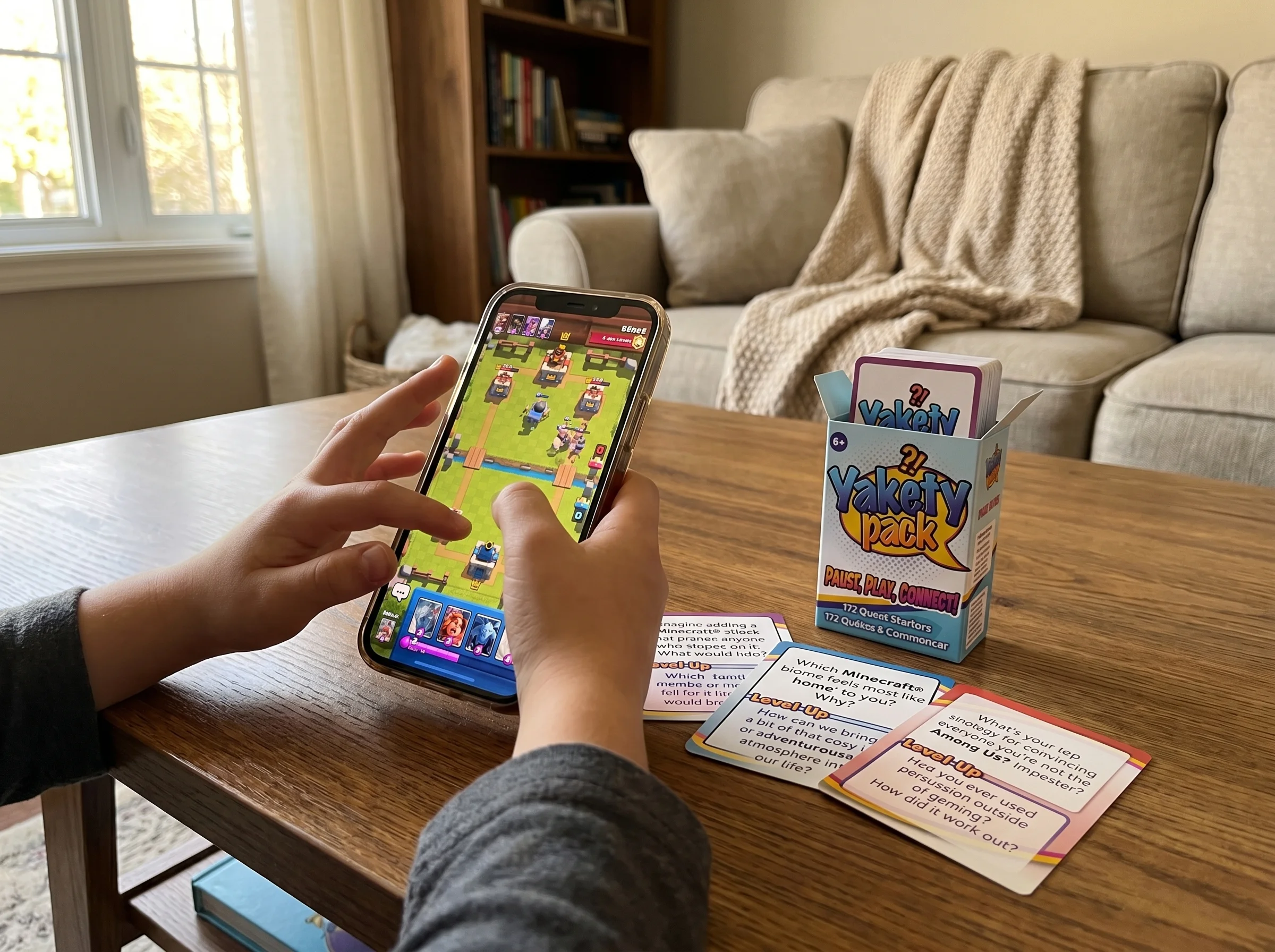
In a typical strategy game, kids are doing four things:
Resource management. In Minecraft, Stardew Valley, or Civilization, they're constantly asking: what do I have, what do I need, and what do I trade to get there? My son once explained to me why he was planting pumpkins before wheat in Stardew. There was a multi-step economic argument. I couldn't follow it.
Sequence planning. In Clash Royale, kids build decks where the cards have to support each other in a specific order. In chess, they're thinking three, four, eight moves ahead. This is pure "if-then" thinking.
Contingency planning. "What if I get raided?" "What if my elixir runs low?" "What if the enemy team rushes mid?" Kids who game a lot do this constantly. They have backup plans for backup plans.
Short-term vs. long-term tradeoffs. Do I spend my gold now or save it? Do I attack early or build up? This is the exact muscle adults use for budgeting and project management. Your kid is doing it on a phone screen.
Last summer my son explained his Clash Royale deck strategy to me for almost twenty minutes. Card synergies, elixir cost curves, counters for the meta. The same week, when I asked him about his book report, I got, "I dunno, I'll figure it out."
Same kid. Same brain. Two completely different rooms.
Why Strategy Games Don't Automatically Make Kids Better Planners in Real Life
Kids compartmentalize. Hard. There's "game brain" and there's "life brain," and most kids don't realize they're the same brain.
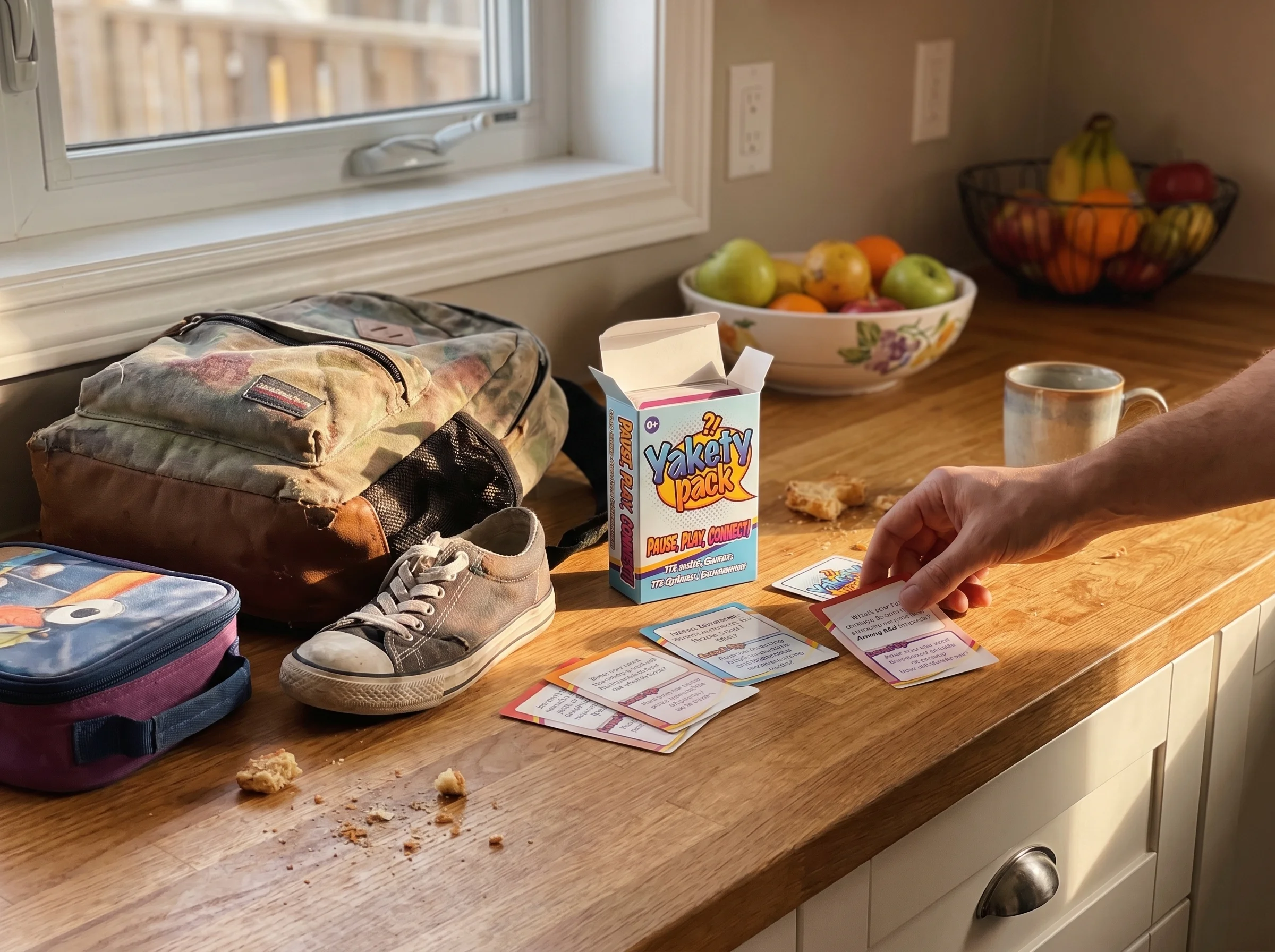
This isn't a flaw in gaming. It's how learning works. A kid who's a wizard at fractions in math class often can't apply fractions to splitting a pizza. The skill is locked to the context where it was learned. You need a bridge to move it.
Without that bridge, you end up with a kid who can manage resource scarcity across a 200-block farm but can't plan his soccer bag the night before practice. The skill is there. He just doesn't know he owns it.
I was the dad who didn't get this for years. I thought gaming wasn't transferring because "gaming doesn't transfer." Turns out the transfer was waiting on me.
 Nothing to win herePause, Play, Connect: Core Deck$49 CAD • 172 promptsSee the deck
How to Build the Bridge (Without Being Weird About It)
Here's the part nobody writes about. Don't lecture. Do not, under any circumstances, say "see, gaming taught you that!" Kids smell that coming from three rooms away and will shut down on you immediately.
What works is a two-step move:
Step 1: Ask game-first questions. Not "how was Minecraft today" (you'll get a grunt). Try:
- "How'd you decide what to build first?"
- "What's your backup plan if it doesn't work?"
- "Why that card and not the other one?"
- "What did you change after last time?"
You're not teaching. You're just curious. Get them used to narrating their planning out loud.
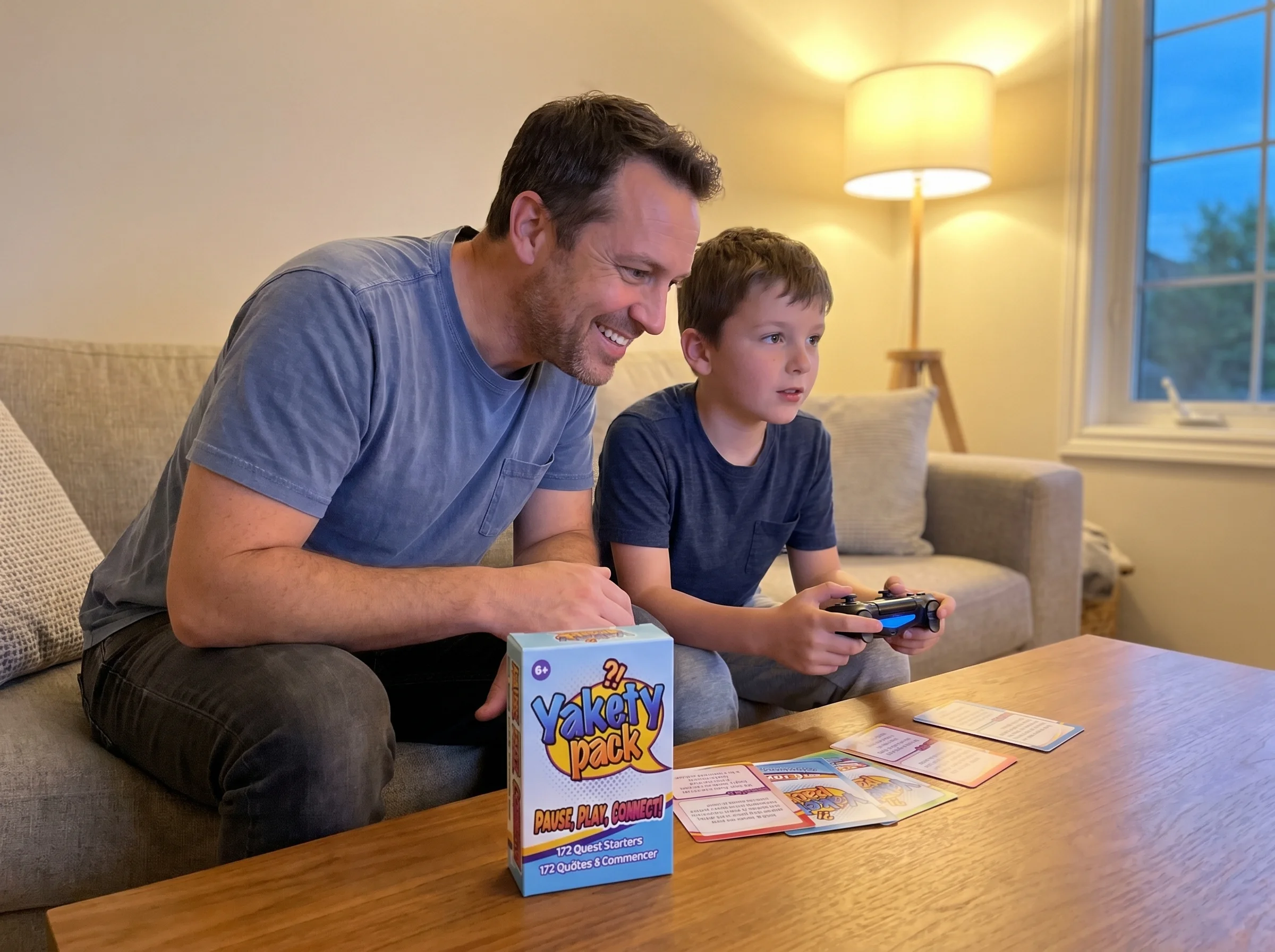
Step 2: A few days later, use the same language for real life. "What's your backup plan if practice runs late?" "Why this assignment first and not the other one?" "What did you change after last week?"
Same words. Different context. You're stitching the two rooms together.
This is the whole reason we built Yakety Pack. After years of fumbling through these conversations, I realized the question is the bridge. Most parents (me included for an embarrassingly long time) don't know which question to ask, or when. Yakety Pack gives you the questions, so you're not standing in the kitchen trying to invent them while your kid is already halfway to his room.
You don't need our product to do this. You just need to know that the question is the move.
The Failure Lesson (Why Losing Is the Real Teacher)
Here's a thing that took me a while to understand: planning skills don't come from successful plans. They come from failed ones.
When a plan works, kids don't learn much. When it falls apart, they have to figure out why, then redesign. That's the whole game. Research on productive failure shows the same thing in classrooms.
Which means the rage-quit, the meltdown, the controller-on-the-couch moment? That's not a red flag. That's the curriculum.
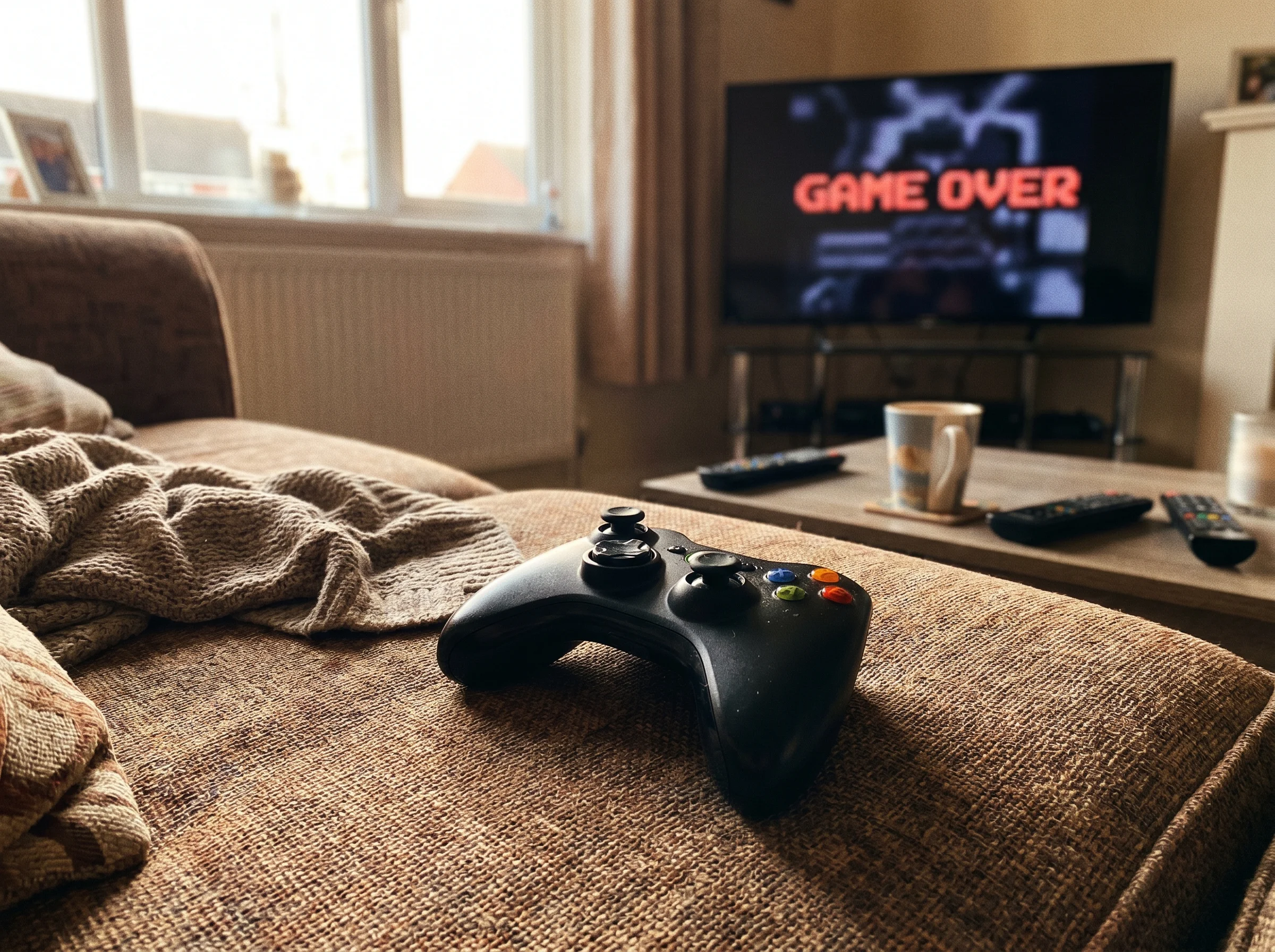
Last year my son lost about 40 minutes of progress in a tycoon game because he didn't save before a big purchase backfired. Full meltdown. Door slammed. The whole production.
I did not say a word about it that night. Don't try to teach the lesson during the fire.
Two days later, casually, in the car: "Hey, what would you do differently next time in that game?" He talked for ten minutes. Save points. Smaller test purchases. Reading reviews of the upgrade first. He had a complete after-action review ready to go. He just needed two days and a question.
That's planning. Real, durable, transferable planning. Born from a failure.
Games That Actually Build Planning (By Age)
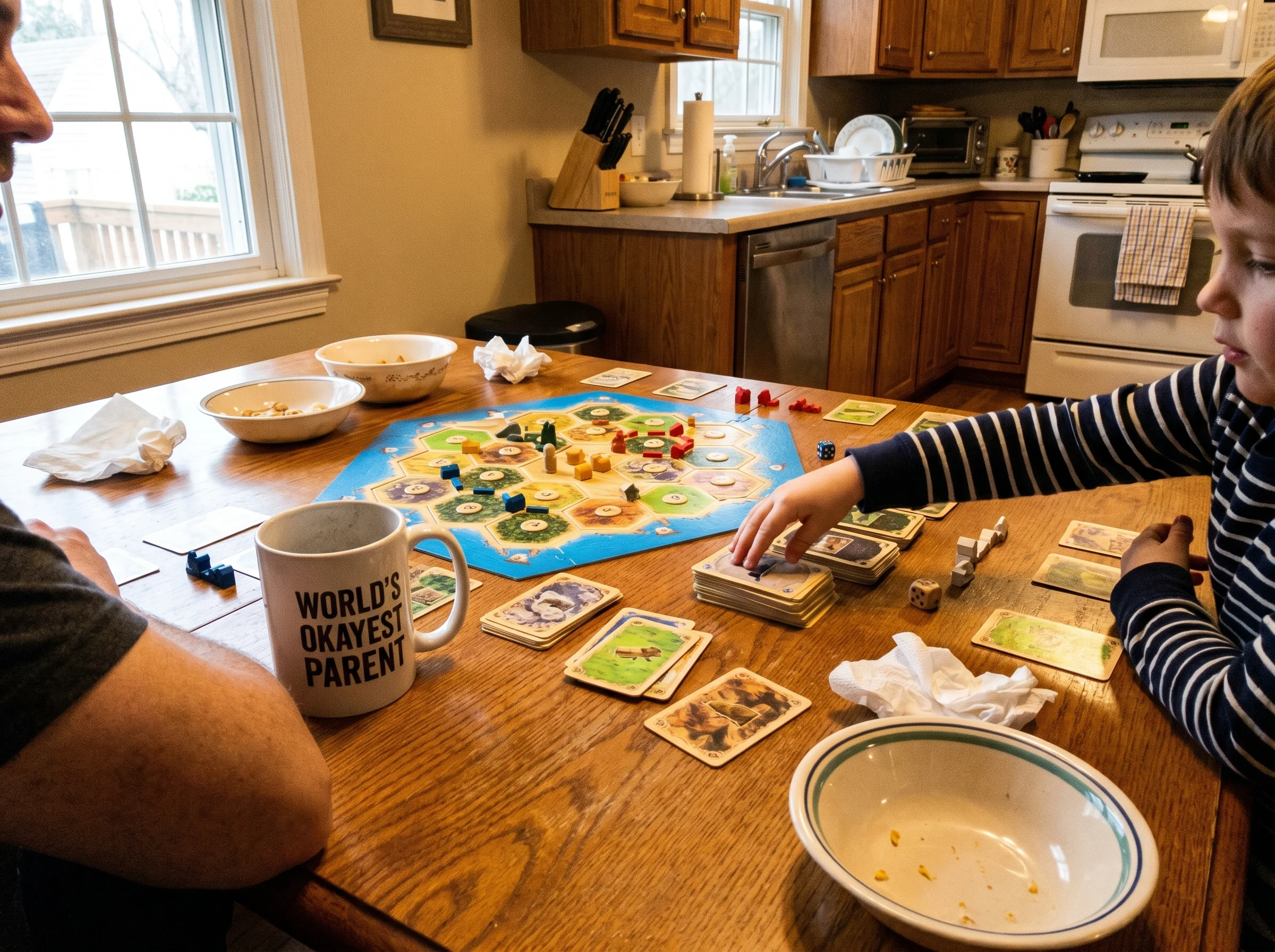
A quick, non-gatekeepy list. Video games count. Mobile games count. Stop pretending only chess is legit.
Ages 6 to 8: Minecraft (creative or peaceful mode), simple tycoon games on Roblox, Ticket to Ride, Catan Junior.
Ages 9 to 12: Clash Royale, Stardew Valley, Civilization VI on easy, Minecraft survival, regular Catan, Risk.
Ages 13+: Total War games, Crusader Kings, Age of Empires, Among Us (planning plus social deduction is a brutal combo), full chess.
If your kid loves a game and it requires decisions across time, it's probably building the muscle. Trust your eyes more than the list.
How to Know It's Working
Don't expect a straight line. The signs show up sideways.
You'll notice your kid starts narrating decisions out loud. "I'm gonna do my math first because the reading is easier and I'll be tired later." You'll catch him mentioning a backup plan without being asked. He'll start saying things like "what if" before he commits to something.
For my kid, it took about a year of low-key conversations before I saw it click. A year. Not a weekend. If you're looking for a 30-day transformation, gaming isn't going to give it to you, and neither is anything else.
So, Do Strategy Games Make Kids Better Planners?
Yes. With an asterisk.
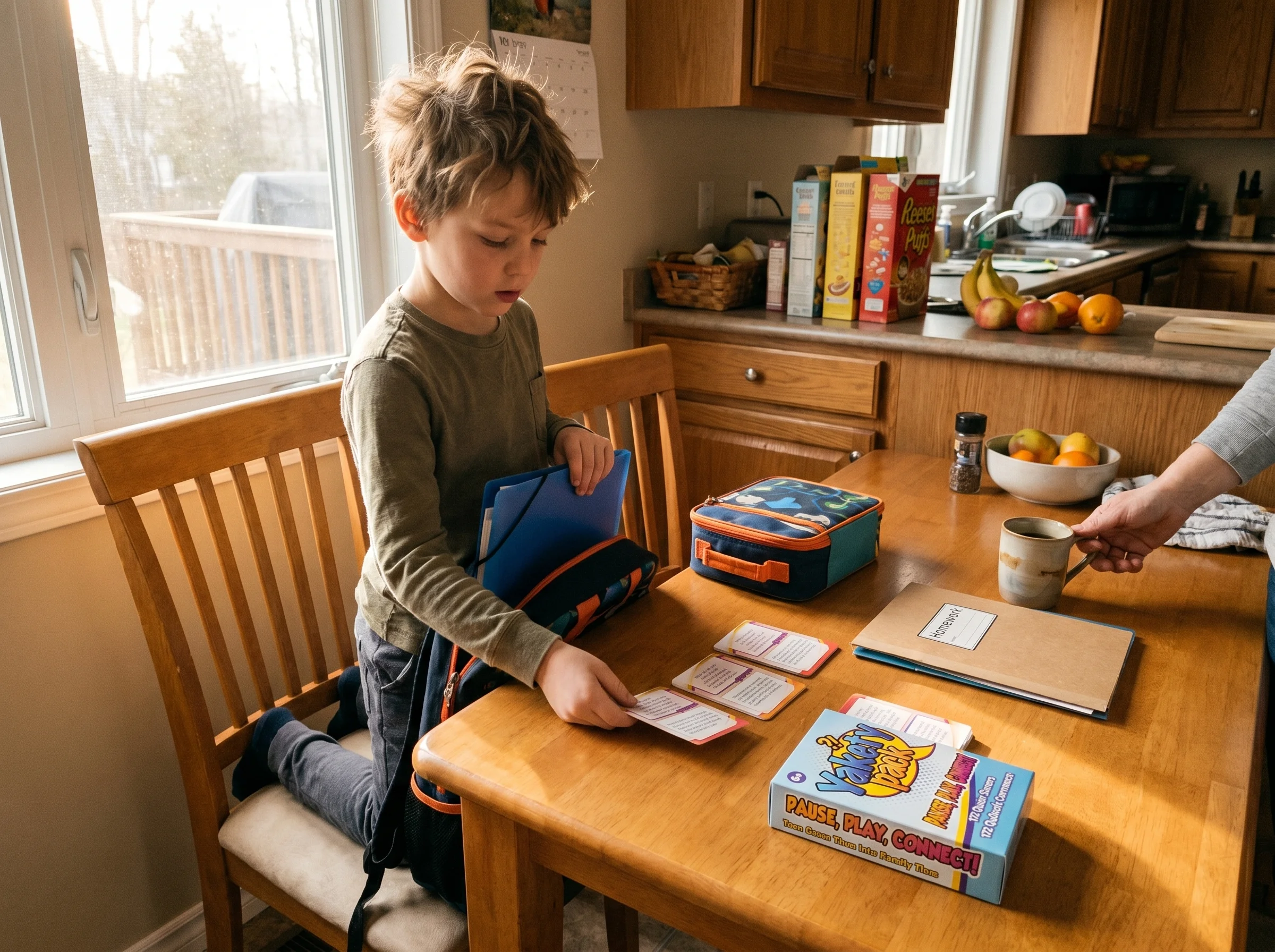
Strategy games build the muscle. The conversations you have about them are what move the muscle into the rest of your kid's life. A kid who plays Civilization for 500 hours and never talks about his decisions might not plan any better in math class. A kid who plays 50 hours and gets asked good questions? Different story.
The game is the workout. You're the physical therapist who helps him actually use the new strength.
So here's the question I'll leave you with: what's the planning your kid does in games that you've never noticed? Go watch him play for ten minutes tonight. Don't say anything. Just watch.
I promise you'll see it. And once you see it, you can build the bridge.

From this article
Pause, Play, Connect: Core Deck
Two days and a question: My son's after-action review was in there the whole time; the right car ride question let it out. The Pause, Play, Connect Core Deck stocks you with bridge questions like that for whenever the moment finally opens up.

