
I bought my son a $50 "award-winning critical thinking" board game for Christmas. It's still shrink-wrapped, sitting on the shelf next to two other "educational" games that promised to turn him into a strategic mastermind.
Meanwhile, that same week, he spent hours playing Clash Royale and explaining elixir economics to me with the focus of a hedge fund analyst. He was talking about counter-pushes, cycle decks, and "baiting out" his opponent's spell cards. Real strategic vocabulary. Real strategic thinking.
I'd been looking for strategy games to teach critical thinking skills in the wrong place. And worse, I'd been ignoring it when it was happening right in front of me.
Here's what I've learned after years of getting this wrong: strategy games do build critical thinking, but the games themselves aren't the whole story. The conversations around the games are where the real growth happens. And the best strategy game for your kid isn't the one Reddit says they should play. It's the one they'll actually play twenty times.
What "Strategy" Actually Means (And Why Most Family Games Aren't It)
Before we talk about games, let's get clear on what makes something strategic.
A strategy game has three ingredients:
- Meaningful choices. Every turn, you're picking between real options with real tradeoffs.
- Visible consequences. Your choices show up in the game state. You can see what worked and what didn't.
- Multiple paths to win. There's no single "right" move. You're building a plan, not following one.
By that definition, Monopoly is mostly luck dressed up like strategy. Candy Land is just a glorified coin flip. Sorry is what happens when you roll dice and pretend it's a game.
That's not a knock on family games. They have their place. But if you sit down to play Monopoly expecting your kid to develop multi-step planning skills, you're going to be disappointed. The game doesn't reward planning. It rewards landing on Boardwalk.
This is the first thing most articles get wrong. They throw "strategy" on any game with cards or hexagons and call it a day.
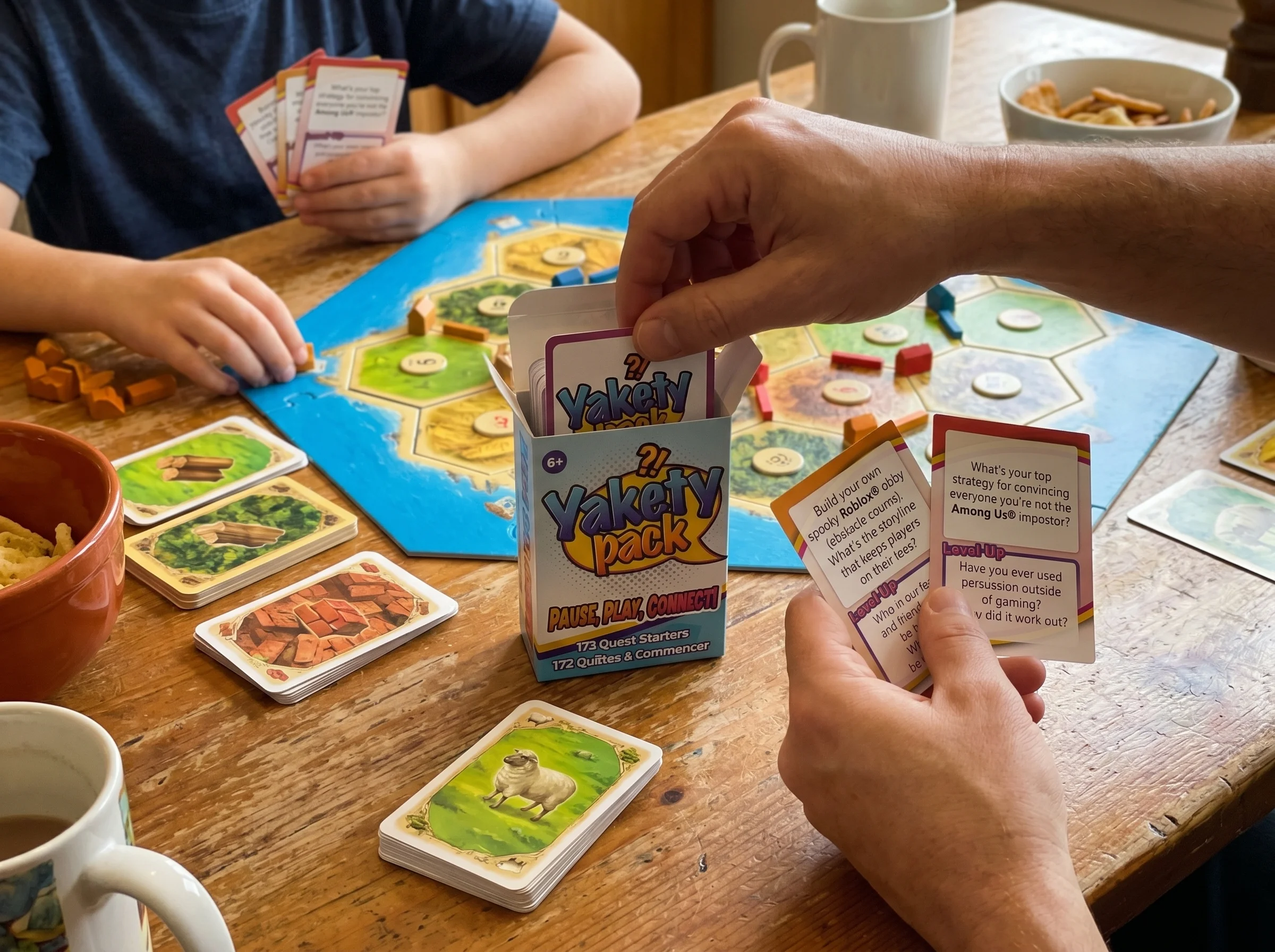
 Sitting across the boardPause, Play, Connect: Core Deck172 prompts that hand you a real question to ask once the board is put away.$49 CAD • 90 cards • 18 reviewsShop the deck
The Specific Skills Different Games Build
Critical thinking isn't one skill. It's a stack of them. Here's what specific games actually train:
Pattern recognition: Chess, SET, Azul. Your kid learns to see structures forming before they're complete.
Resource management: Catan, Splendor, Clash Royale. Limited resources, competing demands, opportunity cost. This is literally how adults think about money and time.
Probability thinking: Backgammon, Can't Stop, Magic: The Gathering. Understanding that "likely" isn't "certain" is one of the most useful adult skills you can teach. There's solid research showing that strategy game play correlates with better problem-solving skills in kids.
Long-term planning: Wingspan, Risk, Civilization VI. You're setting up moves that pay off five turns from now.
Reading opponents: Poker (yes, really), Among Us, Coup. Theory of mind, basically. Figuring out what someone else is thinking.
When you know which skill a game targets, you can pick the right game for the kid in front of you. A 9-year-old who struggles with patience probably shouldn't start with Risk. But Splendor? Twenty minutes, clear feedback, builds the same planning muscle.
The Digital Strategy Games Worth Taking Seriously
This is where I lose half the parenting blogs. Most of them treat any screen as the enemy.
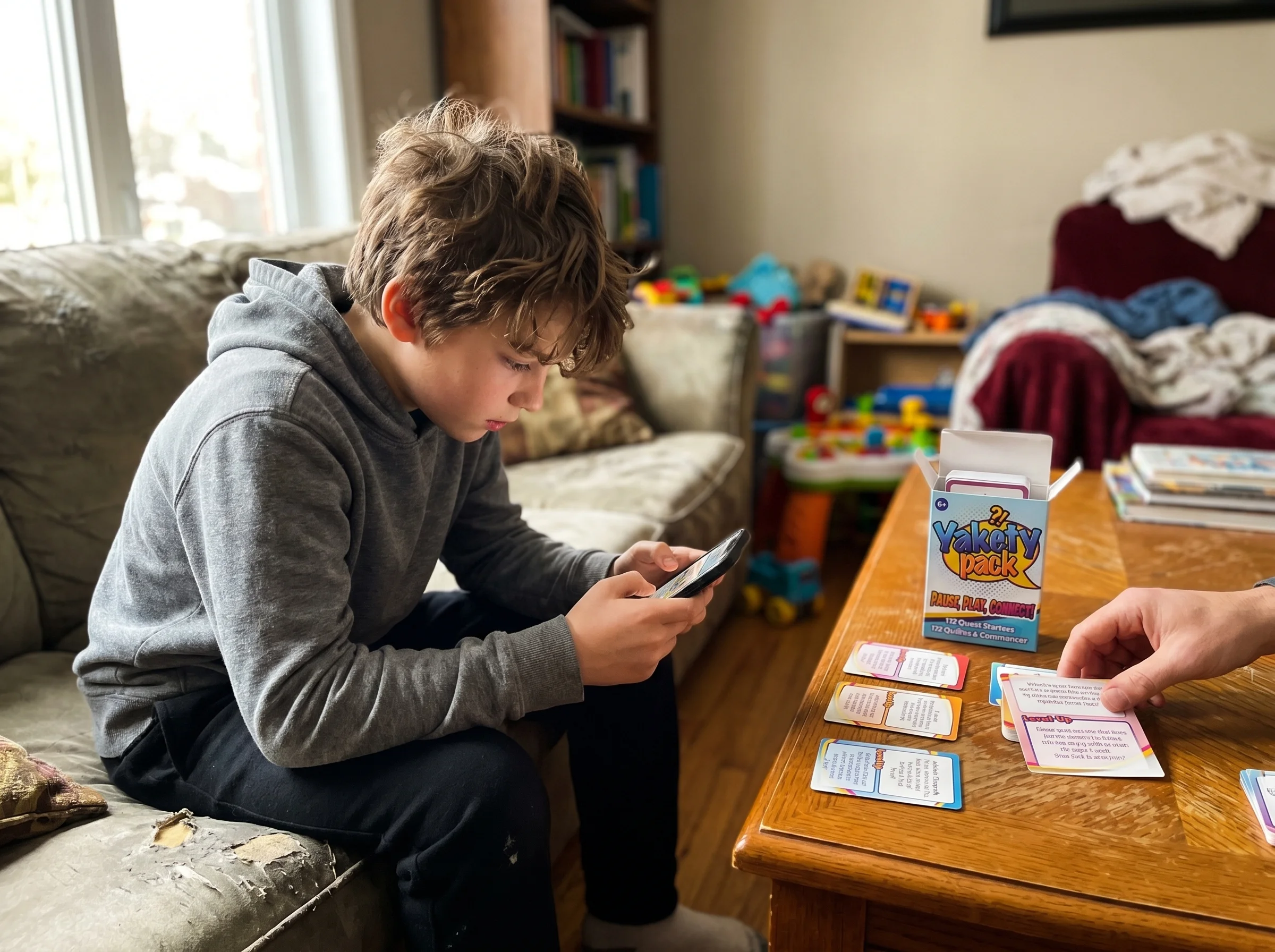
I'm telling you: some of the best strategy games being made right now are digital. Pretending otherwise is just culture-gap stuff that keeps you disconnected from what your kid loves.
Clash Royale is real-time resource management. You have eight cards, an elixir bar that fills slowly, and roughly three seconds per decision. Your kid is calculating opportunity cost every move.
Civilization VI is, no exaggeration, one of the best critical thinking games ever made. It teaches systems thinking, long-term planning, and tradeoff analysis at a level board games can't touch. The American Psychological Association has written about how complex video games build cognitive skills in ways traditional learning doesn't.
Among Us is a logic puzzle wrapped in a social game. Kids are reading behavior, weighing evidence, and constructing arguments.
Even Fortnite, the game parents love to dismiss, has serious strategic depth in build battles, rotation timing, and inventory management. I'm not saying it's Chess. I'm saying it's not nothing.
The 45-minute conversation I had with my son about his Clash Royale deck? He explained why he ran a specific eight-card combination, what each card countered, and when to "cycle" versus when to "commit" to a push. That's strategy. I'd been so focused on cardboard that I missed it happening on a screen.
 Whatever screen it lives onPause, Play, Connect: Core Deck$49 CAD • 172 promptsSee the deck
Age-by-Age, Based on What Kids Actually Enjoy
Box recommendations lie. "Ages 8+" usually means "an 8-year-old can technically understand the rules," not "an 8-year-old will have fun." Here's what's actually worked:
Ages 5-7: Outfoxed, Rhino Hero, Ticket to Ride First Journey. Short games, clear decisions, low frustration.
Ages 8-10: Ticket to Ride, Splendor, Azul, Catan Junior. On the digital side, Clash Royale and chess apps with puzzles.
Ages 11-13: Catan, 7 Wonders, Dominion. Civilization VI starts to make sense here if your kid has the patience. Magic: The Gathering is huge for this age group and teaches more than people realize.
Ages 14+: Terraforming Mars, Twilight Struggle, Magic, Civ VI, StarCraft. Now you're playing real adult-level strategy games together.
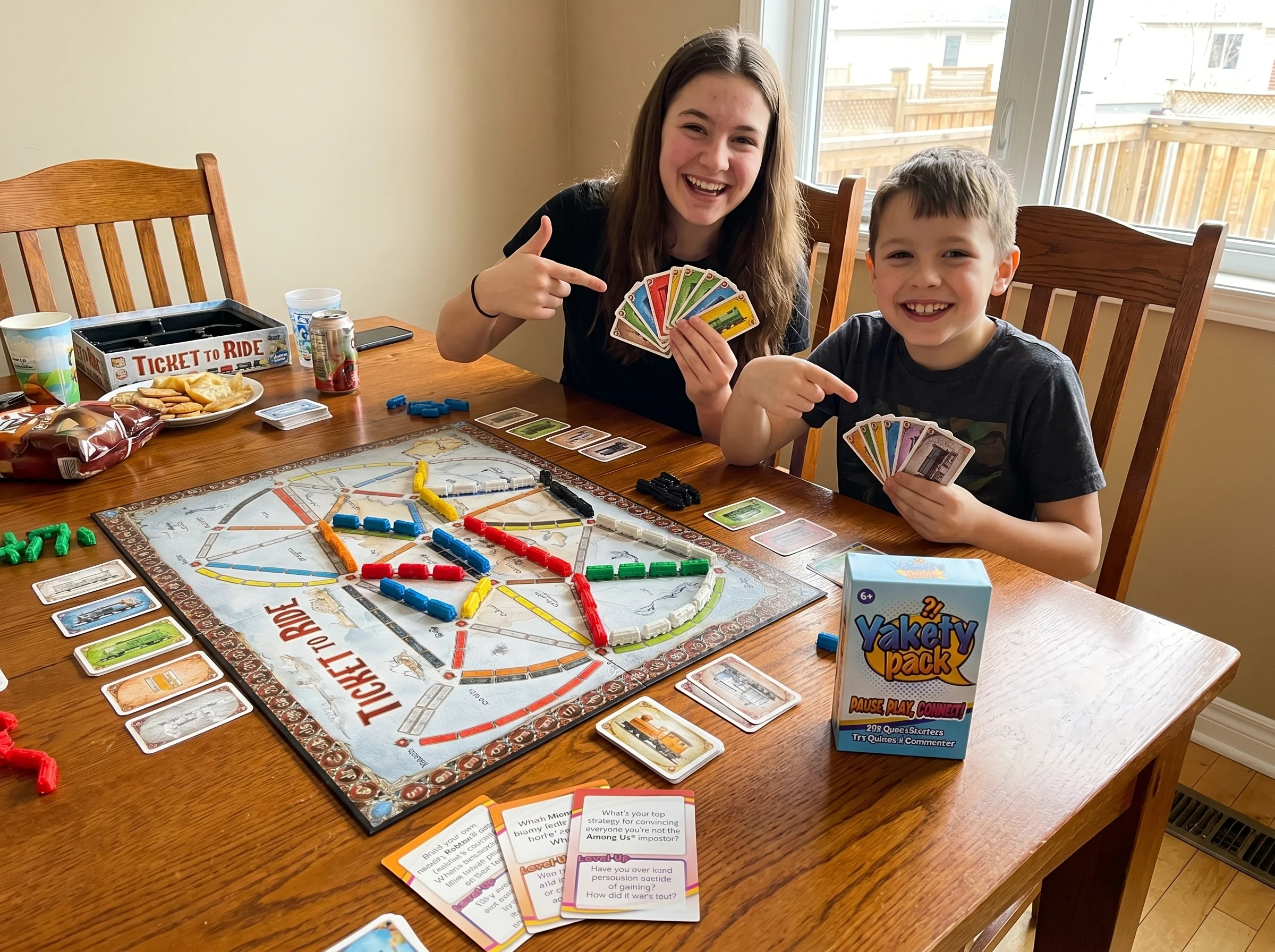
The honest version of age recommendations: start one level easier than you think. A kid who loves a game is a kid who'll play it twenty times. That's twenty times to build the skill. A kid who tolerates a game plays it once.
The Conversation Layer (Where Critical Thinking Actually Happens)
Here's the part nobody talks about. The game doesn't teach critical thinking. The conversation around the game does.
Here are the questions that change everything.
During the game:
- "What are you trying to do this turn?"
- "What would you do if I did X?"
- "What's your worst-case scenario right now?"
After the game:
- "What would you do differently next time?"
- "What was the moment the game turned?"
- "Where did I make a mistake you could've punished?"
That last one is gold. When your kid starts spotting YOUR mistakes, they're thinking critically about the game system itself, not just their own moves.
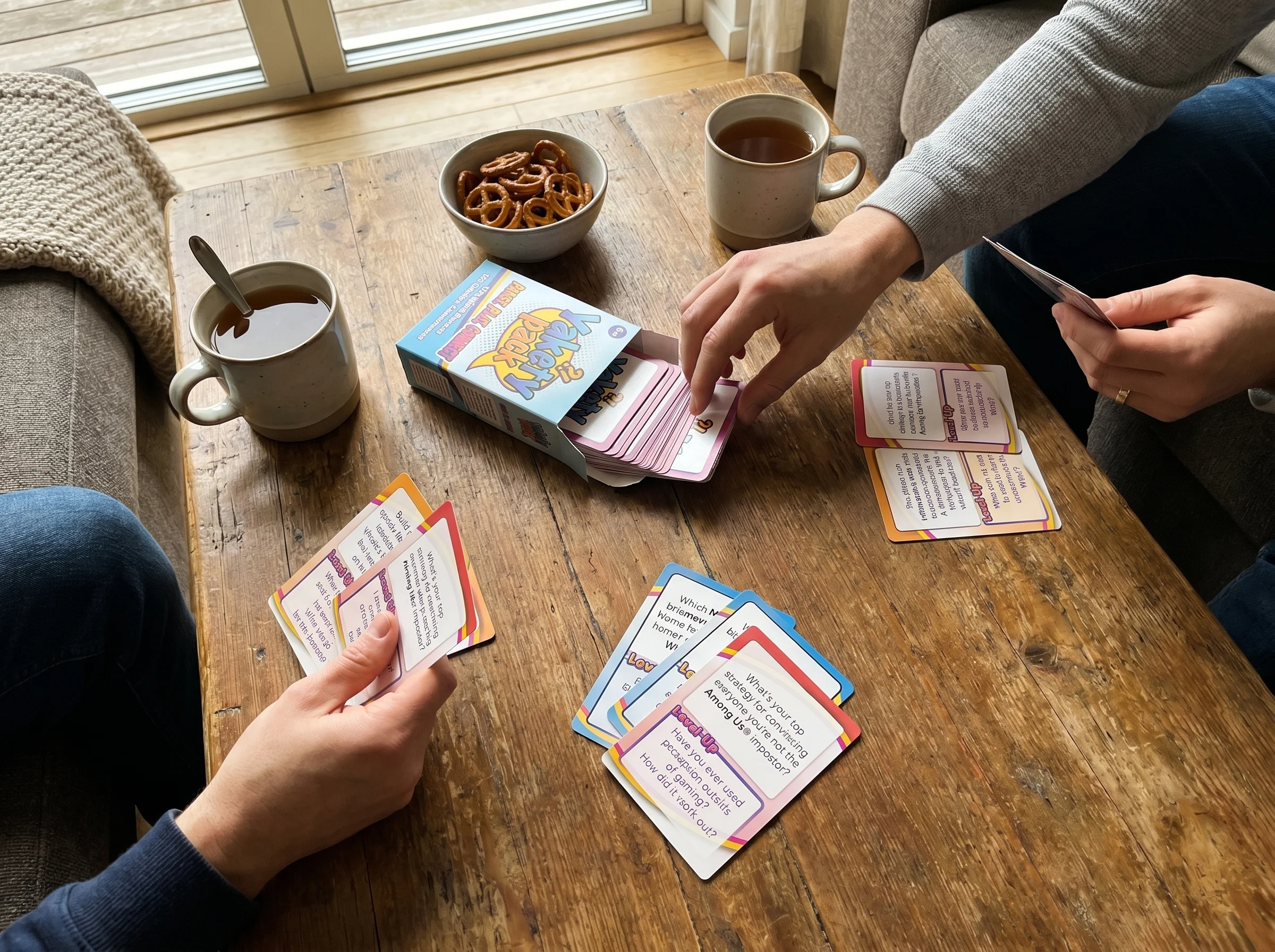
This is exactly why we built Yakety Pack. After years of playing games with my son and missing the chance to actually talk about what was happening in his head, I realized the questions matter more than the activity. Whether you're playing Catan, riding in the car, or eating dinner, the right question opens a door. The wrong one (or no question at all) closes it. The deck is just a tool for asking better questions, the kind that turn an activity into a conversation.
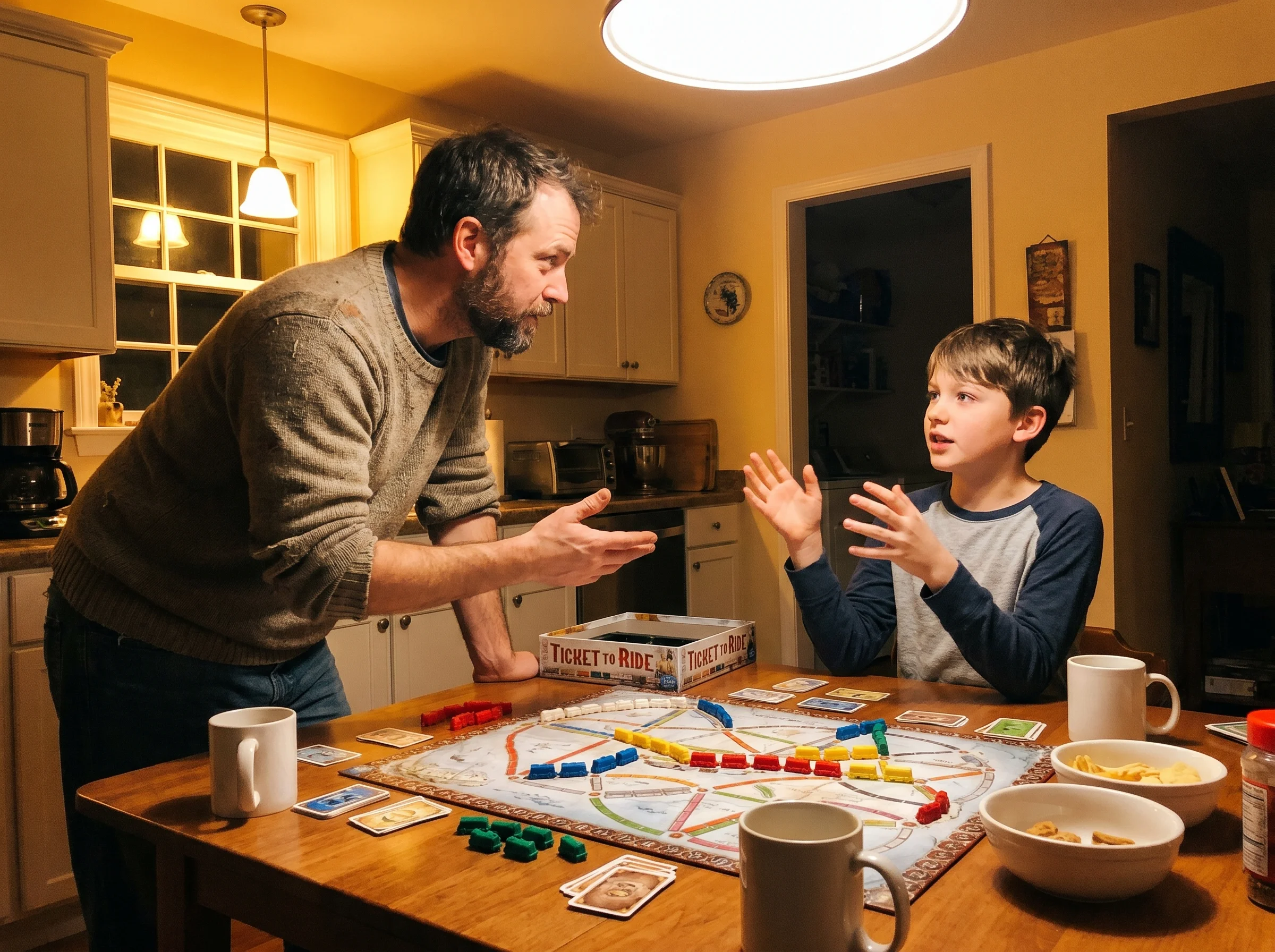
How to Handle Losing (Both Theirs and Yours)
Strategy games create real frustration. If your kid rage-quits, you're not alone. Mine did, too.
A few things that helped:
Don't let them win. Letting a kid win teaches them nothing and they always know. Instead, play at their level by making your moves slower and more conservative. Give them room to find good plays without handing them the game.
Use the "explain your move" rule. When emotions run hot, slow down. "Before you play that card, tell me why." This pulls them out of reactivity and back into thinking.
Run a 30-second debrief after a loss. Not a lecture. One question: "What's one thing you'd do differently?" Then drop it.
And when YOUR kid finally beats you? Don't fake it and don't be weird about it. The first time my son legitimately beat me at Splendor, I almost ruined the moment by being overly performative about how impressed I was. He saw through it instantly. What worked was the opposite: "Okay, walk me through your strategy. When did you know you had me?" He talked for ten minutes. He was proud and he was teaching me. That's the moment critical thinking really clicks.
When You Only Have 20 Minutes
Most strategy game lists feature 2-hour epics no real family will finish. Here are games that actually fit a Tuesday night:
- Patchwork (2 players, 20 min): spatial planning and tradeoffs
- Hive (2 players, 20 min): pure strategy, no luck, no setup
- Lost Cities (2 players, 30 min): probability and commitment
- Onitama (2 players, 15 min): chess-like, gorgeous, fast
- Jaipur (2 players, 30 min): resource management and timing
For digital quick hits: chess.com puzzles, Mini Metro, and short Clash Royale matches all give you a strategic workout in under 15 minutes.
A quick game with a real conversation beats a long game with no debrief every time.
One Thing to Do This Week
Pick one game your kid already loves. Board game, video game, doesn't matter. Sit down with them and ask: "Can you teach me how this works? Like, really teach me. I want to understand your strategy."
Then shut up and listen.
You'll learn more about how your kid thinks in 30 minutes than you'd learn from a year of "how was school today." That's the whole game, really.
If you want to go deeper, the best games to play with your kids by age and skill level is where I'd go next. And if you want games that build connection over competition, the cooperative games for families covers a totally different angle.
Strategy games build thinkers. But only if you're in the loop with them.

From this article
Pause, Play, Connect: Core Deck
Where the skill sticks: The game trains the thinking, but the debrief afterward is what turns a match into a lesson. The Pause, Play, Connect Core Deck keeps a good post-game question ready when your own supply runs dry on a Tuesday.

