
Look, I used to think my son was rotting his brain playing Clash Royale. Hours on the couch, thumbs flying, that little victory jingle playing on loop. I'd walk past, sigh dramatically, and go fold laundry while muttering about "kids these days."
Then one night at dinner, he started explaining why his deck "countered" his friend's deck. He talked about resource management, baiting out spells, predicting what his opponent would play next based on what they'd played in the last three matches. He was casually describing game theory concepts I didn't learn until college. He didn't know the words. He just knew the moves.
That was the night I started paying attention. And after three years of watching my own kids, talking to other gaming parents, and reading way too many studies, I can finally answer the question I get asked all the time: do strategy games improve intelligence?
Yes. And no. And the difference matters more than you think.
 Skip ahead to the talkingPause, Play, Connect: Core Deck172 prompts that start a family conversation about the games your kid already plays.$49 CAD • 90 cards • 18 reviewsShop the deck
The Honest Answer Nobody Gives You
Most articles on this topic do one of two things. They either tell you chess will turn your kid into Einstein, or they tell you there's no real evidence games make anyone smarter. Both are wrong, and both miss what you actually want to know as a parent.
Here's the real answer: strategy games build specific cognitive skills. Working memory, planning, pattern recognition, decision-making under pressure. Those are real, measurable, and they show up in kids who play a lot of strategy games. A 2013 review in American Psychologist found that strategic video games predict improvements in problem-solving skills and school grades in adolescents.
But they don't magically raise IQ. And here's the kicker nobody talks about: those skills only transfer to real life if someone helps the kid build the bridge between their gaming brain and the rest of their world.
Without that bridge, you get a kid who can run a digital empire but can't remember to bring home his math worksheet. Sound familiar?
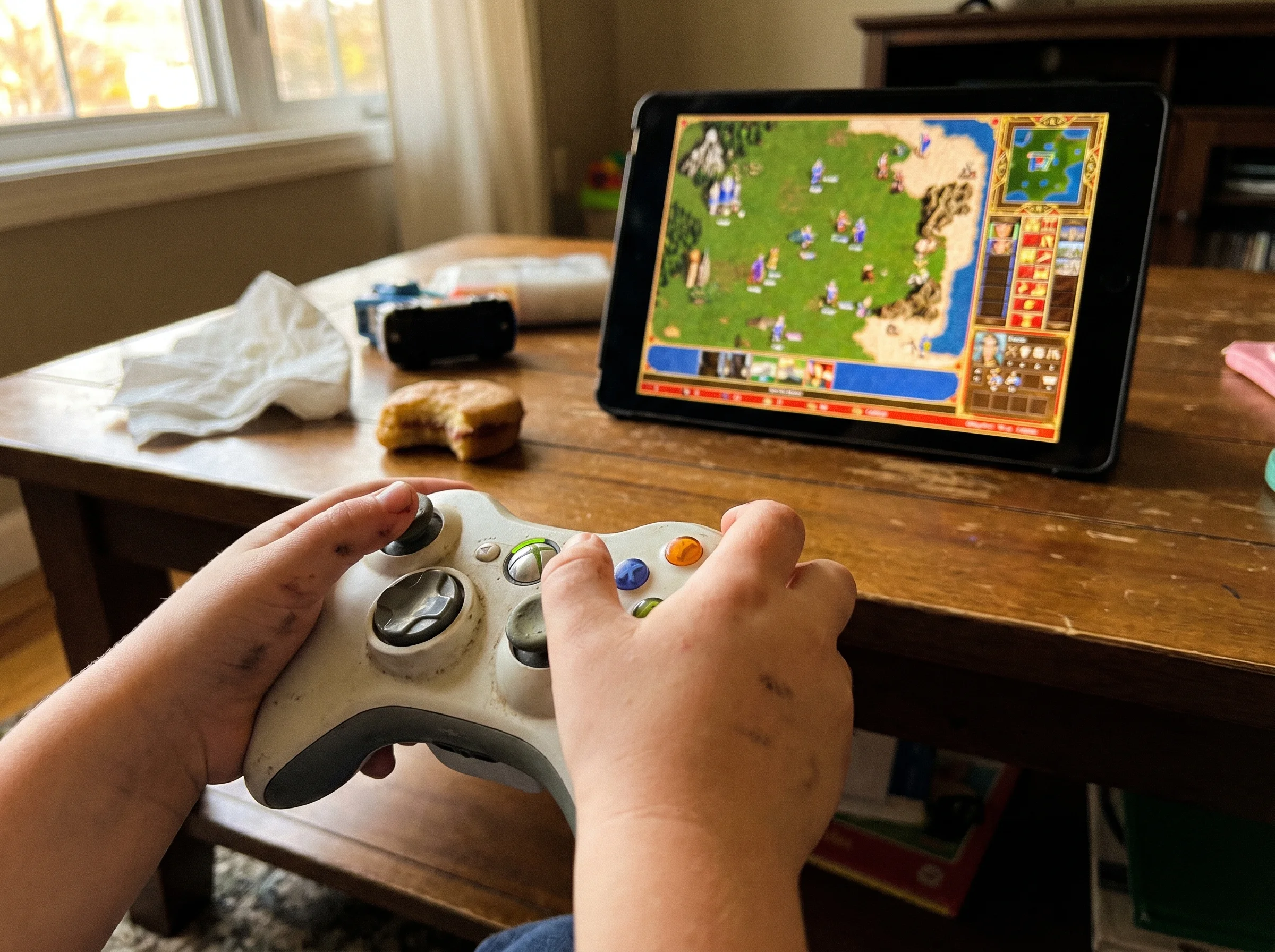
What "Intelligence" Even Means Here
When people say strategy games make kids smarter, they're usually pointing at four specific things. Let me decode them for you in plain English.
Working memory. Holding multiple things in your head at the same time. In a game, that's tracking your resources, your opponent's last three moves, and what you're planning next. In real life, that's a kid who can follow a three-step instruction without losing the thread.
Pattern recognition. Seeing what's about to happen before it happens. In a game, it's knowing your opponent always plays their big card after they defend twice. In real life, it's the kid who notices you're stressed before you say a word.
Planning. Thinking three steps ahead. In a game, you're not just reacting, you're setting up something for two turns from now. In real life, that's the kid who plans the sleepover with snacks, movies, and a backup plan if the first movie is boring.
Cognitive flexibility. Changing your plan when the situation changes. In a game, your opponent does something unexpected and you have to pivot. In real life, the field trip gets canceled and your kid doesn't melt down because they can adjust.
These are real skills. Strategy games genuinely build them. The problem is that brains are weirder than we give them credit for.
Why Your Kid Can Crush a Game But Bomb a Math Test
This is the part nobody warns you about. It's called the transfer problem, and it's the reason your kid can manage a digital army of 200 villagers but forget to pack his lunch.
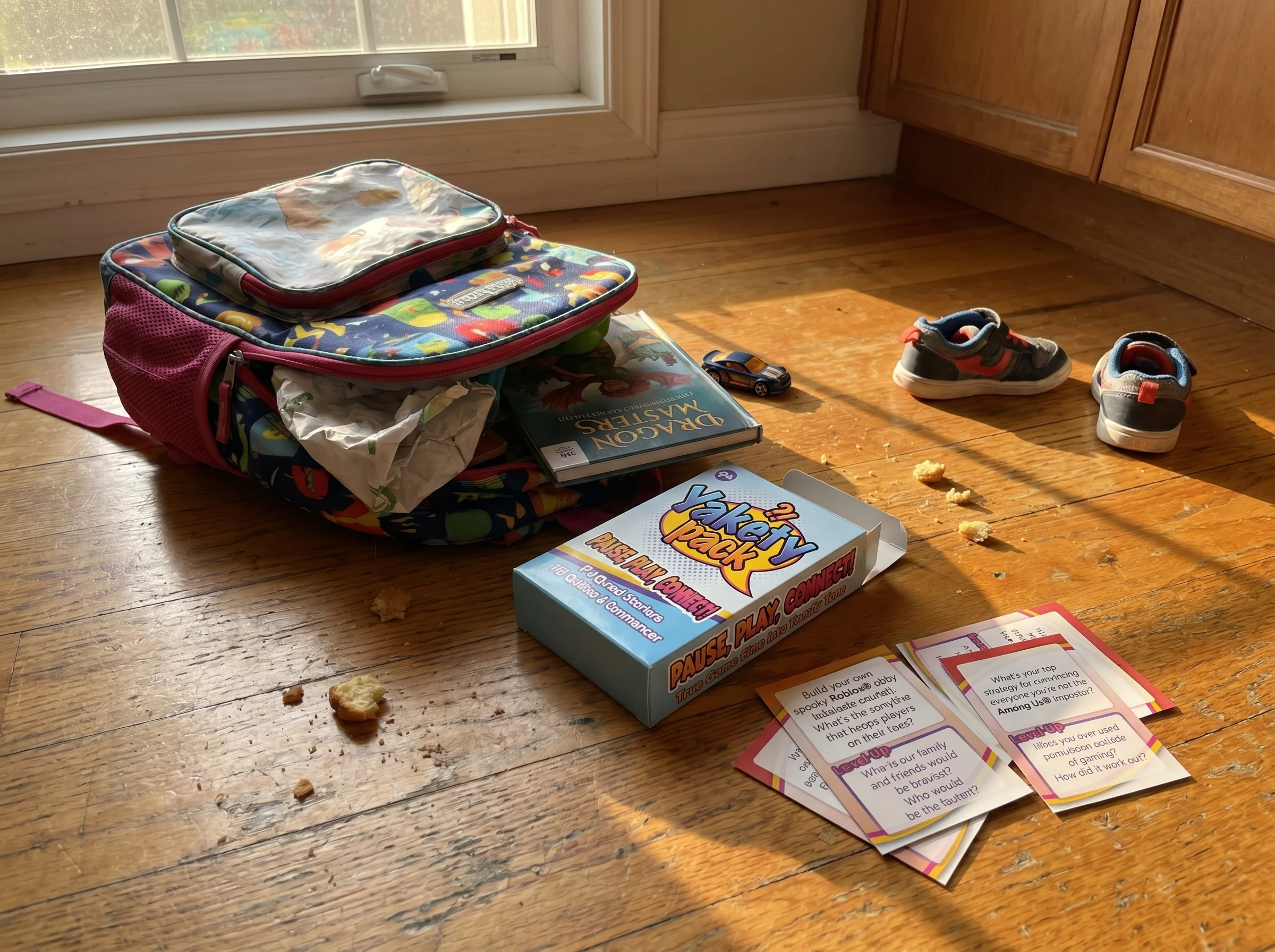
Brains compartmentalize. Hard. The "Fortnite brain" doesn't automatically become the "homework brain." The skills are there, but they're locked in the room where they were learned.
My daughter is a perfect example. She used to play this base-building game where she managed dozens of villagers, allocated resources, planned long-term expansions. Genuinely impressive strategic thinking. The same week, she forgot her lunch three times and lost her library book inside her own backpack.
Same kid. Same brain. Different compartments.
This is why "my kid plays chess so he must be doing great in school" is a fantasy. The skills don't leak from one room to the other on their own. They need a door. And that door is you.
 Something to talk about tonightPause, Play, Connect: Core Deck$49 CAD • 172 promptsSee the deck
The Parent Bridge (Where Real Intelligence Growth Happens)
Here's the secret nobody puts in the headline: games build the muscles, but conversations build the connections.
If you want your kid's strategic thinking from gaming to show up at school, at the dinner table, in their friendships, you have to help them see what they're doing. You have to pull it out of the game and into the world. And you do that with questions.
Bad question: "Did you win?"
Good question: "What did your opponent do that you didn't expect?"
Bad question: "How was gaming?"
Good question: "What's a game you're better at than your friends, and why?"

The trick is what I call narration. You're getting the kid to explain their thinking out loud. The minute they put words to what they're doing, those skills become portable. They start to recognize that the same brain solving game problems can solve homework problems, social problems, real problems. Researchers call this idea metacognition, and it's one of the strongest predictors of how well kids transfer learning between contexts.
This is actually one of the reasons we built Yakety Pack. I kept noticing that the best conversations with my kids started when I asked about their games the right way. One of our cards literally just asks, "What's a game you're better at than your friends, and why?" and you would not believe how much kids reveal about how they think when you ask it that way. Suddenly they're explaining strategy, talking about reading other people, describing how they handle losing. The intelligence was always there. The question is what pulled it out.
Not All Strategy Games Are Created Equal
Quick sniff test: is your kid making real decisions, or just clicking faster?
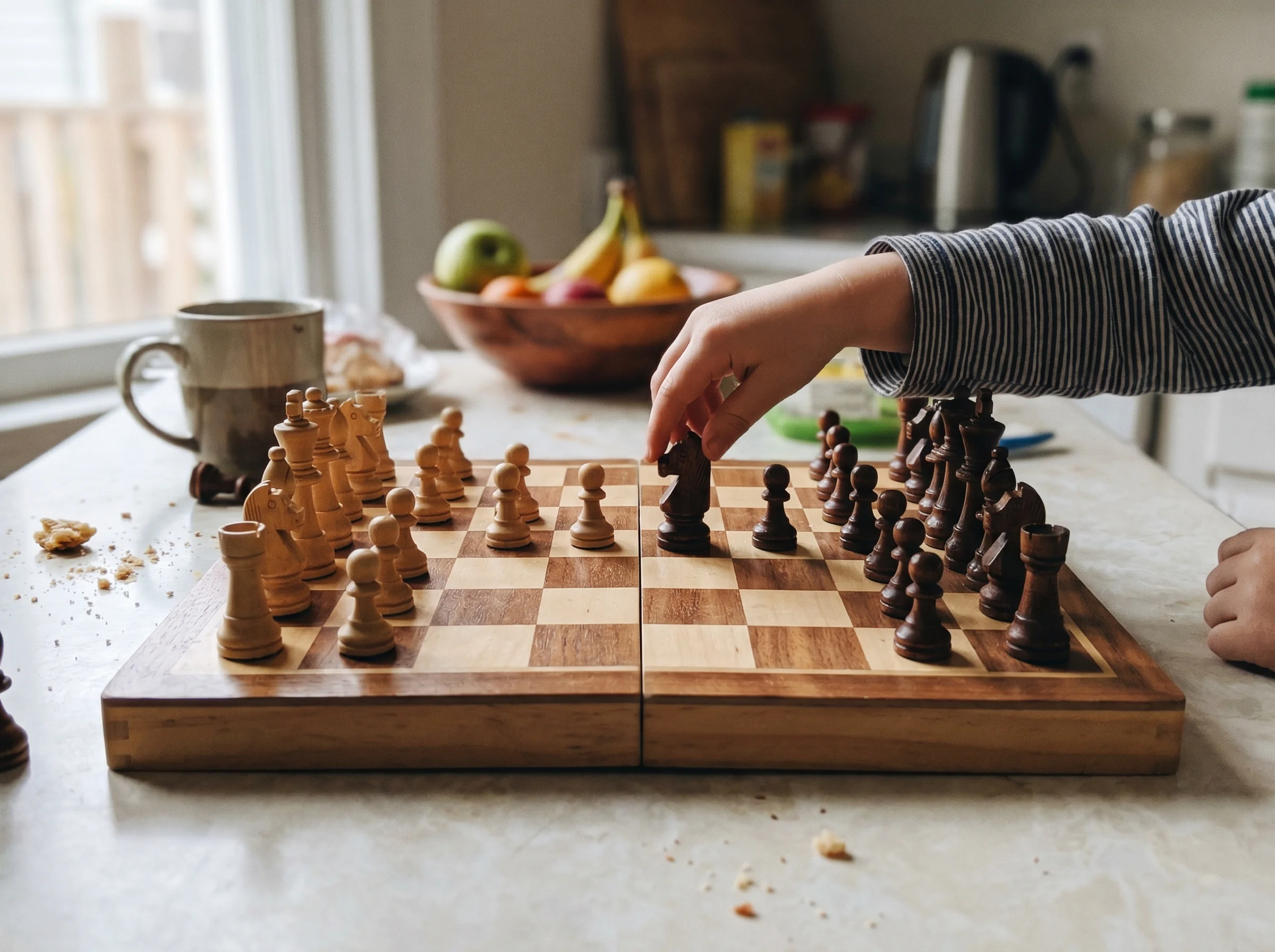
Real strategic games make your kid choose. Chess. Civilization. Clash Royale (yes, really). Age of Empires. Stardew Valley (so much planning). Among Us (deduction and reading people). These reward thinking over twitching.
Strategy-flavored but mostly reflex: most battle royales, gacha games where the "strategy" is just paying for better cards, anything where the kid who wins is the kid with faster fingers.
And ignore the mobile-versus-PC argument. It doesn't matter what device. Depth matters. A good mobile strategy game beats a shallow PC one every time.
How to Tell If Strategy Games Are Improving Intelligence
You'll know the intelligence is transferring when you start seeing these signs:
- Your kid explains their decisions instead of just making them
- Your kid plans ahead in non-game situations (birthday parties, school projects, weekend hangouts)
- Your kid handles losing differently (better or worse, both are signals they're processing it)
- Your kid can articulate why something works, not just that it works
I'll never forget the night my son tried to negotiate his bedtime with me using straight if-then logic. "If I go to bed at 9:30 tonight, then I'll be more tired tomorrow, so you should let me stay up till 10 because tomorrow's Saturday anyway." I was annoyed and proud at the same time. That was game brain, applied to real life. That was the bridge.
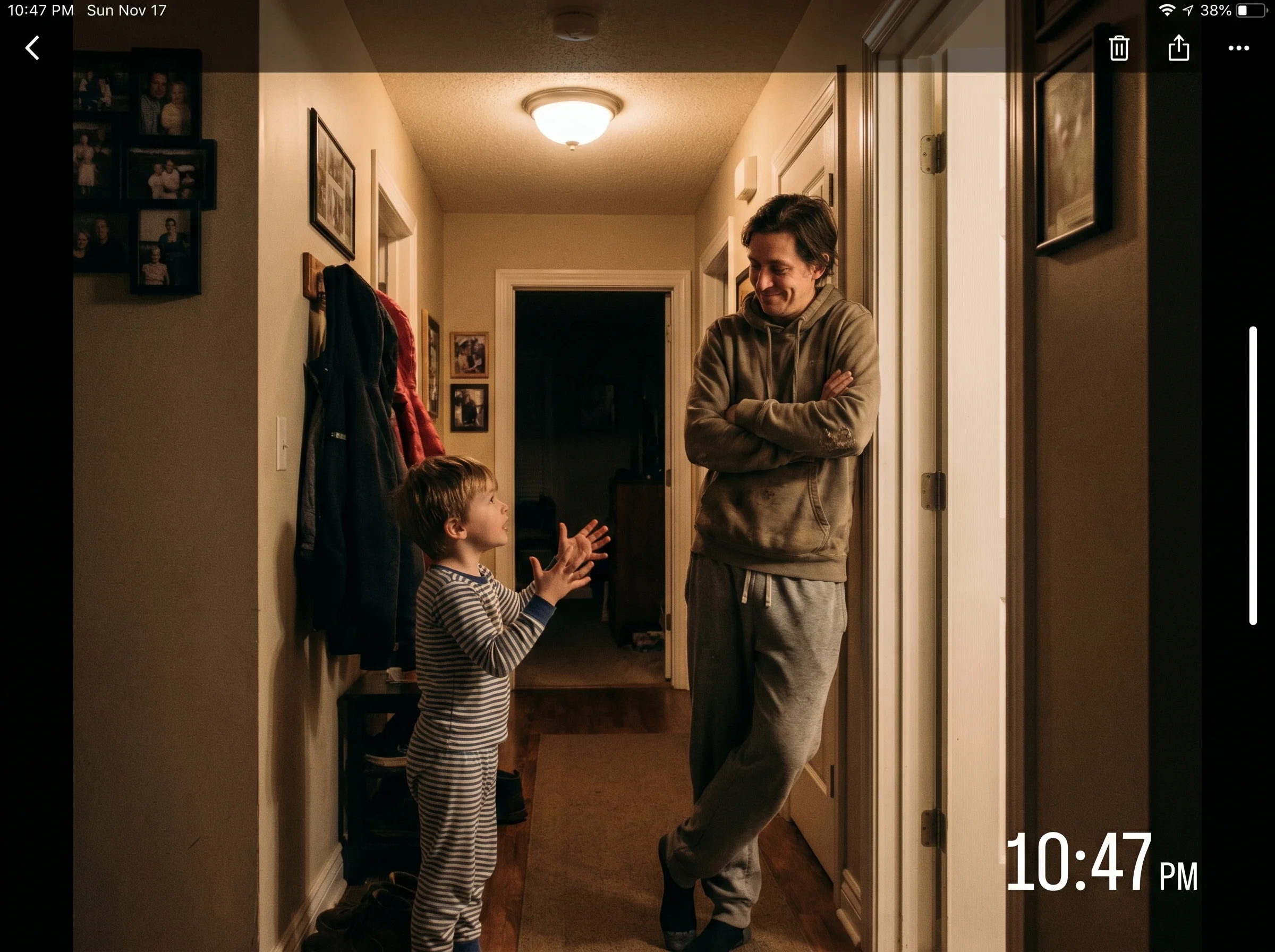
If your kid is great at the game but can't tell you why, the skills are still locked in the game room. Start asking better questions.
The Bottom Line
Do strategy games improve intelligence? In narrow but real ways, yes. They build specific mental muscles that absolutely matter. But the benefit gets amplified maybe ten times over when a parent engages with what the kid is actually learning.
The goal isn't smarter kids who play less. The goal is smarter kids whose gaming becomes one of many places they practice thinking, and who learn to carry those skills into school, friendships, and life.
Stop asking "how was gaming today." Start asking the real questions. The intelligence is already in there. Your job is just to help it find the door.
If you want a deeper look at picking the right games for your kid, check out our pillar guide on strategy games for kids. And if you want a shortcut to better conversations, that's literally why we made Yakety Pack.
One question to leave you with: what's the last thing your kid taught you about how they think?

From this article
Pause, Play, Connect: Core Deck
Unlocking the game room: The narration habit only sticks if a good question shows up night after night, not just the week you read this. The Pause, Play, Connect Core Deck keeps a fresh "explain your thinking" prompt in your hand whenever the controllers go down.

