
Look, I'll save you the suspense: nobody can promise you a strategy game will bump your kid's IQ by 10 points. Anyone selling that is lying to you.
But after seven years of watching my son go from button-mashing toddler to a kid who legitimately out-strategized me at a board game last Christmas (in front of the whole family, thanks bud), I can tell you something more useful. Something about what actually changes in their brain when they play these games. And more importantly, how to make sure any of it actually sticks once they put the controller down.
Because here's the thing nobody tells you about the "can strategy games improve IQ" question: it's the wrong question. It's the question we ask when we're really trying to figure out if we should feel guilty about the screen time. Let me give you a better one.
 Ask them, not the researchPause, Play, Connect: Core Deck172 prompts that give you something to ask your kid about, once the reading is done.$49 CAD • 90 cards • 18 reviewsShop the deck
The Honest Answer About Whether Strategy Games Improve IQ
IQ is famously stubborn. It barely budges. Decades of research on brain-training apps, Lumosity, all those "boost your cognition" programs, the honest verdict is: you get better at the thing you practiced. Not at life in general. The FTC actually fined Lumosity $2 million for overselling exactly this idea.
This is called the transfer problem, and it's the single most important concept parents need to understand here. Getting really good at chess makes you really good at chess. It does not automatically make you better at fractions, or remembering your homework, or solving disputes with your sister.
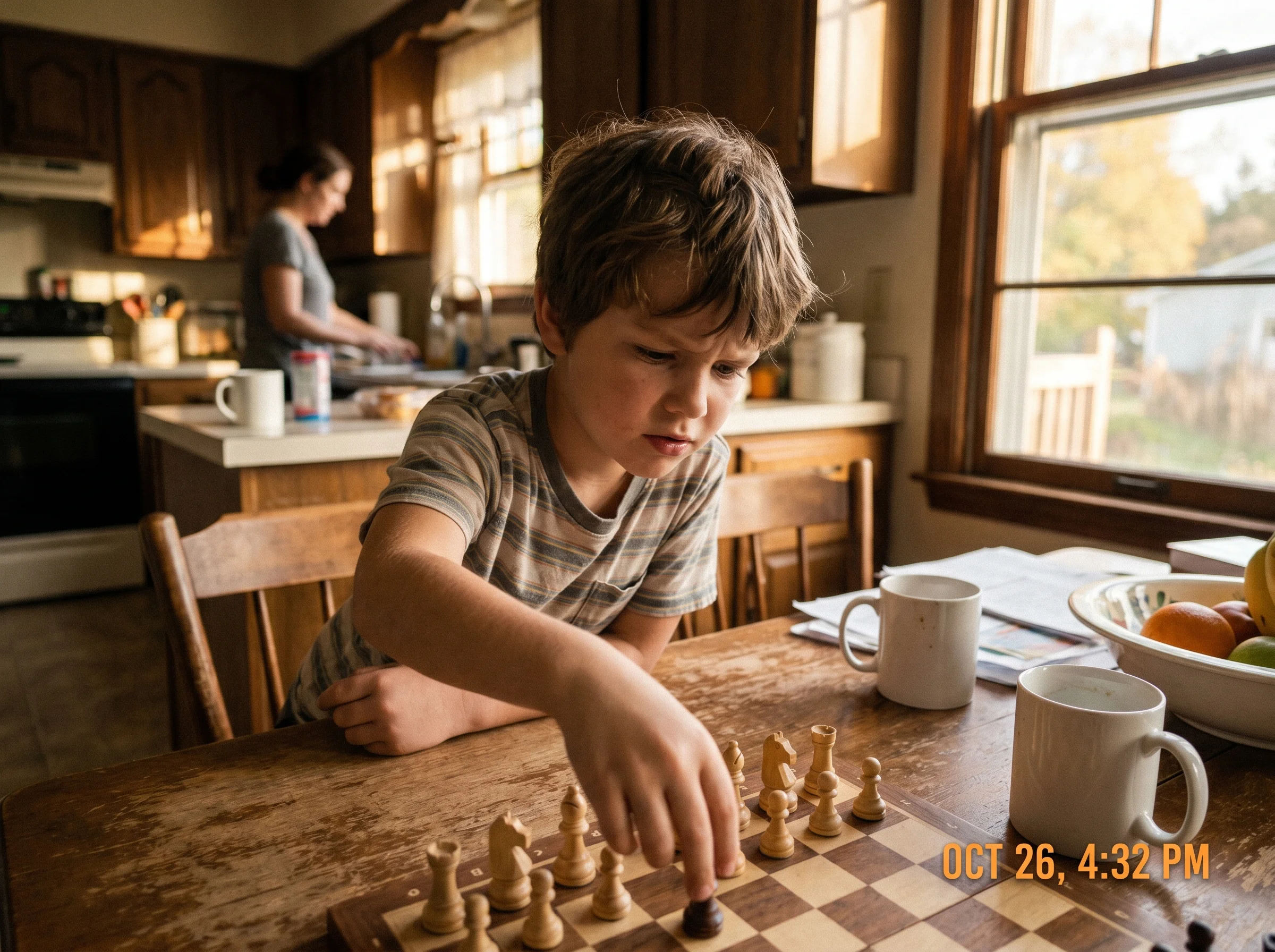
I learned this the expensive way. When my son was 8, I went full "tiger dad lite" and signed him up for a year of chess lessons. Real coach, weekly sessions, tournament fees. I had read all the articles. I was sure his report card was about to glow.
His chess got fantastic. He started beating me regularly by month four. His fourth grade math grade? Identical to before. His reading? Same. His ability to remember to bring his lunchbox home? Worse, somehow.
What I didn't understand then is that strategy games don't pour intelligence into kids like filling a gas tank. They build specific skills, and those skills only travel into real life when somebody helps the kid carry them there.
That somebody is you. We'll get to that.
What Strategy Games Actually Build (And Why It's Better Than IQ)
Forget IQ for a second. Here's what I've watched strategy games genuinely build in my kids:
- Multi-step planning. "If I take this, he'll do that, which means I should set up here first."
- Resource management under pressure. Limited gold, limited time, limited troops. Pick.
- Pattern recognition. Seeing the shape of a problem before it's fully formed.
- Cost-benefit thinking. Every move costs something. Kids learn this faster in games than in any lecture.
- Recovering from a bad position. This one might be the most valuable.
That last one stops me every time. A couple summers ago I absolutely steamrolled my daughter in a board game. Took out her whole army in one turn. I felt bad enough that I almost offered a do-over. She didn't even look up. She just started quietly rebuilding her economy, hoarding cards, playing defense.
She lost. But months later, when she bombed a math test and came home red-eyed, I watched her do the exact same thing. Sat down. Made a study plan. Asked for help. Rebuilt.
I'm not saying the game taught her that. But the game gave her a hundred low-stakes reps at being behind and not panicking. That's worth more than any IQ point.
Not All "Strategy" Games Are Created Equal
Here's a distinction nobody makes, and it matters: there's a difference between strategy games and strategy-flavored games.
Real strategy games punish you for not thinking ahead. Chess, Go, Civilization, Into the Breach, Catan, Risk, Age of Empires, Stardew Valley when you actually plan your seasons. Even Minecraft survival mode counts, and I'll die on that hill. Managing food, shelter, mobs, resources, and long-term builds is legitimate strategic thinking.
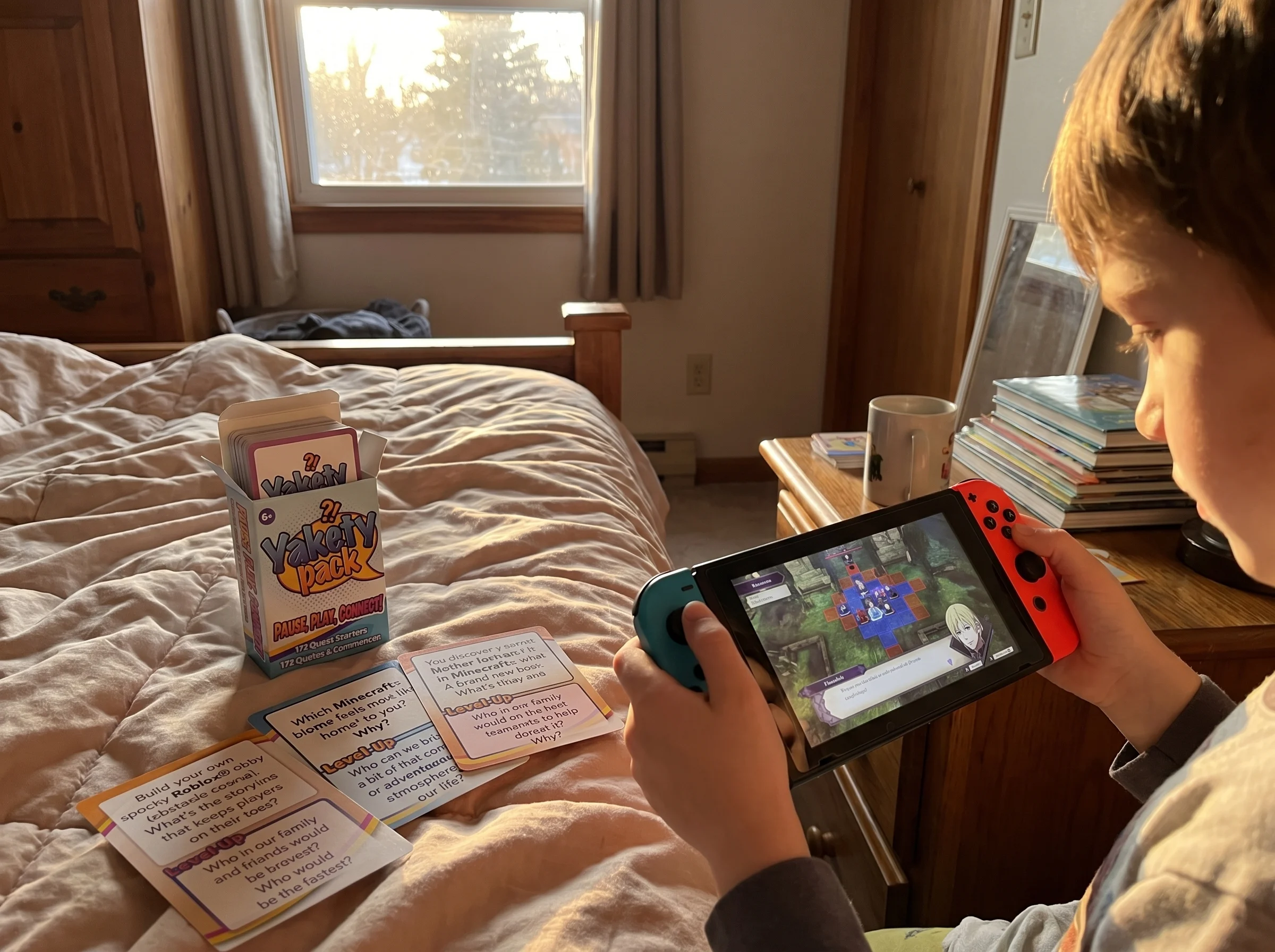
Strategy-flavored games look like strategy but are mostly timers, luck, and dopamine hits. A lot of the mobile "build your kingdom" games fall here. Clash of Clans is closer to a slot machine with a castle skin than to actual strategy. There's some planning, sure. But the core loop is "wait for timer, tap, get reward."
The test I use: if you take 30 seconds to think before each move, does it noticeably change the outcome? In Into the Breach, absolutely. In Clash Royale, sort of, briefly. In most "tap to upgrade" games, not really.
This isn't about banning the dopamine games. It's about knowing which ones are doing the actual cognitive work so you don't kid yourself.
 Hear it from your kidPause, Play, Connect: Core Deck$49 CAD • 172 promptsSee the deck
How to Know It's Actually Working (Signs at the Dinner Table)
You won't see this in test scores. You'll see it in conversation. Here's what to watch for:
- They start narrating their thinking out loud. "Wait, if I do this first, then..."
- They use conditional language. "If" and "then" become regular.
- They get less rattled when something goes wrong. Lost game, dropped phone, bad grade. Less meltdown, more recalibration.
- They start planning weird things. Their allowance. Their Lego build order. What chores they'll do first to free up Saturday.
The day I knew something had clicked: my son, age 10, broke down his entire Pokemon team composition for me. Type matchups, hedging against opponents he hadn't met yet, why he kept a "wasted" slot for a status move. He sounded like a varsity coach explaining a depth chart.
He was doing systems thinking. In a kid's game. About cartoon monsters. And he didn't even know that's what it was.
Which brings us to the most important part.

The Secret Sauce: You Have to Be the Bridge
This is what every article about games and IQ misses. Skills don't transfer on their own. Somebody has to help the kid notice the skill, name it, and connect it to other places it works. Researchers call this metacognition, and it's one of the most evidence-backed boosters of real learning.
That somebody is you. Sorry.
The good news is it's not hard. You don't need to play the game. You need to ask better questions about it.
"How was Fortnite?" gets you grunts. I learned this the hard way for about six months.
Try these instead:
- "What's the smartest move you made today?"
- "What would you do differently if you started over?"
- "Was there a moment you thought you were going to lose and then turned it around?"
- "If you had to teach me one trick, what would it be?"
Then, and this is the part most parents skip, point out where else that thinking would work. "Hey, that thing you said about saving resources until you knew the map, that's basically how I budget for vacations." It feels cheesy. Do it anyway. That's the bridge.
Honestly, I built Yakety Pack partly because I kept fumbling these conversations with my own kids. The questions I wrote out worked, but I'd forget them in the moment, or my brain would default to "how was school" autopilot. One of our cards just asks "What's the smartest move you've ever made in a game?" and my quiet 11-year-old would not stop talking. That's the whole game. The door opens, you walk through.
A Quick Age-by-Age Cheat Sheet
The point isn't the specific game, it's matching the cognitive load to where they are.
- Ages 5-7: Connect 4, Sorry, simple pattern games. Goal: cause and effect.
- Ages 8-10: Chess, Catan Junior, Minecraft, Pokemon. Goal: planning a few steps ahead.
- Ages 11-13: Civilization, Into the Breach, full Catan, Magic: The Gathering. Goal: managing multiple systems at once.
- Ages 14+: Real-time strategy, Europa Universalis, heavy board games. Goal: long-term strategy and adapting to other minds.
When to Actually Worry
I'm not anti-screen. But I'm also not pretending more is always better.
Watch for these:
- The game becomes the only place these skills show up. If your kid can manage twelve units in StarCraft but can't manage a backpack, the skills aren't traveling.
- Losing causes meltdowns that don't get better with practice. Strategy games should build frustration tolerance over time, not destroy it.
- Sleep and exercise are losing. No cognitive game beats a tired, sedentary kid into smartness. That's just physics. The American Academy of Pediatrics has the basics on this if you want guardrails.
Ninety focused, engaged minutes of a real strategy game will do more than four zombie hours of anything. I'd bet money on it.
So, Can Strategy Games Improve IQ?
Probably not the number on a test. Honestly, who cares.
What they can do, with your help, is build a kid who plans, who recovers, who thinks in systems, and who can explain their reasoning out loud. That's the whole point. The "IQ" question was a distraction the whole time.
If you want a starting list of games that are actually worth the time at each age, I went deeper on that in the main strategy games for kids guide. Start there, pick one, and the next time your kid finishes a session, skip "how was it" and ask them what the smartest move they made was.
Then listen. That's where the brain growth lives. Not in the game. In the conversation after it.

From this article
Pause, Play, Connect: Core Deck
Building the bridge: Transfer happens when somebody names the skill out loud, and that somebody needs a prompt in hand before autopilot kicks in. A Pause, Play, Connect Core Deck by the dinner table beats trying to remember the good questions in the moment.

