
For about eight years, I had family dinners completely backwards. I talked maybe 80% of the time, asked questions like a tired detective ("How was school?" "Fine." "What'd you learn?" "Nothing."), and then wondered why my son gave me one-word answers and bolted from the table the second his plate was empty.
Then a teacher friend of mine, over beers, said something offhand: "Yeah, in my classroom I try to follow the 70/30 rule." I asked what that was. She told me. And it kind of wrecked everything I thought I knew about getting my kids to open up.
So What Is the 70/30 Rule in Teaching, Actually?
Here's the plain version: in a classroom using the 70/30 rule, students talk about 70% of the time and the teacher talks about 30%. That's it. That's the whole rule.
It came out of research on student engagement and retention. Old-school classrooms ran on a 90/10 model, sometimes worse, where the teacher lectured and kids absorbed whatever stuck. Turns out, that's a terrible way to learn. Kids retain information they say out loud way better than information they hear. Edutopia has written about this shift for years, and the research backs it up.
But the math isn't really the point. The point is the power shift. In a 70/30 classroom, the teacher's job isn't to deliver information. It's to ask the right question and then get out of the way.
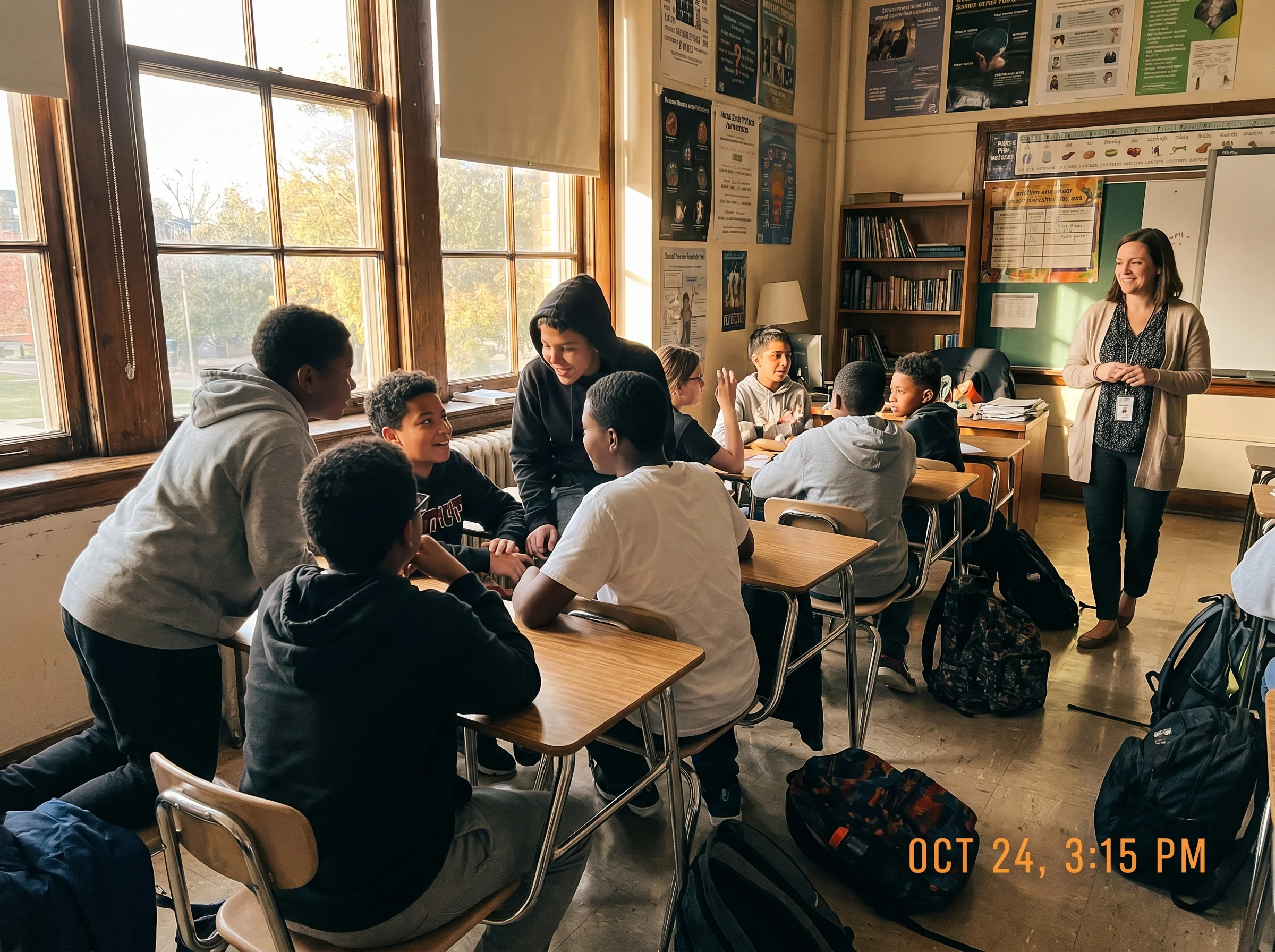
My son's 6th grade teacher runs her room this way. I knew something was different when he came home and actually quoted things from class. Not "we learned about the Civil War." Stuff like, "Mom said the South was kind of doomed economically even before the war started." He said it because he'd said it in class first. He owned the idea.
 When the silence gets awkwardPause, Play, Connect: Core Deck172 prompts that hand you the question so your kid does most of the talking.$49 CAD • 90 cards • 18 reviewsShop the deck
Why the 70/30 Rule Works (It's Not About Word Count)
Talking is how kids process. If they're just listening, they're often not absorbing, they're waiting for you to stop. When a kid says something out loud, especially something they figured out themselves, they believe it in a way they never will when we say it to them.
The silence in a 70/30 conversation does most of the heavy lifting. It feels awkward to us because we're used to filling it. But the silence is where the kid actually thinks. Research on "wait time" in classrooms shows that even three extra seconds of silence after a question dramatically changes the quality of student responses.
And that 30%? That's where you earn your keep. Good questions, well-timed follow-ups, and the discipline to not jump in with your own story or your own opinion the second they pause.
Stealing the Rule for the Dinner Table
I'm not a teacher. I'm a dad. But I've come to believe the 70/30 rule works even better at home than in a classroom, because at home there's no curriculum to cover. You're just trying to know your kid.
The shift sounds small but it isn't. Instead of reporting our day at our kids ("Work was crazy, then I had to..."), we get curious about theirs. Instead of asking yes/no questions, we ask questions that need a story to answer.
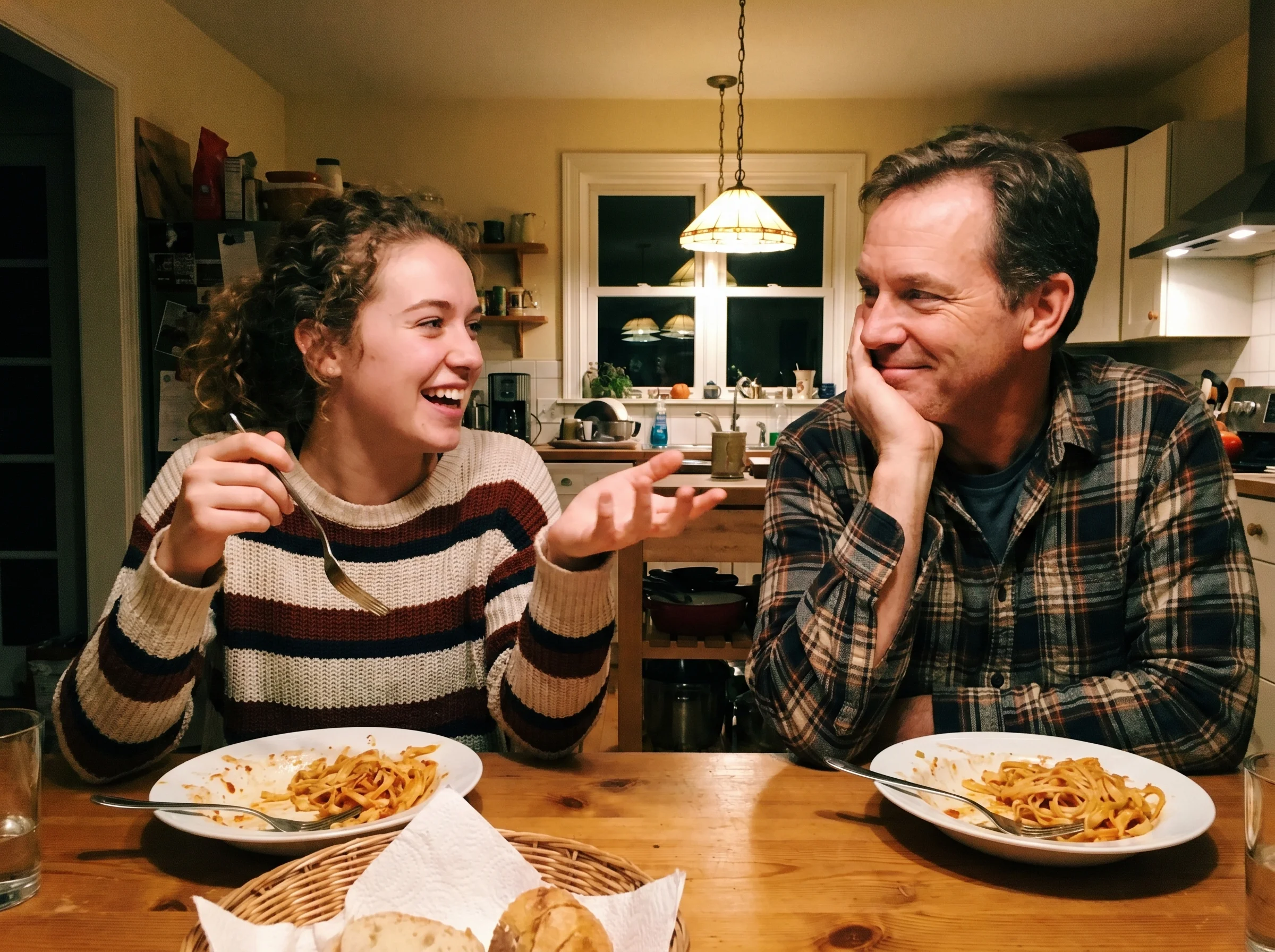
The first time I actually tried it on purpose, my daughter looked up from her pasta and said, "Are you okay? Why are you being weird?" That's how unused to listening I was. She'd noticed within about four minutes.
Expect that. Day one is awkward. Day two might be worse. Your kid has been trained, by you, that conversations with you go a certain way. Breaking that pattern takes a minute.
Your Kid Is Already a 70/30 Pro (You Just Haven't Noticed)
Here's the thing that flipped my whole brain around: kids already do 70/30 all day long. Just not with us.
Watch your kid in a Discord voice chat with three friends playing Fortnite. They're talking constantly. They're telling stories, narrating, joking, arguing about loadouts. In a group text about Minecraft? Same. They're not quiet humans. They're selectively quiet humans. And they're usually selectively quiet with us because we've trained them to be. We ask, they answer, we lecture, they tune out.
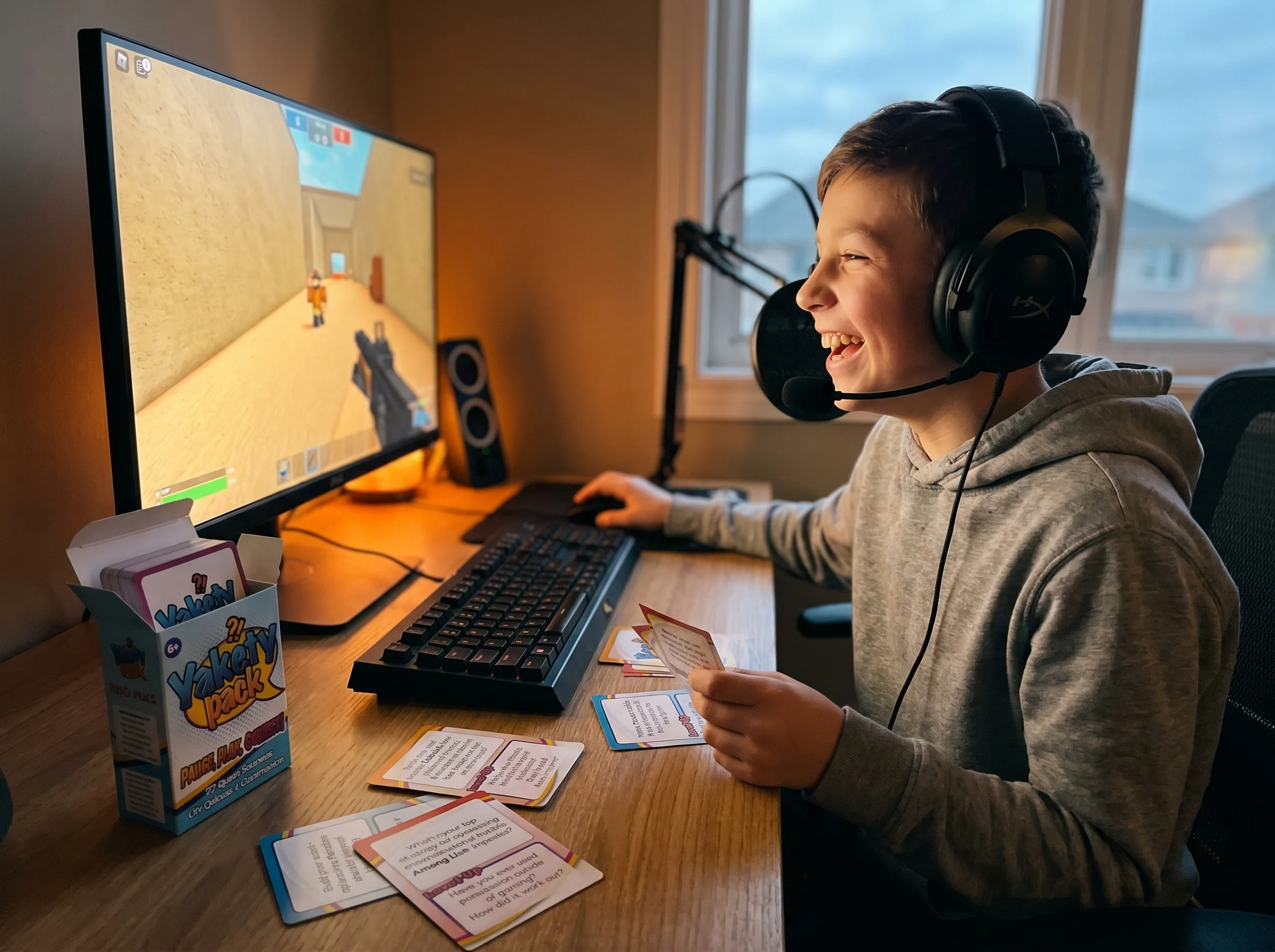
Which means gaming is actually the easiest topic on earth to get a kid into their 70%. They WANT to talk about it. They're just waiting for us to ask in a way that doesn't feel like a setup for a screen time lecture.
I learned this the hard way. For weeks I'd ask, "How was Minecraft today?" Got grunts. Then one night I asked, "What's the craziest thing that happened in your world this week?" Twenty minutes. Twenty. He told me about accidentally flooding his village, how his friend's house was underwater, how they had to mount a rescue mission for some villagers. The question mattered.
We actually built Yakety Pack because I kept fumbling that 30%. I'd freeze, ask something dumb, and lose the moment. One of the cards in the deck asks something like, "What game character would you want as a real friend, and why?" My son took that one and ran with it for ten minutes. I just nodded. (If you want more on this, here's how we use gaming questions to spark real conversations.)
 The part where you askPause, Play, Connect: Core Deck$49 CAD • 172 promptsSee the deck
What Your 30% Should Actually Sound Like
Nobody gives you the script, so here's mine.
Open questions, not yes/no. "Did you have fun?" is a closed door. "What was the best part?" is a door cracked open.
"What" and "how" beat "why." "Why" feels like an accusation to a kid. "Why did you do that?" puts them on defense. "What were you thinking when that happened?" gets you the actual answer.
Echo their last word as a question. They say, "It was wild, we flooded the village." You say, "Flooded the village?" That's it. They'll keep going. This trick is borderline magic.
Resist the fix. Do not advise. Do not compare to your childhood. Do not problem-solve unless asked. Your job in the 30% is to keep the door open, not walk through it.
The phrase that changed everything for me: "Tell me more about that." It works in basically any conversation. It signals you're actually interested, and it costs you nothing.
When the 70/30 Rule Falls Apart (And How to Recover)
It's going to fall apart. You're going to slip and start lecturing. Probably about screen time, homework, or attitude. You'll be three minutes into a monologue before you realize your kid's eyes glazed over at minute one.
Here's what saved me: just admit it, mid-sentence. "Sorry, I just hijacked that. What were you saying?"
One night I was lecturing my son about Fortnite time, the usual speech, when I caught myself. I stopped and said, "Wait, what were you trying to tell me?" He looked at me like I had three heads. Then he kept going with what he'd actually been telling me, which, it turns out, was that one of his friends was being kind of mean in the lobby and he didn't know what to do about it.
I almost missed that. Because I was too busy being right.
Kids notice when you actually listen. They also notice when you stop. The repair matters more than the slip.
Using the 70/30 Rule in Teaching Moments That Actually Matter
Here's the counterintuitive part. The harder the conversation, the LESS you should talk.
Most parents do the opposite. We sense a big topic, screen time rules, a fight with a friend, something at school, and we gear up. We come in loaded with points. We dominate the room.
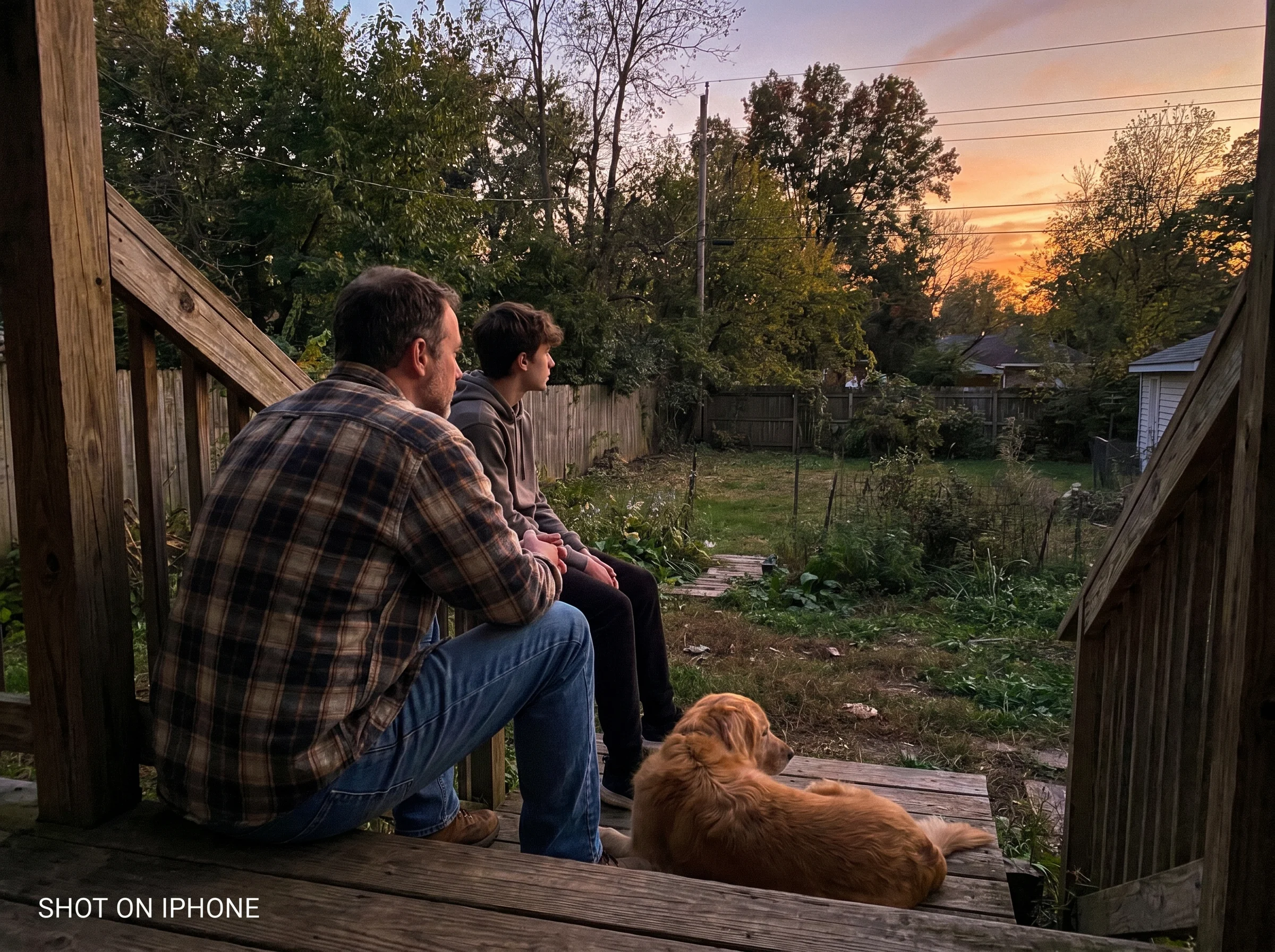
The 70/30 rule says: when it matters most, your kid needs to hear themselves think out loud. Your job is the question and the silence.
When we sat down to talk about screen time limits last year, I went in planning to announce the rules. Instead I asked, "What do you think a fair amount of gaming time on a school night is?" His answer was, honestly, pretty close to what I'd been planning to decree. But because he said it, he owned it. We've had way fewer fights about it since. (More on that approach here: how to set screen time rules without a fight.)
This is the whole reason family screen time conversations get stuck. Parents talk, kids tune out, nothing changes. Flip the ratio and something actually shifts.
One Thing to Try Tonight
Pick one meal this week. Decide before you sit down that you're going to ask one good open question and then shut up. Not interrogate. Not fix. Just ask, listen, and echo their last word back as a question whenever they pause.
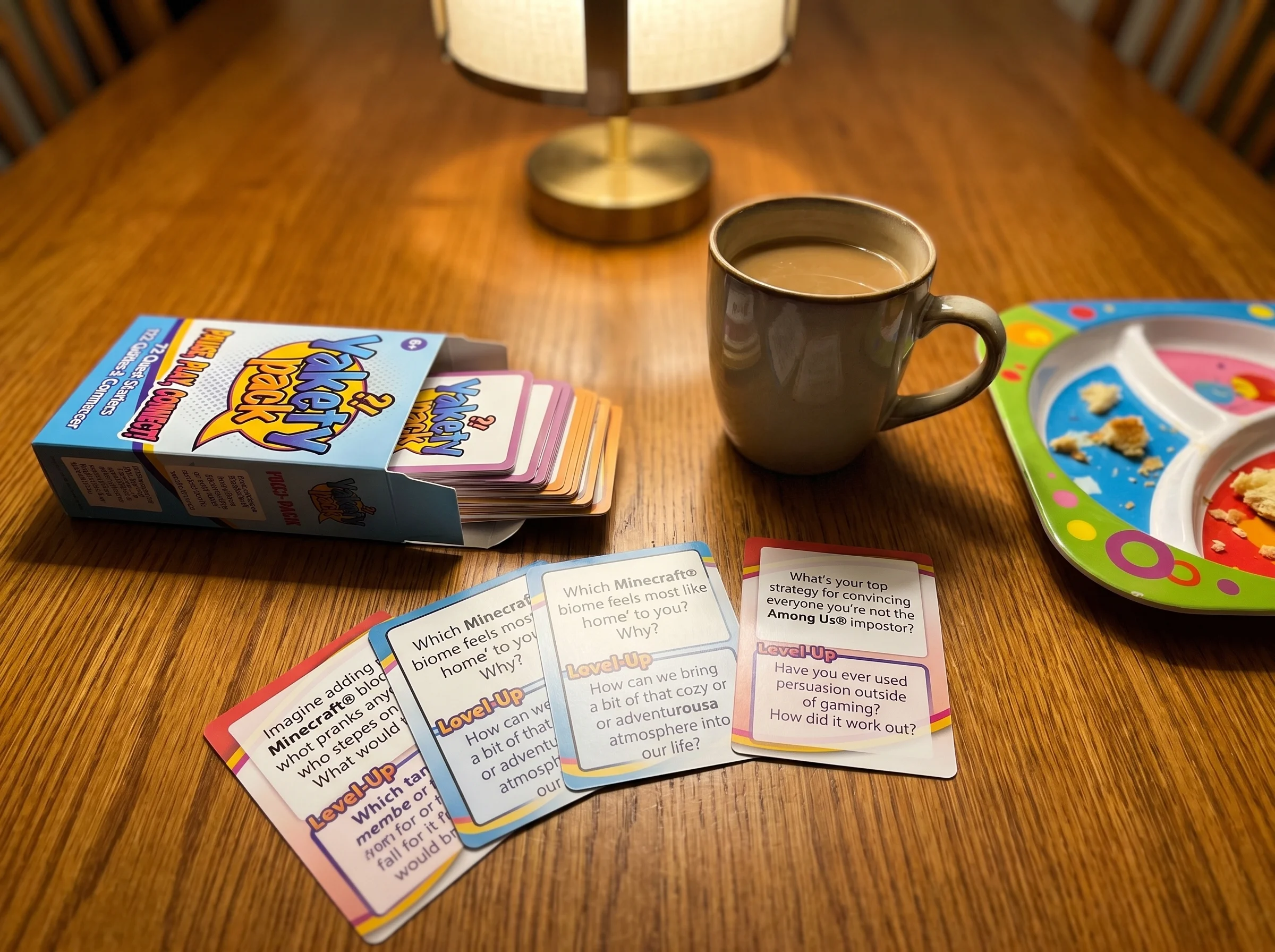
If the silence feels brutal, that's normal. If you need a little help filling your 30% with a question that actually works, that's literally why we made Yakety Pack. A card on the table beats a parent staring at a kid waiting for them to talk.
The 70/30 rule isn't a magic ratio. It's a discipline. It's you deciding to shut your mouth and trust that if you ask the right question and wait, your kid will fill the space.
They've been doing it with their friends all along. They're just waiting for you to ask the right way.

From this article
Pause, Play, Connect: Core Deck
Filling your 30 percent: The ratio is easy to preach and hard to hold at 6 pm on a Tuesday. Putting the Pause, Play, Connect Core Deck in the middle of the table does the asking so all you have to manage is the shutting up.

