
My son once spent four straight hours building a Minecraft castle without so much as a bathroom break. That same night, I tried to have a 12 minute conversation with him about screen time and lost him before I finished the intro.
I sat there afterward, genuinely confused. How does a kid who can focus on a video game until his eyes go bloodshot tune out his own dad in under three minutes? Was something wrong with him? Was it the screens rotting his brain like everyone keeps telling me?
Nope. Turns out there's a teaching rule that explains exactly what went wrong. And once I understood it, I stopped blaming my kid and started fixing my approach.
So What Actually Is the 10 Minute Rule in Teaching?
The 10 minute rule in teaching says that learners' attention drifts after about 10 minutes on the same mode of input. So good teachers change things up roughly every 10 minutes. Lecture for a bit, then ask a question. Pose a problem, then break into small groups. Direct instruction, then hands-on activity. The "input" changes, attention resets.
It got popular thanks to John Medina's book "Brain Rules", and it's been gospel in education circles ever since.
Here's the honest part most articles won't tell you: the "10 minutes" isn't some ironclad neuroscience number. It's a teaching heuristic. Real attention is way more complicated than a stopwatch. In fact, research from the Association for Psychological Science has pushed back on the idea that there's a hard cutoff at all. But as a rule of thumb? It works. Teachers who follow it have more engaged classrooms. That's the practical truth.
The mistake everybody makes is treating the rule like it's about attention capacity. It isn't. It's about engagement architecture. Big difference, and that difference is the whole game when you bring it home.
 A question you cannot predictPause, Play, Connect: Core Deck172 prompts that get your kid driving the conversation instead of waiting for you to finish.$49 CAD • 90 cards • 18 reviewsShop the deck
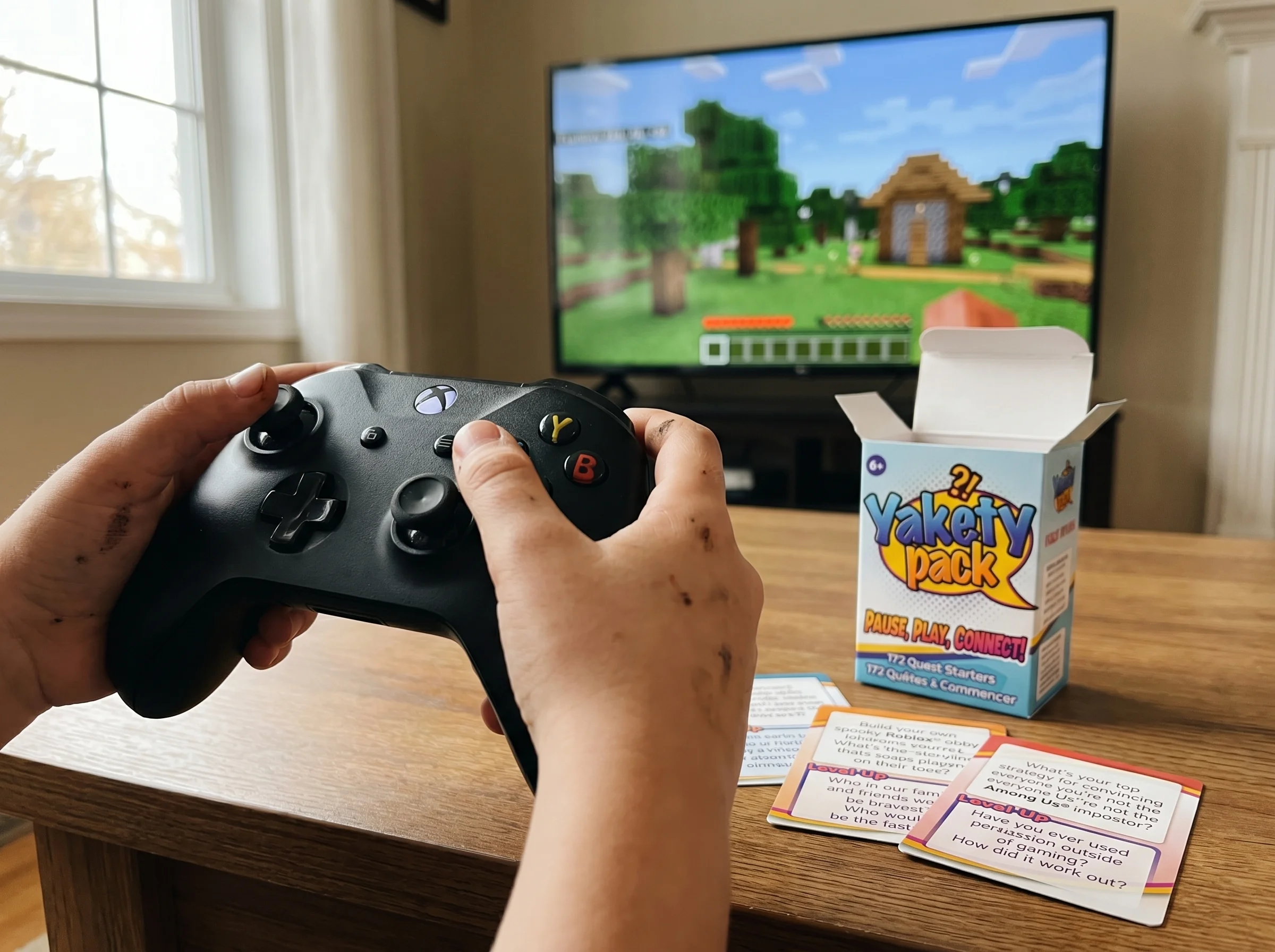
Why Your Kid Can Game for Hours But Tunes You Out in Two Minutes
Let's go back to my Minecraft kid.
Four hours of focus on a game. Two minutes of glazed eyes during my talk. Same brain, same kid, same day. What changed?
Participation.
Every few seconds in Minecraft, my son makes a choice. Mine this block or that one. Build up or dig down. Risk the creeper or run. He's getting feedback constantly. He's the one driving. The "input" isn't passive, it's a loop: action, feedback, decision, new action.
My screen time lecture? One input. Me. Talking. Forever.
He didn't have an attention problem. He had a "this experience has no participation in it" problem. The 10 minute rule isn't about how long kids CAN focus. It's about how long the same one-way input stays interesting. The answer, for most parents talking AT their kids, is way less than 10 minutes. It's closer to 90 seconds.
How Teachers Actually Use the 10 Minute Rule
In a real classroom it looks something like this: a teacher gives 8 to 10 minutes of direct instruction, then drops a question that students discuss with a neighbor for two minutes ("think-pair-share"). Then maybe a quick poll, a show of hands, a thumbs up if you get it. Then back to teaching for another chunk. Then a hands-on task.
The pivot moves are the secret. The teacher isn't covering less material, they're breaking the material into chunks with engagement loops between them. Same content, different rhythm.
Now look at the average parent-led "we need to talk" conversation. It's a 10 minute monologue with no pivots. No questions that actually invite an answer. No moments where the kid gets to drive. We'd never let a teacher get away with that. But we do it to our own kids constantly.

The Parent Translation: Why Your Dinner Table Talks Keep Failing
Here's my version of the rule for parents: if you're still doing most of the talking after 10 minutes, you've already lost them. And honestly? After 3 minutes is more realistic.
The screen time talk that went off the rails for me went something like this. I started with "We need to talk about how much time you're spending on the Xbox." Then I rolled into my prepared points about sleep, schoolwork, and balance. Around minute three, I noticed his eyes had that thousand yard stare. By minute five I was basically talking to myself.
What I should've done: said one sentence, then asked him a real question. Not "do you understand why this matters" (that's a trap question and kids know it). Something like "what do you think a fair amount of game time looks like on a school night?" Then shut up and actually listen.
A real switch, the kind that resets engagement, isn't just changing your tone or pausing for breath. It's one of these:
- Asking a question you don't already know the answer to
- Letting them choose where the conversation goes next
- Changing physical location (move to the couch, go for a walk)
- Doing something with your hands while you talk
That last one is underrated. Conversations where you're both shooting hoops, doing dishes, or driving somewhere are dramatically better than the across-the-table interrogation. Eye contact is pressure. Side-by-side is safety.
 Bring it on the walkPause, Play, Connect: Core Deck$49 CAD • 172 promptsSee the deck

Steal What Game Designers Already Know
Game designers are the world's experts at the 10 minute rule. They have to be, because if a player gets bored, they quit. There's no captive audience.
So what do they do? They build engagement loops. Every few seconds: action, feedback, reward, new choice. Every few minutes: a bigger goal completed. Every session: a sense of progress.
You can import this into a conversation. Instead of "tell me about your day" (vague, no hook, predictable), try "what's the weirdest thing that happened in your game today?" That's a hook. Specific, invites a story, gives them the wheel. Then your job is to react, ask one follow up, and let them keep going.
I learned this when I changed my Minecraft question from "how was Minecraft today" (got a grunt) to "what's the craziest thing that happened in your world this week?" Got 20 minutes about how he accidentally flooded his village. Twenty minutes. Unprompted.
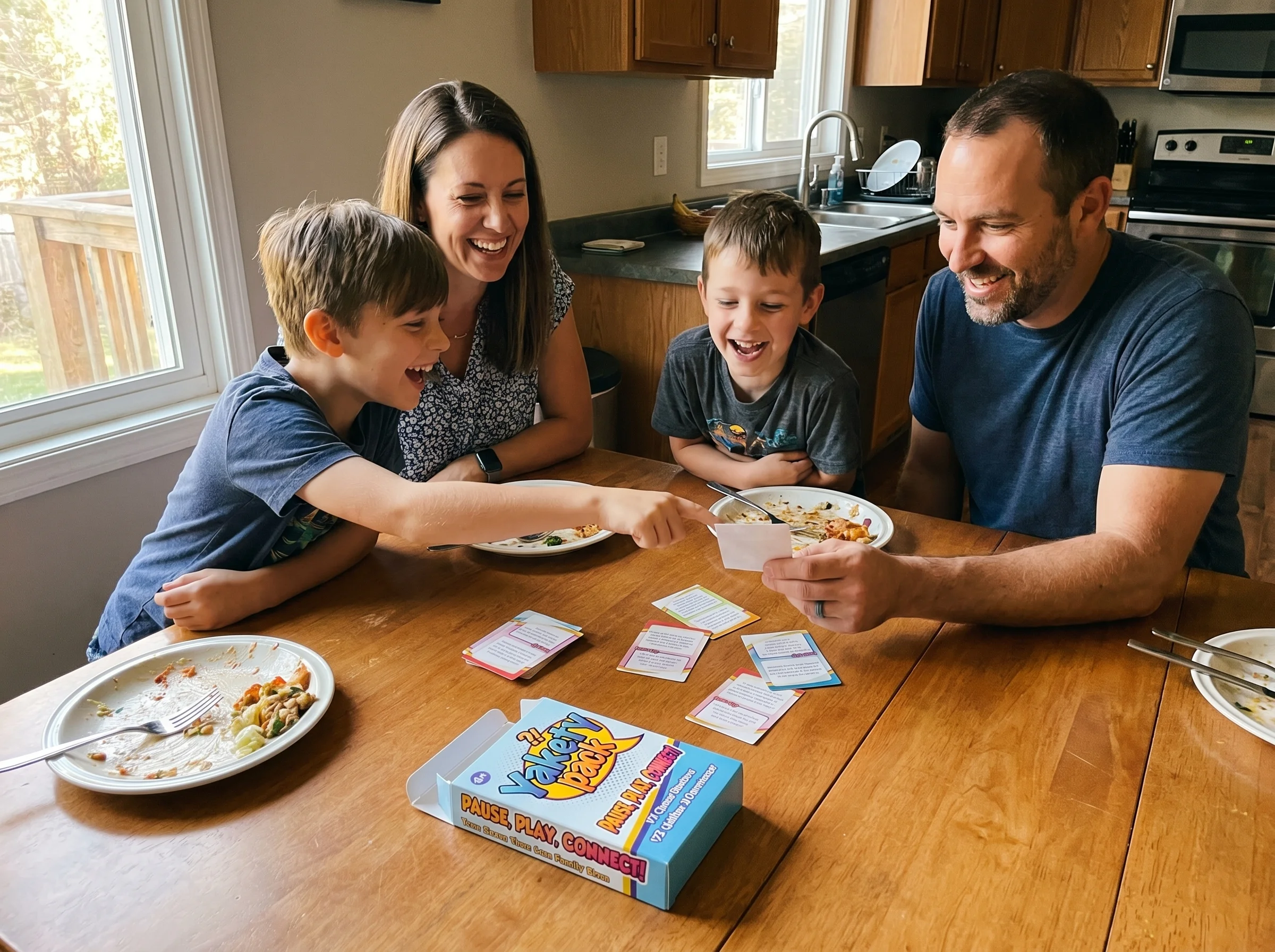
That's actually the whole reason we built Yakety Pack the way we did. Each card is basically one good question, the kind that opens a loop instead of closing it, and then space for the kid to take it wherever they want. It keeps things under that 10 minute fatigue line because they're driving, not us. We stopped designing conversation cards like surveys and started designing them like game prompts.
What to Do When You've Got More Than 10 Minutes of Stuff to Say
Sometimes you genuinely have a lot to cover. New rules, a hard situation, a big decision. Here's what works:
Break it into chapters. Don't try to land it all in one sitting. "Hey, I want to talk about three things. Let's do one tonight and the others later this week." That's not weakness, that's strategy.
Use questions as pivots. Every couple of minutes, hand them the mic. "What's your take on that?" "Does this match what you're seeing?" "What would you do?" Real questions, not rhetorical traps.
Walk and talk. Movement resets attention. So does being side-by-side instead of face-to-face. Some of my best conversations with my kids happened in the car when I deliberately said nothing for the first five minutes.
Give yourself permission to pause. The conversation doesn't have to finish the topic. "Let's both think about this and pick it up tomorrow" is a power move, not a cop-out.
Does the 10 Minute Rule Even Work With Teenagers?
Honest answer: with teens, you've probably got 5 minutes, not 10. Maybe less if you open with "we need to talk."
The biggest unlock for me with my older kid wasn't a technique, it was a format change. Face-to-face talks were brutal. But playing a co-op game together? He'd talk for an hour. No eye contact, low pressure, side-by-side, something to do with our hands. The conversation happened in the gaps between rounds, and those gaps were gold.
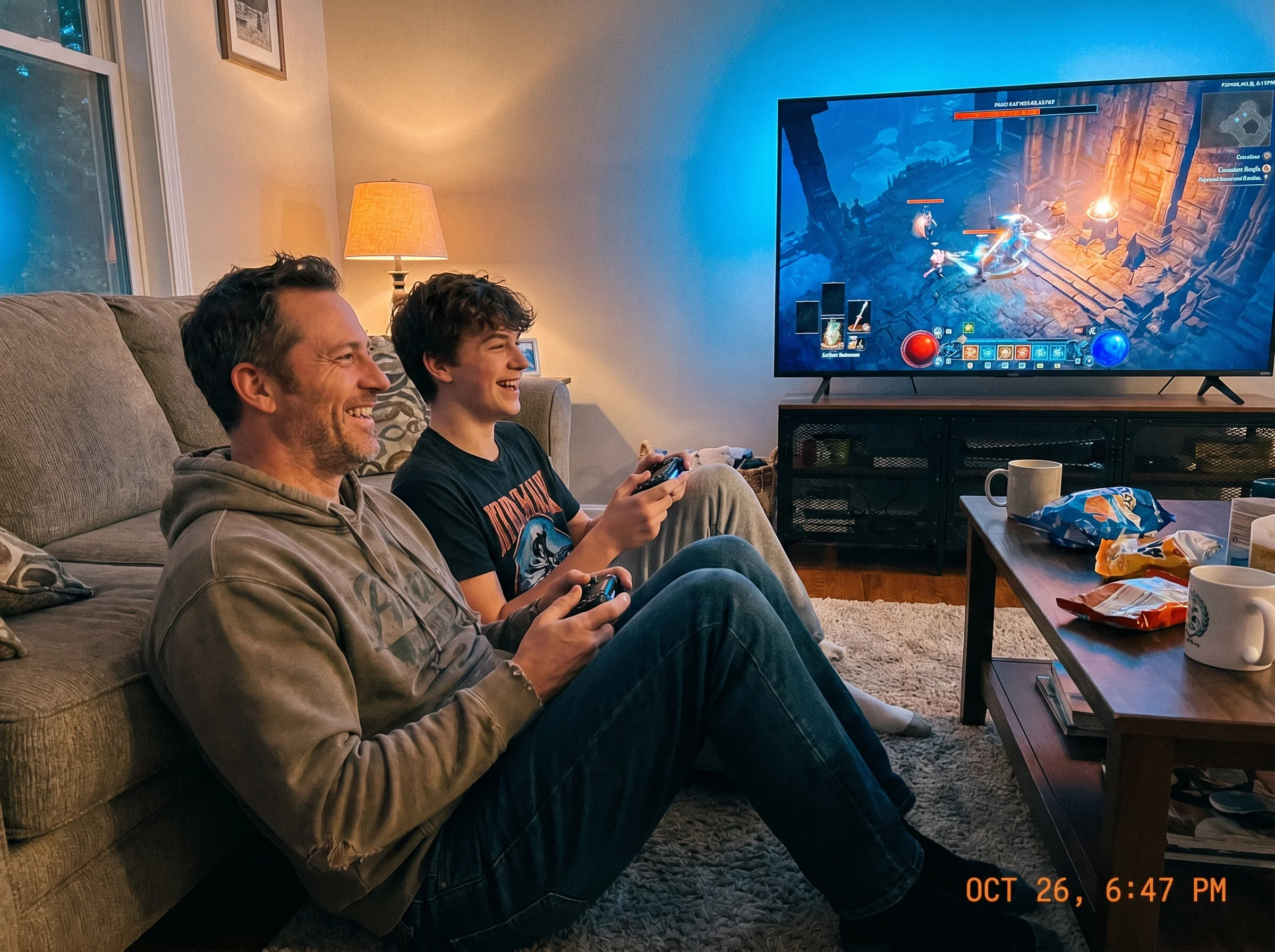
If you're parenting a teenager, stop scheduling "talks." Start finding shared activities. Car rides, walks, gaming together, cooking. The 10 minute rule still applies, but the 10 minutes happen inside an activity, not as the activity.
The One Thing to Try This Week
Pick one conversation you've been meaning to have. Write down the first question you'll ask. Make it specific, real, and one you don't already know the answer to. Then promise yourself you won't talk for more than 90 seconds before handing the wheel back.
That's it. That's the whole experiment.
Here's a question for you to sit with: what's the longest your kid has ever talked to you uninterrupted, and what were they doing while it happened? Whatever the answer is, that's your clue. Build more conversations that look like that, and you'll never need a stopwatch.

From this article
Pause, Play, Connect: Core Deck
Beating the 90-second limit: The rule says change the input before attention dies, and a card your kid flips over does that better than another sentence from you. The Pause, Play, Connect Core Deck hands them the wheel, which is the whole trick.

