
A few years ago, my son came home from school and casually mentioned his teacher kept talking about "the 5 C's." I nodded along like any self-respecting dad does when his kid drops a phrase he's never heard before. Then I went to my office, closed the door, and Googled it.
Turns out, the 5 C's are everywhere in education circles. And once I figured out what they actually meant, something clicked. These weren't just classroom buzzwords. They were the exact framework I'd been missing for talking to my kid about the stuff he actually cared about. Mostly video games.
If you've ever sat across from your kid at dinner, asked "how was your day?", and gotten a one-syllable answer, this article is for you. The 5 C's work way better at your kitchen table than they do in a classroom. Let me show you why.
So What Are the 5 C's of Teaching, Really?
Here's the plain English version:
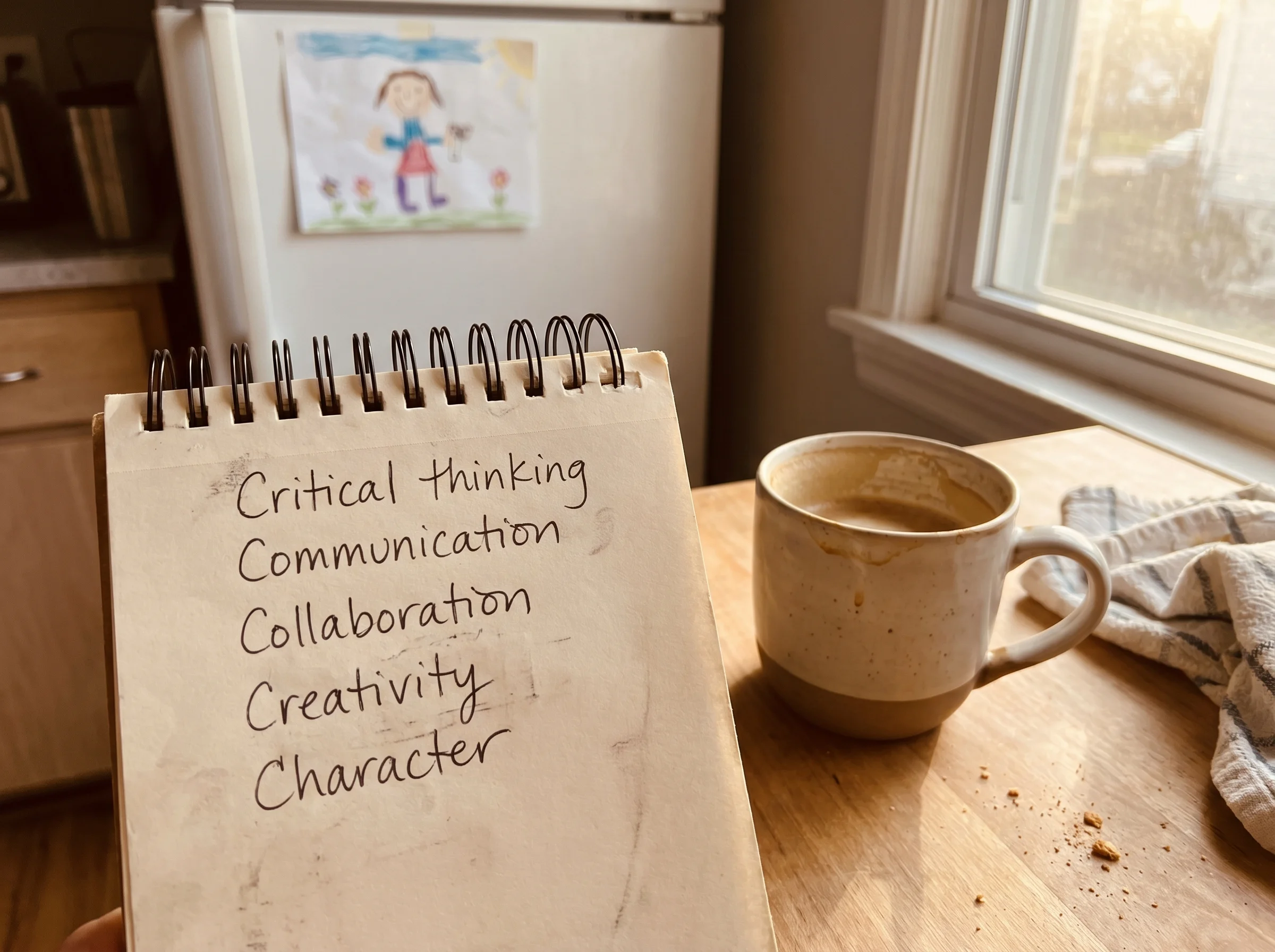
- Critical thinking - making sense of information and decisions
- Communication - sharing ideas clearly, both ways
- Collaboration - working with other people
- Creativity - making something new
- Character - being a decent human being
That's the most common version. But if you Google around, you'll see articles swap "Character" for "Citizenship," or toss in "Curiosity" or "Connection." Everyone picks their favorite five and acts like the others don't exist. Organizations like the Partnership for 21st Century Learning have been pushing similar frameworks for years, which is part of why you see them everywhere now.
I'll save you the debate. After living with these for a few years, here's my actual take: Connection is the secret sixth C, and it has to come first. You can't teach a kid critical thinking if they feel judged every time they open their mouth. You can't model communication if you refuse to communicate about the thing they care most about. Without connection, the other four collapse.
I'll come back to that. Let's walk through them.
 When you freeze upPause, Play, Connect: Core Deck172 prompts that give you something specific to ask when your mind goes blank at dinner.$49 CAD • 90 cards • 18 reviewsShop the deck
Critical Thinking (or: How to Stop Lecturing and Start Asking)
Critical thinking at home doesn't look like a worksheet. It looks like a question that makes your kid pause and actually think.
Here's a swap that changed everything for me. Instead of saying "that game is a waste of time," I started asking, "what's the smartest decision you made in that match?"
Different planet. The first one ends the conversation. The second one starts a TED talk.
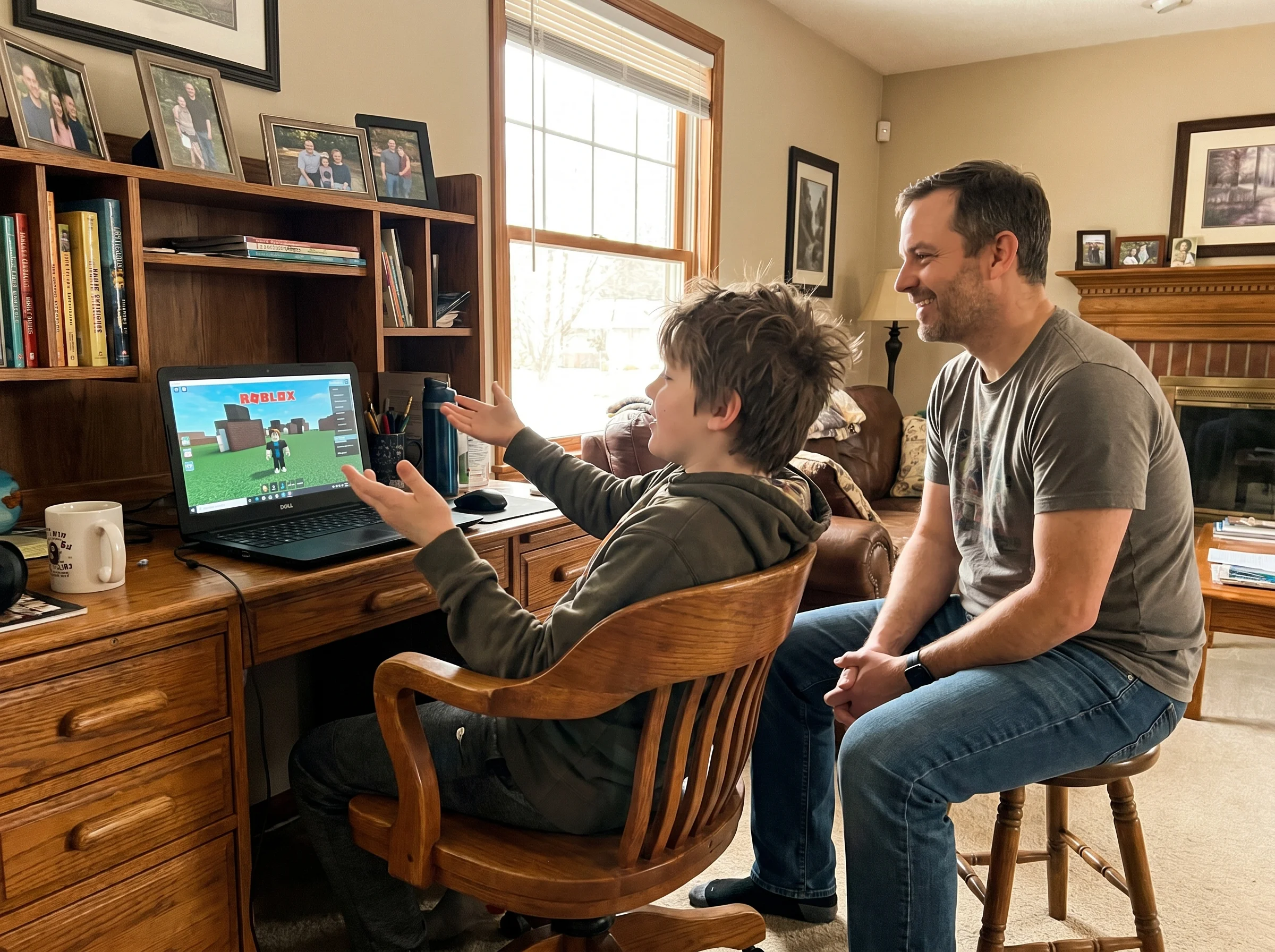
One night my son was playing Roblox and I asked him how trading worked in the game. He spent forty minutes explaining supply and demand, scarcity, how he watched the market for a few days before unloading an item, why certain colors of a hat were worth more. I sat there realizing my eleven-year-old was doing economics I didn't touch until college. He'd been doing it for months. I just never asked.
Critical thinking is already happening in your kid's life. Your job isn't to install it. Your job is to notice it and ask better questions.
Communication (The C Most Parents Get Wrong)
The grunt problem is real. "How was school?" gets you "fine." "How was practice?" gets you "okay." We blame the kids, but the questions are the problem.
Yes/no questions get yes/no answers. Vague questions get vague answers. Specific, weird, curious questions get stories.
I tried asking my son "how was Minecraft today?" for weeks. Got grunts. Then I asked, "what's the craziest thing that happened in your world this week?" He talked for twenty minutes about accidentally flooding his entire village because he misplaced a single water bucket. He laughed. I laughed. I learned more about him in that conversation than I had in the previous month.
That moment is actually why we built Yakety Pack. I had all the right intentions and none of the right questions. I'd freeze. The cards we made are full of prompts like "What game character would you want as a friend, and why?" It's not really about gaming. It's about getting in.
The point is: communication is a skill, and the parent has to practice it too.
Collaboration (Your Kid Is Already an Expert)
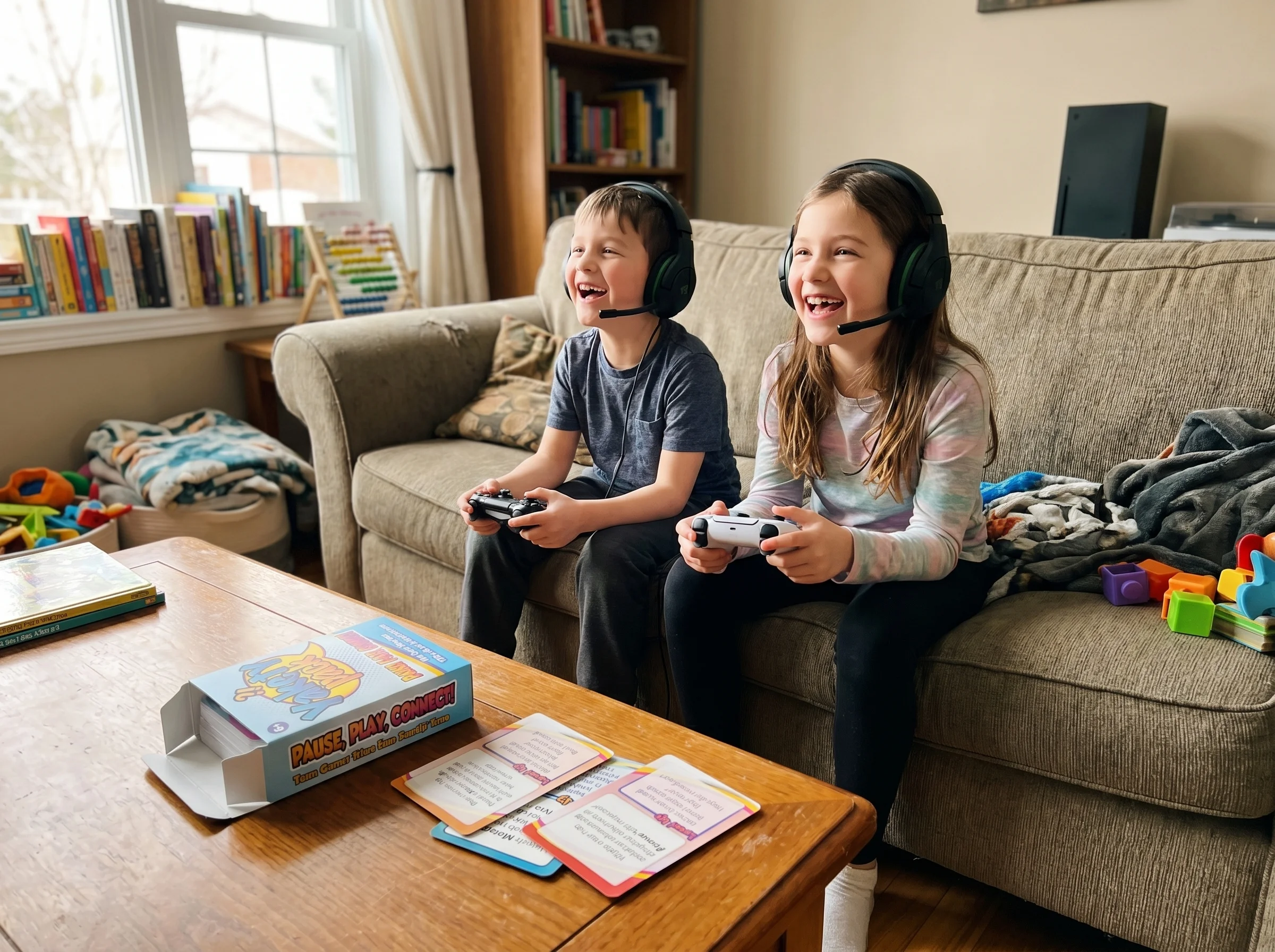
If your kid plays Fortnite, Valorant, Roblox, or any squad-based game, they're getting more collaboration reps in a week than most adults get in a month. They're coordinating with strangers, dividing roles, calling out information under pressure, dealing with someone who quits in the middle of a match.
That's collaboration. It's just wearing a hoodie. Research from the American Psychological Association has even pointed to the social and cooperative benefits of multiplayer games, something most parents never hear about.
The trick is to ask about it without sounding like you're conducting an investigation. Try: "Who's the easiest person on your squad to play with? Why?" Or, "Who's the hardest? What do they do?"
You're not snooping. You're learning how your kid thinks about teamwork. That's gold.
Creativity (Stop Calling It a Waste of Time)
Minecraft. Roblox. Modding. Fanfiction. YouTube edits. Lego. These are all creativity. Just because it lives on a screen doesn't make it less real than a kid with a paintbrush.
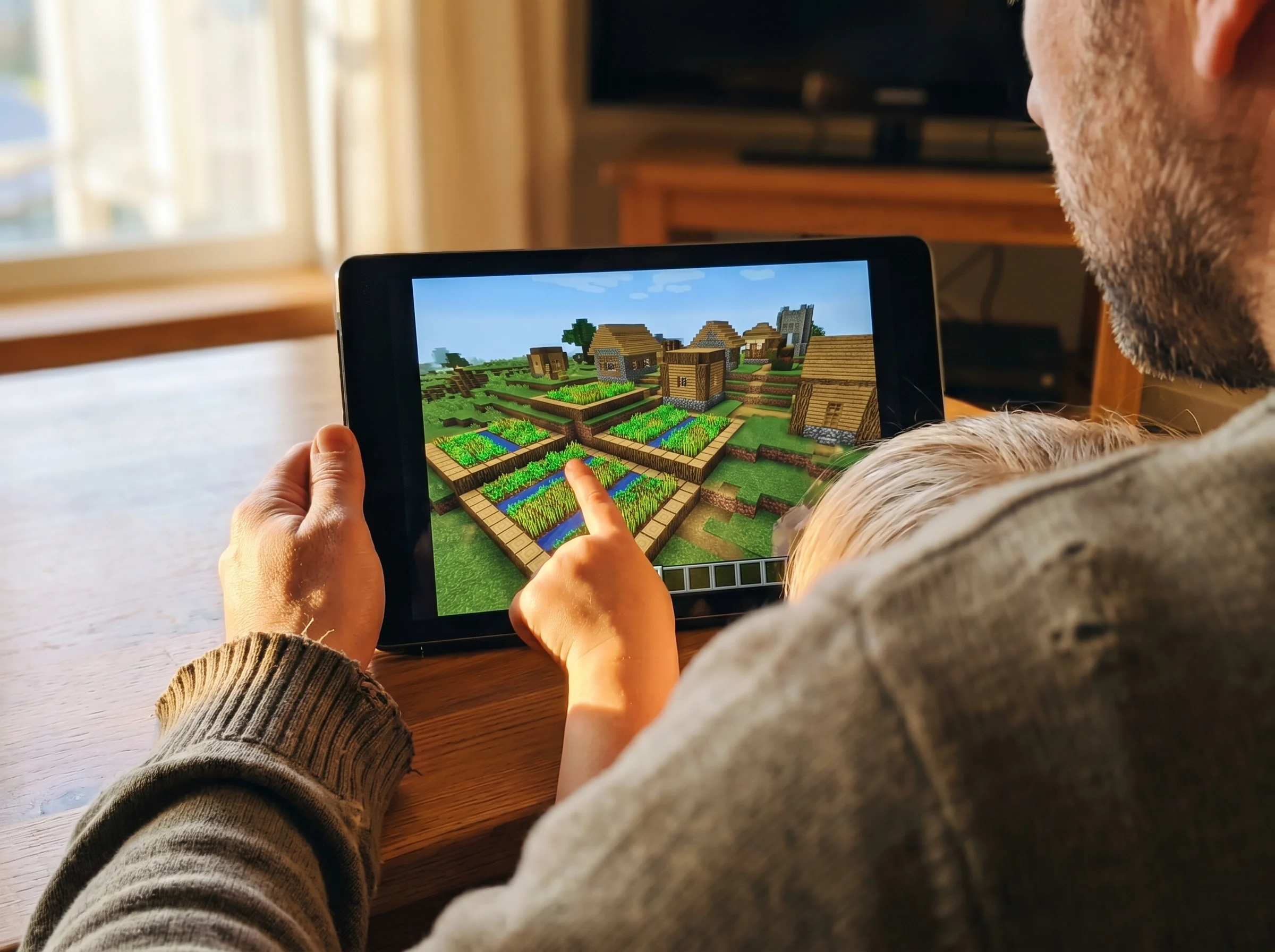
One Saturday I asked my son to actually show me his Minecraft world. He spent an hour walking me through it. He'd built an irrigation system. An automated farm. A whole village with named NPCs. He'd thought through water flow, redstone logic, defenses against mobs.
I had been calling it "the game" for two years. It was a project. A long, ongoing, deeply creative project. I just hadn't bothered to look.
Creativity is the easiest C to honor. You just have to see it.
 For the hour-long tourPause, Play, Connect: Core Deck$49 CAD • 172 promptsSee the deck
Character (The One That Actually Worries Parents)
Here's where most parents want to start. Character. Values. Being a good person. I get it. It's the C that keeps us up at night.
But here's what I learned the hard way: character lessons land best when the other C's have built trust first. If you lead with character lectures, your kid tunes out before you finish the first sentence. If you've spent six months actually being curious about their world, a small comment about how they treated a teammate carries real weight.
Also, real talk: kids learn character from watching us. How we talk to the people in the drive-thru. How we handle our own screen time. Whether we put the phone down when they walk in the room. That stuff teaches more than any speech.
The Hidden C: Connection
None of this works without connection. Connection isn't a Saturday morning sit-down talk. It's a habit. Small moments, repeated.
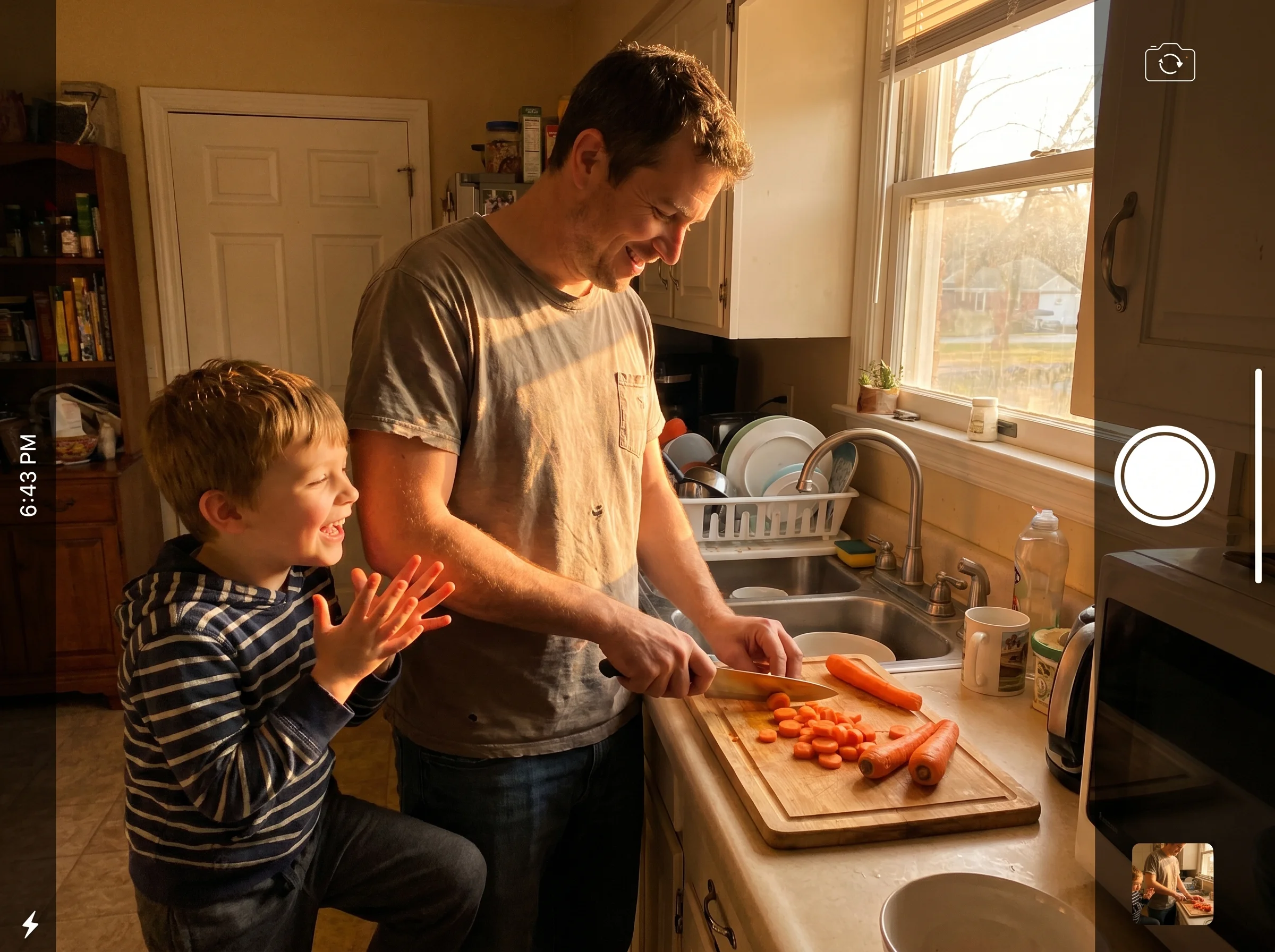
Ten seconds of "tell me about your build" while you're making dinner beats a forty-minute lecture every time. A question in the car beats a family meeting. Connection is daily reps, not occasional events.
If you're only going to take one thing from this article, take this: get curious about the thing your kid loves before you try to teach them anything. The teaching gets easier once they feel seen.
How This Fits With the Other Rules
If you've been reading around this topic, you've probably bumped into the 10 minute rule or the 70/30 rule. Those are great. The 5 C's are the WHAT you're trying to build. Those rules are the HOW MUCH and the WHEN. They work together. The 5 C's tell you what conversation to have. The other rules tell you how to pace it.
One Thing to Try Today
Pick the Communication C. Tonight, ask your kid this exact question: "What's the craziest thing that happened in your game this week?"
Then shut up and listen. Don't correct. Don't judge. Don't pivot to homework. Just listen.
That's it. That's the whole assignment. Do that for a week and tell me your kid doesn't open up. The American Academy of Pediatrics has solid resources on family media habits too, if you want more reading after you try it.
If you want help with the questions, that's exactly what we built Yakety Pack for. And if you want the bigger picture on how all of this fits together, check out our pillar piece on family screen time conversations. The 5 C's are one piece. The conversation is the whole game.

From this article
Pause, Play, Connect: Core Deck
Practicing the Communication C: Knowing the framework is one thing, having a good question ready when your kid wanders into the kitchen is another. I keep the Pause, Play, Connect Core Deck on the counter for exactly those ten-second openings.

