
I used to think "gamification" was a buzzword marketers invented to sell apps with cartoon mascots and progress bars. Then one Tuesday night, my son skipped dinner because he was "three blocks away" from finishing a Minecraft build. Not three city blocks. Three Minecraft cubes. And it hit me: there are four very specific things hooking him to this game, and once I figured out what they were, I finally had a way into his world.
That's what this article is about. Not the corporate version of gamification. The parenting version. So if you've ever wondered what are the 4 pillars of gamification and why they matter for your kid, stick with me.
So What Actually Are the 4 Pillars of Gamification?
The 4 pillars of gamification come from Jane McGonigal's work (she's a game designer and researcher who basically wrote the foundational stuff on this). She boiled games down to four essential ingredients:
- A Goal
- Rules
- A Feedback System
- Voluntary Participation
That's it. Strip away the graphics, the characters, the storylines, and every game from chess to Fortnite has these four things.
Now, you're going to see a lot of articles online telling you the four pillars are "points, badges, leaderboards, and rewards." Ignore those. Those are tactics, not pillars. They're decorations on the cake. The pillars are the cake.
You might also see Yu-kai Chou's "8 Core Drives" framework. That's a different (more complex) model that's useful for game designers. McGonigal's four pillars are the cleaner lens for what we're doing here, which is understanding our kids.
My first assumption was that gamification = rewards. I was wrong. Rewards are a feedback mechanism, not the engine. The engine is the four pillars working together. Once I understood that, my kid's behavior started making a lot more sense.
 Get them explaining itPause, Play, Connect: Core Deck172 prompts that get your kid describing their game instead of shrugging at the dinner table.$49 CAD • 90 cards • 18 reviewsShop the deck
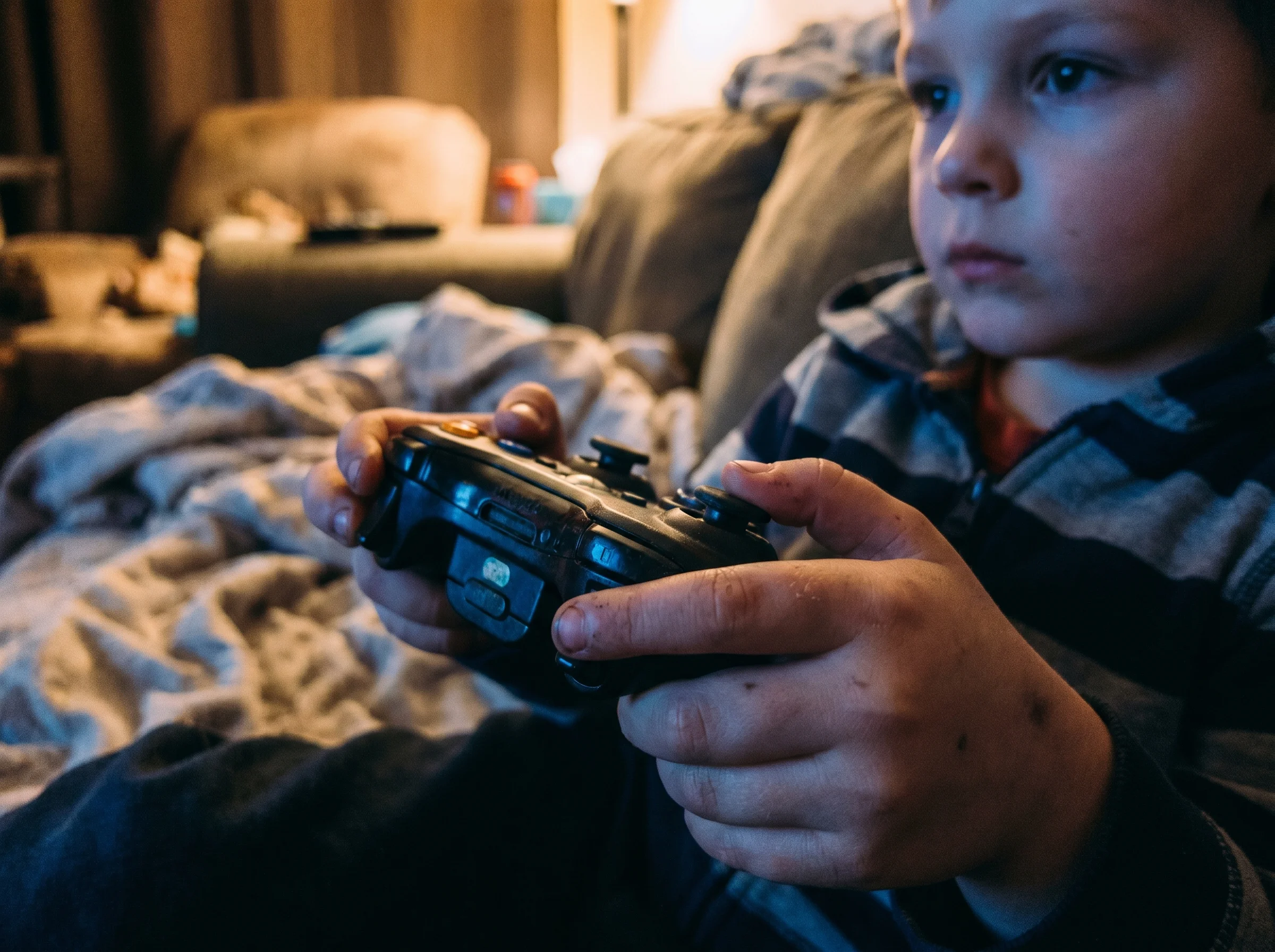
Pillar 1: Goals (And Why Your Kid Will Grind for Hours)
A goal in a game is crystal clear. Defeat the dragon. Build the castle. Reach level 50. There's no ambiguity. Your kid knows exactly what "done" looks like.
Compare that to "clean your room." What does done look like? Vacuumed? Or just clothes off the floor? Books stacked? In what order? When a kid stares at their room, they don't see a goal. They see fog.
Games never have fog.
Here's what's interesting though: the kind of goals your kid picks tells you a lot about them. My son told me his current Minecraft goal was building a working roller coaster. I asked him how he was figuring out the physics. Twenty minutes later, I had heard about minecart momentum, powered rails, and gravity drops. This was the same kid who once told me science was "boring."
Try this: ask your kid what their current goal is in whatever game they're playing. Then ask why they picked that goal. Creative? Competitive? Collaborative? You'll learn more about them in five minutes than from a month of report cards.
Pillar 2: Rules (The Constraints That Make Creativity Possible)
Games are stuffed with rules. You can't fly in survival mode. You can't break bedrock. You can't carry more than 64 of something in a stack. And kids will follow these rules with the precision of a tax attorney.
My nephew, the same kid I cannot get to brush his teeth without a hostage negotiation, explained the rules of his Roblox game to me last summer in extraordinary detail. He knew every constraint, every workaround, every exception. He loved it.

Why? Because rules in games feel earned, not arbitrary. They create the puzzle. Without rules, there's no challenge. Without challenge, there's no satisfaction.
Real life rules often feel random to kids. "Because I said so" is the opposite of a game rule. Game rules are transparent: you can see them, test them, and understand exactly how they shape what's possible. That's not a constraint. That's a creative playground.
If your kid loves the rules in their game (talks about systems, mechanics, "how things work"), you've probably got a systems thinker on your hands. That's a real skill. Engineers, programmers, lawyers, and game designers all live in that headspace.
 Better than how was schoolPause, Play, Connect: Core Deck$49 CAD • 172 promptsSee the deck
Pillar 3: Feedback (The Real Reason Games Are "Addictive")
This is the big one. Games give you feedback in seconds. You jump, you land or you don't. You shoot, you hit or you miss. You level up, you hear a ding. You see a progress bar fill.
School gives feedback in weeks. Parenting gives feedback in years. Games give it in milliseconds.
I asked my son once why he liked a game I personally found boring. He said, "Because I always know how I'm doing." That sentence has stuck with me for two years. It's the whole thing, right there.
This isn't manipulation. It's how brains learn. Tight feedback loops are how kids master skills. It's why a kid who "can't focus" in math class can focus for four hours on a game that's arguably more cognitively demanding.

Here's the honest part nobody says: this is also why games are hard to put down. The feedback loop is so tuned, so satisfying, that walking away feels physically uncomfortable. That's not a moral failing on your kid's part. That's neurochemistry. Knowing this changes how you handle screen-time conversations. It's not "why can't you just stop?" It's "yeah, that's designed to be hard to stop, and we need a plan."
Pillar 4: Voluntary Participation (The One Parents Miss)
This is the pillar that almost every article about the 4 pillars of gamification skips, and it's the most important one for parents.
Nobody is forcing your kid to play. They chose it. They opened the game. They picked the world. They invited their friend. The whole thing is voluntary, from start to finish.
The moment you make a game mandatory, it stops being a game.
This is why "gamified" homework apps almost always fail. They slap points and badges on top of something the kid is being forced to do. The pillars of goals, rules, and feedback are there, but voluntary participation is missing. So it's not a game. It's a chore with confetti.
For parenting, this is huge. Kids need to feel chosen-in, not coerced. When you can find ways to let your kid opt in (to chores, to family time, to learning), you're tapping into the same energy that fuels a 200-hour Minecraft world.
Using the 4 Pillars as a Decoder Ring for Your Kid
Here's where this gets useful. Once you know the four pillars, you can start to see which one hooks your kid hardest. And that tells you something real about who they are.
- Goal-driven kid? Ambitious, completionist, loves a checklist. Probably crushes school when the assignment is clear.
- Rules-loving kid? Systems thinker. Will probably love coding, debate, or anything with mechanics.
- Feedback-craving kid? Needs to see progress. This is huge info for school. If they're not getting feedback fast enough, they'll check out.
- Voluntary-pillar kid? Autonomy is their oxygen. They will fight coercion to the death. Give them choices and they'll move mountains.
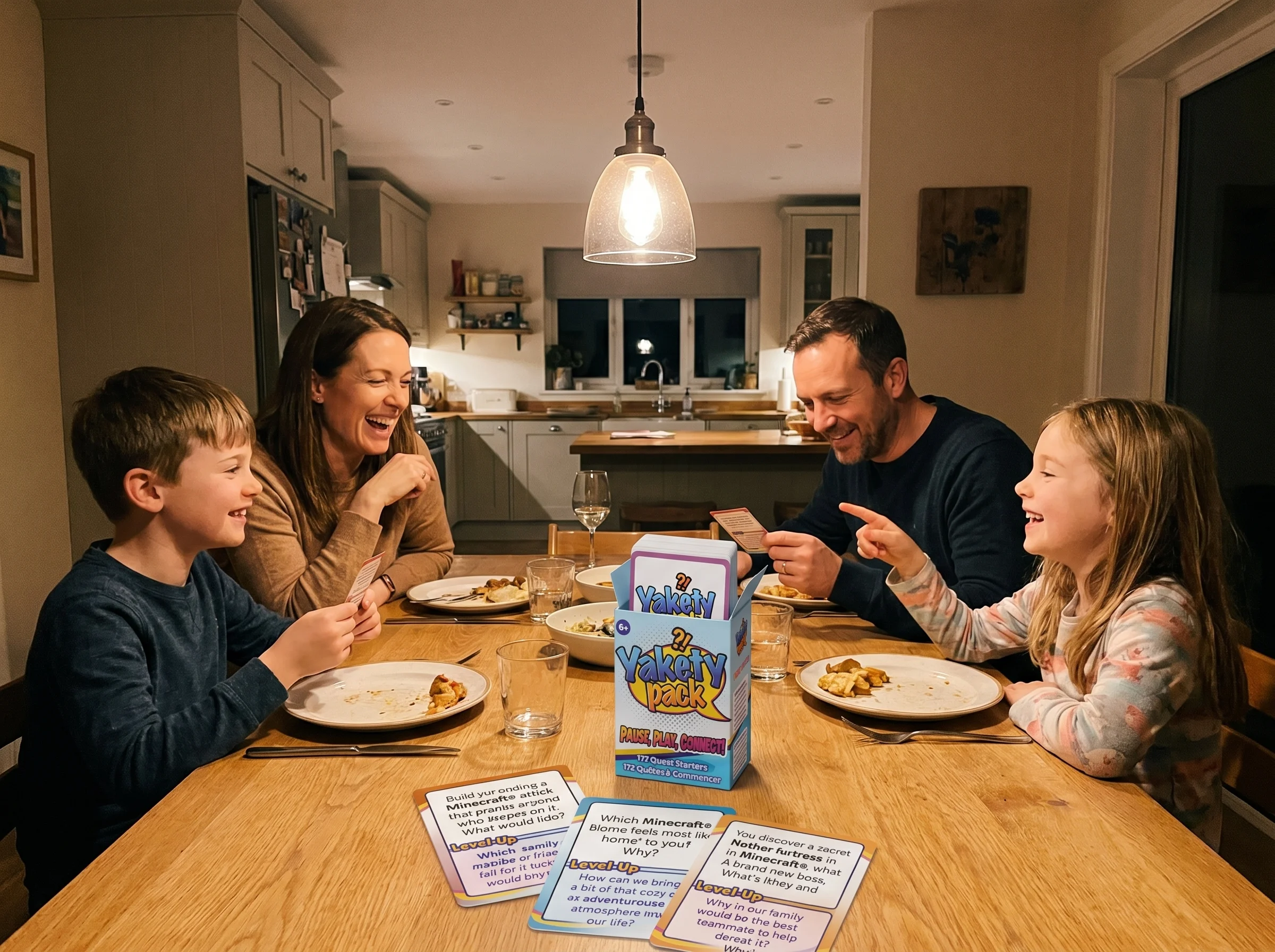
This is the conversation worth having at dinner. Not "how was school?" but "what's the most interesting rule in your game right now?" or "what's the hardest goal you've set for yourself this week?"
I built Yakety Pack with my co-founder because I kept asking my son the wrong questions and getting grunts. One of our cards asks something like "what's a game rule you'd change if you could?" The first time I asked him that, he talked for fifteen minutes. It's not about getting kids off screens. It's about hearing them think. If you want more on this, here's our take on turning gaming into a conversation starter.
Can You Use These Pillars in Real Life?
Yes, with a giant caveat.
You can borrow from gamification. Clear goals work. Fast feedback works. Letting kids choose helps. But you can't fake it.
Kids smell a chore-chart-with-stickers from a mile away. I know because I tried it. I made a beautiful little chart with points and rewards and weekly tiers. It worked for two weeks. Then my son figured out he could just say "no thanks" and the whole system collapsed because, surprise, voluntary participation is the pillar you can't fake.
If you force it, it dies. Every time.
What does work: making goals genuinely clear ("the room is clean when these five things are true"), giving feedback fast ("hey, that thing you did this morning, that was great"), and offering real choices, not fake ones. "Do you want to do homework now or after dinner?" beats "do your homework" every time, because it preserves a tiny bit of voluntary participation.
The Bigger Picture
Understanding gamification isn't about copying it. It's about understanding what your kid is experiencing every time they pick up a controller.
When you know the four pillars, screen time stops being a battlefield and becomes a starting point. You stop asking "did you have fun?" and start asking "what's your goal right now?" You stop fighting the game and start learning from it.
And once you start seeing the pillars at work, the next question naturally becomes: what is my kid actually learning from all this? That's a whole other rabbit hole, and it's the one we cover in our pillar piece on measuring learning outcomes from gaming. Worth a read when you're ready.
Tonight, though, try this. Ask your kid which of the four pillars sounds most like them. Goal, rule, feedback, or choice. Their answer might surprise you. Mine did.

From this article
Pause, Play, Connect: Core Deck
Putting the decoder to work: Knowing which pillar hooks your kid only pays off when you actually ask about it, and inventing the question is the hard part on a tired weeknight. The Pause, Play, Connect Core Deck puts those questions on the table ready to go.

