
For about a year, every conversation I had with my son about Fortnite ended one of two ways. Either he shut his laptop and walked out of the room, or I raised my voice and he shut his laptop and walked out of the room. I kept using the openers I'd read in parenting articles. "Can we talk about your screen time?" "How do you feel about how much you're gaming?" I might as well have been reading him his Miranda rights.
The turnaround didn't happen because I found a better script. It happened because I stopped trying to talk about screen time and started asking about the game itself. Once he believed I was actually interested in his world instead of just trying to shrink it, the whole tone shifted. Screen time negotiations went from screaming matches to actual back-and-forth conversations, because we'd finally built a bridge worth walking across.
If you're looking for screen time negotiation conversation starters with tweens that don't get met with a shrug or a slammed door, here's what actually worked for me. Fair warning: some of it is questions. A lot of it is what to do before and around the questions, which is the part nobody talks about.
Why Most Conversation Starters Fail With Tweens
Tweens have a superpower. They can smell an agenda from three rooms away. The second you sit them down with that particular voice, the one that says "this is a Talk," their nervous system locks up and you get grunts and shrugs no matter how good your opener is.
Most "conversation starters" you'll find online aren't questions. They're verdicts wearing a question mark. "Don't you think two hours is a lot?" isn't a question. "How do you feel about your device use?" is a therapist ambush. No 11-year-old on Earth answers that honestly.
Here's the developmental piece nobody mentions: autonomy is oxygen for a 9-to-12 year old. Everything in their brain is telling them to figure out who they are outside of you. Research from the American Academy of Pediatrics has been pointing to this for years: the goal isn't rigid limits, it's conversation and modeling. When your first move is a question designed to steer their behavior, they'll fight the steering even if they agree with where you're headed.
The first time I sat my son down and said "we need to talk about your gaming," I watched his face go blank in about 1.5 seconds. I sounded like a boss firing an employee. He knew it. I knew it. Nothing useful happened for the next 40 minutes.
 Openers that do not ambushPause, Play, Connect: Core Deck172 prompts that give you something to ask a tween who can smell an agenda.$49 CAD • 90 cards • 18 reviewsShop the deck

The Homework You Have to Do First
You can't ask good questions about a world you refuse to learn about. This is the part I skipped for way too long.
Before any of these conversation starters will land, do three things:
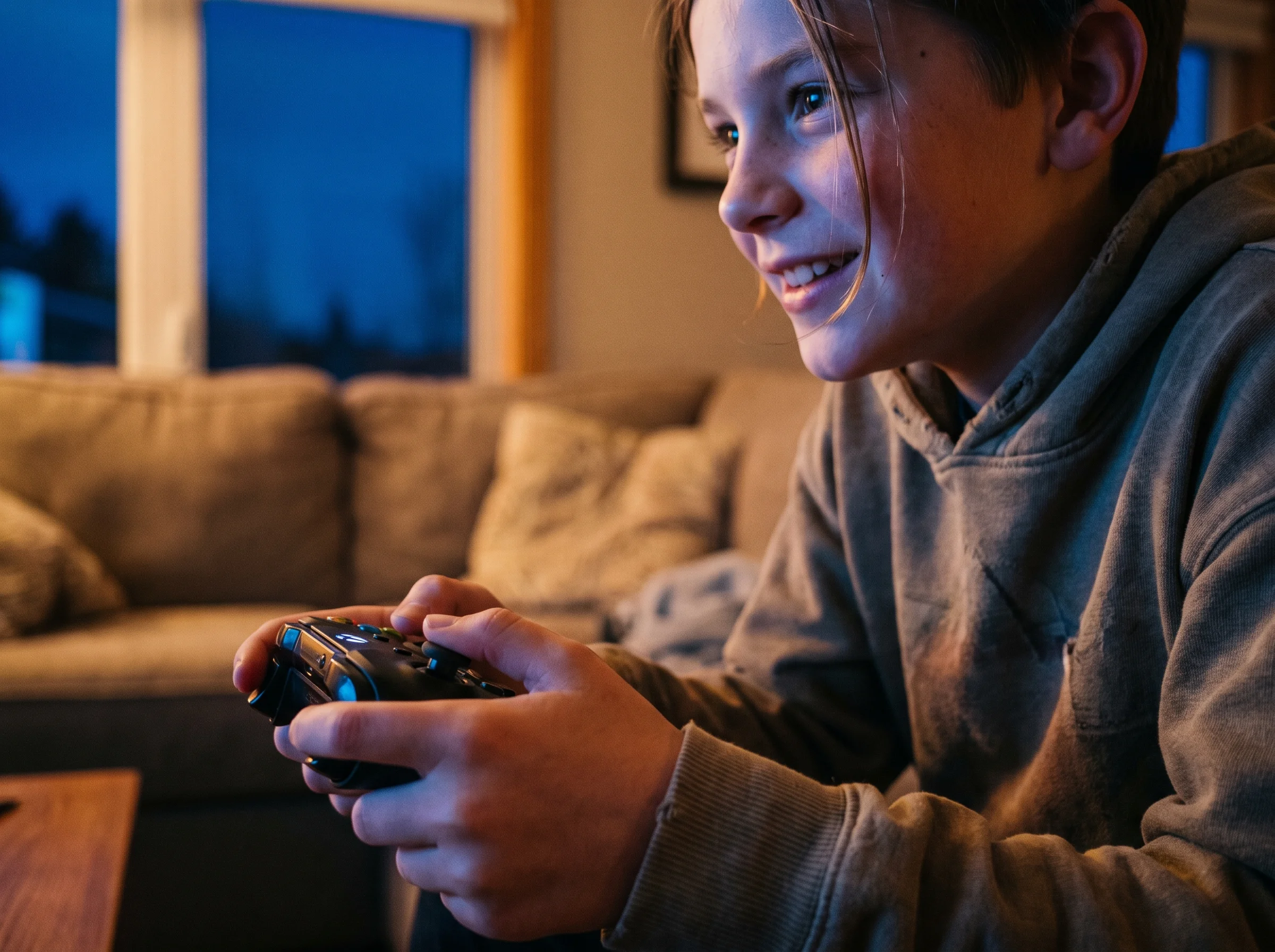
- Watch them play for 15 minutes without a single comment or question. Not "wow that's a lot of shooting" or "who's that guy." Just watch. The first time I did this with my son, he narrated on his own by minute 8. Unprompted. Because nobody had ever just been curious without an agenda.
- Learn the names of the three games or apps they use most. Not "that shooting game." Fortnite. Rocket League. Roblox. Say them right.
- Know one character, one map, or one feature they love. Just one. It signals you've been paying attention, and paying attention is the single most flattering thing a parent can do to a tween.
Do this for a week before you try any of the questions below. Seriously.
9 Conversation Starters About the Game (Not the Time)
These are entry points, not exits. You're learning, not measuring.
- "What's the weirdest thing that happened in your game this week?"
- "Who's the best player you've ever seen play, and what makes them good?"
- "If you could design a new character, what would they do?"
- "What's the dumbest way you've ever died in this game?"
- "Is there a kid at school who's annoying online too?"
- "What would you build if you had unlimited [insert resource: diamonds, V-Bucks, whatever]?"
- "What's the last thing that made you actually laugh out loud while playing?"
- "Who do you play with the most, and why them?"
- "What do you wish I understood about this game?"
That last one is the sleeper. When I asked my son what he wished I understood about Fortnite, he thought for a long second and said "that it's not just shooting, it's like hanging out with my friends but doing something." That reframe changed how I thought about the whole thing.
8 Conversation Starters That Bridge Into Screen Time
Once you've had a few of the above land, you can start easing into the actual negotiation. The trick is asking them to think like a decision-maker, which is exactly what they want to be at this age.
- "If you were me, how would you figure out when enough is enough?"
- "What's the difference between a good gaming day and a bad one for you?"
- "When do you actually feel done playing, versus forced to stop?"
- "What would you do if you got to set the rules for a week?"
- "What part of our screen time rules feels most unfair to you?"
- "If I got this wrong, what would you want me to know?"
- "What are you giving up when you're playing that long?"
- "What do you think a fair weekend looks like?"
Notice these are questions where you genuinely don't know the answer. That's the test. If you already know what you want them to say, it's not a question, it's a trap, and they'll treat it like one.
 In the car, no agendaPause, Play, Connect: Core Deck$49 CAD • 172 promptsSee the deck
10 Conversation Starters That Aren't About Screens At All
This is the connective tissue nobody writes about. If the first time you sit down and get curious with your tween is when you want to renegotiate their gaming hours, they know exactly what you're doing. You need a bunch of conversations in the bank that had nothing to do with screens.
- "What's the most annoying thing about being your age right now?"
- "Who at school do you actually like being around?"
- "What's something you're pretty good at that nobody knows about?"
- "If you could skip one class forever, which one?"
- "What's a rule at our house that you think is dumb?"
- "What's the last thing that made you feel embarrassed for no good reason?"
- "If our family had a motto, what should it be?"
- "Who's the funniest kid in your grade?"
- "What's something adults get totally wrong about kids your age?"
- "What's a food I make that you secretly hate?"
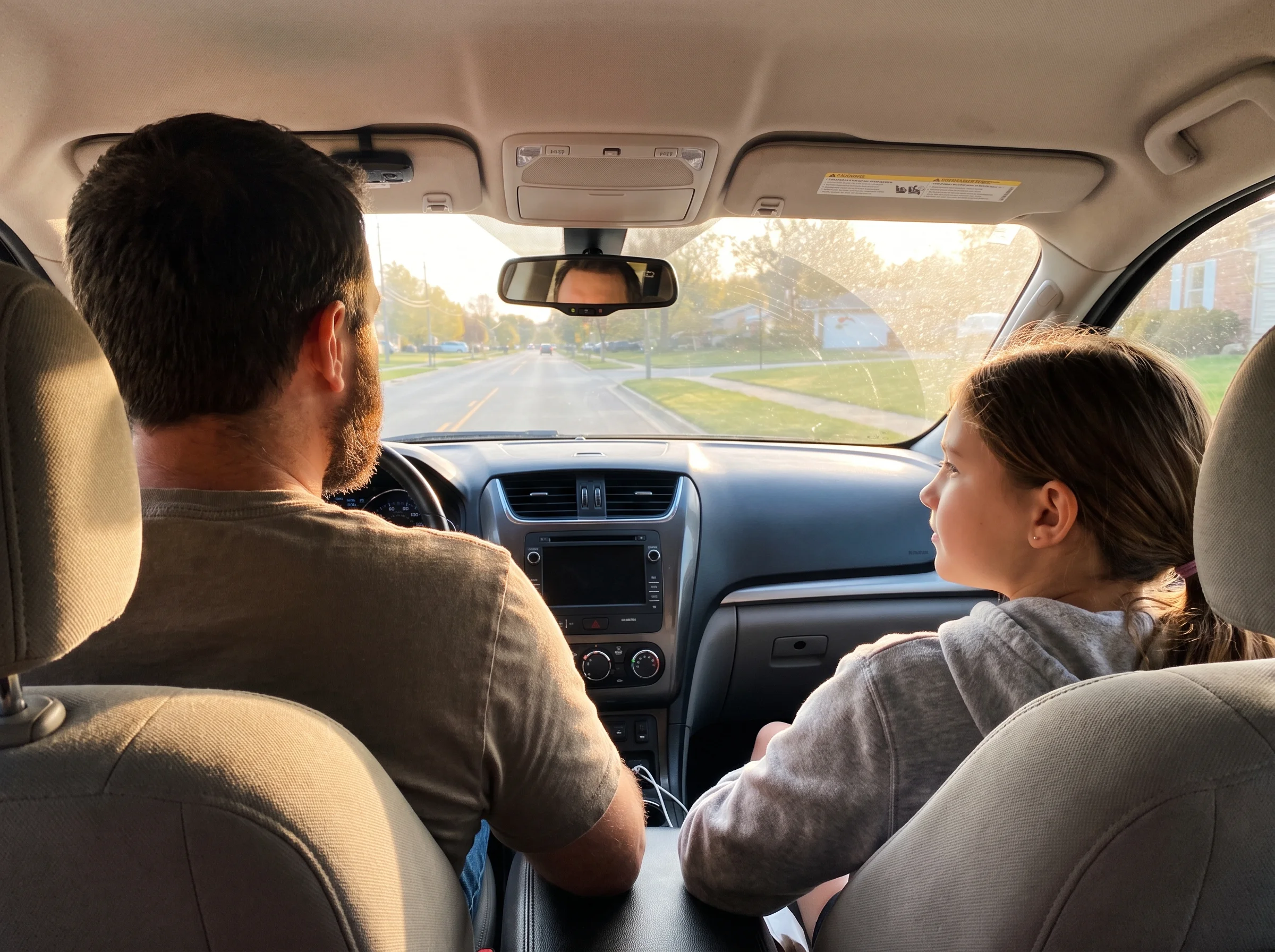
The Costco parking lot is where I learned about this. I'd asked my son who he'd played with that afternoon, just casual, no agenda. He mentioned a friend, and then out of nowhere told me the friend's parents were getting divorced and that's why they'd been playing together so much lately. Gaming was that kid's decompression zone. I never would've learned that if I'd led with "how long were you on today."
We ended up building Yakety Pack because I kept running out of questions like these. Ones that don't feel like traps. The deck has stuff like "what game character would you want as a real-life friend" which sounds like nothing but opens doors that direct screen time questions can't. Sometimes you just need a prompt in your pocket for the car ride home.
Where and When These Actually Land
Setting matters more than the script.
Never across a kitchen table with your arms folded. That's an interrogation room. You've built one without meaning to.
The car is magic. No eye contact required. Something about staring at the road together lowers the defenses on both sides. Long drives are gold. Even a 12-minute drive to soccer practice works. Child psychologists have written about this side-by-side effect for years, especially with tweens and teens who freeze up in direct conversation.
While making food together. Hands busy, side by side, no pressure.
Right after they finish playing, not right before you want them to stop. If they know a question is coming with a countdown attached, they'll never answer honestly.
Never during a game. Never in front of siblings.
I stopped scheduling talks with my son and started ambushing him with curiosity during errands. It sounds sneaky. It's actually just meeting him where he already is.

What To Do When the Question Flops
It's going to flop sometimes. Here's the thing: a shrug is not a rejection, it's a first draft.
Silence for 10 seconds is fine. Actually, it's more than fine, it's the whole game. Most parents ruin their own good question by filling the silence with a follow-up or, worse, a lecture. Ask, then wait. Count to ten in your head. Look out the windshield.
The best answer my son ever gave me started as "I don't know." I just didn't say anything. About 15 seconds later he said "well, actually..." and talked for 20 minutes.
If it truly flops, don't push. Say "yeah, fair" and let it go. Try a different one in three days. One bad question doesn't burn the bridge unless you turn it into a speech.
The Point of All This
Conversation starters are the on-ramp, not the destination. The actual negotiation, the rules, the limits, the family meeting, all of that comes later. If you do this work first, that stuff gets dramatically easier because your tween trusts the frame. They know you're not just trying to shrink their world.
But start here. Start with curiosity that has no agenda attached. Pick one question from the list above and use it in the car this week. Don't chain it to a rule. Don't turn it into a lesson. Just ask and see what happens.
The point isn't to trick your tween into less screen time. It's to become someone they'll actually talk to about it. Everything else, the limits, the rules, the negotiations, gets a hundred times easier from there.
So you never run dryPause, Play, Connect: Core Deck172 prompts that keep the no-agenda questions coming long after this list is used up.$49 CAD • 90 cards • 18 reviewsShop the deck

