
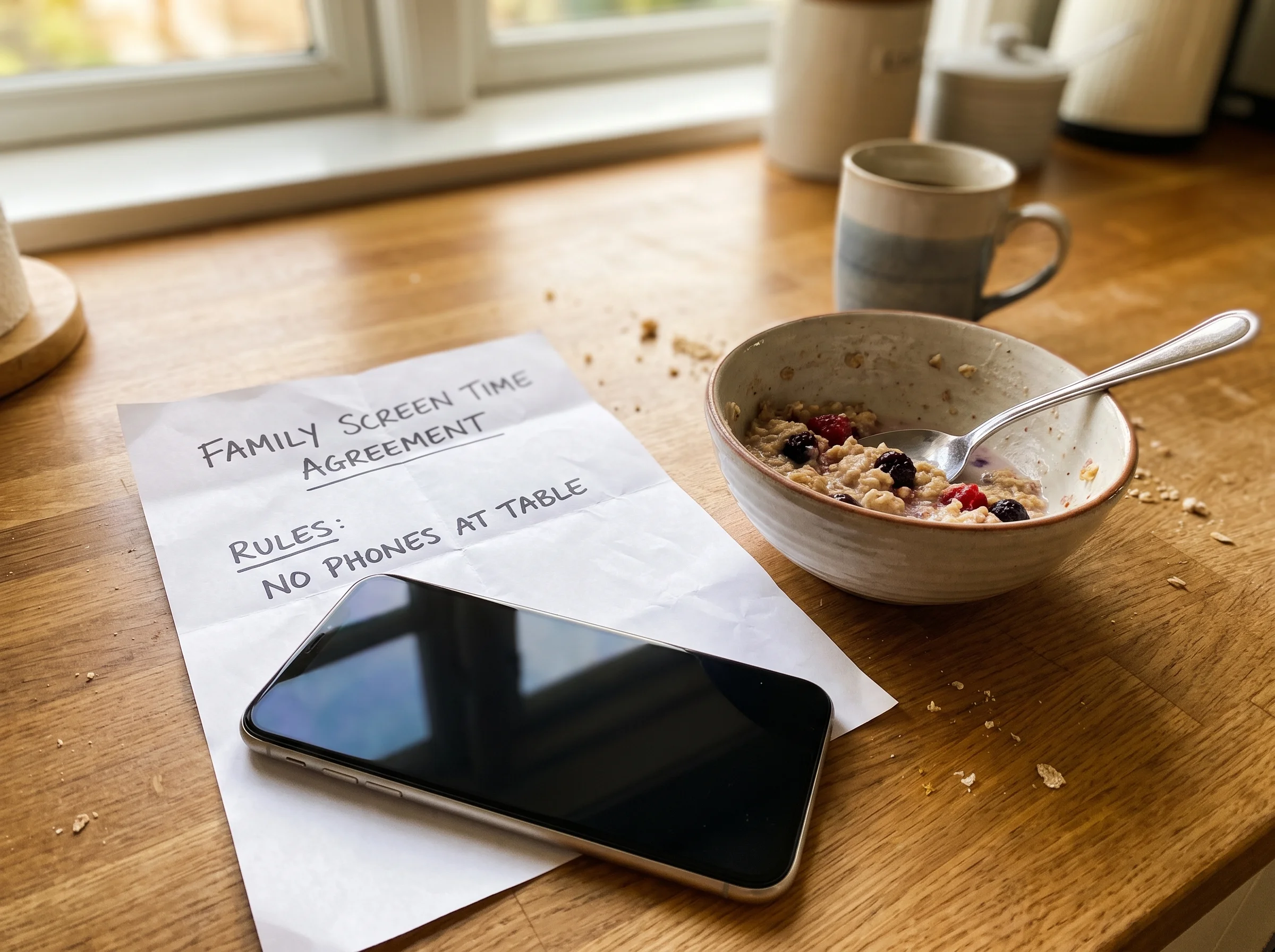
I printed out a screen time contract once. Beautiful thing. Bullet points, signature line, a little clip-art border because apparently I thought we were going to frame the thing. My son signed it in about four seconds without reading it, and we were back in an argument by Thursday.
The paper wasn't the problem. The conversation I skipped was.
If you're searching for a screen time contract template for a conversation with your 12 year old, I get it. You want structure. You want to stop being the bad guy every night at 8:47 PM. I'm going to give you a template. But I'm also going to tell you upfront: the template is maybe 20% of why this works. The conversation is the other 80%. Skip the conversation and you've just built a rule your kid will spend the next three weeks trying to loophole.
Why Most Screen Time Contracts Fail Before the Ink Dries
Here's what I did wrong the first time. I googled "screen time contract kid," found a nice PDF, printed it, and slid it across the kitchen island like I was closing on a house. My son signed it. He didn't read it. Because to him, it wasn't a deal, it was a decree with a signature line.
Twelve-year-olds are not rule-followers. They're deal-makers. They've been negotiating bedtimes and dessert portions since they were three. If you hand a 12-year-old a contract they had no part in writing, they'll sign it to make you go away, and then they'll violate the spirit of it by Wednesday and the letter of it by Friday.
The contract is the artifact. The conversation is the actual work.
 The part no template coversPause, Play, Connect: Core Deck172 prompts that get a 12-year-old talking about the games behind the clauses.$49 CAD • 90 cards • 18 reviewsShop the deck
Before You Sit Down, Know What They Actually Play
This is the piece almost every template skips. Ninety minutes of Minecraft in creative mode is not the same as ninety minutes of Fortnite. One you can save and walk away from. The other one, if you quit mid-match, you tank your teammates and lose rank and everyone in the party voice chat hears you get yelled off the game by your mom.
Match-based games (Fortnite, Rocket League, Valorant, Overwatch, Apex) don't stop when a timer beeps. They're also social plans. When your kid is in a squad with three friends at 7:30 PM, that's not "playing a video game." That's hanging out. Kicking them off mid-match is like walking into their bedroom and hanging up the phone on their friends.
Researchers who study kids and gaming have made this point for years. The American Psychological Association notes that online gaming is often a primary social outlet for tweens and teens, not just entertainment. Which lines up with what any parent watching their kid laugh into a headset already knows.
So before you write a single clause, ask: what do you actually play? Which ones can you pause? Which ones can't? Who do you play with? You'll learn more in ten minutes of that conversation than in a week of monitoring screen time reports.
How to Open the Conversation Without It Feeling Like an Ambush
Do not, and I cannot stress this enough, open with "We need to talk about your screen time." Their walls go up in 0.3 seconds and you've lost before you started.
Try this instead:
"Hey, I want to figure out screen stuff with you, not just tell you how it's gonna be. Can we sit down Saturday morning? I want you to have a real say in it."
Pick a neutral time. Not right after you took the device away. Not right after they lost a match. Saturday morning, snacks on the table, no rush.
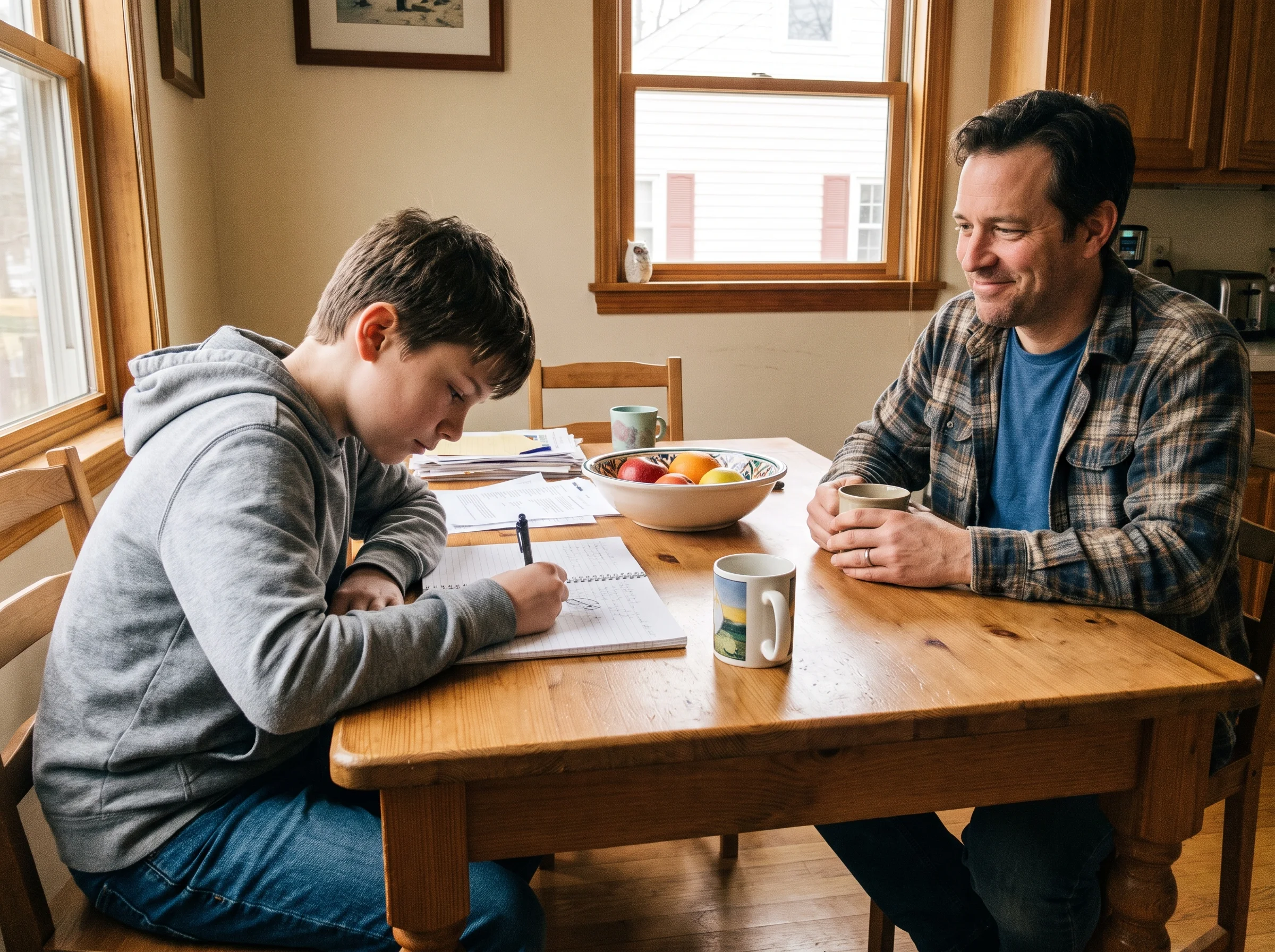
And here's the move that changed everything for me: I brought a blank piece of paper. Not a printed template. A blank piece of paper and two pens. I told my son, "You draft first. Write down what you think is fair. I'll write down what I think is fair. Then we'll figure it out."
He looked at me like I was running a scam. Then he started writing. And the first clause he wrote was "if I'm in a match, I get to finish it." Which I hadn't even thought of, and which was completely fair, and which solved about 40% of our fights on the spot.
The Actual Screen Time Contract Template
Okay, here's the thing. Structure this as categories, not a rigid legal document. Both of you write clauses under each. Here's what should be on it:
Weekday and Weekend Time
A range, not a hard number. "1 to 2 hours on school nights depending on homework and family stuff. Up to 3 hours on weekends, more with permission if there's nothing else going on."
Match Rules
For competitive games: finish the match, then log. If you're queuing up a new match when there are ten minutes left, that's on you.
Homework and Chores First
Define what "done" means before it becomes a fight. "Homework done means finished, in the backpack, and you can tell me one thing you learned." Vague standards create arguments. Specific ones don't.
Where Devices Sleep
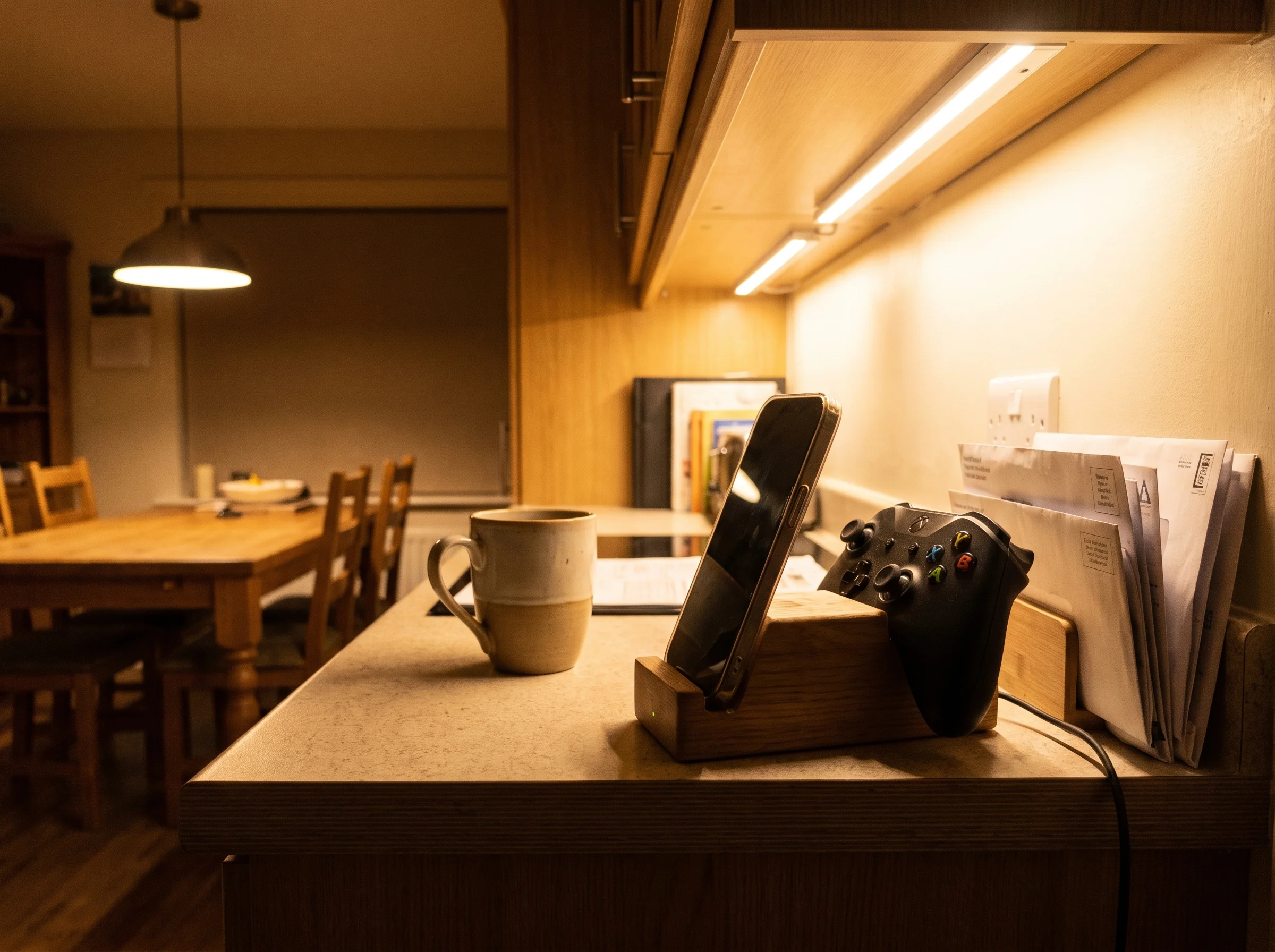
Not in the bedroom. Charging station in the kitchen. This one's non-negotiable for me, but I explain why: sleep matters, and the phone in the bedroom is the single biggest predictor of a wrecked night. The American Academy of Pediatrics recommends keeping devices out of bedrooms overnight for exactly this reason.
Games That Need Permission
New downloads, M-rated titles, anything with open voice chat with strangers. Not "no," just "let's talk about it first."
Parent Commitments
This is the clause most templates skip and it's the most important one. Write down what YOU commit to:
- I won't yell "get off that thing" mid-match.
- I'll ask what you're playing before I assume it's garbage.
- I'll try one of your games with you once a month.
- I won't bring up screen time during a fight about something else.
When your 12-year-old sees you signing something too, the whole dynamic flips. You're not the warden. You're in the deal with them.
Consequences
Agreed on together. Not dictated. Ask them: "If one of us breaks this, what should happen?" You will be shocked how fair kids are when they get to write the consequences. Mine proposed harsher stuff than I would have.
Renegotiation Date
Thirty days out. Non-negotiable. Put it on the calendar. This is the clause that saves the whole thing.
 Nothing to sign herePause, Play, Connect: Core Deck$49 CAD • 172 promptsSee the deck
Handling the Pushback (Because It's Coming)
Mid-conversation, your kid will say "this isn't fair." Every 12-year-old says it. Here's what I do now instead of arguing:
"Yeah, maybe it's not. What would be fair?"
Then shut up and listen. Half the time their counter-proposal is reasonable. The other half, when you ask them to defend it, they realize their own logic doesn't hold and they walk it back themselves.
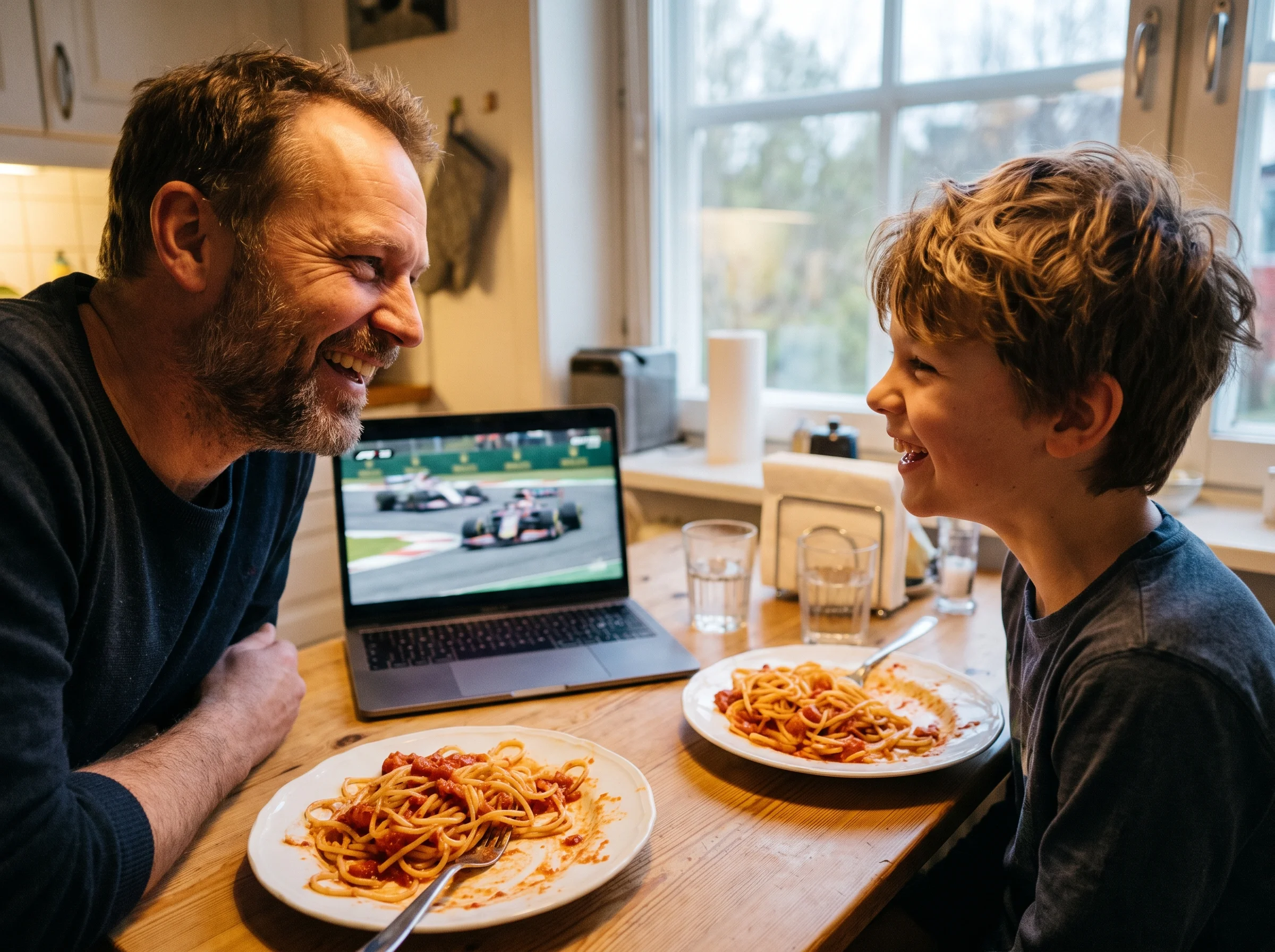
When they refuse to sign a specific clause, don't push. That refusal is the actual conversation. Ask what they hate about it. My son crossed out "no devices at dinner" and rewrote it as "no devices at dinner unless we're all watching something together." Better rule than mine. We eat dinner watching Formula 1 highlights sometimes now, and it's one of my favorite hours of the week.
What to Do When the Contract Breaks
It will break. Probably in week two.
Breaking the contract isn't the end of the contract. It's data. The 30-day renegotiation is where trust actually gets built, because it teaches your kid that mistakes get talked about, not punished into oblivion.
The mistake I made in week two of our first real contract: I treated the first violation like a betrayal. Big lecture, disappointed-dad voice, the whole show. What I should have said was, "Hey, the after-school clause isn't working. Let's rewrite it." Because it wasn't working. He was coming home starving and tired and needing 20 minutes of decompression before homework, and I had written a clause that assumed he was a robot.
"This clause isn't working, let's rewrite it" is a completely different sentence than "you failed." Use the first one.
The Real Win Isn't the Contract
If you do this right, you don't just have a contract. You have a language. You've established that hard stuff gets talked about at the kitchen table, not yelled about in the hallway. That's the muscle you're actually building. The screen time contract is just the first rep.
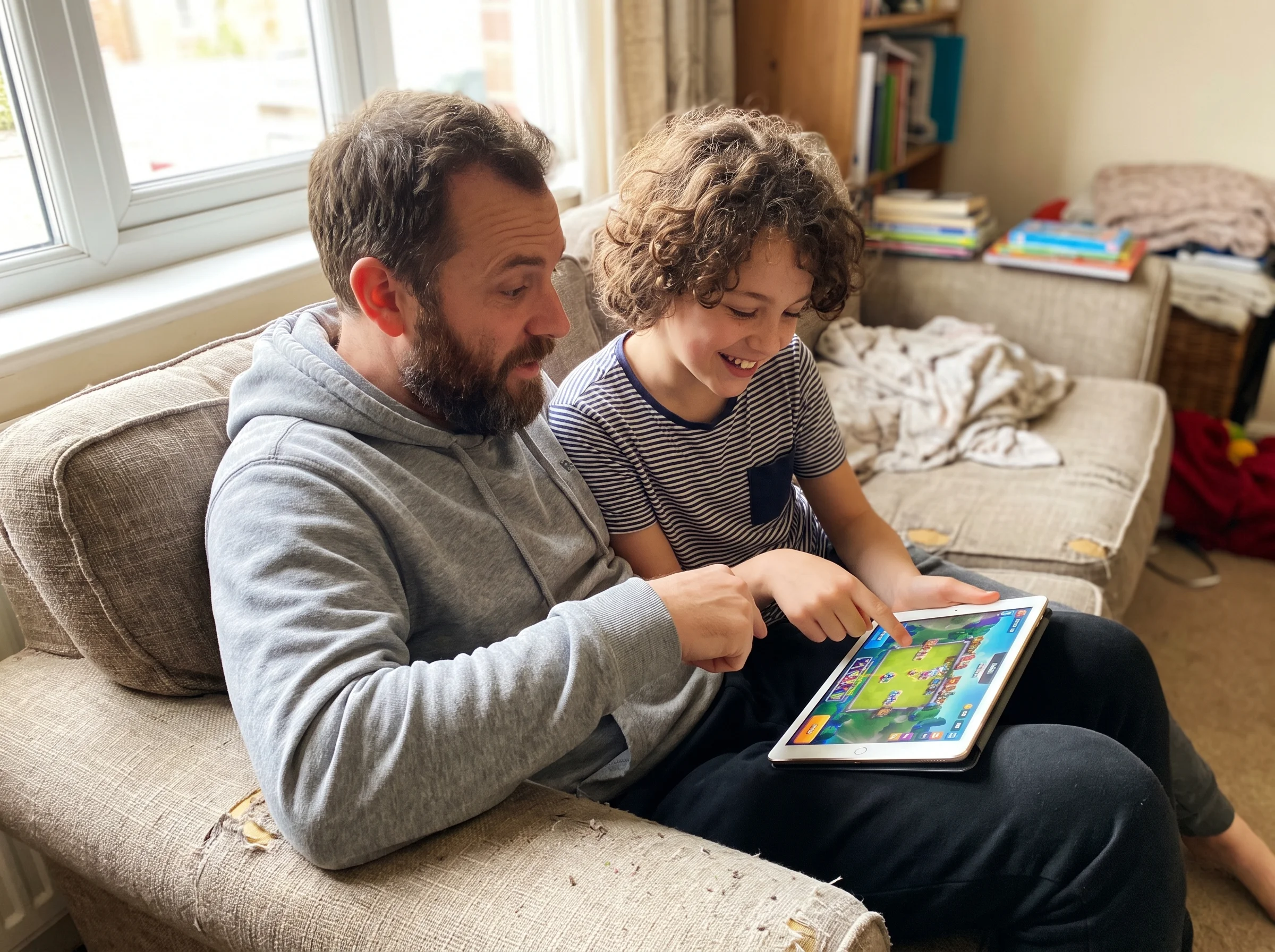
Once we had ours in place, I started asking better questions. Not "how was gaming today" (grunts). Try "what's the coolest thing that happened in your game this week?" or "who did you play with tonight?" or "show me the dumbest thing that happened in your match." You get twenty-minute answers instead of one-word ones.
That's actually why we made Yakety Pack, a deck of cards with questions that meet kids where they already are, including in the games they play. The contract gave us structure. The questions gave us actual conversations.
One Specific Thing to Do Today
Don't print a template. Grab a blank piece of paper. Text your kid: "Saturday morning, you and me, breakfast. I want to figure out the screen stuff together instead of me just making rules. Cool?"
That text is the whole ball game. Everything else is just filling in the blanks.
Screen time with a 12-year-old isn't a war. It's a negotiation, and negotiations only work when both sides show up with something to offer. Show up with a blank page and a willingness to sign the thing yourself. You'll be amazed what your kid writes on it.
Questions with twenty-minute answersPause, Play, Connect: Core Deck172 prompts that get more than a grunt out of a 12-year-old at breakfast.$49 CAD • 90 cards • 18 reviewsShop the deck

