
My son asked me last summer if outside had "respawns."
He was six. We were in the backyard, he'd just tripped over a sprinkler head while playing tag with his cousin, and he wanted to know if there was a checkpoint somewhere he could go back to.
I laughed at first. Then I realized he was dead serious. And that question changed how I thought about outdoor games for elementary school kids ages 5-8. I stopped expecting them to play the way I did in 1992. I started meeting them where they actually are. Here's what's worked.
First, A Quick Reality Check on Ages 5 to 8
Most articles about outdoor games for elementary school kids ages 5-8 treat this range like one big group. It isn't. Not even close.
A 5-year-old still thinks the rules of tag are negotiable mid-game. An 8-year-old will argue boundary lines like a tiny attorney. A 5-year-old gets winded after 90 seconds of running. An 8-year-old can sprint for an hour and ask what's next.
Here's the rough split:
- 5 to 6 year olds: Simple rules, lots of repetition, no team strategy. They want to move and laugh. Winning matters less than the next turn coming fast.
- 7 to 8 year olds: Fairness obsession kicks in hard. They want structure, stakes, teams, and they will absolutely call you out if you fudge a rule.
I learned this the hard way. I tried to run a Capture the Flag game last summer with my 8-year-old son, his 5-year-old cousin, and two neighbor kids. It lasted four minutes. The little one didn't understand what "jail" was, my son got mad that his cousin kept "ruining the strategy," and somebody was crying in the rose bushes before I'd even finished explaining the rules.
If you've got kids on both ends of this range, you have to handicap or modify almost every game. More on that later. The American Academy of Pediatrics recommends at least 60 minutes of active play a day for this age group, so the goal is keeping them moving, not running a perfect tournament.
 For the mixed age backyardPause, Play, Connect: Core Deck172 prompts that give you something to ask when the game winds down and everyone flops on the grass.$49 CAD • 90 cards • 18 reviewsShop the deck
Games That Work With Just One or Two Kids
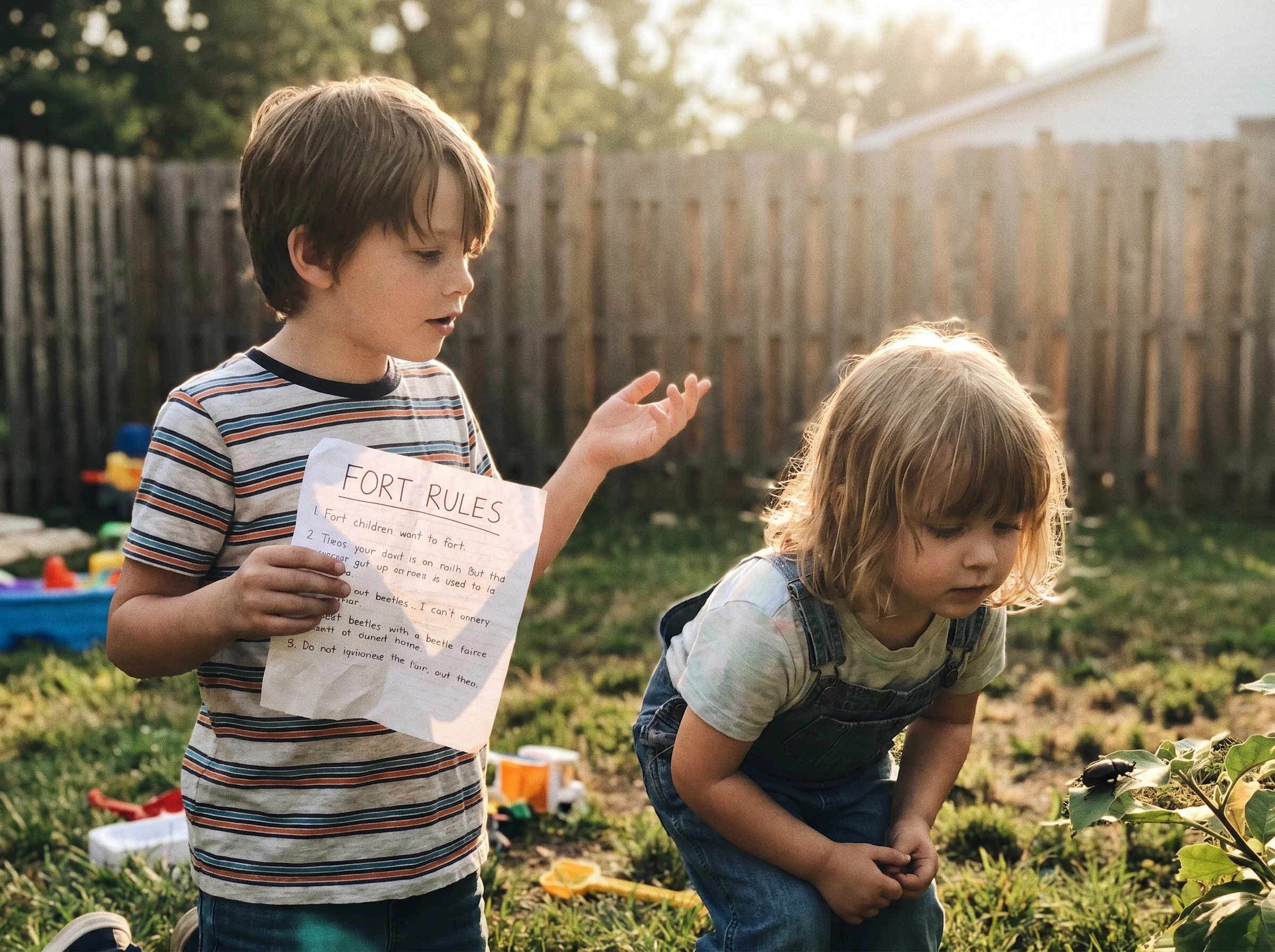
A lot of lists assume you've got a neighborhood crew. Most of us don't. Most of us have one or two kids and a backyard.
These work when it's just you and your kid:
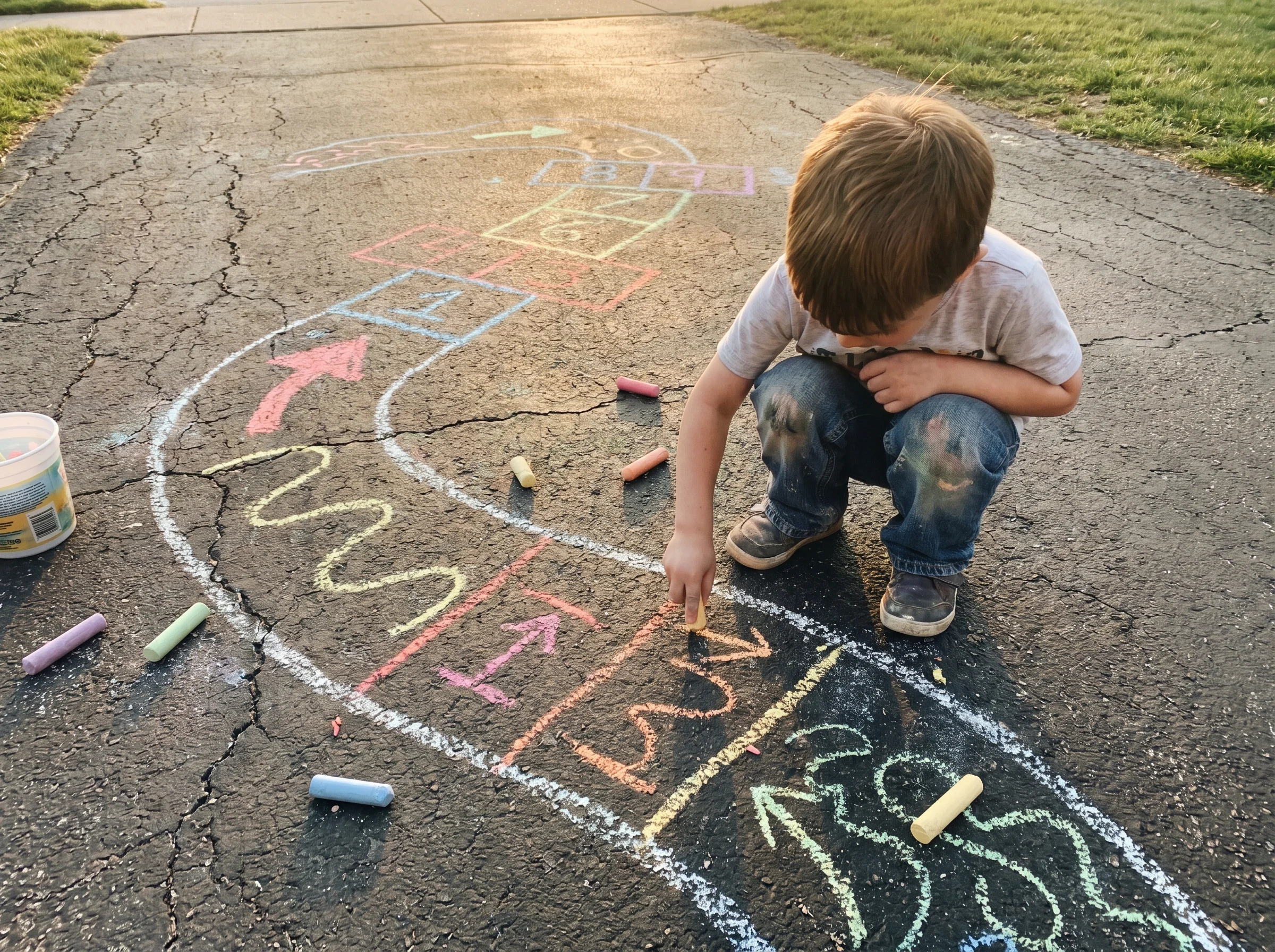
- Sidewalk chalk obstacle courses. You draw it, they run it, you time them. They will try to beat their own time twenty times in a row.
- Spy missions. "Find five red things, three round things, and something that doesn't belong outside." My daughter did this for 45 minutes one Saturday.
- HORSE with a kiddie hoop. Lower the stakes, lower the hoop.
- Bubble chase. You blow, they pop. Sounds dumb. Works on 5-year-olds every single time.
- Lava floor. I made this one up. The cracks in the sidewalk are lava. Step on them and you "die." You have to make it from the mailbox to the porch. My daughter still asks to play it.
Notice none of these require other kids. That matters.
Classic Games, But With the Video Game Treatment
This is the part nobody else writes about, and it's the thing that actually changed everything for us.
My son rolled his eyes when I asked if he wanted to play tag. Standard tag. Predictable. Boring. But when I said "you're patient zero, you have to infect the survivors before they reach the safe zone," he sprinted around the yard for 45 minutes.
Same game. Different frame.
Kids raised on Minecraft and Roblox don't think about play the way we did. They think in quests, narratives, stakes, and structure. So give them that.
- Tag becomes Zombie Outbreak. One infected, everyone else survivors. Safe zones reset every 60 seconds.
- Hide and Seek becomes Stealth Mode. Add a mission: hide AND grab the flag from the picnic table without getting spotted.
- Freeze Tag becomes Respawn Tag. Teammates can revive each other by tapping them. Suddenly it's cooperative.
- Red Light, Green Light with a Squid Game frame if your kid is old enough to have heard of it. (Have the conversation about the show first. They've heard of it. Trust me.)
- Foot races with lore. "You're delivering medicine to the village. The bridge collapsed. You have to take the long route." My son ran the same loop six times.
The framing isn't a trick. It's just meeting kids in the language they already speak. The physical game is identical. The story is what makes them care.
Low-Prep Games (Nothing But Bodies)
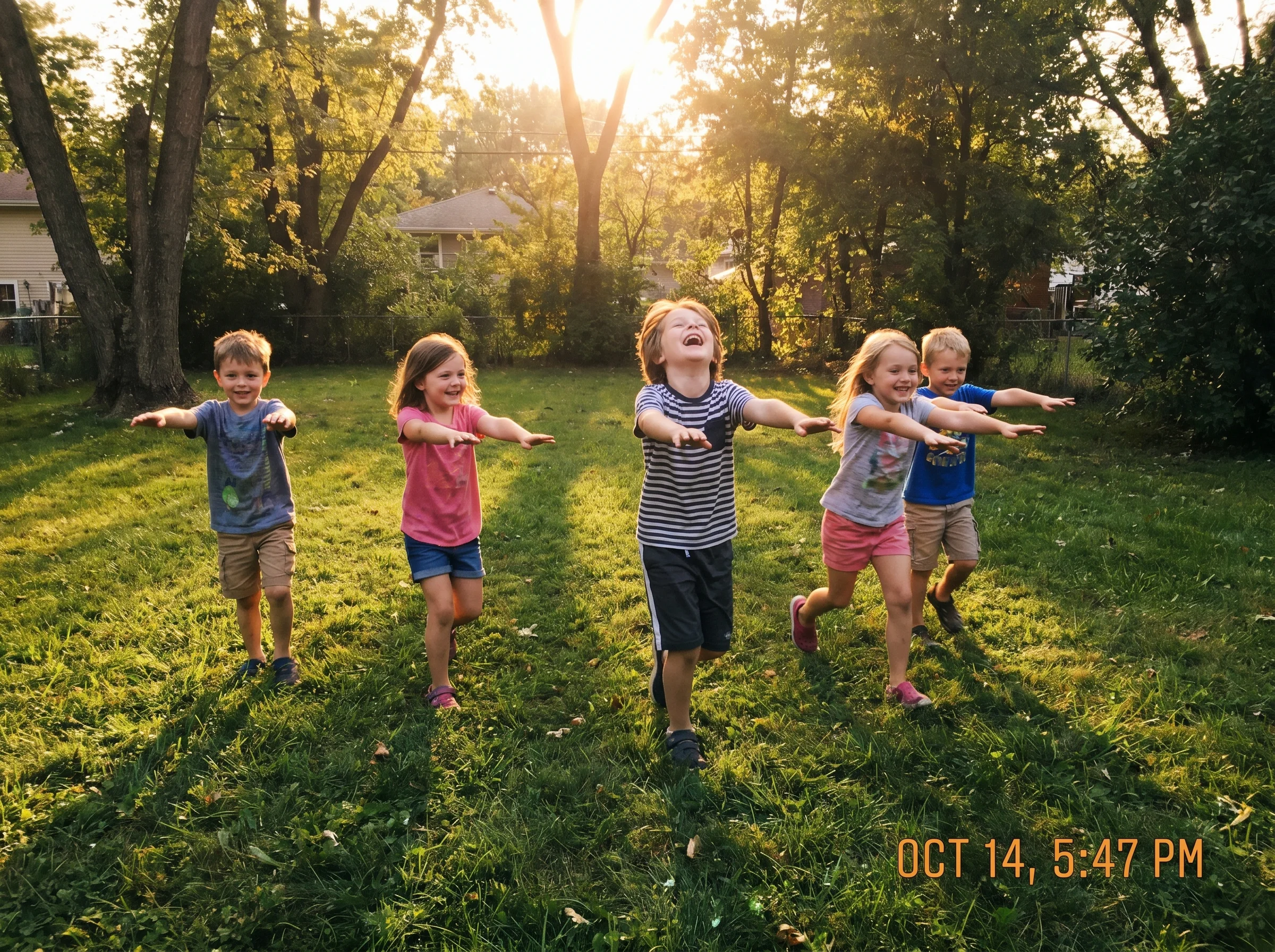
You don't need to buy anything. You don't need to prep. These work in 30 seconds flat:
- Mother May I
- Simon Says with physical challenges (do five jumping jacks, hop on one foot to the tree)
- Sharks and Minnows
- Shadow Tag (tag someone's shadow instead of them, brilliant on sunny days)
- What Time Is It, Mr. Wolf?
- Animal races (waddle like a penguin, hop like a frog, gallop like a horse)
If you have chalk, add hopscotch, four square, or a finish line. That's the entire equipment list.
 Nothing to set upPause, Play, Connect: Core Deck$49 CAD • 172 promptsSee the deck
Games Worth Twenty Bucks of Equipment
If you want to upgrade, keep it simple and cheap:
- Water balloon piñata. Hang water balloons from a tree branch. Whack with a stick. Get wet.
- DIY bean bag toss. Old socks filled with rice. Buckets as targets.
- Driveway four square. Just chalk and a playground ball.
- Kickball. One ball, four bases (use shoes).
- Bubble wand sword fights. Sounds weird, kids love it.
Don't turn this into a Pinterest project. Twenty bucks, max.

What to Do When the Game Falls Apart
Because it will. Every time. Here's what nobody else writes about.
The crier. When my son rage-quit kickball last summer, my first instinct was to say "you're being a baby, just keep playing." That made it ten times worse. What worked the next time was: "Okay, you're out for now. When you want back in, come find me." No drama, no lecture. He came back in four minutes.
The cheater. With 5-year-olds, let it go. They don't fully understand rules yet. With 7 and 8 year olds, call it out matter-of-factly: "Hey, your foot was over the line. Go back." Don't make it a character thing. Just a fact.
The bored kid. Outdoor games hit a wall around the 7-minute mark for this age. Be ready to change something: new rule, new role, new objective. Don't try to extend the same game past its expiration date.
The skill gap. When my 8-year-old plays with his younger cousin, I'll quietly give the older one a handicap. "You have to hop on one foot." "You can only use your left hand." Frame it as a challenge, not a punishment. He eats it up.
The "I want to go inside" kid. Sometimes you push, sometimes you fold. If they've been out for 20 minutes and had fun, let them go in. Forcing it past the fun point teaches them outside equals a fight.
Outdoor Play Is Where You Actually Learn Your Kid
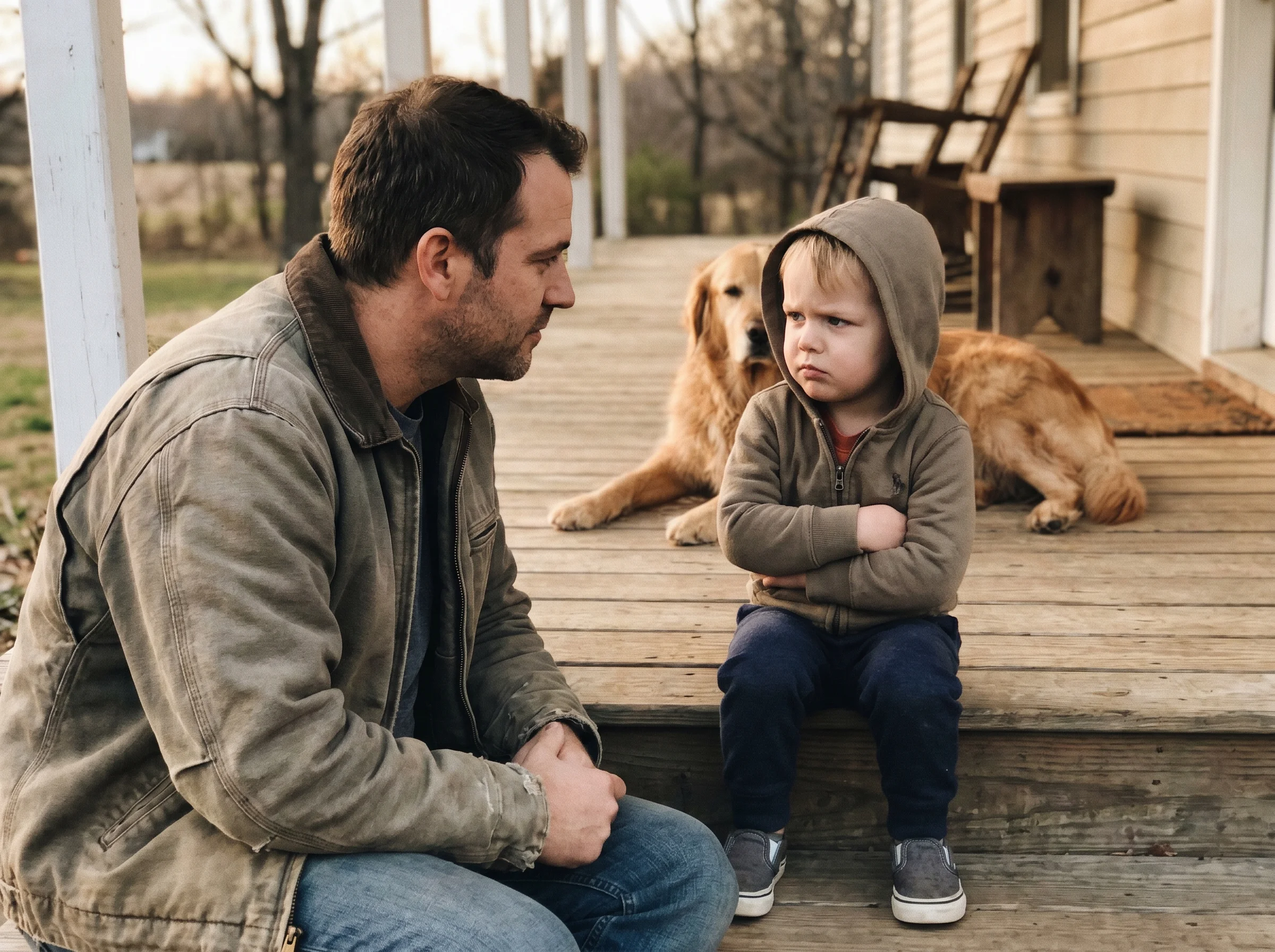
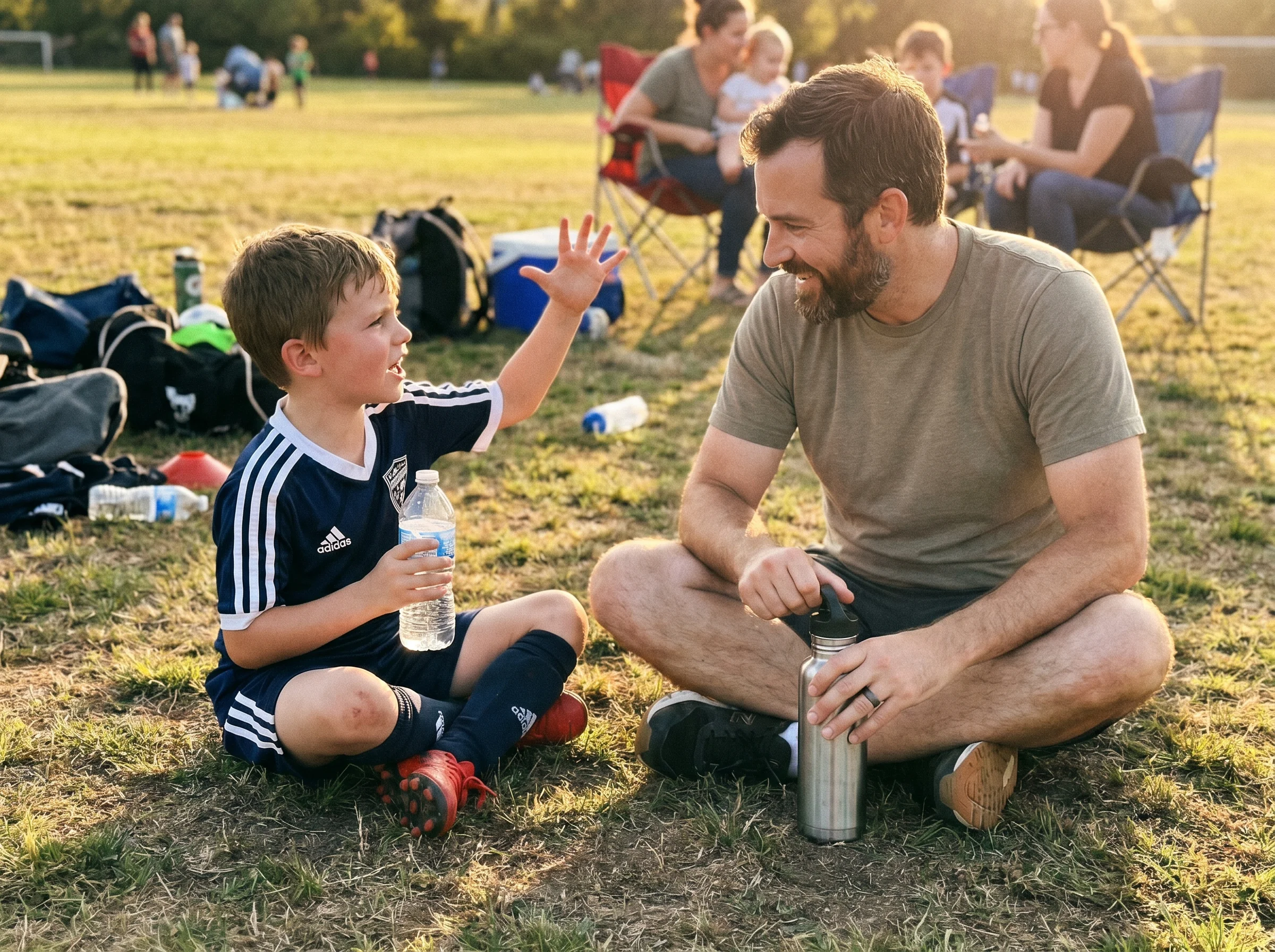
Here's the thing I didn't expect. The dinner table is the worst place to get my son to open up. The backyard, mid-game, between rounds of zombie tag, that's where he tells me things.
"Did you have fun?" gets you a yes. "What was the craziest thing that happened?" gets you a five-minute story.
Outdoor play loosens kids up because they're not being asked to perform a conversation. They're moving. The talking is sideways, not face-to-face. Researchers call this kind of side-by-side talk "shoulder-to-shoulder" conversation, and it tends to land deeper than the face-to-face version we keep trying to force at dinner.
This is actually why we started Yakety Pack. The best stuff comes out when you're not staring at each other. One of the cards in our deck asks, "What's a power you wish you had in real life?" That question lands different when your kid is already running around the yard pretending to be infected. The play primes the conversation. The conversation deepens the play.
I've learned more about my son's competitiveness, his sense of fairness, his frustration tolerance, from one game of capture the flag than from a hundred parent-teacher conferences.
One Thing to Try This Week
Pick one classic game. Rename it. Add a story. Just one.
Tag becomes zombie outbreak. Hide and seek becomes a stealth mission. Foot race becomes a delivery quest. Watch what happens when your kid hears the same game in a language they already love.
If you want the bigger picture across ages and game types, the pillar guide on best games to play with your kids has the full breakdown. And if your kid is the type who melts down at competition, the cooperative games spoke might be a better fit than anything in this article.
Just don't try to play Capture the Flag with a 5-year-old and an 8-year-old at the same time. I already tested that one for you.

From this article
Pause, Play, Connect: Core Deck
For the water break: The best talks in our yard happen sideways, between rounds of zombie tag, when nobody has to perform a conversation. A few cards from the Pause, Play, Connect Core Deck in your pocket turn those breathers into the good stuff.

