
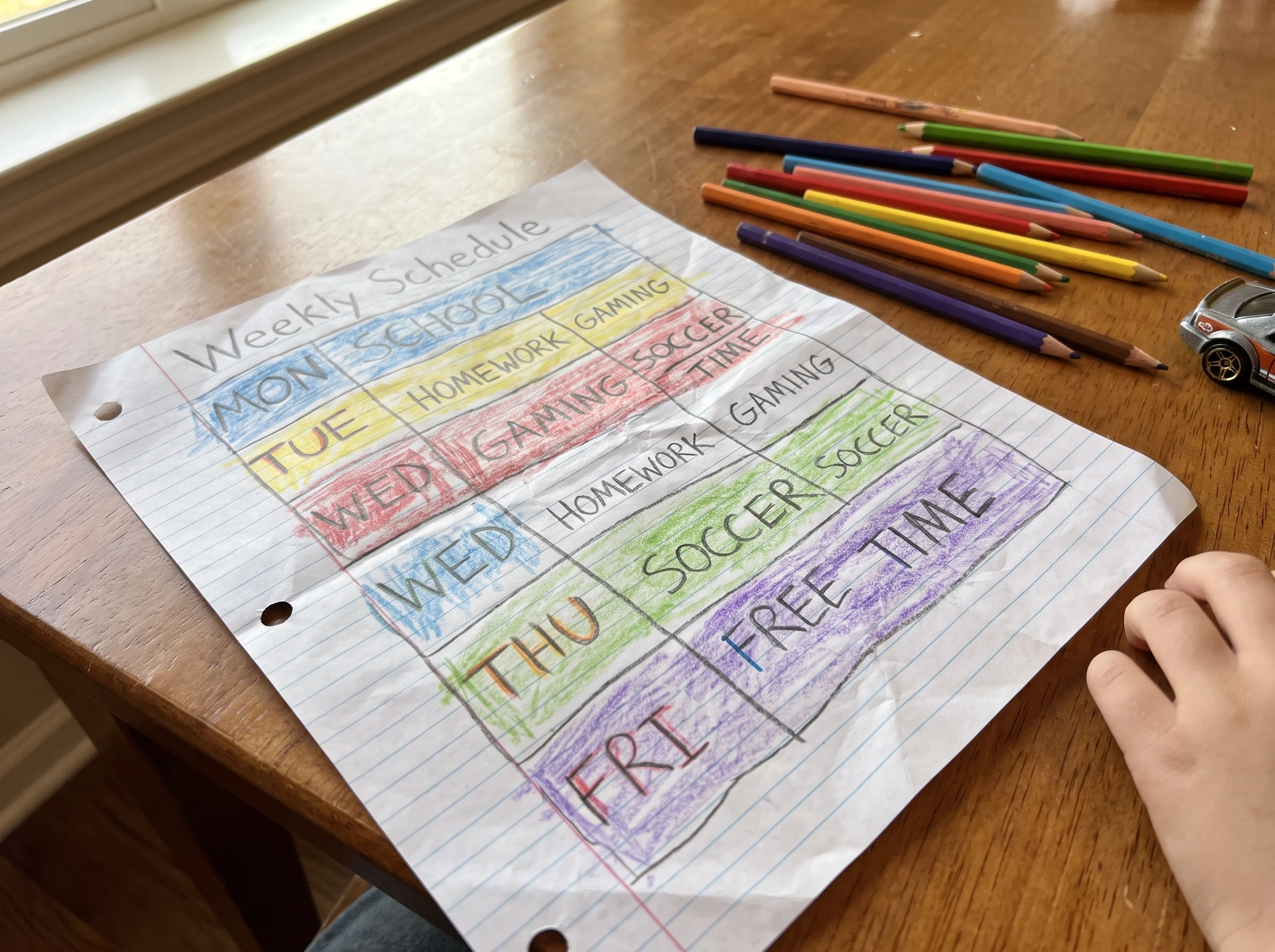
Look, my first attempt at explaining screen time limits to my 10-year-old went about as well as you'd expect. I had bullet points. I had a calm voice. I had, I swear to God, a little printed schedule. He had a face like I'd just told him we were moving to a farm with no wifi.
Twenty minutes later we were both frustrated, nothing was resolved, and he'd learned exactly one thing: screen time talks are something to survive, not something to have.
If you're trying to figure out how to explain screen time limits to a 10-year-old without either of you crying or slamming a door, I've got some things I wish someone had told me before I opened my mouth.
First, understand what a 10-year-old actually hears
When you say "let's talk about screen time," your kid does not hear "I care about your wellbeing." They hear "the thing I love is being taken away, and I have to sit still while you explain why that's good for me."
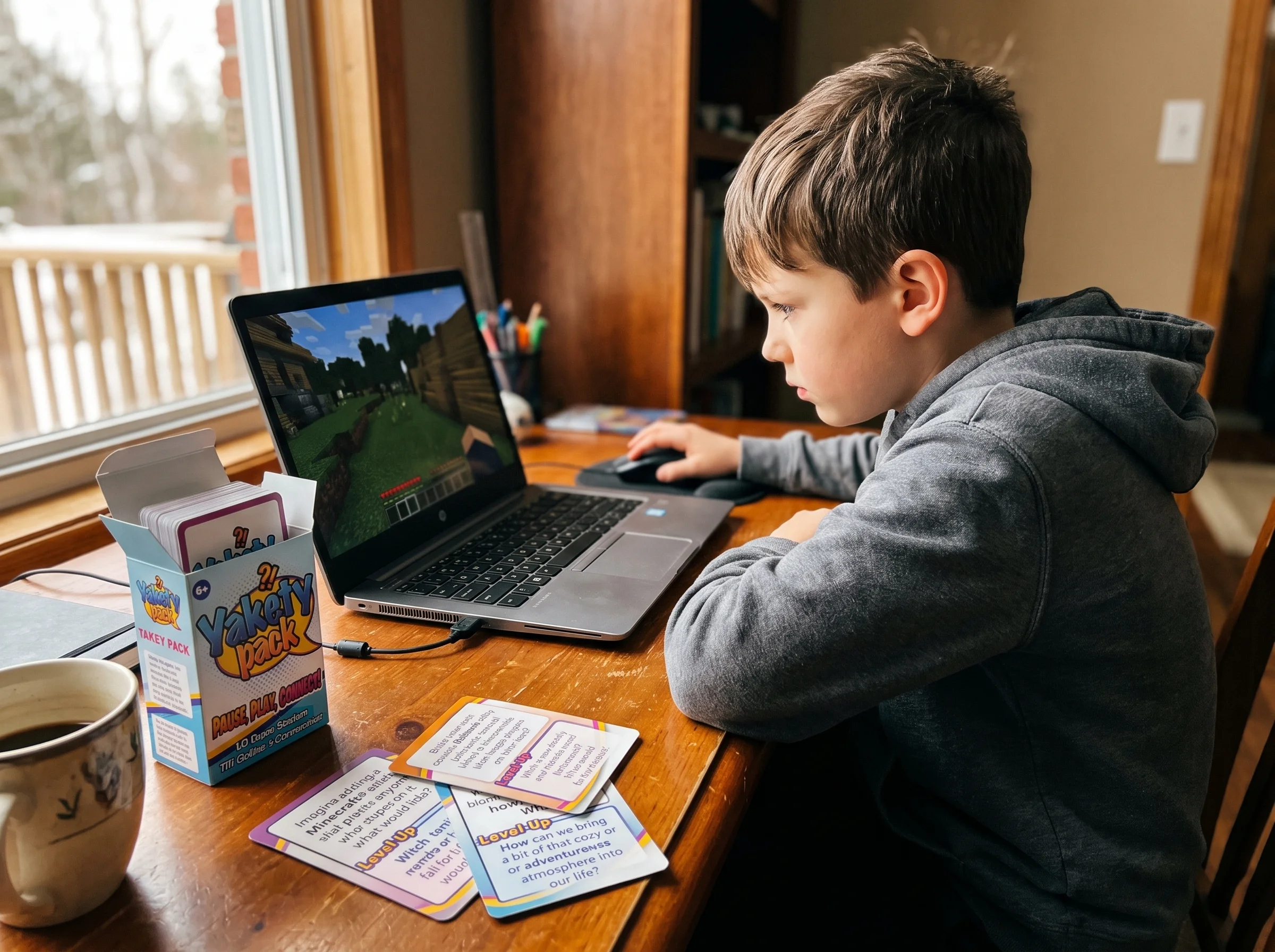
Ten is a hinge age. They're not little kids anymore. They notice logic gaps. They notice hypocrisy. They notice when you lump Roblox, YouTube shorts, Minecraft with their best friend, and solo Fortnite grinding into one big blob called "screen time," because to them those are wildly different things. One is a creative sandbox with their cousin. One is watching a stranger scream about Skibidi Toilet. Treating them the same makes you sound out of touch, and once you sound out of touch, your kid checks out.
My son actually said this to me once, dead serious: "You don't even know what you're limiting." He was right. I was making rules about a world I'd never bothered to look at.
 One blob, four different worldsPause, Play, Connect: Core Deck172 prompts that let a 10-year-old explain the games you have been lumping together.$49 CAD • 90 cards • 18 reviewsShop the deck
Do the homework before the conversation
Before you sit down, or in my case, sit next to them, do five minutes of homework. I'm not asking you to become a Fortnite expert. Just enough to sound like you've been paying attention.
Know the actual name of the game. Not "that shooting one." Not "the block one." The name. If your kid plays Rocket League, know it's soccer with cars. If they play Minecraft, know the difference between creative and survival mode. This alone changes the energy of the conversation.
Ask yourself what you're actually worried about. Not "screens." Screens is too vague to defend. Are you worried about sleep? Homework quality? Their mood after two hours of solo play? The fact that you haven't had a real conversation with them in a week? Family dinner? Get specific.
If you can't name your worry, your kid will smell it. Vague worries produce vague rules, and vague rules feel arbitrary, which is exactly the fuel a 10-year-old needs to argue with you for an hour. The American Academy of Pediatrics actually recommends focusing on what screens displace (sleep, movement, in-person time) rather than just counting hours, which lines up with what I learned the hard way.
The opening line matters more than the whole talk
Do not, under any circumstance, open with "we need to talk about your screen time." That sentence puts up a wall so fast you'll practically hear it click into place.
Try this instead: "Hey, can you show me what you were working on in Minecraft yesterday? I want to ask you about something after."
Then actually watch. Ask a question about the build. Be a little impressed, because honestly, some of the stuff kids make is impressive.
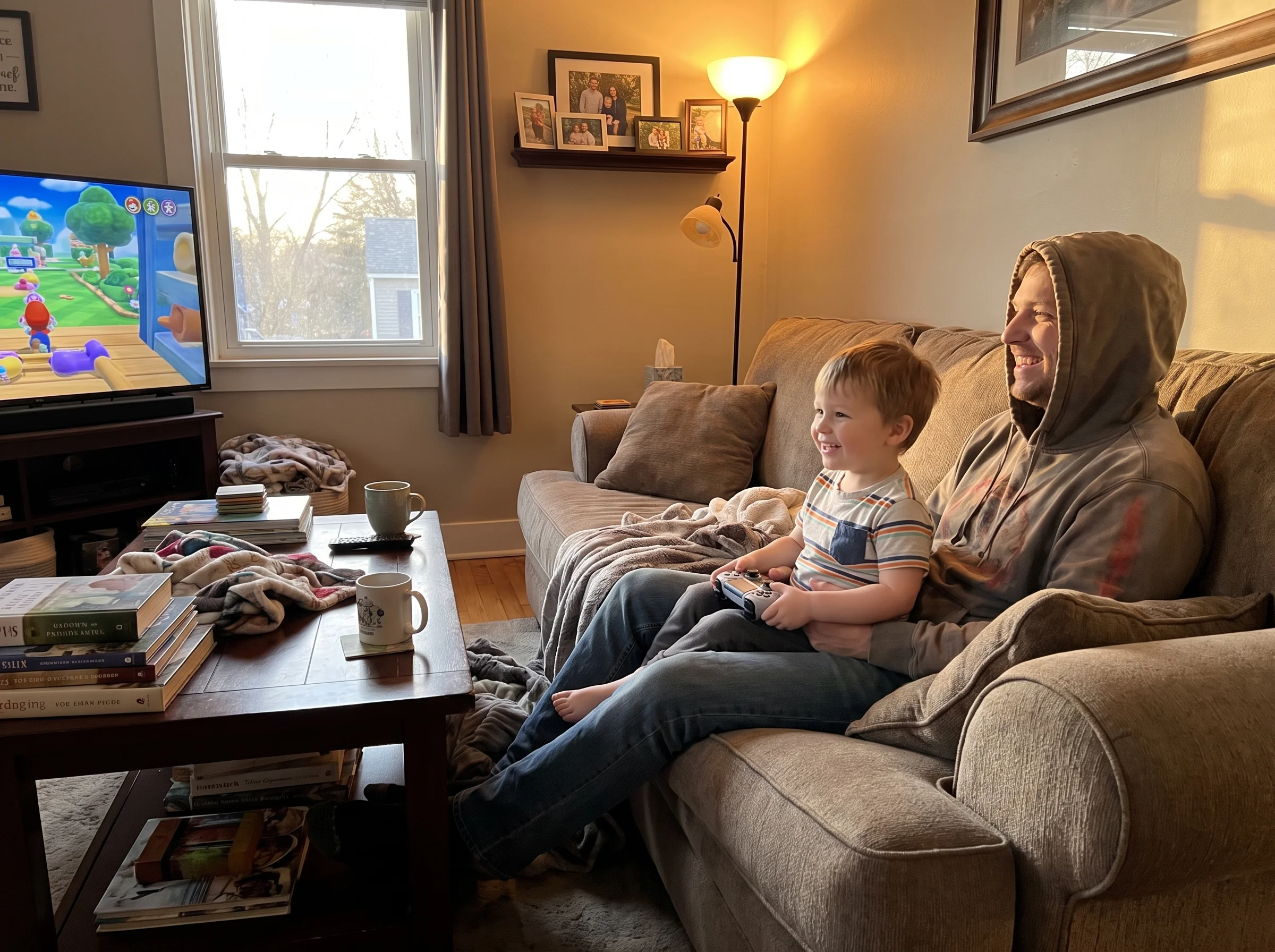
And here's the counterintuitive part that changed everything for me: have this conversation on the couch, not at the kitchen table. Every parenting article tells you to sit down and have a serious talk. That's the exact wrong setup for a 10-year-old. Face-to-face at a table feels like an interrogation. Side-by-side on a couch, while they're mid-game or right after, feels like two humans talking.
Explain what you're protecting, not what you're limiting
This is the shift that saved my relationship with my kid, and I'm not being dramatic when I say that.
Kids can argue with a rule all day. What they can't really argue with is a worry, if it's a real one.
Try: "I'm not trying to take gaming away. I'm trying to protect us hanging out on Saturday mornings" or "I'm trying to protect your sleep, because I've noticed you're a totally different person when you get eight hours."
Name the specific thing. Vague concerns get vague pushback. Specific worries get real conversations.
The night it clicked for me, I finally said out loud, "I'm scared we won't know each other anymore." Not "I'm worried about your development." Not "screens can be addictive." Just, I'm scared we won't know each other. My son's whole face changed. He didn't agree with all my rules after that. But he understood I wasn't just trying to control him. That's the whole game right there.
 So you still know themPause, Play, Connect: Core Deck$49 CAD • 172 promptsSee the deck
Answer the three questions they're absolutely going to ask
"Why do I have limits when Jake doesn't?" Do not badmouth Jake's parents. That's a trap. Try: "Different families do different things. In our family, this is what we've decided works." Then move on. Don't over-explain.
"Don't you trust me?" This one hurts because they mean it. Answer honestly: "This isn't about trust. You're 10. Your brain is still figuring some stuff out, and mine is too. The limits are for both of us, not because you're doing anything wrong."
"Why do you get to be on YOUR phone all the time?" You have to eat this one. Honestly. I lost credibility with my son for months because I dodged it. The answer is: "You're right. I'm on it too much. I'm going to work on that too." Then actually do it. Put your phone in a drawer during dinner. If you skip this, nothing else you say lands. Research from Common Sense Media has consistently shown kids notice their parents' screen habits more than we think.

Bring them INTO the limit, not just under it
Once they understand what you're protecting, ask them what they think a fair weekday looks like. Genuinely ask. You might be shocked, my son suggested a stricter limit than I was going to.
Show the tradeoffs instead of declaring them. "If we do 90 minutes on school nights, what falls off the shelf? Homework? Reading? Us watching something together?" Let them do some of the math.
This is honestly where I started using Yakety Pack with my own kids, and later built more of it around exactly this problem. One of the cards asks "what's something adults get wrong about gaming?" and it's the fastest way I know to actually hear your kid's real take before you make rules. If you're going to set a limit on a world, you should probably know what they think about that world first.
The limit sticks better when they helped build it. Not because they got their way, but because they were treated like someone with a brain.
Expect to have this talk more than once
Here's the part nobody tells you: the first talk is the worst talk. That's normal. You are not failing.
Circle back in a week. "Hey, how's the new setup feeling? Anything dumb about it?" That last word matters. You're giving them permission to be honest. If they push back later, that's engagement, not disrespect. A kid who argues about the rule is a kid who's still in the conversation. Worry about the one who goes silent.
Don't confuse a good rule with a settled rule. Rules evolve. Your kid at 10 is not your kid at 11. The conversation is the thing, not the outcome of any single sitting.
The one thing to do today
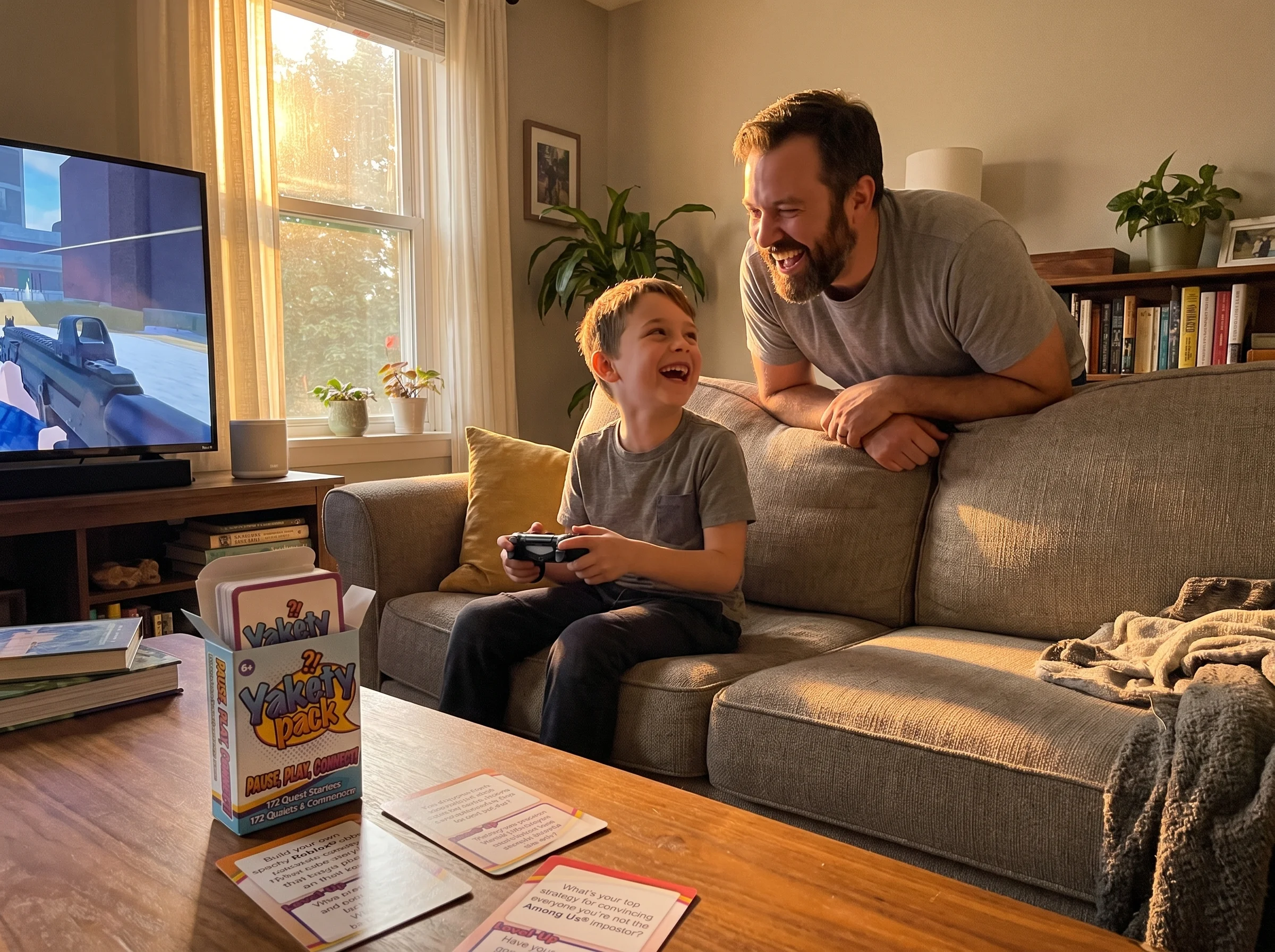
Sit next to your kid tonight while they play. Don't bring up limits. Don't bring up rules. Ask them to show you their favorite thing they built, or their best clip from this week. Just look. Ask a real question.
That's the door in. The limits conversation gets a thousand times easier once you've actually walked through it.
You've got this. Or at least, you've got a better shot than I did with my bullet points.
Tonight, no rules attachedPause, Play, Connect: Core Deck172 prompts to hand you a real question when all you want to do is listen.$49 CAD • 90 cards • 18 reviewsShop the deck

