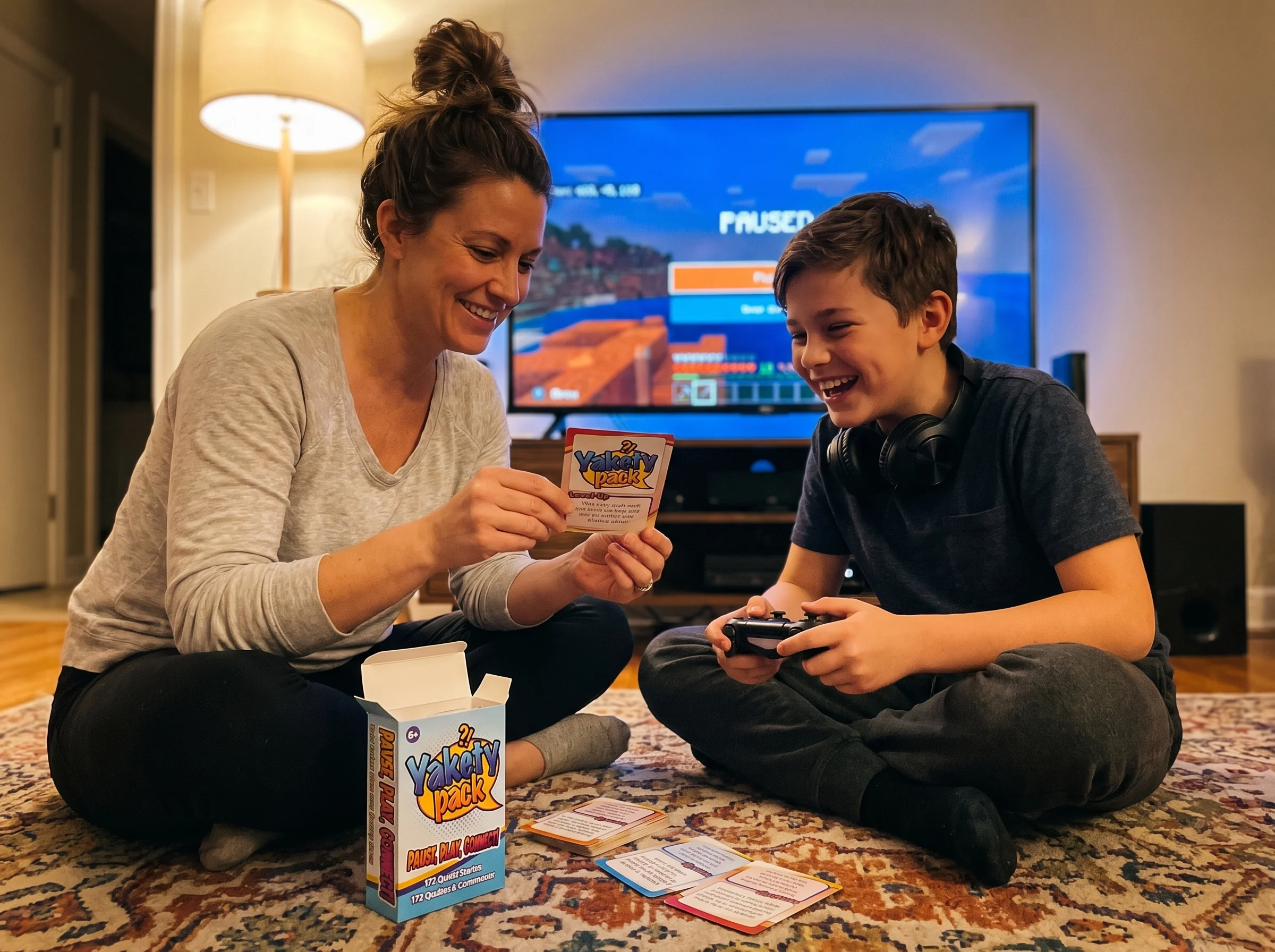
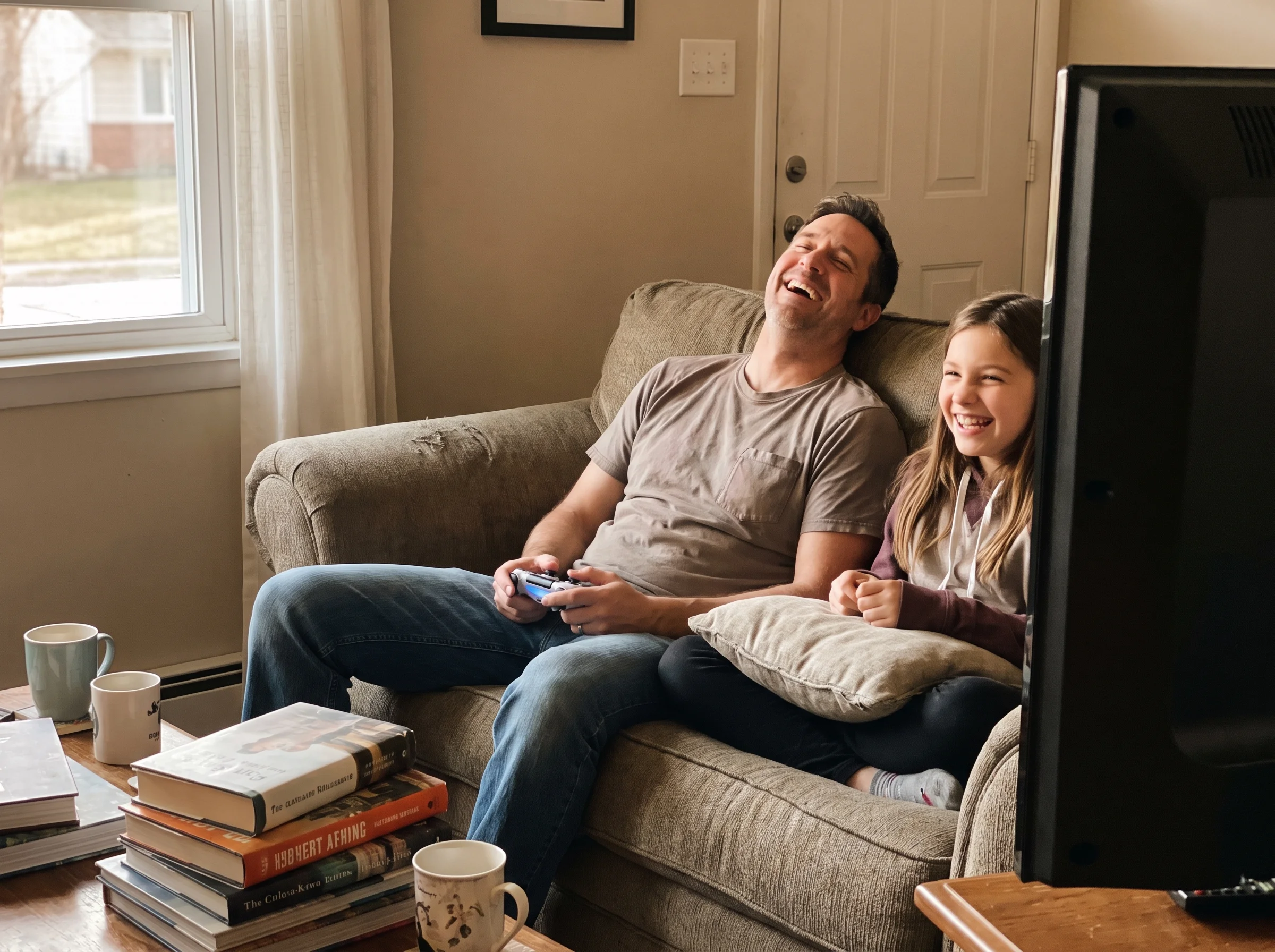
My son beat me 14 times in a row at Rocket League before I finally scored a goal. And when that ball dribbled across the line, mostly because I panic-jumped and got lucky, he threw the controller in the air and screamed like we'd just won the World Cup. He still brings it up. "Remember when you finally scored?"
That moment is the whole reason I'm writing this. Because if I'd stayed on the couch scrolling my phone while he played alone that Saturday, like I'd done for probably 200 Saturdays before, that memory wouldn't exist. Neither would about a hundred others.
So this isn't a list of "gaming activities to do with your kid." Chore charts are for taking out the trash. This is a gaming bucket list for parents and tweens. These are the moments you'll actually remember, the ones your tween will still talk about when they're 22.
Why "Bucket List" Instead of Just a List of Activities
Here's the thing nobody tells you about the tween years: the window is smaller than you think. Somewhere between 9 and 13, kids start declining "want to hang out?" They don't stop loving you. They just stop wanting to sit on the couch and watch a movie you picked.
I noticed it with my son around 10. "Want to go to the park?" Meh. "Want to grab ice cream?" Not really. But "want to show me something in your world?" or "will you teach me how this works?" got a yes every single time.
Gaming became the last shared language we had. That sounds dramatic until you live it. And then it doesn't sound dramatic at all. Research from the Pew Research Center shows that the vast majority of tweens and teens play video games, making it one of the few genuinely shared cultural touchstones left.
That's why I'm calling this a bucket list. Because framing matters. If you approach it as "activities to do together," you'll bail after twenty minutes. If you approach it as "memories I'm building while I still can," you'll show up different.
 Item sixteen for the listPause, Play, Connect: Core Deck172 prompts to reach for when how was school stops getting you an actual answer.$49 CAD • 90 cards • 18 reviewsShop the deck
The Ground Rules Before You Start
Before you touch a single item on this list, four rules. Break these and the whole thing falls apart.
1. Let them pick the game. This is the entire trick. Not the game YOU want to introduce them to. Not the game YOU think is age-appropriate (you already vetted that separately). The game they're currently obsessed with.
2. Be a beginner out loud. Ask dumb questions on purpose. "Wait, what does that meter do?" "Why did you jump right there?" Tweens spend their whole life being the one who doesn't know things. When you flip that, they light up in a way you have to see to believe.
3. Don't police the game while you're playing it. No pausing to ask "is this appropriate?" mid-match. No commenting on the language a random 12-year-old in voice chat just used. Vet the game beforehand, then just play.
4. Match their session length, not yours. If they play for 45 minutes, you play for 45. Bailing after 15 sends a message: this thing you love isn't worth my full attention.
The Bucket List, Part 1: The Playing Together Items
-
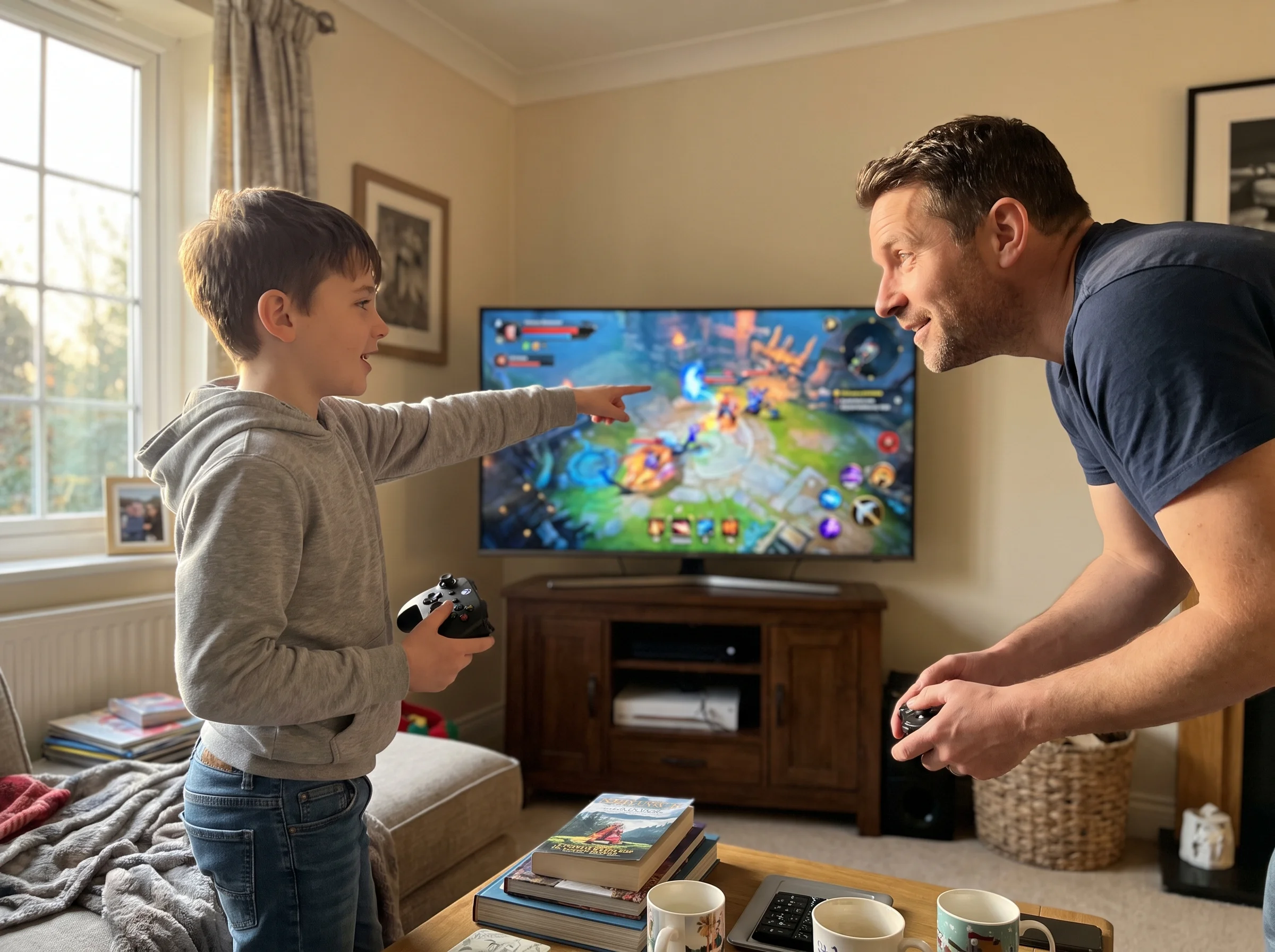
Let them teach you their main game from scratch. I did this with Fortnite. Felt like learning to drive stick. My son laughed so hard he cried when I opened three doors in a row instead of shooting.
-
Play a full co-op story game together, start to finish. It Takes Two is the gold standard. A Way Out, Portal 2, Unravel Two, Overcooked. These are designed for two people to actually need each other. That's the magic.
-
Beat a boss together where you actually contribute. Not where they carry you. Where you have a real job and you do it.
-
Play their favorite competitive game and lose gracefully at least 10 times. More on this later, but you have to earn the right to be there. Losing without whining is how.
-
Build something together in THEIR Minecraft or Roblox world. Not a new world. Their world. The one they've been building since they were 8. That's an invitation into their private universe. Treat it like one.
-
Try their favorite streamer's game while watching that streamer play it. They'll pause to point stuff out. You'll get a running commentary on someone they've watched for hundreds of hours. This is basically a museum tour of their inner life.
-
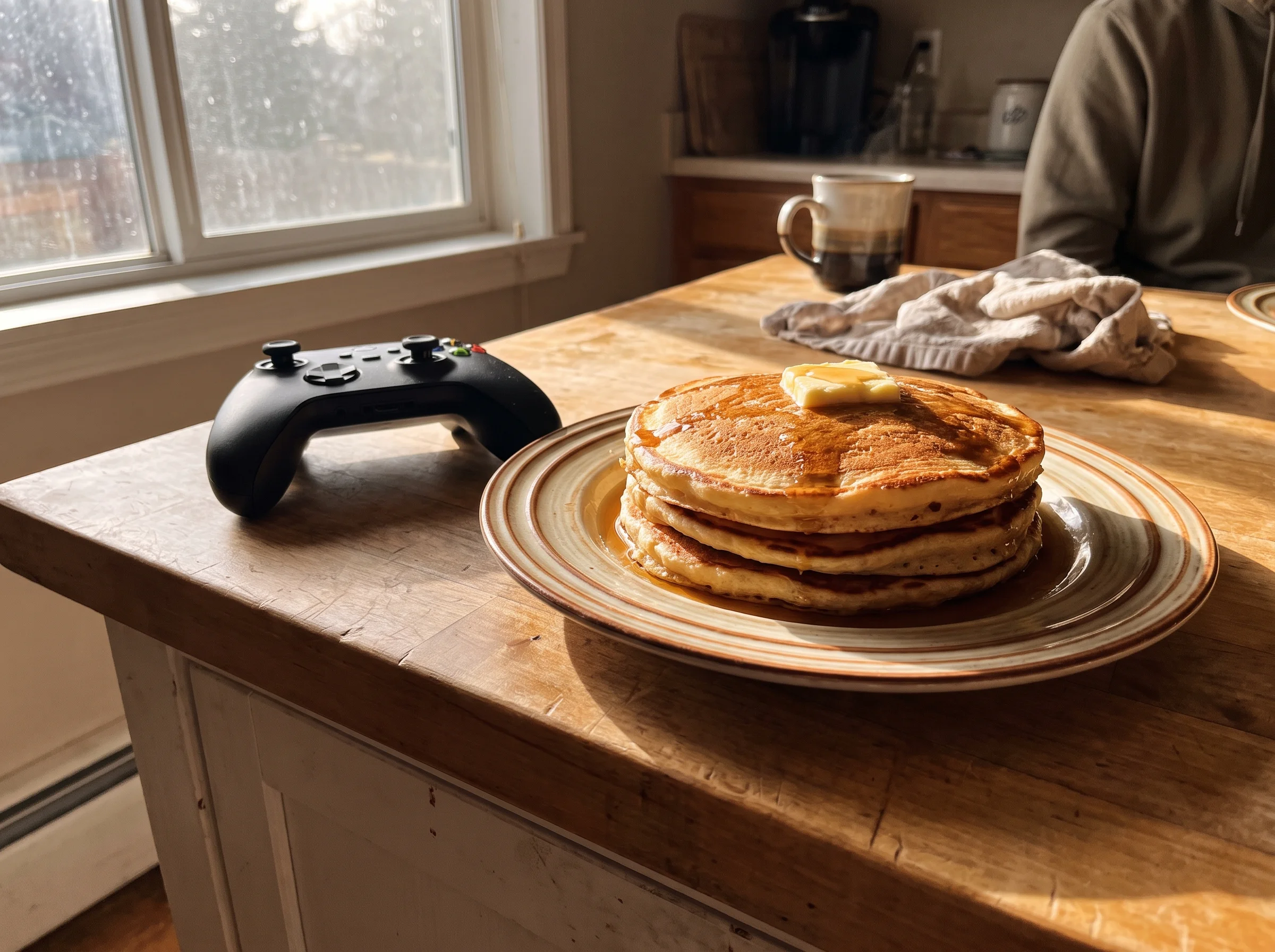
Have one full weekend gaming morning. Pancakes and controllers.
That last one is where the real stuff happens. One Saturday I made pancakes and we played Stardew Valley for four hours. Somewhere around hour two, while we were watering crops, he told me about a kid at school named Marcus who'd said something mean to him on Wednesday. I'd never heard the name Marcus in my life. That conversation does not happen at the dinner table. Ever.
The Bucket List, Part 2: The Gaming Culture Items
Gaming culture is bigger than the game. Most parents miss this entirely. You don't have to be playing to be participating.
-
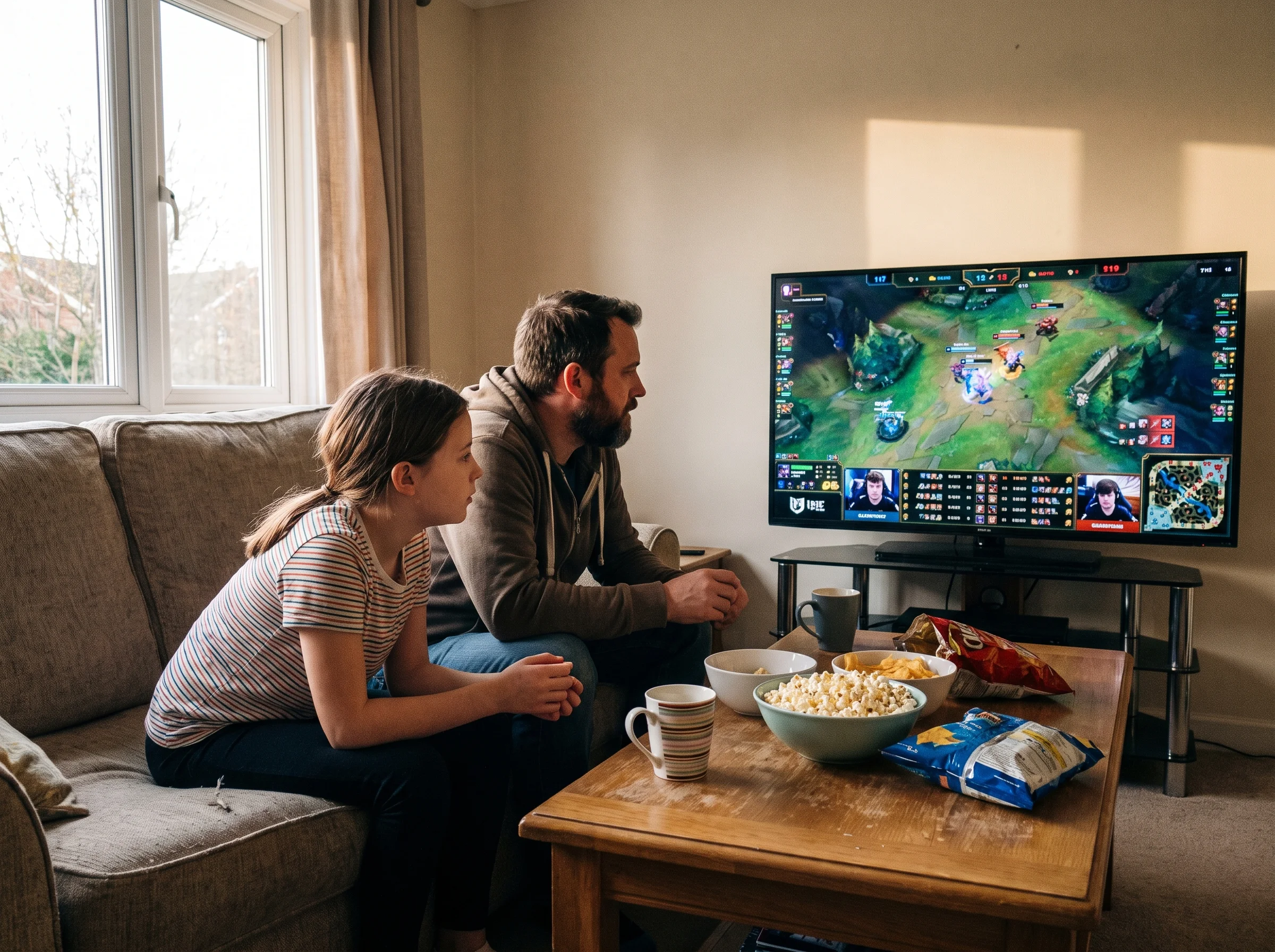
Watch a tournament final together. Fortnite World Cup finals on YouTube. League of Legends Worlds. A big Smash tournament. Ask them to explain what's happening. Bring snacks. Treat it like the Super Bowl, because to them, it kind of is.
-
Go to a gaming cafe or LAN center if there's one near you. The vibe is different from home. They'll be proud to show you around a place they know and you don't.
-
Attend a gaming or comic convention, even a small one. You don't have to cosplay. Just be there. Watch them light up when they see a booth for something they love.
-
Build or upgrade a PC together, or crack open a console to clean it. YouTube tutorials plus a screwdriver plus a Saturday. This one hits different because you're making a physical thing that runs the digital thing they love.
-
Follow a streamer or pro player as a "we" activity. Not just theirs. Yours too. Ask about the streamer at dinner like you'd ask about their friends.
The first time I sat and watched a Fortnite match with my son, I asked him to explain what "cranking 90s" meant. He gave me a 20-minute masterclass with diagrams drawn on a napkin. I understood maybe 30% of it. Didn't matter. He was the professor. I was the student. We were both showing up.
The Bucket List, Part 3: The Conversation Items
These three are the sneakiest ones on the list. They don't look like much. They're actually the most powerful.
-
Ask them to walk you through their in-game friends. Who plays with them and why. What their friends are like. Which ones are from school and which ones are just internet friends. This is a social map you don't otherwise get access to.
-
Have them show you their skins, characters, or collection and explain why they picked each one. Every skin has a story. Every character choice reveals something. Just listen.
-
Ask them: what game character would you want as a real-life friend, and why?
That last one is where I need to tell you about Yakety Pack, because it's literally why we built it. My co-founder and I kept noticing that our kids would answer almost any question if the question was about their world instead of ours. "How was school?" got a shrug. "What game character would you want as a friend?" got a 20-minute answer that somehow ended up being about a kid in their actual class. We turned questions like that into a card deck. It's basically a cheat code for parents who don't know what to ask.
 Between levels, over pancakesPause, Play, Connect: Core Deck$49 CAD • 172 promptsSee the deck
What to Do When You're Terrible at the Game (Because You Will Be)
You're going to lose. A lot. Your tween is going to smoke you in ways that feel biologically unfair. Here's how to handle it.
Narrate your incompetence out loud. "Oh no, I'm walking into a wall again." "Why does my guy keep dying?" Self-deprecation is the fastest way to make it fun for them instead of awkward.
Never fake-lose. Tweens can smell it from across the room. If you lose, actually try and lose. If you win, actually win. Nothing kills the vibe faster than a pity loss.
Ask them to coach you between rounds. "What should I do different next time?" This is the magic phrase. You've just made them the expert AND asked for their help. That's a combo they almost never get from a parent. The American Psychological Association has documented how giving kids a competence role, even in play, boosts their sense of agency and connection.
My daughter once made me play Just Dance in front of her friends. Peer pressure situation, no way out. I did the worm during "Levitating." Full worm. On the living room floor. Her friends screamed. She has never let me live it down. It's also her favorite memory of me. She's told that story at three different family dinners.
Being bad, and being okay with being bad, is a gift.
How to Extend the Gaming Bucket List Beyond the Game
Here's the part most articles miss completely. You just had a great gaming session. Now what?
The 20 minutes right after you stop playing are gold. Kids are still lit up, still open, still in the world you just shared. That's when you ask. Not "what did you learn today?" Something in their language. "Who was the best player in that lobby?" "What's the wildest thing that's ever happened in your Minecraft world?"
Then let it drift into other stuff. Because it will, if you don't force it.
A few more tips:
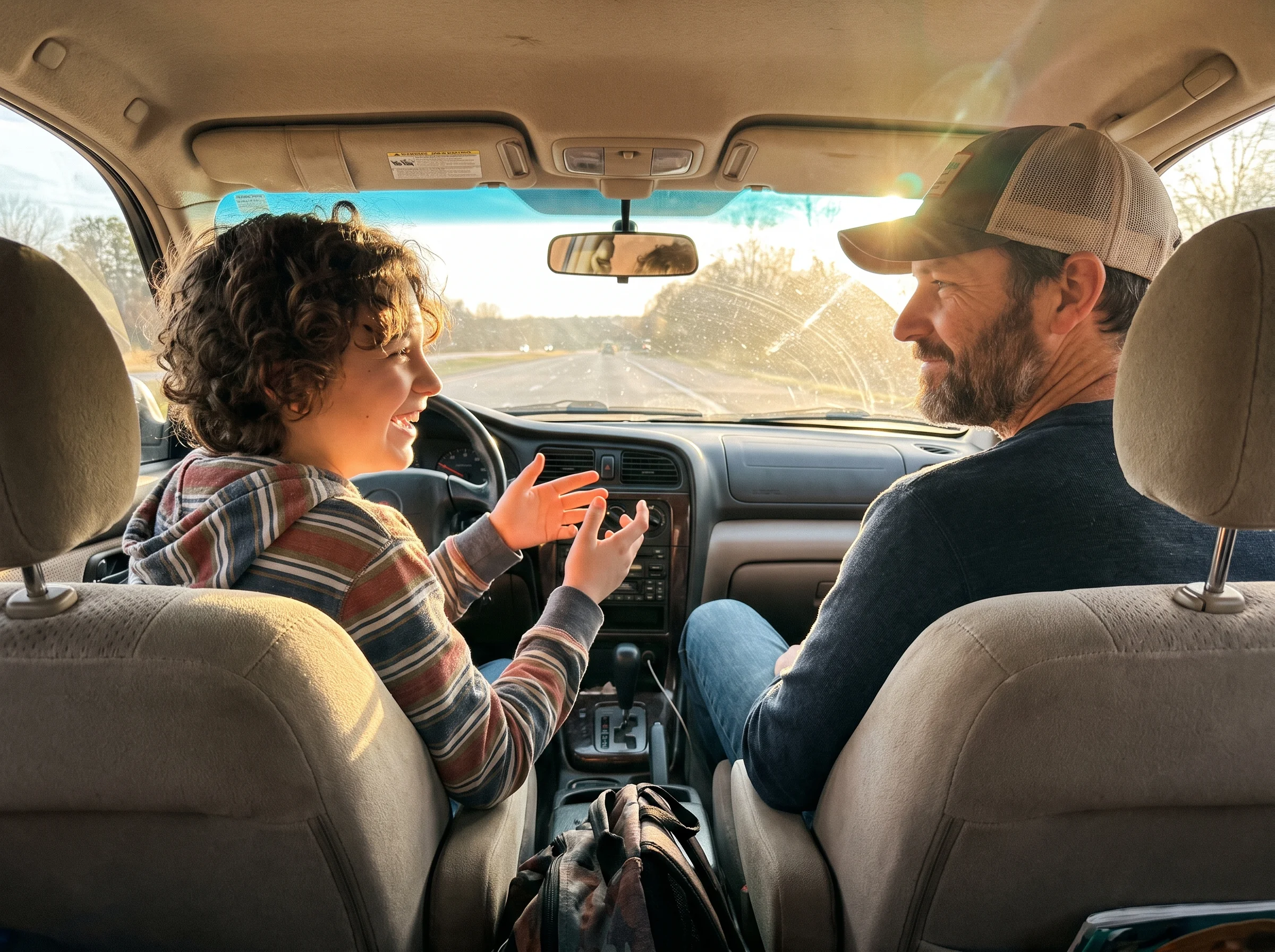
- The car ride is where the real conversation happens. Bring up something from the game two hours later. "Wait, so what does 'diff' mean again?" Watch what they tell you.
- Learn one piece of their gaming vocabulary per week. Diff. Cracked. Sweaty. Cranking. GG. Just one. Use it wrong on purpose sometimes.
- Don't turn every gaming moment into a lesson. Nobody wants to play with a parent who's secretly running a curriculum.
The whole reason Yakety Pack exists is that we realized the post-gaming window was where kids were most open, and most parents were fumbling the ask. The right question in that moment turns a fun session into a real conversation about school, friends, the kid who said something mean on Wednesday. But you have to ask the question that meets them in their world, not yours.
The One Piece of Counter-Intuitive Advice
Don't introduce your tween to your childhood games as a bonding activity. I know, I know. You loved Sonic 2. You have deep feelings about Ocarina of Time. Your kid does not owe your childhood any reverence.
They will politely tolerate 20 minutes of your nostalgia game to make you happy, then quietly go back to Fortnite. The connection doesn't happen when they enter your world. It happens when you enter theirs. Every single time.
Your Practical Next Step
Pick one thing from this list. Just one. Do it this weekend.
If I had to bet on which one, I'd say number 7. Pancakes and a gaming morning. Let them pick the game. Play until they're done playing. See what they tell you between levels.
And if you try one of these? I actually want to know how it went. That's not a marketing line. I built a whole company around this stuff because these moments matter more than almost anything else we do as parents.
You've got a smaller window than you think. Go use it.
Before the window narrowsPause, Play, Connect: Core Deck172 prompts you can pull from on a pancake Saturday, or in the car two hours later.$49 CAD • 90 cards • 18 reviewsShop the deck