
The first family meeting I ran about video games lasted eleven minutes. I had a printed agenda, a kitchen timer, and a folder. An actual folder. My son sat there with his hoodie half up, answered three questions with grunts, and finally said, "Can I go now?" I said yes. He was gone before I closed the folder.
I called it a "family meeting." It was a briefing. He knew it. I knew it. The only person pretending it was a conversation was me.
If you're about to run a family meeting script about video game rules, let me save you that face-plant. Here's what actually works, plus the exact script, from a dad who botched the first three.
Why Most Family Meetings About Gaming Fail Before They Start
You show up with the rules already written. You've decided the number of hours. You've decided which games are okay. You call a "meeting" but there's nothing to meet about because you've already made every decision that matters.
Kids can smell a fake negotiation from the couch. My son could smell mine from another room.
The other problem: you're speaking a different language than they are. You say "screen time." They're thinking about ranked matches with their best friend who moved away, or the Rocket League tournament their squad is doing Saturday, or the fact that if they don't log in tonight, they lose their battle pass streak. When your words don't match their world, they check out.
That eleven-minute disaster taught me the meeting isn't the problem. My prep was the problem. Or lack of it.
 Prep that looks like curiosityPause, Play, Connect: Core Deck172 prompts that get your kid describing their game world in their own words.$49 CAD • 90 cards • 18 reviewsShop the deck
The Prep Work Nobody Tells You About
Before you sit anyone down, do this for a week:
Watch them play. Not from the kitchen. Sit on the couch. Ask what's happening. Don't judge, don't correct, don't say "wow this is loud." Just watch and ask.
Learn the actual vocabulary of their games. Battle pass. Lobby. Ranked. Creative mode. Zero Build. If you don't know these words, your kid knows you're bluffing. I ran a Fortnite meeting once where I said, "No more than an hour a day," and my son asked, "An hour of what? Warm-up, ranked, or Zero Build?" I had no idea those were different things. He wasn't being a punk. He was pointing out that my rule didn't match his reality. That meeting flopped.
Ask one question before the meeting. Days in advance: "What's one thing you'd want me to understand about how you play?" That question alone changed my next meeting. My son actually thought about it for a day and came back with, "I like playing with Cole because he's the only friend from my old school I still talk to." Now I'm not negotiating hours. I'm negotiating a friendship.
Write down what you're actually worried about, in plain language. Not "screen time." Try "you seem grumpy after Warzone" or "you skipped soccer twice for Fortnite." Specific, observed, real. If you want to see what pediatricians actually flag as worth watching for, the American Academy of Pediatrics has a solid family media plan tool that's more practical than most.
The Actual Family Meeting Script About Video Game Rules
Here's the flow. Steal it. Adjust it. But run all six parts.
Part 1: Open with something real (2 minutes)
"I want to talk about gaming, and I don't want this to be me handing down rules. I want us to figure this out together because I keep getting it wrong."
Say it out loud. The admission does more than any agenda ever will. You've just told your kid this isn't theater.
Part 2: Ask them first (5 to 7 minutes)
"Before I say anything, what's working for you right now? What isn't?"
"If you were the parent, what rules would you set for yourself?"
Then shut up. Take notes. Don't react. Don't negotiate yet. Just listen.
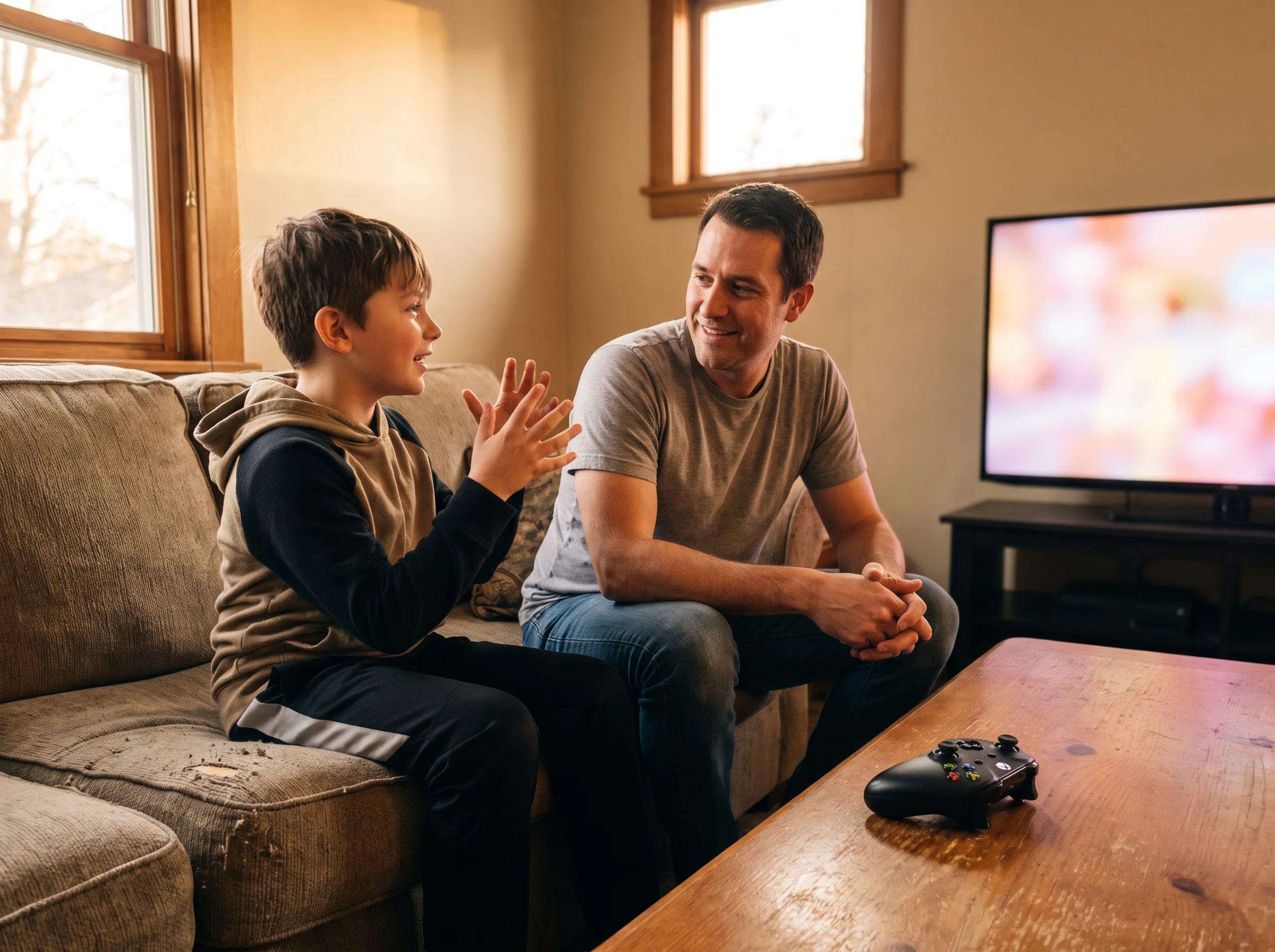
Here's the counterintuitive part: kids almost always propose stricter rules for themselves than you would have set. And they follow rules they wrote themselves. Your job is to add two or three non-negotiables and get out of the way.
Part 3: Share what you've noticed (5 minutes)
"Here's what I've seen. When you play Fortnite for three hours straight on Saturday, you seem burned out. When you and your brother play Rocket League for an hour, you're in a great mood. I'm trying to figure out what's actually helpful vs. what leaves you feeling worse."
Specific. Observational. Not moral. You're not saying gaming is bad. You're saying, "I noticed something. Help me understand it."
When I did this with my two boys, my older one actually said, "Yeah, Fortnite makes me mad when I lose ranked." That's a kid diagnosing himself. I didn't have to.
Part 4: Co-write the rules (10 minutes)
Bring 2 or 3 non-negotiables. Mine were: homework first, off by bedtime, no headset on with strangers I haven't met. Everything else is on the table.
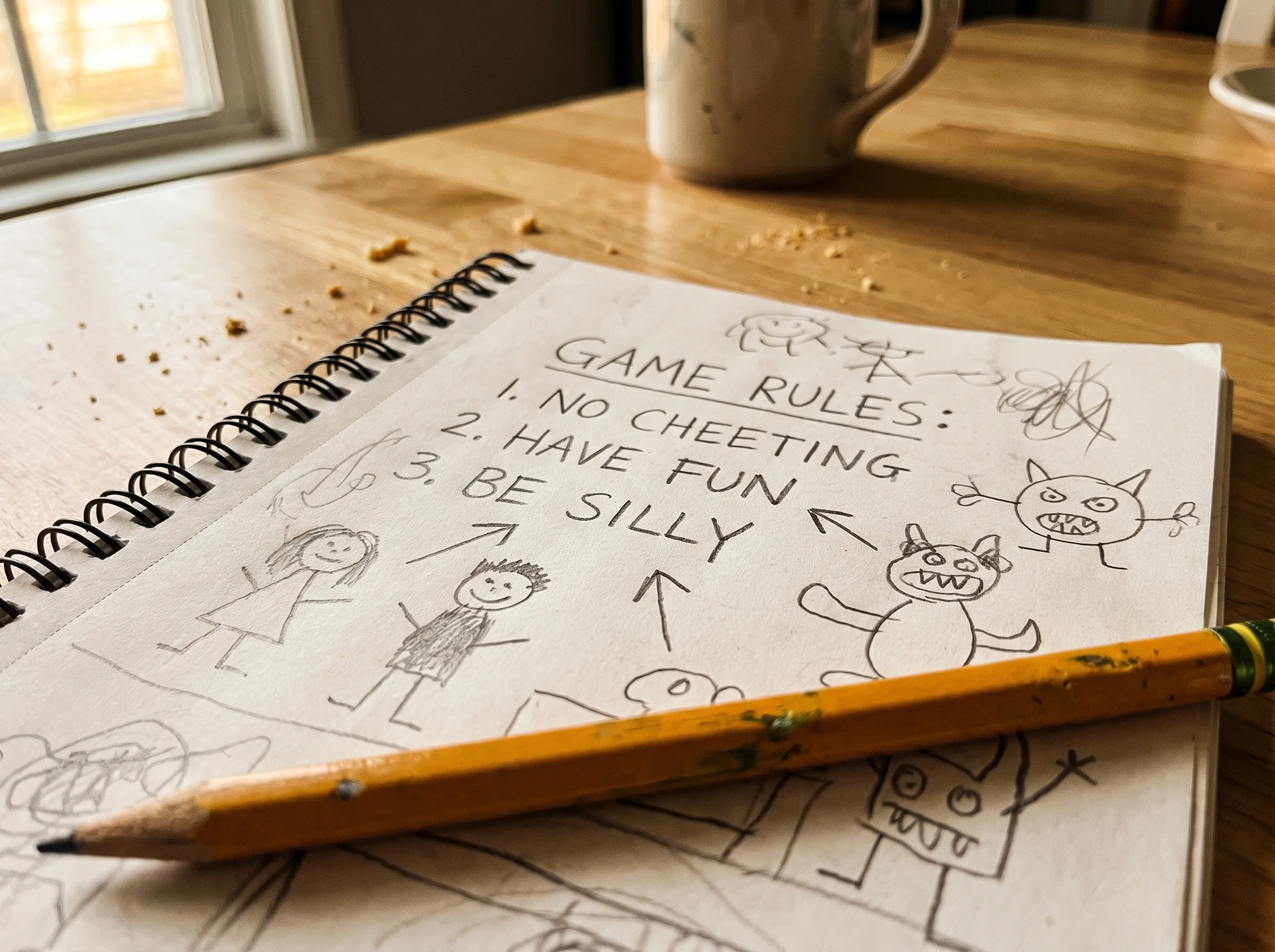
Write the rules down on paper. In their words, not yours. If they say "no ranked on school nights because it stresses me out," write exactly that. Don't translate it into "limit competitive gameplay Monday through Thursday."
Part 5: Agree on what happens if the rules break down
"What do you think should happen if this doesn't work? Let's decide now, when we're both calm."
Kids come up with fairer consequences than parents do. Every time. My youngest once proposed, "If I go over, I lose the next day." I would've said three days. He said one. We went with one. He almost never goes over.
Part 6: Schedule the next meeting
"Let's revisit in two weeks. Rules aren't permanent. If something's dumb, we change it."
That last sentence matters. It tells them this isn't a life sentence. It's an experiment you're running together.
Adjusting the Script by Age
Ages 6 to 9: Keep it under 15 minutes. Use a chart. They need to see the rules, ideally with stickers or a whiteboard. Their attention span won't hold six parts, so compress into three: what do you love, what's the rule, what's the consequence.
Ages 10 to 12: This is the sweet spot. The full script works here. They can negotiate, they want to be respected, and they'll rise to the occasion if you treat them like a partner.
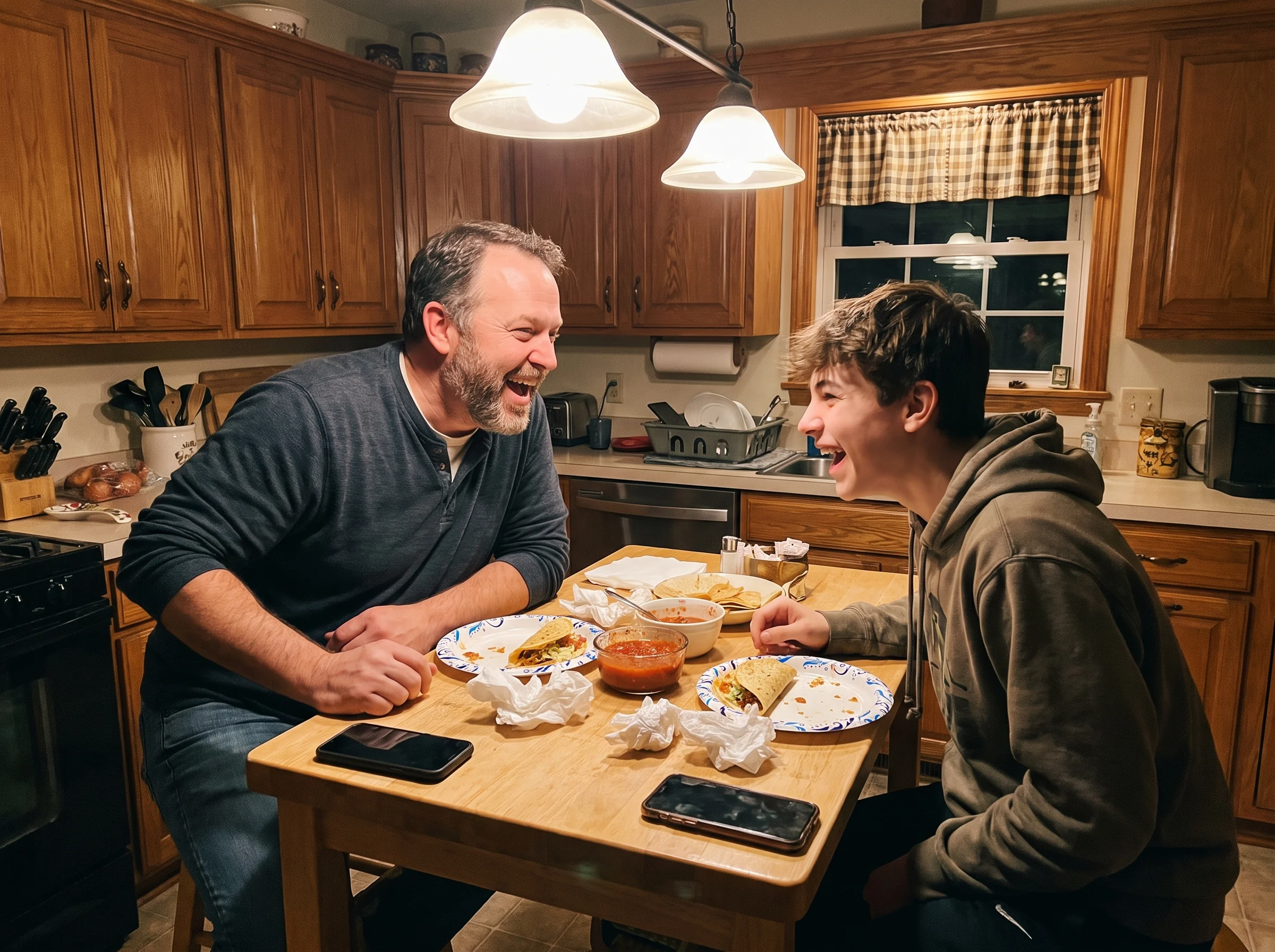
Ages 13 and up: Drop the "meeting" framing entirely. It'll die on arrival. Call it a check-in. Do it over food. Wings, tacos, whatever they like. Same six parts, just don't announce them. Research from Common Sense Media actually backs this up: teens are far more responsive to media rules when they helped write them.
 Between the Sunday check-insPause, Play, Connect: Core Deck$49 CAD • 172 promptsSee the deck
When the Meeting Goes Sideways
Because it will.
Kid shuts down. Don't push. "Okay, we'll try again Sunday." End it. Meeting over.
Kid gets angry. "What's the part that's making you mad?" Then listen. Don't defend.
Kid says "this is stupid." They might be right. Ask what would make it not stupid. You'll usually get a real answer.
You lose your cool. Own it. "That came out wrong. Let me try again." Modeling that repair is worth more than any rule you set.
Two parents disagreeing in front of the kid. Pause the meeting. Go sort it out privately. Come back aligned. Kids will use any gap between you two, not because they're manipulative, because they're kids.
I've had a kid stand up mid-meeting and say, "You don't even know what I play." He stormed off. I earned that one. I hadn't done the prep. I called him back an hour later and said, "You're right. Give me a week to learn. Then let's try again." That meeting, the redo, is the one that actually worked.
The Follow-Through Problem
Most families lose it here, not in the meeting.
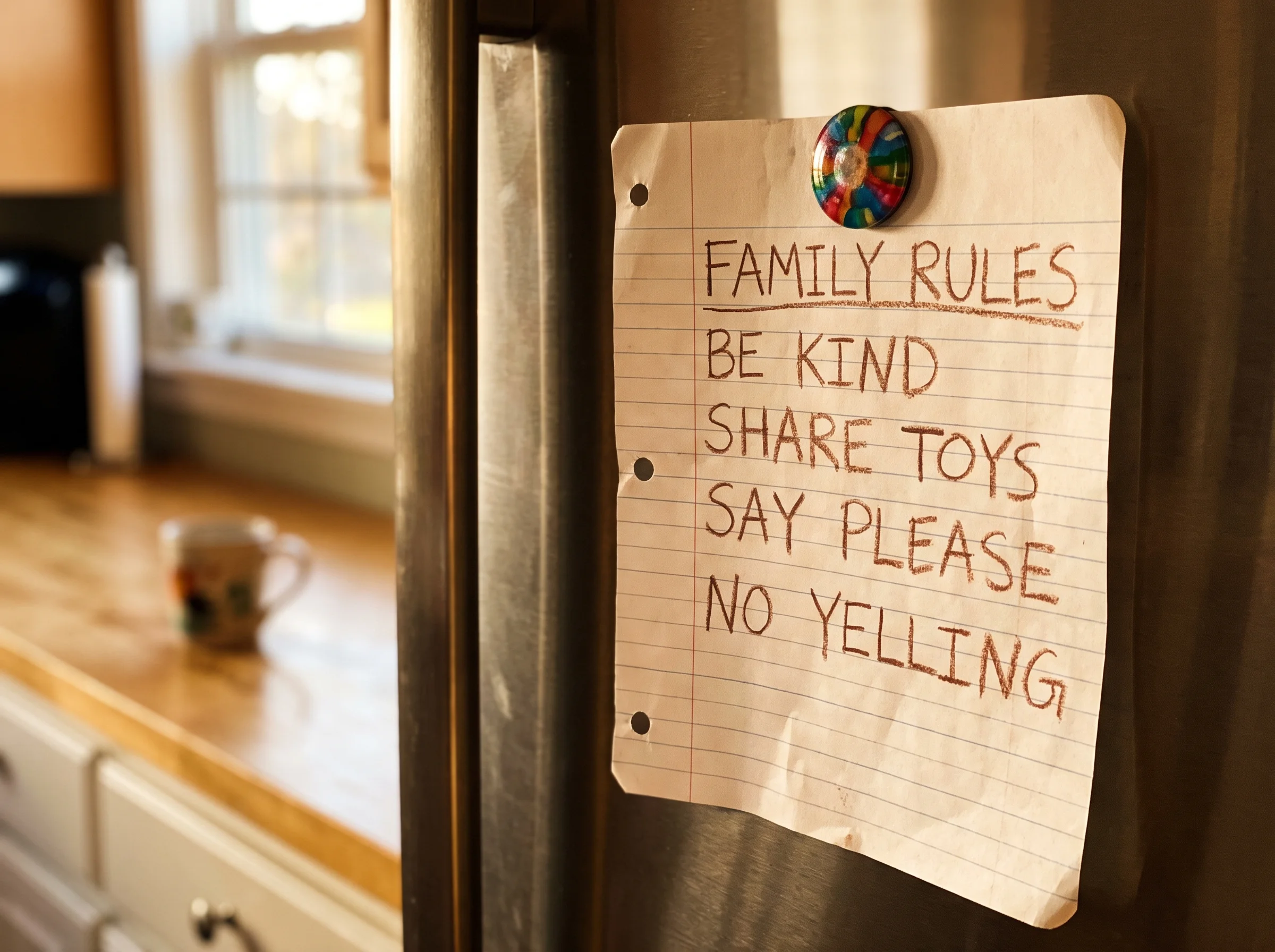
Post the rules somewhere visible. Fridge, kid's door, wherever.
Do a five-minute Sunday check-in. Not a full meeting. Just, "How'd this week go? Anything we should tweak?"
If a rule keeps getting broken, the rule is probably wrong. Not the kid. Rewrite it.
And don't renegotiate mid-week when everyone's cranky. Wait for Sunday.
The Meeting Is a Moment. The Relationship Is the Point.
Here's the thing I wish I'd known three meetings ago: the script doesn't matter if you don't keep talking between meetings. Ask about their games regularly, not just when there's a problem. Otherwise every conversation about gaming becomes a conversation about limits, and that gets old fast for both of you.
Questions that work in my house:
- "What's the craziest thing that happened in your game today?"
- "Who'd you play with?"
- "What's a game you wish I understood?"
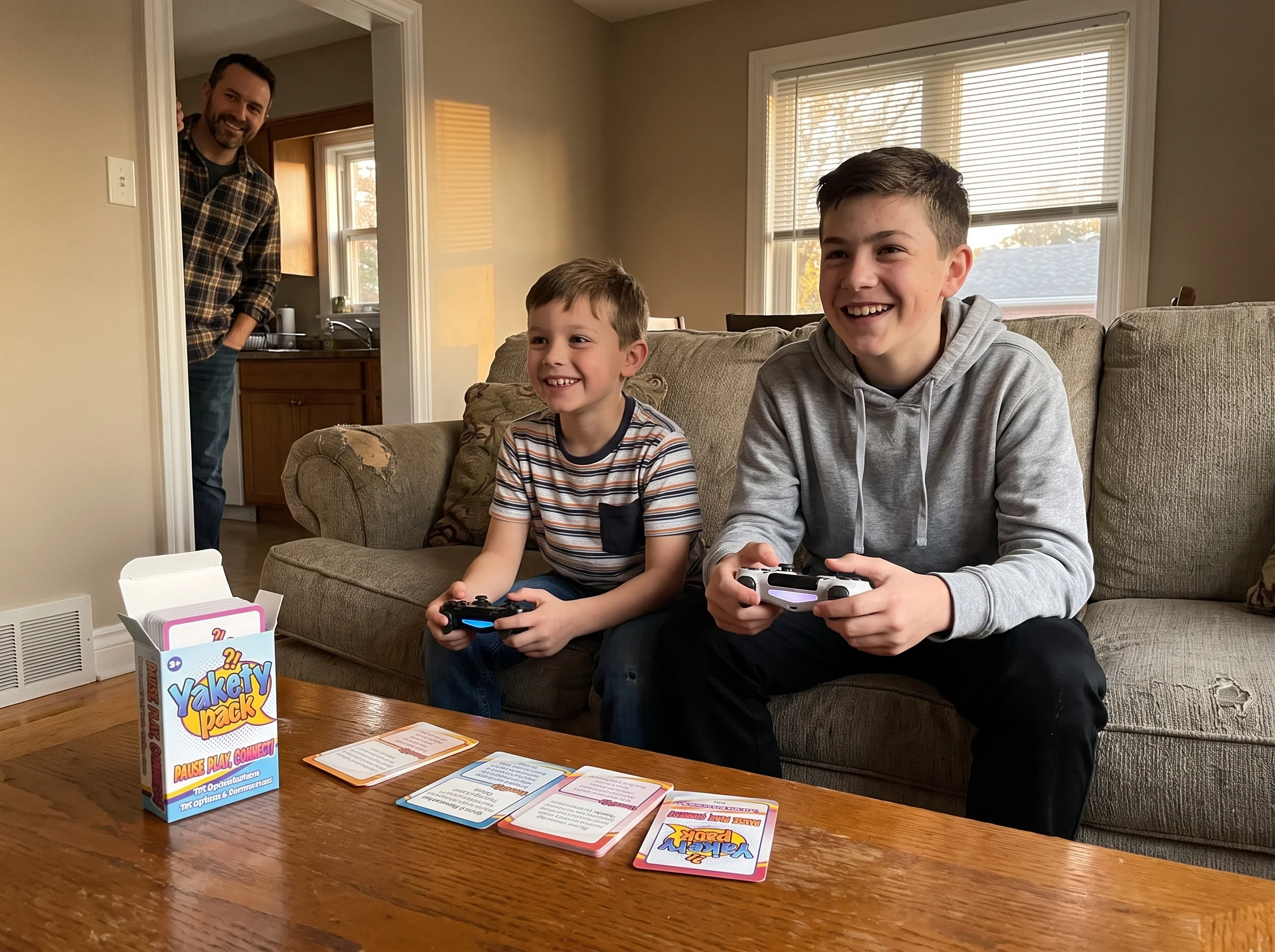
This is honestly why my co-founder and I built Yakety Pack. We kept realizing our kids wanted to talk about their gaming worlds, we just didn't know how to ask in a way that opened them up. One card that changed things for me was "What game character would you want as a real friend, and why?" Got a twenty-minute answer from a kid who normally gives me three words.
The meeting sets the frame. The daily curiosity is what keeps it alive.
Try This Week
Pick a night. Do the prep first, at least three days of actually watching them play. Then run the six parts. Keep it under 30 minutes. Write the rules in their words. Schedule the revisit.
And if your first meeting flops, welcome to the club. Mine lasted eleven minutes. The fourth one changed our house.
When nothing needs decidingPause, Play, Connect: Core Deck172 prompts for the evenings when you just want to hear about their game.$49 CAD • 90 cards • 18 reviewsShop the deck

