
Last spring, my son walked into the kitchen, opened his laptop, and asked, "Dad, can I sign up for those $25,000 scholarships? The Niche ones." He'd been seeing the ads on YouTube between Valorant montages for weeks.
My gut said scam. My research said no, actually, they're real. But the real answer to "can I trust Niche scholarships?" turned out to be way more interesting than yes or no, and I've spent the last six months figuring out what I actually wish I'd known before I clicked "Create Account" with him.
So here's the honest breakdown, from a dad who let his kid sign up and watched what happened next.
 The talk before the signupPause, Play, Connect: Core Deck172 prompts that make the kind of open ended question in this article easier to ask at home.$49 CAD • 90 cards • 18 reviewsShop the deck
The Short Answer (And Why It's Not That Simple)
Yes. Niche.com is a real company. They're headquartered in Pittsburgh, they've been around since 2002 (back then they were called College Prowler), and they actually do award the scholarships they advertise. People win them. Real checks, real college tuition, real verified winners on their site.
So the trust question, in the strictest sense, is answered: not a scam.
But "legitimate" and "worth your kid's time and inbox" are two different things. That's the part nobody's telling you straight. Most articles on this topic dance around the real answer because they're affiliate partners with these platforms. I'm not. So let me just say it plainly.
How Niche Actually Makes Money (The Part Nobody Explains)
Here's the thing that clicked for me once I understood it: Niche isn't a scholarship company. Niche is a lead-generation company that happens to give away scholarships.
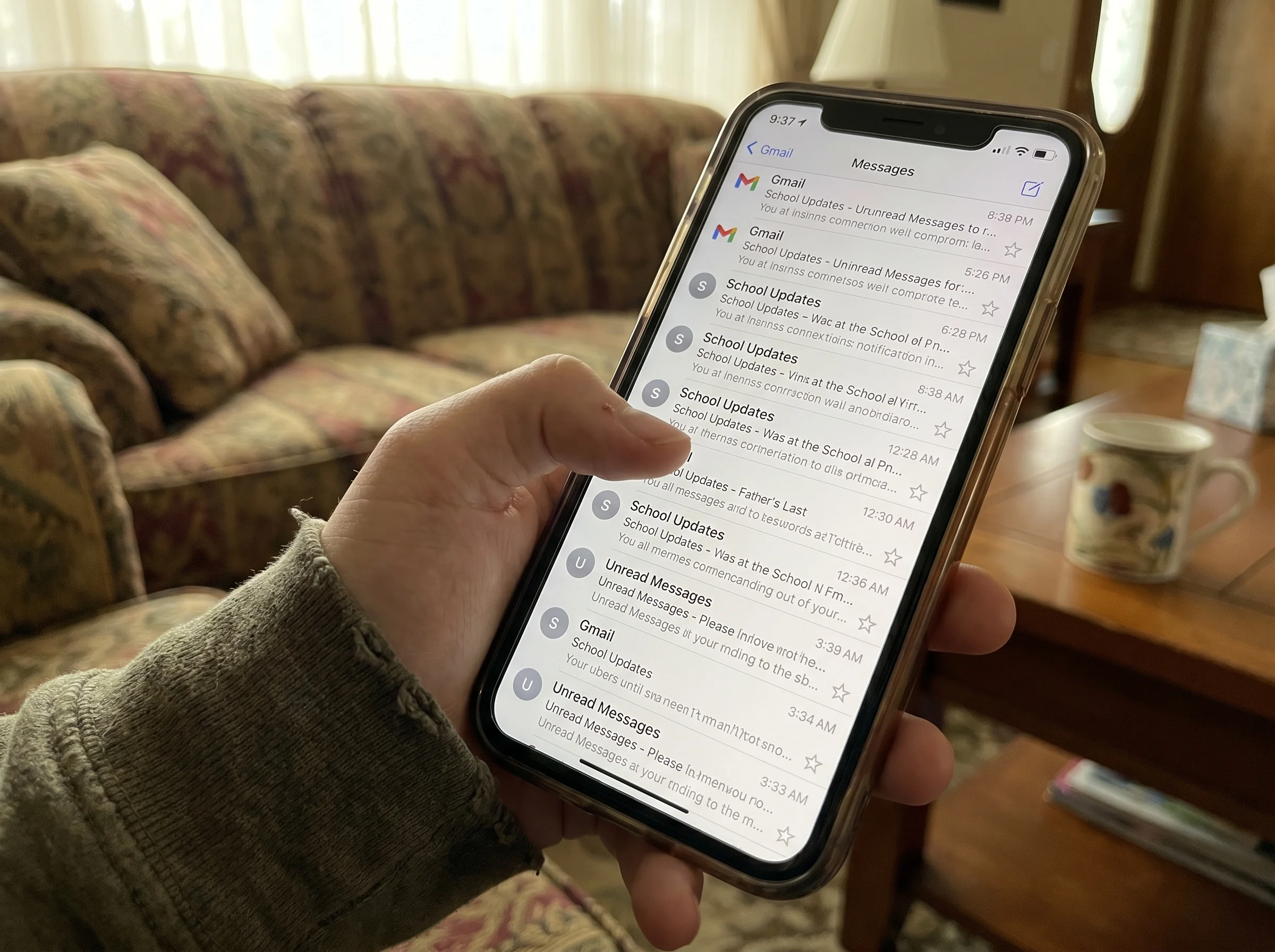
Their actual business is connecting colleges with prospective students. Colleges pay them to surface in front of high schoolers who match certain profiles. Your kid's scholarship application, the one where they enter their grades, interests, intended major, GPA, and contact info, is the price of admission. That data gets matched, sorted, and monetized.
This isn't shady. It's how Cappex, Fastweb, Scholarships.com, and basically every "free" scholarship platform works. The scholarship is the bait. Your kid's profile is the product.
Once you see it that way, the trust question reframes itself. You're not asking "is this a scam?" You're asking "is this trade worth it for my family?" That's a much better question.
What Actually Happened After My Son Signed Up
Let me walk you through the real timeline.
Day 1: Welcome email from Niche. Reasonable.
Week 1: 14 college recruitment emails. 6 texts. Schools he'd never heard of in states he'd never visit.
Month 1: Steady drip from "partner" scholarship sites he'd somehow opted into. His phone buzzed during dinner with messages about scholarships for left-handed marine biology majors. He's right-handed and wants to do computer science.
The good part: He did discover two schools with collegiate esports programs he hadn't considered. One of them is actually now on his real list.

The annoying part: His inbox became completely unusable for actual school stuff. And here's the moment that gutted me. His high school coach sent him an email about a summer skills clinic. He missed it. It got buried under 40 marketing emails. He found out about the clinic from a teammate three days after the signup deadline.
That's the cost nobody tells you about. Not your data in some abstract sense. Your kid's attention. Their ability to spot the real email in a sea of noise.
Your Actual Odds (Let's Just Do the Math)
The Niche $25,000 "No Essay" scholarship gets, by most estimates, well over a million applicants per drawing. They award one per month. That's lottery-ticket odds. Not "competitive scholarship" odds. Sweepstakes odds.
Compare that to a local Rotary Club essay scholarship for $1,000. You write 300 words. Maybe 40 kids apply. Your odds are something like 1 in 40 instead of 1 in 1,000,000+.
The $25,000 prize sounds bigger, sure. But if you multiply prize times probability, the local Rotary scholarship is worth more in expected value than the Niche one, by a wide margin.
That doesn't mean don't apply to Niche. It means call it what it is. It's a sweepstakes. Buying a lottery ticket isn't immoral. Just don't confuse it with earning a scholarship. The Federal Trade Commission has a solid guide on spotting the difference between real scholarships and ones that waste your time.
If you want the deeper breakdown on whether the $25,000 Niche scholarship is real and how the drawings work, I wrote a whole separate piece on that.
 Once the emails startPause, Play, Connect: Core Deck$49 CAD • 172 promptsSee the deck
How to Use Niche Without Wrecking Your Inbox
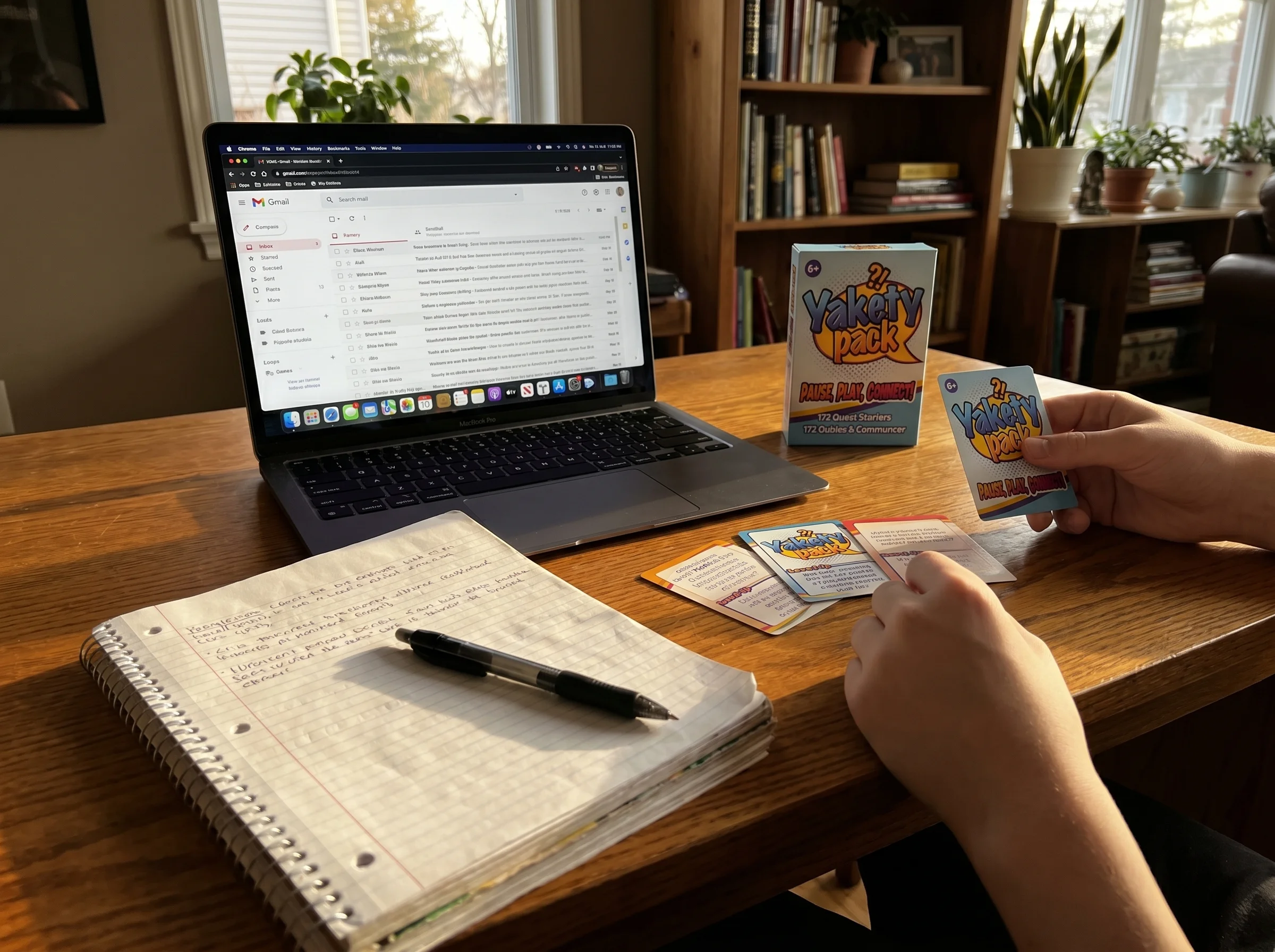
If you decide to use it (and there are reasons to), here's how to do it without paying the attention tax I paid:
- Create a dedicated scholarship email. Not your kid's main one. Not yours. A separate Gmail account just for this stuff. Check it once a week.
- Use a Google Voice number for the phone field. Free, and the spam texts go somewhere you can ignore.
- Uncheck every partner offer box during signup. They're pre-checked. Slow down and read.
- Set a 15-minute weekly limit for scholarship hunting on the platform. Past that, you're grinding for diminishing returns.
- Focus on the third-party scholarships listed on Niche rather than Niche's own sweepstakes. The third-party ones, especially the hyper-specific ones (intended major, ethnicity, region, hobby), often have actual essay requirements and dramatically smaller applicant pools. Those are real opportunities.
Better Bets for Gaming and Esports Families
Here's where I get opinionated, because this is the part that actually changed things for my kid.
My son spent an entire weekend grinding through scholarship platforms. Niche, Fastweb, a couple others. Hours of his life. Filled out maybe 40 applications. Total winnings: zero.

The following Tuesday, on a hunch, he sent a 200-word email to the head coach of a college Overwatch program. Just introduced himself, mentioned his rank, his role, his GPA, and asked if they were recruiting for the next season.
He got a reply in 18 hours. They invited him for a campus visit. They talked about partial scholarship potential.
One email. 200 words. More movement than 40 applications.
If you've got a gaming kid who's serious about competitive play, here's where to actually put your time:
- Direct outreach to college esports coaches at NACE-affiliated schools. Look up the program, find the coach's email, write a real note.
- Booster club and program-specific scholarships at schools with established esports. These are barely advertised. You have to dig.
- Local gaming community awards. Some Twitch communities, regional LAN organizers, and gaming nonprofits run small scholarships with tiny applicant pools.
- Hyper-niche scholarships on Niche itself. Yes, Niche is actually good for this. Filter for very specific criteria. Smaller awards, way better odds.
I dug deeper into the recruiting angle in my piece on how to get recruited for an esports scholarship, and the bigger picture on esports scholarships generally. Both worth a read if your kid's path leans this direction.
The Conversation to Have With Your Kid Before They Sign Up

This is the part I almost skipped, and it ended up being the most valuable thing that came out of the whole Niche experiment.
Before my son hit submit, we had a 20-minute talk. Not a lecture. A real conversation. I asked him: "What do you think they're getting out of this? Why is it free?"
He thought about it. Then he said, "Oh. It's like when a free game wants my email to give me a skin." Bingo. He got it instantly. Kids who play free-to-play games understand the attention economy at a gut level. They've lived inside it.
We talked about what data he was trading, what realistic expectations looked like, and why "free" never actually means free on the internet. Then I let him make the call. He signed up, eyes open. Different decision than if I'd either banned it or just shrugged and let him click through.
This is the kind of conversation that's actually worth having, and it's the reason we built Yakety Pack the way we did. The best talks with our kids don't start with "how was school." They start with the real stuff they're already navigating. Scholarships, gaming, what their attention is worth online. The questions are sitting right there, you just have to ask them.
The Bottom Line: Can I Trust Niche Scholarships?
Can you trust Niche scholarships? Yes, in the sense that they're real and they pay out. No, in the sense that you shouldn't trust them with your kid's main email or expect them to fund college.
Use them as a sweepstakes. Protect your inbox. Spend the bulk of your scholarship time on smaller, targeted awards and direct coach outreach if your kid is on an esports track.
And before your kid signs up, have the conversation. That's where the real value is hiding.

From this article
Pause, Play, Connect: Core Deck
One conversation worth having: The scholarship signup talk did more good in my house than any lecture about data or inboxes. If open-ended questions like that are hard to start cold, a deck of Pause, Play, Connect cards makes the first one easier.

